Xanthium strumarium
زردینه، توق · Rough cocklebur · California-bur · Canada cocklebur · Siberian cocklebur
Description
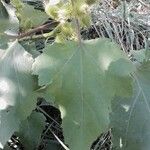
Source: leafsnapXanthium strumarium, commonly known as cocklebur, is a flowering plant in the Asteraceae family. This annual herbaceous plant can reach up to 1.5 meters in height and features a branching stem with large, alternate, ovate leaves. Its flowers are small and greenish-yellow, clustered at the ends of the branches. The fruit of Xanthium strumarium is a burr-like structure covered in hooked spines, which easily attach to clothing or animal fur for dispersal. Inside the burr, the seeds are edible but have a bitter taste. For centuries, various cultures around the world have used Xanthium strumarium for medicinal purposes. It has served as an anti-inflammatory agent, diuretic, and analgesic, among other uses. However, it is important to note that Xanthium stramarium contains toxins that can be harmful to both livestock and humans if ingested in large quantities over time. In summary, Xanthium stramarium is an intriguing plant with valuable medicinal properties but poses potential dangers if not handled properly or consumed in excess.
Care Guide
💧 Water Every 7 days
Rough cocklebur is a resilient plant that can thrive in a variety of moisture conditions, tolerating both wet and dry environments. However, it grows best with moderate hydration, so it's recommended to water it weekly. As an annual herbaceous plant, rough cocklebur experiences significant growth during the rainy season, which influences its life cycle and the timing of its reproduction.
How should I water my Rough cocklebur plant?
Watering Rough cocklebur can be done using various common watering tools, such as a garden hose with a spray nozzle or a watering can. This plant is not too particular about the type of water it receives, as it can thrive with rainwater, tap water, or filtered water. However, it is advisable to avoid watering the plant from overhead to prevent damaging the leaves, flowers, and potential disease. Instead, setting up a drip irrigation system is often the preferred method, as it ensures even and direct water application to the soil. When watering a Rough cocklebur in a container, you can follow a similar approach but with different tools such as a cup, watering can, or tap, applying the water directly to the soil.
What should I do if I give my Rough cocklebur plant too much or too little water?
To remedy underwatering of Rough cocklebur, simply start watering it more consistently when you notice it lacks moisture. Overwatering, on the other hand, can be a much bigger problem if not addressed promptly. Overwatered plants are prone to diseases that can cause their decline and death. To avoid this, choose a growing location with ample sunlight to dry the soil and good drainage to prevent water from pooling. If your potted Rough cocklebur is overwatered, consider changing it to a new pot with better soil and drainage. When repotting, use loose soils and a pot that drains efficiently.
How frequently should I water my Rough cocklebur?
The Rough cocklebur plant needs regular watering throughout the growing season. In spring, water it once per week. As the season gets warmer, you may need to water it two to three times per week. However, excessive watering can harm the plant. It's important to keep the soil relatively moist but not wet. Watering a Rough cocklebur in a pot is different. The soil in pots dries out faster, so you'll need to water it more frequently. Generally, you should water a potted Rough cocklebur a few times per week, compared to just once per week for an in-ground plant.
How much water does my Rough cocklebur plant require?
Determining how much water to give to your Rough cocklebur can be done in a few different ways. One approach is by checking the soil moisture. You can water until the top six inches of soil feel moist. Another method involves using a set measurement. Generally, giving your Rough cocklebur about two gallons of water per week is a good guideline, adjusting for heat and soil dryness. However, be cautious not to overwater if your plant needs less. For container-grown Rough cocklebur, a different approach is necessary. Ensure all soil layers are moist by watering enough, which can be tested by sticking a finger in the soil or observing a slight trickle of excess water from drainage holes.
How can I know if I am giving enough water to my Rough cocklebur?
Avoiding overwatering your Rough cocklebur can be a bit challenging due to conflicting factors. On one hand, you need to water the plant weekly because it has deep roots that require moist soil. On the other hand, Rough cocklebur is prone to root rot, which can happen if the plant is excessively watered. Overwatering can also lead to browning of the plant. Underwatering, on the other hand, is less likely to occur because Rough cocklebur can tolerate periods without supplemental watering. However, if you wait too long to water the plant, it will start wilting and its leaves may become dry.
☀️ Light Full sun
Rough cocklebur grows best with plenty of sunlight. If it does not receive enough light, its development may become stunted and unhealthy. It naturally occurs in sunny habitats, showing tolerance for intense sunlight. Too little sun generally limits its growth, while an excess of sunlight does not harm it.
What are the sunlight requirements for Rough Cocklebur (Xanthium strumarium)?
Rough cocklebur thrives best in full sun, requiring above 6 hours of sunlight to ensure healthy growth. It's essential to observe how sunlight moves through your garden to find spots that offer a perfect balance of light and shade, which will keep your plants happy. Native to sun-rich environments, rough cocklebur is highly resilient against strong sunbeams, and too little sun can hinder its growth. An abundance of sunlight typically does not harm the plant, underscoring the importance of providing ample solar exposure for optimal development.
Can Rough Cocklebur grow with artificial lighting, and if so, how?
Yes, rough cocklebur can grow under artificial lighting, especially in scenarios where natural sunlight is insufficient, such as during winter or in less sunny indoor spaces. For optimal growth indoors, it's important to choose the right type of artificial light, such as LED lights, which can be customized to provide specific wavelengths necessary for the plant. The recommended artificial light intensity varies by plant type: 30-50W/sq ft for full sun plants, 20-30W/sq ft for partial sun, and 10-20W/sq ft for full shade plants. The artificial light source should be placed 12-36 inches above the plant to mimic natural sunlight, and the duration should reflect the natural daylight hours crucial for the plant species, which mostly entails 8-12 hours of light per day.
What are the common symptoms of light deficiency in Rough Cocklebur?
When growing indoors with insufficient light, rough cocklebur may exhibit several signs of light deficiency. Common symptoms include smaller new leaves, leggy or sparse growth, faster leaf drop, slower or halted new growth, and leaves that may show irregular color patterns or paleness, indicating a shortage of chlorophyll and essential nutrients. These symptoms reveal that the plant is struggling with light access and is in survival mode, prioritizing limited resources towards sustaining new growth under poor lighting conditions.
What are some symptoms of excessive sunlight exposure in Rough Cocklebur?
Rough cocklebur can also suffer from excessive sunlight exposure, leading to symptoms such as chlorosis (yellowing leaves due to chlorophyll breakdown), sunscald (damage appearing as pale, bleached areas on the plant), leaf curling (a defense mechanism to reduce surface area and water loss), wilting (drooping caused by significant water loss), and leaf scorching (brown, crispy edges on leaves). These signs indicate that the plant is receiving too much direct sunlight, affecting its ability to photosynthesize properly and maintain overall health.
How can you manage rough cocklebur plants with light exposure issues?
Managing light exposure for rough cocklebur involves several strategies tailored to the plant's specific needs and environment. Indoors, gradually move the plants each week to a spot that gets at least 6 hours of direct sunlight daily, using a south-facing window for maximum exposure. If the plant is too large or not easily movable, supplement with at least 8 hours of artificial lighting daily. Outdoors, adjust the plant's location gradually to prevent sunburn, seeking the best spot that steadily increases sun exposure. If sunlight is obstructed, consider pruning or transplanting to a brighter location. However, it's crucial to note that parts of the plant already affected by insufficient sunlight might not recover, but new growth will be healthy with improved light conditions.
🌡️ Temperature 10–35°C
Rough cocklebur can tolerate a wide range of temperature conditions, but its distribution may still be limited by different combinations of water and heat conditions. It does best in warm summer climates with sufficient rainfall or watering. Extended periods of cloudy, rainy weather or prolonged high temperatures can increase the likelihood of Rough cocklebur dying. In winter, adequate protection from the cold can improve the plant's survival rate.
What is the botanical name of Rough cocklebur?
The botanical name of Rough cocklebur is Xanthium strumarium.
💨 Humidity
🪴 Soil 5-7
🌱 Fertilizer
Rough cocklebur benefits from regular, light applications of fertilizer to encourage healthy leaf growth. You should fertilize Rough cocklebur about once a month during the summer months. Nitrogen is essential for foliage, and providing nitrogen-rich sources helps Rough cocklebur thrive.
🪴 Pot & Repot
✂️ Pruning
To control the invasive nature of rough cocklebur and promote healthy growth, it should be pruned from early to late spring. Remove any dead stems and thin out overcrowded areas to improve air circulation. Regular maintenance is crucial for maintaining a healthy garden. For the best techniques, consult horticultural guides.
🌿 Propagating
🐛 Diseases & pets
☠️ Toxicity
Xanthium strumarium seeds contain a chemical called carboxyatractyloside, which can cause mild symptoms like unpleasant taste and nausea or more severe symptoms like abdominal pain, vomiting, low blood sugar, seizures, and severe liver injury. Mild symptoms typically occur before severe symptoms develop.
Characteristics
- Plant Type
- Herb
- Life Cycle
- Annual
- Genus
- Xanthium
- Family
- Asteraceae
- Hardiness Zone
- 6-9
- Mature Height
- 0.3 m to 1.52 m
- Mature Spread
- 3 cm to 10 cm
- Leaf Color
- Green
- Leaf Type
- Semi-evergreen
- Flower Color
- Green
- Flower Size
- 2.54 cm
- Bloom Time
- Mid summer, Late summer, Early fall
- Planting Time
- Spring, Autumn
- Harvest Time
- Fall
- Native Area
- Russia, Sri Lanka, Afghanistan, Tajikistan, Germany, Cambodia, Myanmar, Bhutan, Iran, Pakistan, Laos, Azerbaijan, Ukraine, Thailand