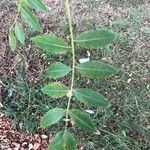
Xanthoceras sorbifolium
Yellow-horn · Shiny-leaved yellowhorn · Chinese flowering chestnut · Goldenhorn
Description
Source: leafsnapXanthoceras sorbifolium, the yellowhorn, shiny leaf yellowhorn, goldenhorn, or Chinese flowering chestnut, is a species of flowering plant in the soapberry family Sapindaceae, and the only species in the genus Xanthoceras. It is native to northern China in the provinces of Gansu, Hebei, Henan, Liaoning, Nei Monggol, Ningxia, Shaanxi, and Shandong. It is also cultivated in Russia, having been imported there since the 19th Century.It is a large deciduous shrub or small tree growing to 8 m tall. The leaves are arranged alternately, 12–30 cm long, and are pinnate, with 9–17 leaflets, the leaflets 3–6 cm long, with a sharply serrated margin. The flowers are 2–3 cm in diameter, with five white petals, and are produced in erect panicles 10–20 cm long in mid spring. The fruit is an oval leathery capsule 5–6 cm diameter, which splits into three sections at maturity to release the 6–18 seeds; the seeds are black, 1.5 cm in diameter, resembling a small horse chestnut seed.The genus name Xanthoceras (which translates as "yellow horn") is considered to be the most basal member of the family Sapindaceae. The specific epithet sorbifolium refers to the leaves, which resemble those of the distantly related rowans (Sorbus). It was originally spelled sorbifolia, but this is a grammatical error that was corrected to sorbifolium under the ICBN.In cultivation in the UK, X. sorbifolium has gained the Royal Horticultural Society's Award of Garden Merit. It is fully hardy, but prefers a sheltered position. The leaves, flowers, and seeds of yellowhorn are all edible.
Care Guide
💧 Water
Xanthoceras sorbifolium is a drought-tolerant plant well-suited for arid regions. It needs to be watered every 1-2 weeks. When grown as an outdoor plant in temperate zones, it benefits from mulching. Mulching helps retain soil moisture and mimics the leaf litter found in its native habitat.
☀️ Light Full sun
Chinese flowering chestnut is native to open habitats, like sunny meadows and forest margins, which supply plenty of light. It performs best in full sun but will also tolerate partial sun, adapting well to a range of light conditions.
🌡️ Temperature 5–35°C
The Chinese flowering chestnut is very adaptable to different climatic conditions, whether facing hot summers or cold winters. However, it does have an optimal temperature range for growth. When temperatures become too high, the plant can suffer heat and humidity stress, which may cause it to die. In areas where temperatures near the lower limit of its cold tolerance, insulating measures should be taken to protect the plant.
💨 Humidity
🪴 Soil 6-7
🌱 Fertilizer
The Chinese flowering chestnut needs adequate nutrients for optimal fruit production. Fertilize in early spring to support new growth and flower development. Regular feeding keeps the plant healthy, encourages tastier fruit, and prevents nutrient-deficiency problems such as yellowing leaves and poor fruit production.
🪴 Pot & Repot
✂️ Pruning
Xanthoceras sorbifolium is an ornamental shrub admired for its beautiful white flowers and vibrant foliage. To encourage healthy growth and improve air circulation, it's best to prune the shrub in early spring. Be sure to use sterilized tools to prevent the spread of disease. For a well-balanced shape, trim back any long stems.
🌿 Propagating
🐛 Diseases & pets
☠️ Toxicity
Characteristics
- Plant Type
- Shrub
- Life Cycle
- Perennial
- Genus
- Xanthoceras
- Family
- Sapindaceae
- Hardiness Zone
- 5-9
- Mature Height
- 2.44 m to 7.62 m
- Mature Spread
- 3.05 m to 7.62 m
- Leaf Color
- Green, Dark Green
- Leaf Type
- Deciduous
- Flower Size
- 2.54 cm
- Bloom Time
- Mid spring, Late spring
- Planting Time
- Spring, Summer, Autumn
- Harvest Time
- Late summer, Early fall, Mid fall