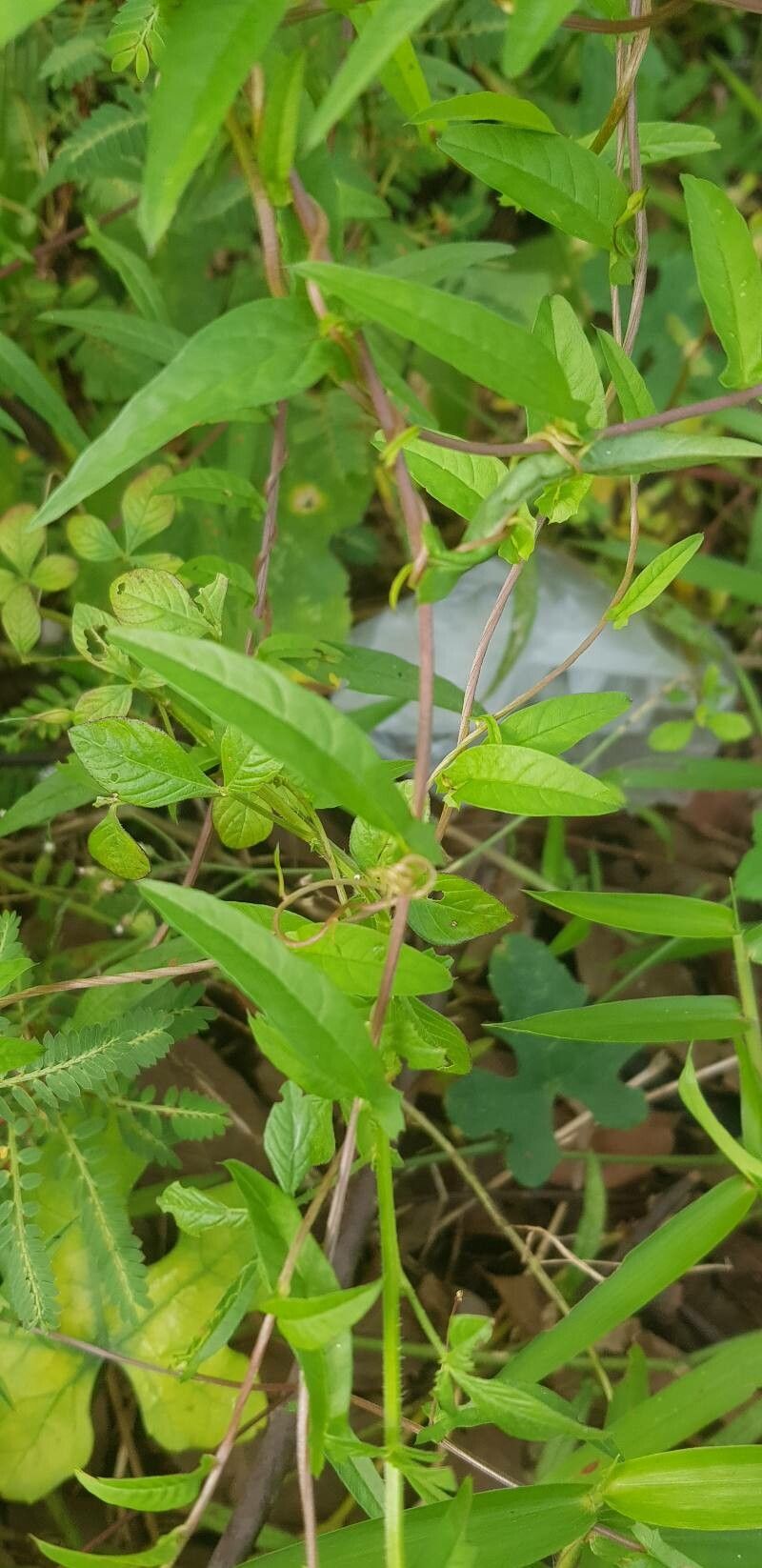
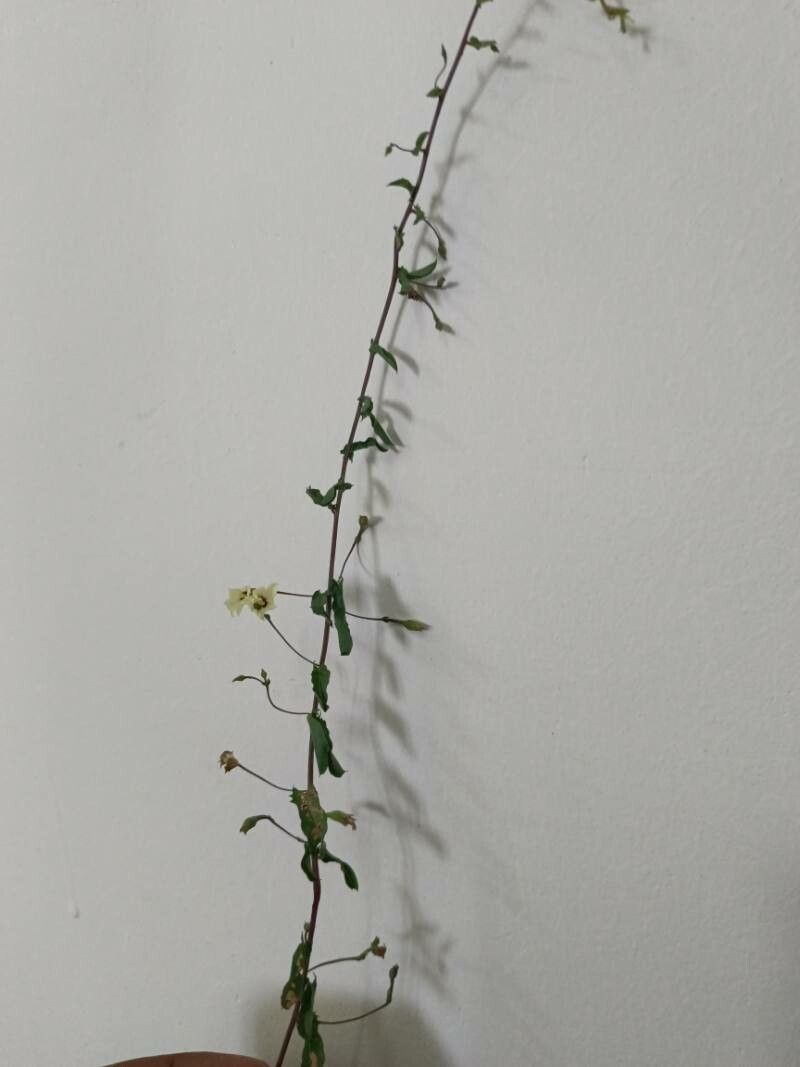
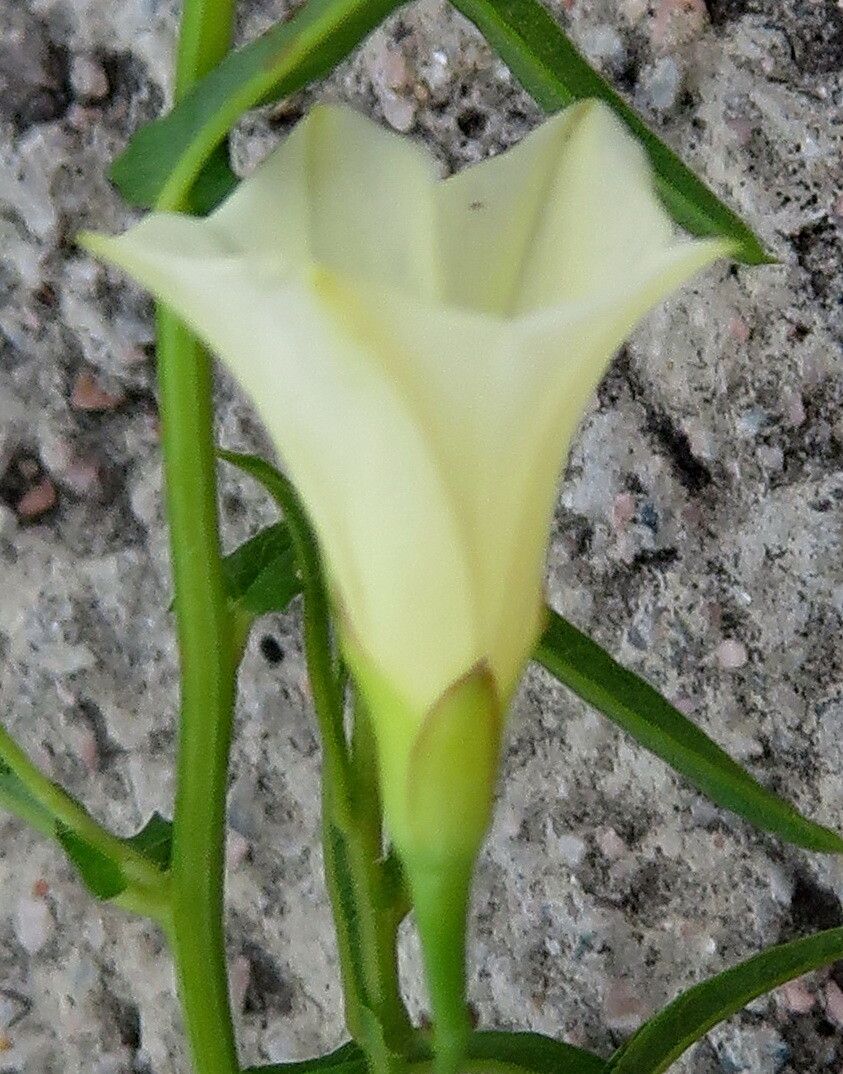
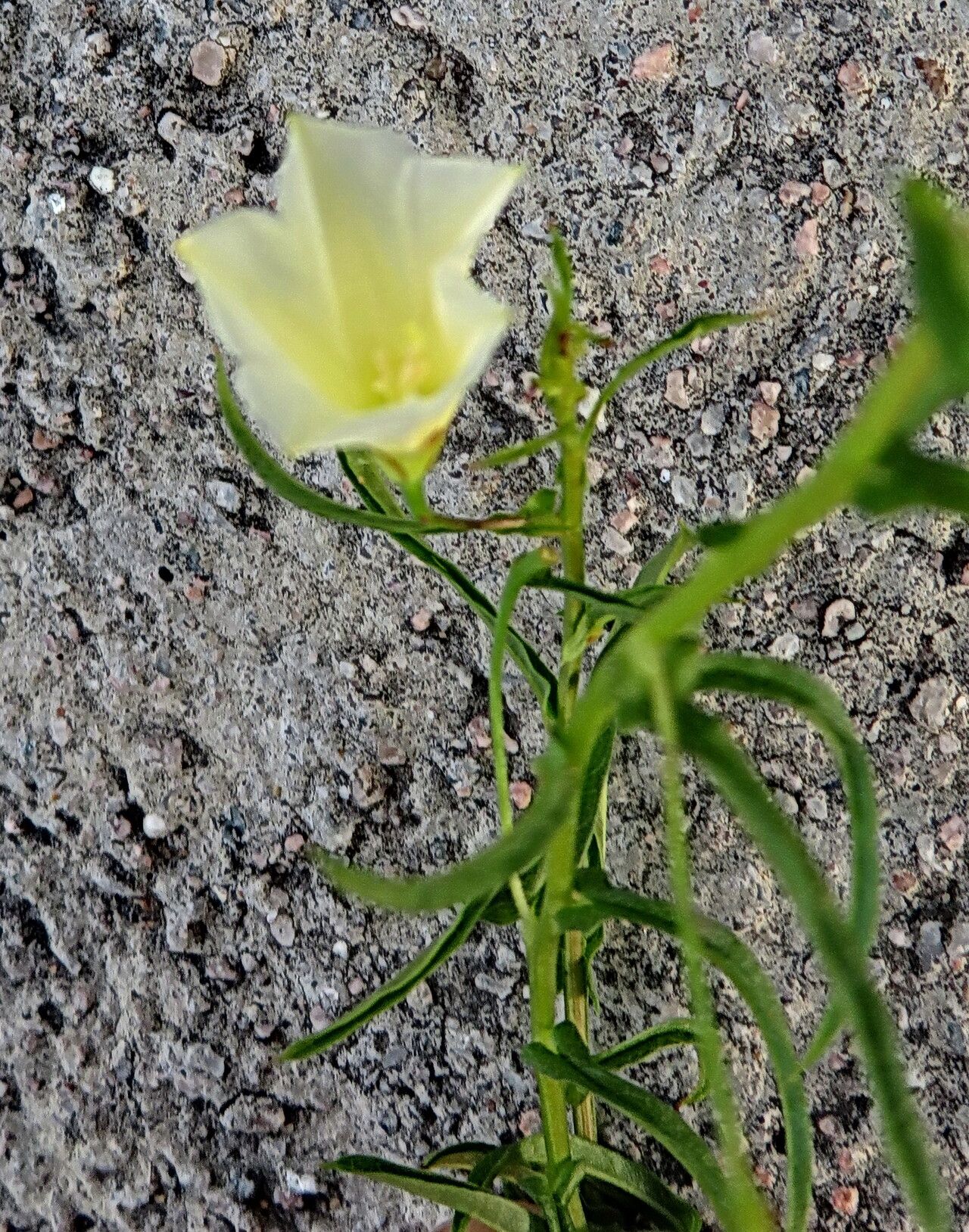
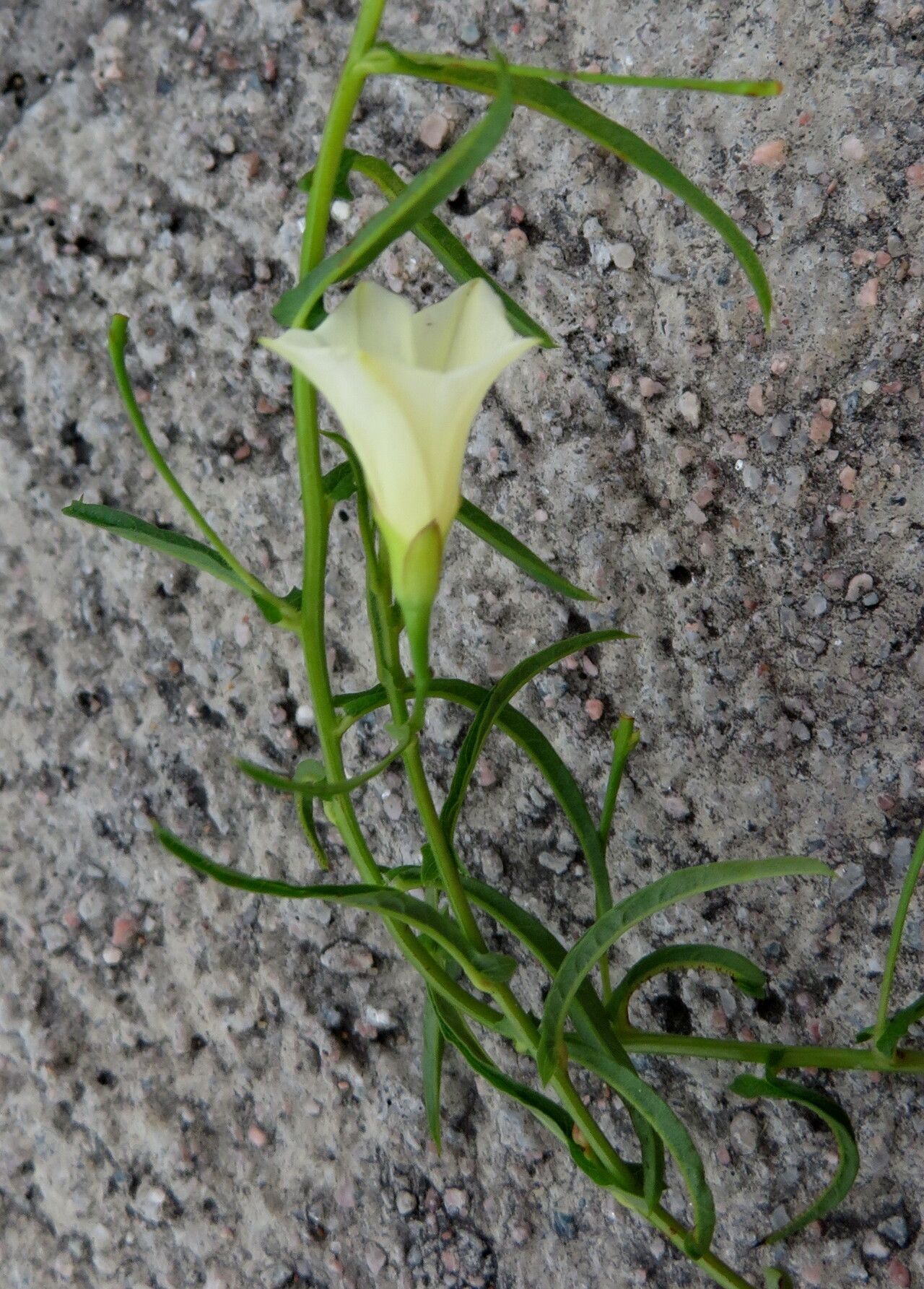
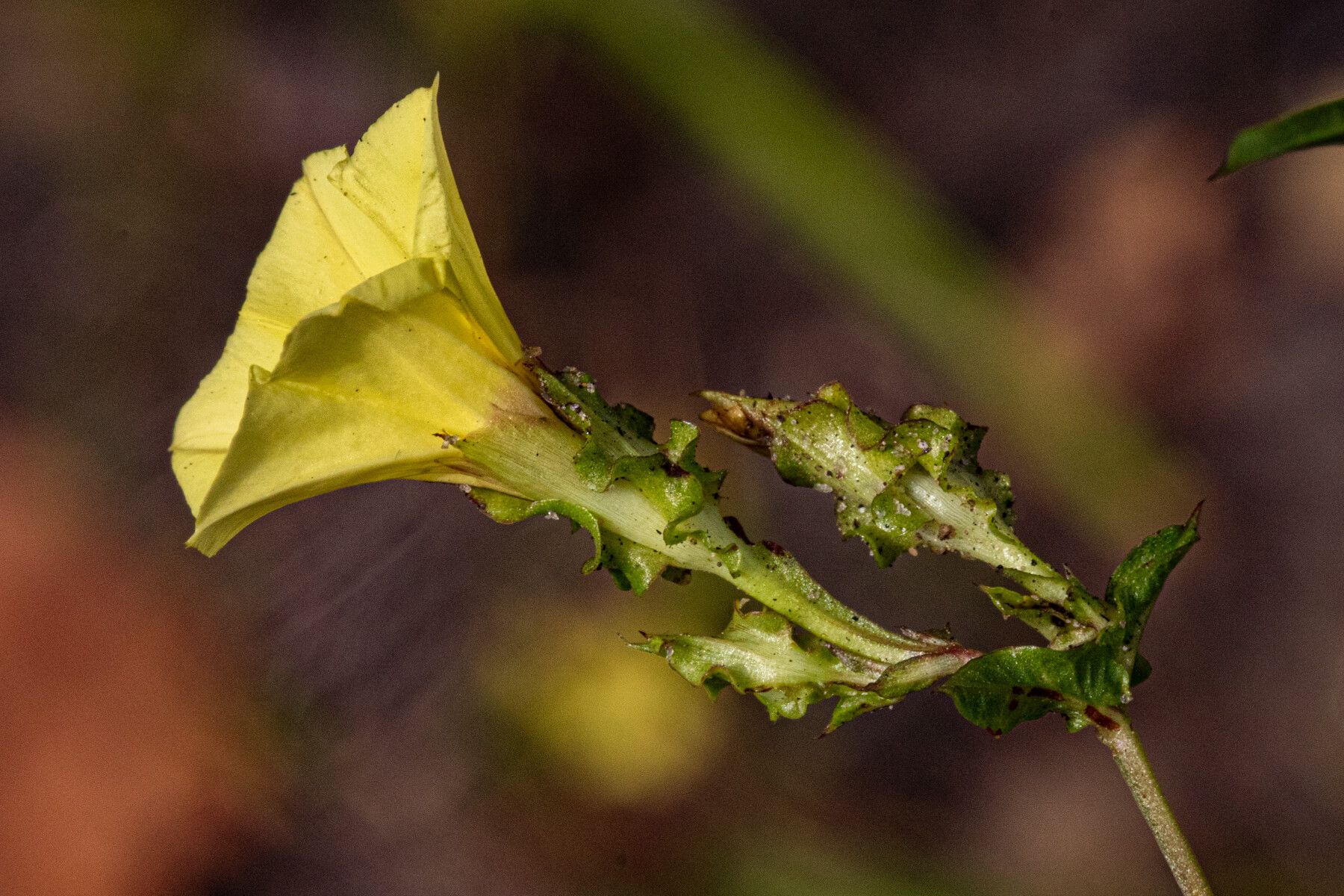
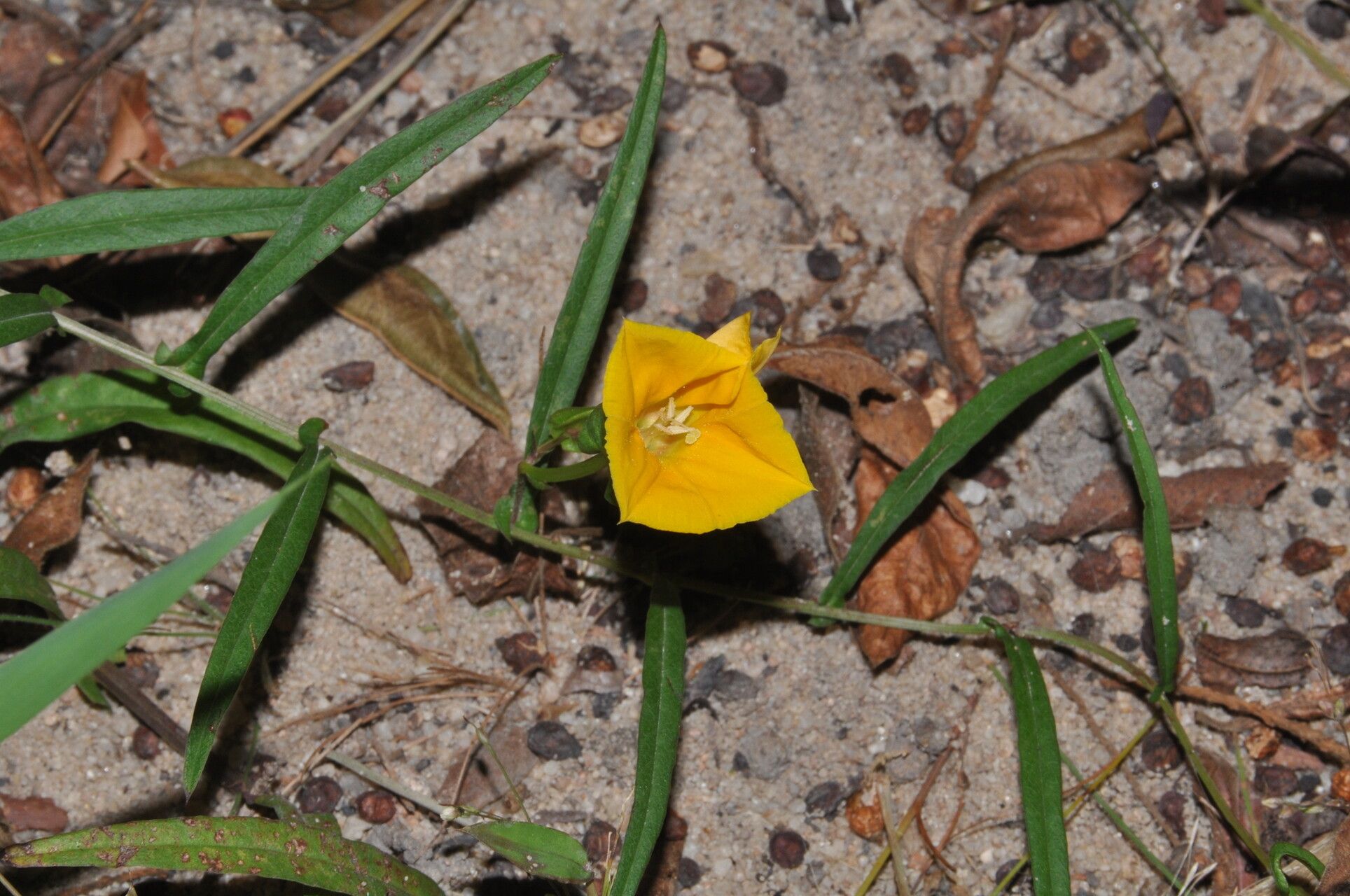
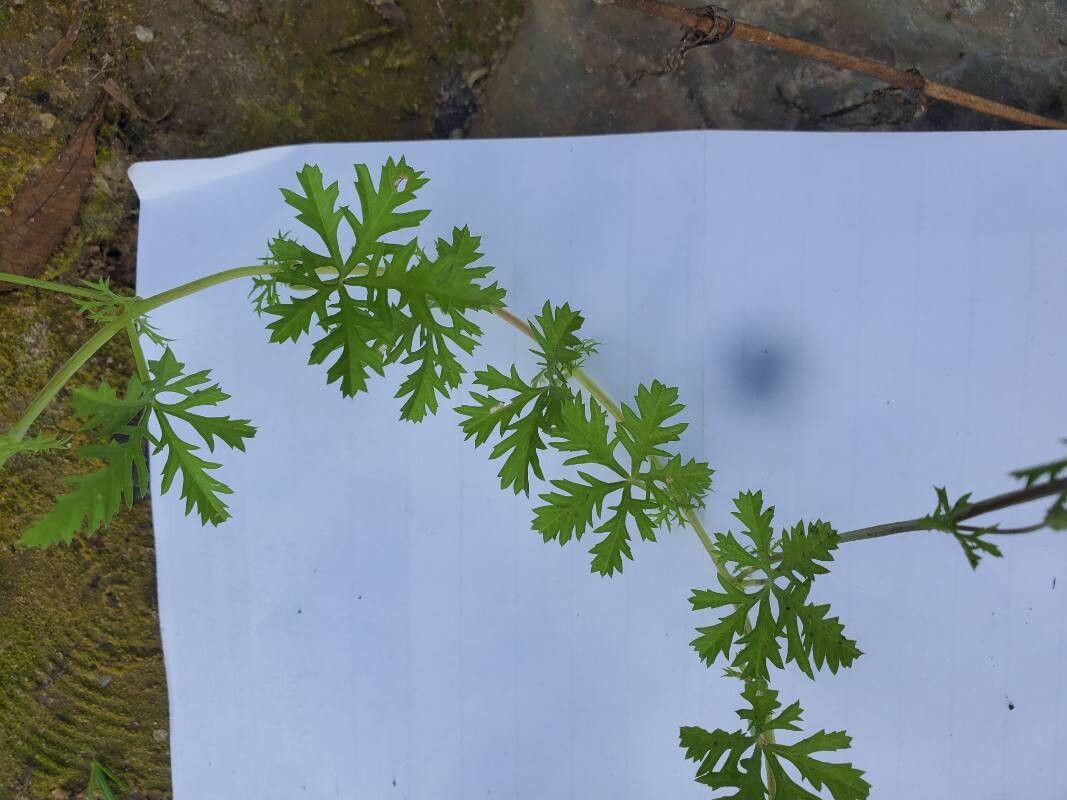
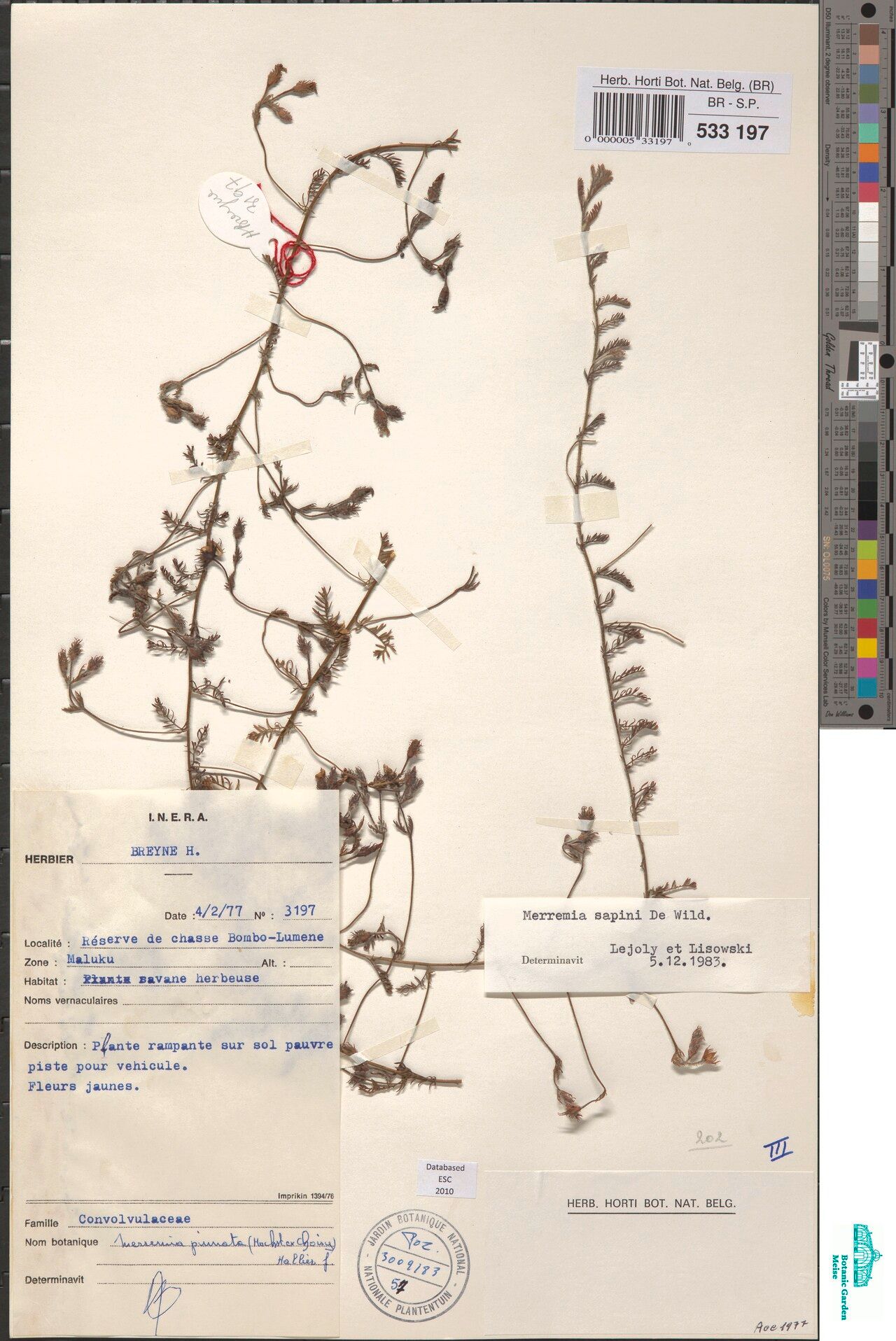
Xenostegia tridentata, commonly known as the Narrowleaf morning glory, is a perennial creeper belonging to the family Convolvulaceae. It is widely distributed across tropical and subtropical regions of Africa, Asia, and Australia, and has also naturalized in parts of the Americas. The plant is characterized by its narrow, arrow-shaped leaves with toothed bases and small funnel-shaped yellow to white flowers. It typically grows in sandy soils, coastal areas, wastelands, and cultivated fields, flowering throughout the year.
African morningvine shows strong disease resistance and is generally not susceptible to illnesses. Nevertheless, it can be vulnerable to pests and diseases present in its environment; such infections are typically mild. Carewise, the plant needs moderate maintenance. Regular pruning is needed to keep a good appearance and support healthy growth. Applying fertilizer can also encourage flowering. African morningvine is appropriate for anyone with outdoor space, like a garden or patio, and does not demand extensive gardening experience. When grown indoors, it may need more attentive care.
How to keep Xenostegia Tridentata.
Light
African morningvine is a sun-loving perennial herbaceous plant that originates in open habitats and often thrives in meadows and grasslands. It prefers full sun but can also tolerate partial sun.
Water
The African morningvine thrives in areas with variable rainfall, preferring moderate moisture levels. It strikes a balance between drought tolerance and its need for hydration, typically requiring weekly watering. Primarily grown outdoors, it's crucial to monitor soil moisture during its active season to ensure optimal health.
Temperature
African morningvine originates from habitats with moderate to warm temperatures, between 59 and 89.6 °F (15 to 32 ℃). It performs best when temperatures stay consistent within that range. Seasonal adjustments are advisable in areas that undergo extreme temperature shifts.
Fertilizer
Early spring, when the African morningvine is coming out of dormancy and starting active growth, is the best time to fertilize it. Fertilization supplies essential nutrients for healthy growth. Although the African morningvine has relatively low fertilizer needs, annual feeding can improve its survival and encourage better, longer-lasting flowers.
Pruning
To maintain a healthy and vibrant African morningvine, it's best to prune it from early to late spring. This helps improve its shape and encourages growth. Start by removing any dead stems and thinning out excessive growth, which enhances air circulation. By pruning regularly, you can reduce the risk of diseases and pests, resulting in a lush and vibrant plant that is a perfect addition to any garden.
Botanical profile.
- Plant Type
- Herb, Vine
- Life Cycle
- Perennial
- Genus
- Xenostegia
- Family
- Convolvulaceae
- Hardiness Zone
- 8
- Mature Height
- 3.96 m
- Mature Spread
- 0.91 m to 2.13 m
- Leaf Color
- Green, Dark Green
- Leaf Type
- Evergreen
- Flower Color
- White, Yellow, Red
- Flower Size
- 0.76 cm
- Bloom Time
- Summer, Early fall, Mid fall
- Planting Time
- Spring, Summer, Autumn
- Harvest Time
- Late summer, Fall, Early winter
Other names.