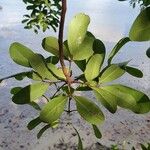
Xylocarpus granatum
Cannon ball tree · Apple mangrove · Cannonball mangrove · Cannonball-tree · Cedar mangrove
Description
Source: leafsnapXylocarpus granatum, commonly known as the cannonball mangrove, is a mangrove tree native to the Indo-Pacific region. It can grow up to 30 meters tall and produces distinctive round fruit that resembles cannonballs, hence the name. The tree features thick, sturdy wood that is highly resistant to water and insects. The leaves of Xylocarpus granatum are leathery and glossy green. Its small, white flowers, which bloom in clusters at the ends of branches, have five petals each. The fruit starts green but turns brown as it matures. The cannonball mangrove thrives in coastal areas with brackish water or tidal mudflats, where it can tolerate high salinity levels. It plays a crucial role in stabilizing coastal ecosystems by preventing shoreline erosion. In traditional medicine, various parts of Xylocarpus granatum have been used for their medicinal properties, such as treating skin diseases and relieving pain from rheumatism or arthritis. However, due to overexploitation for its valuable wood, which is used in boat building and furniture making, along with habitat loss caused by human activities such as deforestation, this species is now considered endangered according to the IUCN Red List criteria. Conservation efforts are essential for its survival.
Care Guide
💧 Water Every 7 days
The cannonball tree originates from tropical regions and is well-suited to environments with high humidity and moderate drought. It thrives when watered every 2-3 weeks, which helps to keep the soil moist. Its growth cycle is influenced by the rainy season, which dictates periods of activity and dormancy.
How should I water my Cannon ball tree?
Your Cannon ball tree is not too particular about how you water it. You can use any common watering tool, such as watering cans, hoses, or even cups. It's important to water the soil directly, making sure to evenly moisten all areas to provide water to the entire root system. Using filtered water is helpful because tap water may contain harmful particles. Additionally, using water that is at or slightly above room temperature is recommended as extremely hot or cold water can be shocking to the Cannon ball tree. However, this tree generally responds well to any type of water you give it.
What should I do if I give my Cannon ball tree too much or too little water?
When it comes to outdoor plants, especially newly planted ones or seedlings, they can easily suffer from lack of watering. It's important to make sure you are watering them enough for the first few months, especially when the tree is small or newly planted. Once the roots are established, the Cannon ball tree can usually rely on rain for its water needs. If you have a potted Cannon ball tree, be careful not to overwater it. Overwatering is a common problem in this case. If you accidentally overwater your plant, you should take immediate action. Stop watering the plant right away to minimize the negative effects of overwatering. Then, remove the tree from its pot and inspect the roots. If you don't see any signs of root rot, you can put the tree back in its container. However, if you do notice signs of root rot, you should trim away the affected roots and consider applying a fungicide to prevent further damage. Finally, repot the tree in well-draining soil. On the other hand, if your Cannon ball tree is underwatered, it's a relatively easy problem to fix. When a tree is underwatered, its leaves tend to droop, dry out, and fall off. Once you water the plant sufficiently, the leaves will quickly regain their fullness. It's important to adjust your watering frequency as soon as you notice signs of underwatering.
How many times should I pour water on my Cannon ball tree?
If your area doesn't receive enough rainfall, you may need to water your plants to ensure their growth. During the spring and fall, watering every two weeks is usually enough, but in the summer you will need to water more frequently. In the winter, when plants need less water, you can water them sparingly or not at all. Young or newly planted Cannon ball trees may require more frequent watering to help them establish and become drought tolerant. For potted plants, you can either follow a predetermined watering schedule or check the soil moisture. During the summer, it's best to water based on the moisture level of the top few inches of soil.
How much water does my Cannon ball tree require?
To properly water your Cannon ball tree, you don't always need to give it a large amount of water. If only a few inches of soil have dried out since your last watering, you can support its healthy growth by giving it about five to ten ounces of water each time. You can also determine the amount of water based on the moisture of the soil. Take note of how many inches of soil have dried out between waterings. To ensure the tree has enough moisture, water it enough to moisten all the dry soil layers since the last watering. If more than half of the soil is dry, you should consider giving more water than usual. In such cases, keep adding water until you see excess water draining from the pot's drainage holes. If your Cannon ball tree is planted in an area that receives plenty of rain outdoors, it may not require additional watering. When the tree is young or establishing itself, make sure it receives 1-2 inches of rain per week. As it grows and becomes established, it can survive solely on rainwater. Only in cases of hot weather and no rainfall for 2-3 weeks should you consider giving your Cannon ball tree a thorough watering to prevent stress.
How can I know if I'm giving enough water to my Cannon ball tree?
The Cannon ball tree often suffers from overwatering, which is a more common problem. There are clear signs to watch out for when overwatering occurs. Generally, if a Cannon ball tree is overwatered, its leaves will turn yellow and it may even shed some leaves. Additionally, overwatering can lead to the plant's overall structure shrinking and potentially cause root rot. On the other hand, if a Cannon ball tree is underwatered, it will start to wilt. The leaves may turn brown or become brittle to the touch. Whether signs of overwatering or underwatering are present, it is important to take action and restore the tree's health.
☀️ Light Full sun
Cannon ball tree is native to open habitats, such as sunny meadows and forest edges, where light is abundant. It does best in Full Sun but can also tolerate Partial Sun, adapting well to a range of sunlight conditions.
What are the sunlight requirements for a Cannon ball tree?
The Cannon ball tree thrives in environments that are well-lit, such as sunny meadows and forest edges, which provide it ample light. It flourishes in Full Sun, needing more than 6 hours of sunlight each day, but it can also tolerate Partial Sun, requiring about 3-6 hours of sunlight. It's crucial to observe how sunlight moves through your garden, choosing locations that offer a balanced mix of light and shade to ensure the optimal growth and happiness of your plants.
How can indoor Cannon ball trees receive adequate lighting?
Indoor Cannon ball trees require sufficient lighting, especially when natural sunlight is lacking, such as during winter or in less sunny spaces. Artificial lighting becomes essential, promoting healthier growth. LED lights are recommended due to their ability to provide specific wavelengths needed by plants. Full sun plants should have 30-50W/sq ft of artificial light, partial sun plants 20-30W/sq ft, and full shade plants 10-20W/sq ft. The light source should be placed 12-36 inches above the plant, mimicking natural sunlight as closely as possible, and most plants will benefit from 8-12 hours of light daily.
What are the signs of light deficiency in Cannon ball trees?
Light deficiency in Cannon ball trees can lead to several symptoms. New leaves may grow smaller, and the plant might exhibit leggy or sparse growth, indicating insufficient light. Early leaf drop is a sign the plant is conserving resources, and a halt in new growth suggests survival mode due to poor lighting conditions. Pale or irregularly colored new leaves and conditions such as chlorosis, where leaves turn yellow due to lack of chlorophyll, are further indicators. Sunscald, leaf curling, wilting, and leaf scorching are symptoms caused by excessive sunlight exposure, indicating an imbalance in the plant's light requirements.
How can you address lighting issues for Cannon ball trees?
To ensure Cannon ball trees receive optimal light, gradually move them to sunnier locations each week, aiming for at least 6 hours of direct sunlight daily. Use south-facing windows and keep curtains open during the day for indoor plants. For larger or non-movable plants, consider artificial lighting, keeping a desk or ceiling lamp on for at least 8 hours daily, or invest in professional grow lights. Outdoors, it's crucial to avoid sudden changes in light intensity to prevent sunburn. If trees block sunlight, pruning branches or relocating smaller plants to sunnier spots with good drainage can be beneficial, especially during the plant's dormant period, usually late winter or early spring.
🌡️ Temperature 20–37.8°C
The cannon ball tree comes from tropical areas, where the climate is usually warm and humid. Therefore it is well adapted to high heat and humidity. It does not tolerate sudden temperature shifts and prefers a consistent temperature, so avoiding indoor temperature fluctuations is important. It generally cannot withstand cold and needs warmer conditions to grow. If the ambient temperature falls too low, growth may stop or the plant could die.
💨 Humidity
🪴 Soil 6-7
🌱 Fertilizer
The ideal time to fertilize a Cannon ball tree is in early spring, when it breaks dormancy. This encourages overall growth and flower development. Fertilization improves the foliage, stems, and branches, while encouraging flowers that are large, vivid, and longer-lasting. It helps transfer nutrients from the roots to the blooms and enhances the plant’s health and resistance to disease.
🪴 Pot & Repot
✂️ Pruning
To care for a cannonball tree, prune it from early to late winter by removing dead branches and thinning out any crowded ones. Light and regular trimming helps strengthen the tree's structure and vitality, while also reducing the risk of disease. Be sure to consult your local horticultural guidelines for techniques that are specific to your climate.
🌿 Propagating
🐛 Diseases & pets
☠️ Toxicity
Characteristics
- Plant Type
- Tree, Shrub
- Life Cycle
- Perennial
- Genus
- Xylocarpus
- Family
- Meliaceae
- Hardiness Zone
- 10-12
- Mature Height
- 11.89 m
- Mature Spread
- 4.88 m to 10.06 m
- Leaf Color
- Dark Green
- Leaf Type
- Evergreen
- Flower Color
- White
- Flower Size
- 0.76 cm
- Bloom Time
- Late spring, Summer
- Planting Time
- Spring, Summer, Autumn
- Harvest Time
- Late summer, Fall
- Native Area
- Sri Lanka, Somalia, India, Malaysia, Philippines, Madagascar, Bangladesh, Fiji, Kenya, Brunei, Tanzania, China, Indonesia, Cambodia, Vietnam, Mozambique, Myanmar, Singapore, Thailand