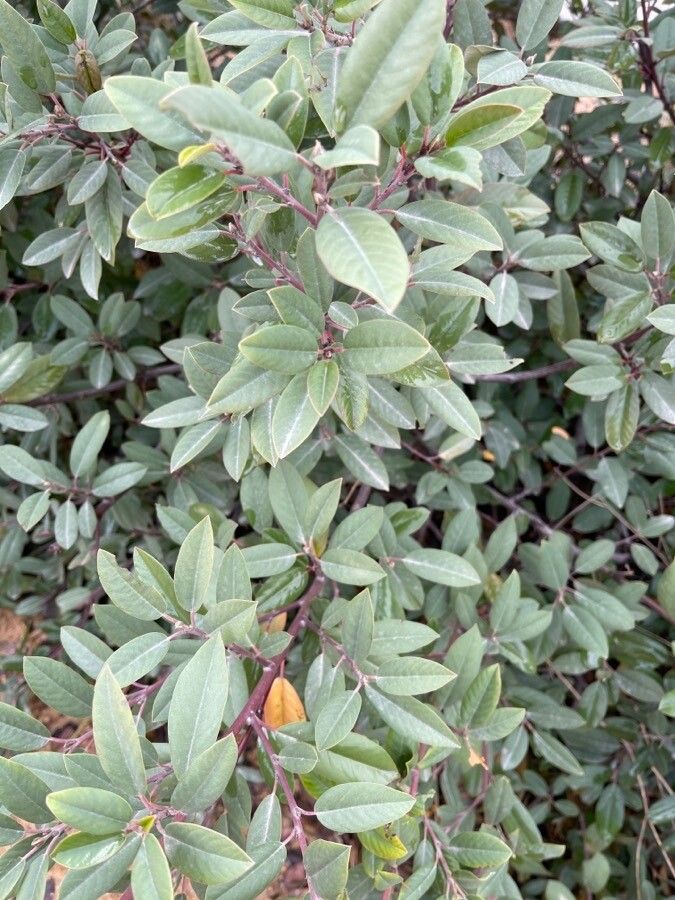
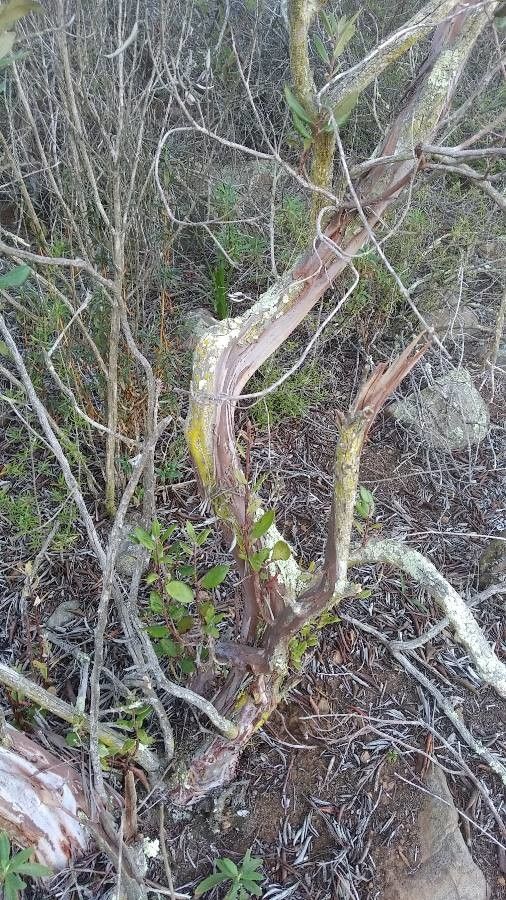
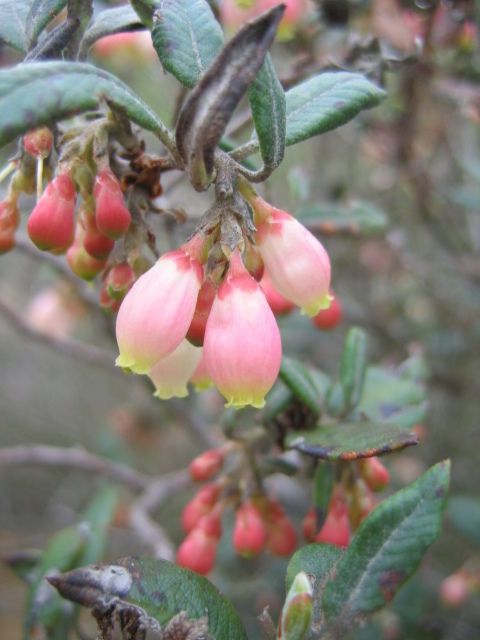
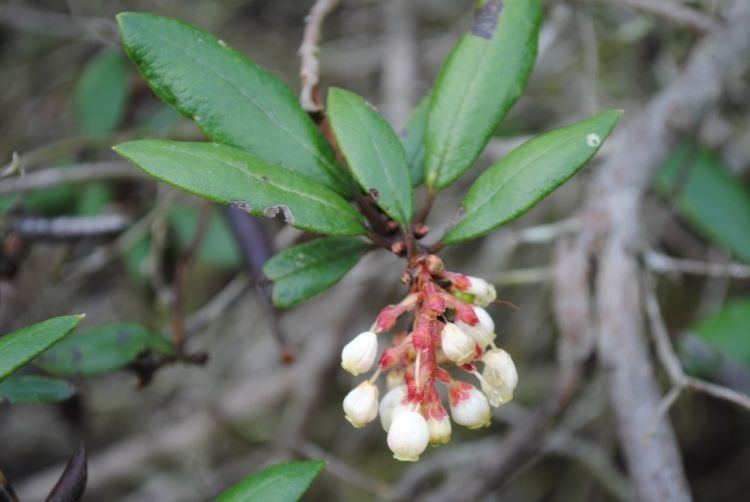
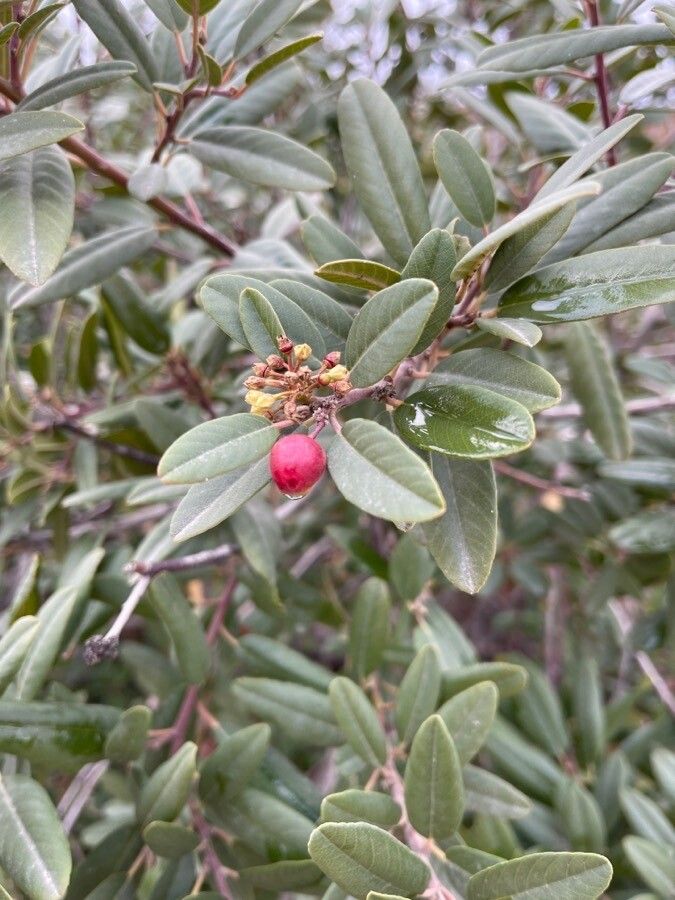
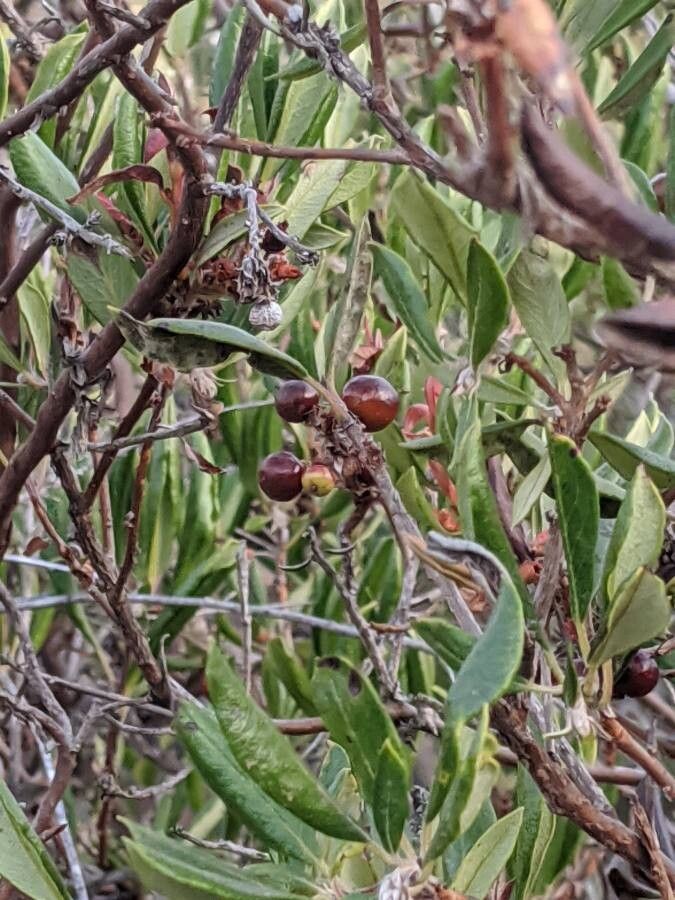
Xylococcus is a monotypic genus of flowering plants in the heather family which contains the single species Xylococcus bicolor, commonly known as the mission manzanita. It is a burl-forming, evergreen shrub to tree with leathery leaves and smooth dark reddish bark. From December to February, white to pink urn-shaped flowers adorn the foliage, often attracting hummingbird pollinators. It is native to southern California and the Baja California Peninsula, south to the Sierra de la Giganta. There is growing concern over the future of this plant, referred to as the "queen of the elfin forest, " as it may possibly lose up to 88% of its habitat and its wild seedlings are failing to survive more than a full year.Known to and utilized by the indigenous peoples for centuries, this species was first described to Western science by Thomas Nuttall, who had found it on his journey to California. Nuttall named it Xylococcus, which is derived from the Greek word for "wood berry." Later botanists lumped this species into the true manzanitas (Arctostaphylos), but it has distinct features, such as the flowers and fruit, that support its generic placement. In light of its struggle in the wild, this plant is available from specialty nurseries focusing on California native plants, making it a distinctive and hardy shrub in the garden.
Mission manzanita has strong resistance to disease and is usually not susceptible to illnesses. In terms of care, this plant is fairly low-maintenance. When planted outdoors it needs very little watering, and larger specimens generally do not require pruning. However, smaller plants should be pruned after they have finished blooming. Mission manzanitat is appropriate for anyone with an outdoor area, such as a garden or a deck, and does not demand much prior care experience.
How to keep Xylococcus Bicolor.
Light
Mission manzanita comes from open environments, such as sunny meadows and forest edges, which offer abundant light. It flourishes in Full Sun but can also tolerate Partial Sun, adapting well to a range of sunlight conditions.
Temperature
Mission manzanita is native to regions where temperatures typically range from 59 to 95 °F (15 to 35 ℃). The plant prefers moderate warmth and might not survive in extreme cold or extreme heat.
Fertilizer
Timing is important when fertilizing Mission manzanita. Apply fertilizer in early spring and then monthly until early summer. Fertilizer aids in producing attractive blooms and supplies energy during both dormant and active growth phases.
Botanical profile.
- Plant Type
- Shrub
- Life Cycle
- Perennial
- Genus
- Xylococcus
- Family
- Ericaceae
- Hardiness Zone
- 7-10
- Mature Height
- 4.88 m
- Mature Spread
- 3.05 m
- Leaf Color
- Dark Green, Gray
- Leaf Type
- Evergreen
- Flower Color
- Pink, White
- Flower Size
- 0.76 cm to 1.02 cm
- Bloom Time
- Late winter, Early spring, Mid spring
- Planting Time
- Spring
- Harvest Time
- Summer, Early fall
- Native Area
- Mexico
Other names.