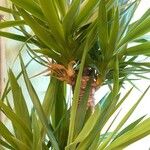
Yucca elephantipes
Giant yucca · Blue-stem yucca · Bluestem yucca · Elephant yucca · Spineless yucca
Description
Source: leafsnapYucca elephantipes, commonly known as the Spineless Yucca or Giant Yucca, is a popular ornamental plant native to Central America and Mexico. This slow-growing succulent can reach heights of up to 30 feet and widths of up to 15 feet. It features a thick trunk topped with sword-shaped leaves that grow up to 3 feet long and are arranged in rosettes. During the summer months, the Spineless Yucca produces white or cream-colored flowers on tall spikes. These blooms are followed by fleshy fruits containing black seeds. This plant is easy to care for, as it tolerates drought conditions and low light levels. It is an excellent choice for indoor environments. The Spineless Yucca prefers well-draining soil and requires only occasional watering during dry periods. In addition to its ornamental appeal in gardens and landscapes, the Spineless Yucca has been used for medicinal purposes by indigenous people of Central America. Its roots are utilized to treat various ailments, such as arthritis and skin conditions. Overall, this striking plant adds a unique touch of tropical flair wherever it is planted. Its low-maintenance nature makes it perfect for those seeking an easy-to-care-for yet visually stunning addition to their home or garden.
🌳 Beyond its ornamental value, spineless yucca has long been employed for a variety of uses. Its tough, fibrous leaves provide excellent material for making ropes and weaving baskets. In local cultures, the plant’s sap was commonly used as a natural shampoo, cleansing hair while giving it shine and strength. This tradition highlights spineless yucca’s untapped potential in personal care industries, especially as consumers seek more natural products.
🎭 Eliminates bad luck
Care Guide
💧 Water Every 7 days
Your Stick yucca will need frequent watering in hot, dry climates and less in cooler zones. Allow the ground to dry out between waterings before soaking thoroughly. They are also drought-tolerant and don’t appreciate being waterlogged.
☀️ Light Partial sun
Spineless yucca originates from environments with varying sun exposure and prefers moderate light, though it can tolerate both high and low light levels. Its light requirements change little as it grows. Extended periods of low light can lead to sparse foliage, while excessive light may cause leaf burn.
🌡️ Temperature 20–37.8°C
Spineless yucca comes from warm regions and can tolerate temperatures of 20 to 38℃ (68 to 100℉). In winter it prefers cooler conditions of 10 to 15℃ (50 to 59℉) and should be kept safe from frost. In summer it may benefit from being put outdoors in partial shade to prevent scorching during very high temperatures.
💨 Humidity
🪴 Soil 6-7
🌱 Fertilizer
Fertilization is essential for Spineless yucca care. Regular feeding during the growing season preserves the energy required for its showy leaves and supports overall growth. Failing to fertilize can lead to unhealthy leaves, reduced ornamental appeal, and stunted or weak growth that is prone to breaking.
🪴 Pot & Repot 2-3 years
When repotting Spineless yucca, choose a pot 1–2 inches (2.5–5.1 cm) larger with ample drainage. Use a well-draining potting mix. Repot in spring or fall, ensuring the root ball is slightly lower than the rim of the flower pot. Water thoroughly after repotting and place in a warm spot with indirect sunlight.
✂️ Pruning
Stick yucca is quite a low-maintenance plant and does well on its own with little interference. You can trim dead or sagging leaves to maintain a healthy and neat plant. After blooming ends, you can prune the spent flowers.
🌿 Propagating
🐛 Diseases & pets
☠️ Toxicity
The Stick yucca is potentially toxic to people, dogs, and cats. It contains steroidal saponins that can induce vomiting, nausea, weakness, drooling, and other moderate toxicity symptoms. Keep this plant away from curious children and pets to minimize the risk of harm.
Characteristics
- Plant Type
- Shrub, Tree
- Life Cycle
- Perennial
- Genus
- Yucca
- Family
- Asparagaceae
- Hardiness Zone
- 9-12
- Mature Height
- 6.1 m
- Mature Spread
- 4.57 m to 7.62 m
- Leaf Color
- Green, Blue
- Leaf Type
- Evergreen
- Flower Color
- White
- Flower Size
- 2.54 cm to 5.08 cm
- Bloom Time
- Mid summer
- Planting Time
- Spring, Summer, Autumn, Winter
- Harvest Time
- Mid summer, Late summer, Fall
- Native Area
- Mexico