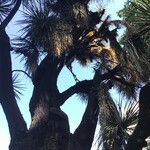
Yucca filifera
Palma China yucca · St Peter's palm · Tree yucca
Description
Source: leafsnapYucca filifera, commonly known as the Mexican weeping yucca, is a large succulent plant native to Mexico. This slow-growing plant can reach heights of up to 30 feet and spread to widths of about 15 feet. It features a single trunk adorned with long, sword-shaped leaves that grow up to 4 feet in length and about an inch in width. The leaves are green with white margins and have thread-like filaments along their edges. During the summer, Yucca filifera produces tall spikes of creamy white, bell-shaped flowers that can grow up to 8 feet high. These fragrant flowers attract pollinators like moths. This plant is drought-tolerant and thrives in well-draining soil with full sun exposure. Due to its unique appearance and low maintenance requirements, it is commonly used as an ornamental plant in landscaping. Historically, the sap of Yucca filifera has been used by indigenous people for its anti-inflammatory properties. Additionally, the fibers from its leaves have been traditionally used to make ropes, baskets, mats, sandals, and other items. Overall, Yucca filifera's unique appearance makes it an attractive addition to both indoor and outdoor spaces. Its low maintenance requirements make it perfect for those who want beautiful plants without spending too much effort or time on upkeep.
Care Guide
💧 Water Every 7 days
St. Peter's palm flourishes in dry conditions and needs only occasional watering. During the fall and winter, water it every 2 to 3 weeks, and in the spring and summer, water it weekly. Be sure to let the soil dry out before each watering. If the plant is outdoors in direct sunlight, you may need to water it more frequently. Over-watering can cause the tips of the leaves to turn brown and lead to root rot, whereas under-watering results in brown, wilted leaves.
☀️ Light Full sun
Native to dry areas, St. Peter's palm does best in full sun, as its natural habitat has intense sunlight and little shade. It can also tolerate partial sun, providing some flexibility in its growth.
What are the sunlight requirements for St. Peter's Palm?
St. Peter's Palm, also known scientifically as Yucca filifera, thrives in various lighting conditions. For optimal growth, it requires full sun, which is defined as receiving above 6 hours of sunlight daily. However, it can also flourish in partial sun, meaning it should get about 3-6 hours of sunlight each day. It's important to observe the way sunlight moves through your garden to find spots that offer the right balance of light and shade to ensure your St. Peter's Palm stays healthy and happy.
🌡️ Temperature 15–37.8°C
St. Peter's palm does best in warm conditions and needs elevated temperatures during the growing season to encourage growth and metabolic activity. It prefers plenty of sunlight, appropriate moisture, and good air circulation. It can be harmed by excessively low temperatures and by too much watering. It's important to maintain a balance and avoid very high temperatures or excessively dry conditions as well.
💨 Humidity
🪴 Soil 0-0
🌱 Fertilizer
St. Peter's palm only requires light applications of fertilizer 1-2 times a year during the growing season. Do not fertilize in winter or in summer when the plant is dormant. Cut back on fertilizer for repotted plants and wait a couple of months after repotting before applying any. Fertilizing helps maintain healthy growth and encourages blooms.
🪴 Pot & Repot
✂️ Pruning
St. Peter's palm is characterized by its sword-like leaves and sturdy trunk. To promote its growth, it's best to prune it in early spring. During this time, remove any dead leaves and crowded stems, making sure to use sharp tools for clean cuts. Pruning not only encourages new growth but also improves airflow and reduces pest problems. This results in a healthier and more attractive plant.
🌿 Propagating
🐛 Diseases & pets
☠️ Toxicity
Characteristics
- Plant Type
- Tree, Succulent
- Life Cycle
- Perennial
- Genus
- Yucca
- Family
- Asparagaceae
- Hardiness Zone
- 8-11
- Mature Height
- 9.14 m
- Mature Spread
- 1.52 m
- Leaf Color
- Green
- Leaf Type
- Evergreen
- Flower Color
- White
- Flower Size
- 3.05 cm to 4.06 cm
- Bloom Time
- Late spring, Early summer, Mid summer
- Planting Time
- Spring, Summer
- Harvest Time
- Mid summer, Late summer, Early fall
- Native Area
- Mexico