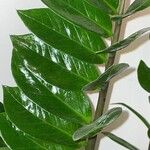
Zamioculcas zamiifolia
ZZ Plant · Zanzibar Gem · Zamia · Palma Zamioculca (México) · Black Raven
Description
Source: leafsnapZamioculcas zamiifolia, commonly known as the ZZ plant, is a popular houseplant native to eastern Africa. It belongs to the Araceae family and is characterized by its glossy green leaves that grow in a rosette pattern. The ZZ plant can reach up to 3 feet in height and width, making it an ideal choice for indoor areas with limited space. One of the most notable features of the ZZ plant is its ability to thrive in low light conditions. It can endure low light levels for extended periods without showing any signs of stress or damage. Additionally, it requires minimal watering and can survive long periods without water, thanks to its succulent-like stems. The ZZ plant is also known for its air-purifying properties, as it helps remove toxins such as benzene and formaldehyde from indoor air. In summary, Zamioculcas zamiifolia, or the ZZ plant, is an excellent choice for those seeking a low-maintenance houseplant that adds aesthetic value while enhancing indoor air quality.
💡 This perennial evergreen herb is a rare foliage plant with underground tubers, native to tropical Africa. Its compound leaves have dark green, thick-textured oval leaflets that appear to have a sparkling glaze when exposed to sunlight. The plant has a clean and beautiful appearance and is easy to care for, as it is resistant to pests and drought-tolerant. It can survive for up to two weeks without any attention, making it an excellent choice for indoor spaces. The lush green leaves can also help to invigorate and refresh the people around them.
🌳 Frequently admired for its appearance, the zZ plant stands out for its excellent air-purifying ability. Its hardy nature allows it to remove harmful compounds from the air, such as xylene and benzene. A NASA study lists it among the top air-cleaning plants. It is also valued in feng shui for bringing wealth. Its unexplored potential lies in its latex, which may be useful for rubber production pending further research.
🎭 Drawing in prosperity, resilience, stability, longevity
Care Guide
💧 Water Every 14 days
The Zanzibar Gem is a perfect choice for those seeking a low-maintenance plant. It thrives in low-water conditions and only needs to be watered every three weeks, allowing the soil to dry out between sessions. This plant adapts well to indoor environments and can tolerate various light conditions. To mimic its natural humidity and improve its well-being, occasional misting is beneficial.
When Should I Water My Zanzibar Gem?
Determining the right time to water your Zanzibar Gem (Zamioculcas zamiifolia) involves monitoring for specific signs. Check the soil moisture by inserting your finger up to the second knuckle; if it feels dry, it's time to water. Leaf drooping can indicate water stress, whereas leaf yellowing suggests underwatering. Wilting signifies a lack of water to maintain plant turgidity. Assessing the pot's weight is another method; a lighter pot indicates dry soil, needing water. It's crucial to avoid early watering to prevent root diseases and late watering to avoid stunted growth or plant death. Proper water management promotes health, growth, and extends the lifespan of the Zanzibar Gem.
How Should I Water My Zanzibar Gem?
Watering a Zanzibar Gem correctly involves considering its specific needs and sensitivities. It prefers being slightly underwatered than overwatered to avoid root rot. Bottom-watering by placing the pot in a tray of water allows for moisture absorption directly to the roots, preventing over-saturation. Use a watering can with a narrow spout to direct water to the base, avoiding foliage which could lead to leaf spots due to excessive moisture. Regular watering is crucial, adjusting based on soil moisture rather than a fixed schedule. Ensure the plant has well-draining soil and pot for proper drainage, and consider environmental factors like light, temperature, and humidity which can influence watering needs.
How Much Water Does Zanzibar Gem Really Need?
The water requirements of Zanzibar Gem depend on various factors, including pot size and root depth. Since Zanzibar Gem is drought-tolerant and has a shallow root system, it should be watered when the top inch of the soil feels dry. Optimal hydration can be noted by dark green and shiny leaves, with soil that is moist but not waterlogged. Overwatering may cause root rot, whereas underwatering can result in wilting and stunted growth. Achieving the right balance is vital for healthy growth. Additionally, regular misting can increase humidity, and using a well-draining soil mix with proper drainage holes helps prevent waterlogging.
What Kind of Water is Best for Zanzibar Gem?
The Zanzibar Gem thrives best with water free from impurities and harsh chemicals. Distilled water is ideal due to its purity. Rainwater is also excellent, being natural and chemical-free. Filtered water is acceptable if it removes harmful contaminants. Tap water can be used but may contain chlorine and fluoride, which the plant is sensitive to, potentially causing leaf burn and stress. It's recommended to let tap water sit for 24 hours to evaporate chlorine or use a filtration system for fluoride. The plant prefers water at room temperature (around 68-72°F or 20-22°C) to prevent shock.
How Do Zanzibar Gem's Watering Needs Change with the Seasons?
The watering needs of Zanzibar Gem shift with the changing seasons. In spring, during its active growth phase, maintain consistently moist soil. Reduce watering frequency in summer due to natural dormancy, allowing the soil to dry slightly between watering sessions. As it prepares for winter dormancy in autumn, decrease frequency further but keep soil lightly moist. In winter, water sparingly, allowing the topsoil to dry out more between watering. These adjustments help accommodate the plant's seasonal growth cycles and dormancy periods.
☀️ Light Partial sun
The ZZ plant performs well in locations that receive a moderate amount of sunlight, though it tolerates shadier environments. It is commonly found in spots with filtered light. Throughout its development, it requires steady but sheltered sunlight. Too much sun can scorch the leaves, while insufficient light may result in stunted growth.
What is the ideal sunlight requirement for Zanzibar gem plants?
Zanzibar gems thrive best in conditions that offer a fair amount of sunlight exposure, but they are also quite tolerant of more shaded locations. They ideally need filtered light to mimic their natural habitat. For healthy growth, a constant, yet sheltered sunlight exposure is required. The plant needs about 3-6 hours of sunlight daily, classified as partial sun. However, it can also survive in full shade, which is less than 3 hours of sunlight per day. It's crucial to monitor the sunlight's movement through your garden to ensure plants get the perfect balance of light and shade.
How can I use artificial lighting for Zanzibar gem when natural sunlight is insufficient?
Indoor Zanzibar gem plants require adequate lighting for optimal growth, which can be achieved using artificial lights when natural sunlight falls short. This is especially useful during winter or in less sunny indoor spaces. For indoor plants, selecting the right type of artificial light is crucial, with LED lights being a popular choice due to their capacity to provide specific wavelengths needed for plant growth. The required intensity of artificial light varies: full sun plants need 30-50W/sq ft, partial sun plants 20-30W/sq ft, and full shade plants 10-20W/sq ft. The light source should be positioned 12-36 inches above the plant, simulating the natural sunlight. Most plants will thrive with 8-12 hours of artificial light per day.
What are the signs of inadequate lighting for Zanzibar gems?
Inadequate light can cause several growth issues for Zanzibar gems, including leggy or sparse growth, where the spaces between leaves or stems elongate, giving the plant a thin, stretched appearance. This condition makes the plant appear sparse and weak, potentially leading to breakage. Insufficient sunlight can also result in slower or halted growth, lighter-colored new leaves indicating a lack of chlorophyll, chlorosis where leaves lose their green hue and turn yellow, sunscald characterized by pale, bleached, or necrotic spots on the plant, leaf curling as a defense mechanism against excessive sunlight, wilting from water loss through transpiration, and leaf scorching seen as brown, dry edges on the leaves.
What solutions can help Zanzibar gems with insufficient sunlight?
To address insufficient sunlight for Zanzibar gems, gradually moving them to sunnier spots each week until they receive the optimal 3-6 hours of direct sunlight daily can help plants adapt to light changes. For large or immovable indoor plants, supplementing with artificial light, such as keeping a desk or ceiling lamp on for at least 8 hours daily or investing in professional plant grow lights, is recommended. Outdoor plants should be moved to better sunlight spots gradually to avoid sunburn. If sunlight is obstructed, consider reducing obstructions like pruning branches or transplanting smaller plants to sunnier locations with good drainage during their dormant period. Note, however, that parts of the plant affected by insufficient sunlight may not recover, but new growth should be healthy post-adjustment.
🌡️ Temperature 20–37.8°C
The zZ plant originates from hot tropical areas and can tolerate temperatures between 20 and 38℃ (68 to 100.4℉). In winter, it is best kept in a warmer location with temperatures of 18 to 24℃ (64.4 to 75.2℉), and it should be kept away from cold drafts.
What is the native environment of the Zanzibar gem?
The Zanzibar gem, also known as Zamioculcas zamiifolia, is native to hot tropical regions. It flourishes in temperatures ranging from 20 to 38°C (68 to 100.4°F). Given its preference for warmth, the plant shows great tolerance for heat, making it ideal for environments that replicate its native tropical conditions.
How should I care for my Zanzibar gem during winter?
During the colder months, it is crucial to keep your Zanzibar gem in a warmer spot, ideally with temperatures ranging between 18 to 24°C (64.4 to 75.2°F). The plant should be protected from cold drafts by not placing it near such areas. Additionally, moving outdoor plants indoors to a brightly lit window, while ensuring they're not too close to heaters, will help maintain the optimal growth temperature and prevent damage from cold temperatures.
What are the symptoms of exposure to low temperature for a Zanzibar gem?
When exposed to temperatures lower than its preferred range, the Zanzibar gem's leaves may lighten in color, indicating stress due to cold. Frost damage can further cause the leaves to turn brown or black, leading to wilting and drooping. This signifies that the plant is in a non-ideal environment, warranting immediate action to relocate the plant to a warmer and more stable environment.
How can I manage frost damage or cold stress in my Zanzibar gem?
In the event of frost damage or any signs of cold stress, such as discoloration or wilting of the leaves, it's advisable to trim off the damaged parts of the Zanzibar gem. The plant should then be moved indoors to a warm setting away from cold drafts. A suitable spot near a south-facing window will ensure the plant receives ample sunlight without the adverse effects of heaters or air conditioning vents, which could increase air dryness and further stress the plant.
What should I do if my Zanzibar gem is exposed to high temperatures?
During summer, it's important to monitor the temperature closely and ensure it remains below the plant's maximum tolerance level to prevent the leaves from lightening or the plant from getting sunburned. If the plant experiences stress due to excessive heat, trim away the sunburned and dried parts, and relocate it to a shaded area, especially during the peak sun hours. Regularly watering the plant in the morning and evening will help keep the soil adequately moist, providing relief from high temperatures.
💨 Humidity dry (<40%)
This plant prefers dry conditions, so don't mist it. However, watering it less often can also thrive in higher humidity.
🪴 Soil 6-7
🌱 Fertilizer
The ZZ plant needs the most fertilizer during its active growth period, which occurs mainly in spring, summer, and early fall. Fertilizing supplies essential nutrients that the soil may lack, supporting healthy root and stem development and the attractive foliage that is a key characteristic of this plant.
Why should I add fertilizer to my Zanzibar gem plant?
Plants, including the Zanzibar gem, need soil nutrients to grow. Unfortunately, the soil they're in might not have all the necessary nutrients. This is where fertilization and soil amendments come in to make sure the plants in your garden have both the basic nutrients they need and the specific ones they require. In the case of the Zanzibar gem, it needs fertilizer to promote healthy root and stem development during the growing season. Fertilization also helps the plant produce fantastic-looking leaves, which are its main attraction.
When should I fertilize my Zanzibar gem plant?
A Zanzibar gem requires the most fertilizer when it is actively growing, which is mainly during spring, summer, and early fall. Once winter ends, you should feed it every two to four weeks. Keep this frequency until fall, when you can gradually decrease the amount of fertilizer. Finally, stop feeding it altogether in preparation for winter, as the Zanzibar gem will have less active growth during this time.
When is it not a good idea to fertilize my Zanzibar gem plant?
For most of the year, which includes spring, summer, and most of fall, it is important to regularly feed your Zanzibar gem. However, there are a few exceptions to this rule. If you notice that your Zanzibar gem has already been given too much fertilizer or if you have applied fertilizer incorrectly, resulting in fertilizer burn or other issues, you should address these problems before resuming the regular feeding schedule. The only time you should refrain from fertilizing your Zanzibar gem is during winter. If you are growing this plant indoors in a cold winter environment, it will go into a dormant phase. Fertilizing during this dormant phase is unnecessary and detrimental to the plant's growth, as it is highly likely to cause fertilizer burn.
What kind of fertilizer does my Zanzibar gem plant need?
When fertilizing a Zanzibar gem, it is important to consider the specific blend of nutrients needed. An ideal fertilizer should have a balanced N-P-K ratio of 3-1-2, but a general-purpose fertilizer with an even nutrient blend can also be effective. Regardless of the type of fertilizer chosen, it is recommended to keep the ratio number for each nutrient at 10 or lower. There are two options for fertilizers: granular and liquid-based. If using a liquid-based fertilizer, it is generally advised to dilute the strength by half. While granular fertilizer has few drawbacks, it is often more practical to use liquid fertilizer, especially when watering the Zanzibar gem.
How do I give my Zanzibar gem plant the nutrients it needs?
When fertilizing your Zanzibar gem, it is important to follow the instructions provided with the fertilizer. In most cases, it is recommended to fertilize just before or while watering the soil. This helps to prevent the plant's roots from being burned by the fertilizer. If you are using a slow-release granular fertilizer, sprinkle it on the soil and then water immediately afterwards. For liquid-based fertilizers, dilute them with water before applying them to the soil, and then provide a little extra water. It is especially important to dilute your fertilizer by at least half in the spring and fall when the plant's growth is increasing or decreasing, respectively.
🪴 Pot & Repot Once a year
Repot a ZZ plant in spring or summer when it’s warm enough, choosing a slightly larger pot with good drainage. Water thoroughly after repotting and place it in bright, indirect light. Consider adding a moss pole for support as the plant grows.
✂️ Pruning
The Zanzibar gem boasts glossy, dark green leaves and requires minimal pruning. To keep the plant healthy, perform pruning in early spring. This helps to remove damaged leaves, enhance air circulation, and shape the plant. Be sure to use clean, sharp tools to promote robust foliage and prevent overcrowding, which contributes to the plant's long-term vitality.
🌿 Propagating
🐛 Diseases & pets
☠️ Toxicity
Characteristics
- Plant Type
- Herb
- Life Cycle
- Perennial
- Genus
- Zamioculcas
- Family
- Araceae
- Hardiness Zone
- 10-12
- Mature Height
- 30 cm to 61 cm
- Mature Spread
- 0.61 m to 1.22 m
- Leaf Color
- Green
- Leaf Type
- Evergreen
- Flower Color
- White, Green, Cream
- Flower Size
- 5.08 cm to 6.35 cm
- Bloom Time
- Early summer, Mid summer
- Planting Time
- Spring, Summer, Autumn, Winter
- Harvest Time
- Mid summer, Late summer
- Native Area
- Malawi, Mozambique, South Africa, Kenya, Tanzania, Zimbabwe