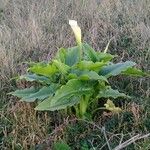
Zantedeschia aethiopica
Calla lily · Arum Lily · Altar-lily · Lily-of-the-Nile · Pig-lily
Description
Source: leafsnapZantedeschia aethiopica, commonly known as calla lily and arum lily, is a species of flowering plant in the family Araceae, native to southern Africa in Lesotho, South Africa, and Eswatini.
🌳 The striking calla lily is more than a common household ornamental; it also holds historical importance. In times of food shortage, its sturdy rhizome was used as a source of starch. Specifically, the calla palustris variant of the calla lily was important in Native American diets, as they processed its rootstocks into a calcium-enriched flour. It’s a clear demonstration of the plant’s practical value beyond mere decoration.
🎭 Brotherhood, sanctity, piety, innocence
Care Guide
💧 Water Every week
Calla lilies thrive in wetlands due to their preference for consistent hydration and high humidity, although they can tolerate moderate drought conditions. They should be watered once a week. Suitable for both indoor and outdoor growth, the calla lily's bulbous structure efficiently stores water, allowing it to adapt to different watering schedules while maintaining its vibrant flowers.
When Should I Water My Calla Lily?
Proper watering is crucial for the health and growth of calla lily, as it maintains its lush appearance and strengthens the root system, building resistance against diseases and pests. To determine when to water, check if the top 1-2 inches of soil are dry; this indicates it's time to water. Ensure the soil is moist but not waterlogged to prevent root rot. Observing the leaves can also provide clues; wilting suggests underwatering, while yellow or brown soft leaves suggest overwatering. Watering needs vary with growth stage—more frequent during active growth in spring and summer, less during dormant periods in autumn and winter. Be vigilant about pests and diseases, as they can indicate watering issues. Both overwatering and underwatering can severely impact the plant’s health, so adjust watering practices to avoid these risks.
How Should I Water My Calla Lily?
Watering your calla lily correctly involves specific techniques to meet its needs. Bottom-watering is recommended to adequately moisten the roots without saturating the soil surface, which minimizes the risk of fungal diseases. This method involves allowing the plant to absorb water from a tray or saucer. If using a watering can, opt for one with a narrow spout to direct water flow to the base and avoid wetting the foliage, which promotes root-level hydration without excess moisture on leaves.
How Much Water Does Calla Lily Really Need?
The amount of water your calla lily requires depends on several factors. Originating from marshy areas in South Africa, calla lilies prefer moist soil with good drainage to prevent waterlogging. The size of the plant and pot impacts watering needs; larger pots retain more moisture. Ensure the plant is watered thoroughly so the water reaches the bottom of the pot, but allow the soil to drain well. If the top inch of soil is dry, it's time to water. Regularly check the soil’s moisture level and look for signs of over or under watering, such as yellow leaves or shriveled leaves, respectively. Incorrect watering can reduce the plant's health and blooming ability.
What Kind of Water is Best for Calla Lily?
Calla lily thrives best with certain types of water due to its moderate water sensitivity. Distilled water is ideal because it's free from harmful contaminants and minerals. Rainwater is also excellent for its natural and chemical-free qualities. Filtered water is a suitable alternative, ensuring it removes contaminants effectively. If tap water is your only option, let it sit for 24 hours to allow chlorine to evaporate due to the plant's moderate chlorine sensitivity. Avoid water with high mineral content like sodium or boron, and use water at room temperature to avoid shocking the plant.
How Do Calla Lily's Watering Needs Change with the Seasons?
The watering needs of calla lily vary through the seasons. In spring, during its active growth, maintain even soil moisture with regular watering. Summer may usher in a natural dormancy, requiring reduced watering. In autumn, decrease watering frequency as the plant prepares for dormancy, keeping the soil lightly moist. Winter marks the calla lily’s dormant period; water sparingly and allow the topsoil to dry out between waterings. Adjust your watering practices based on seasonal changes to support the plant’s health throughout the year.
☀️ Light Partial sun
Calla lily prospers in locations with moderate sunlight yet can also tolerate conditions of full sun exposure or complete shade. Native to an environment with comparable lighting, calla lily's health and vigorous growth are strongly influenced by the amount of sunlight. Excessive exposure or insufficient sun can negatively affect its growth.
What are the sunlight requirements for Calla Lily?
Calla Lily thrives best in areas that receive moderate sunlight, approximately 3-6 hours of sunlight daily (partial sun), but it can also adapt to full sun (above 6 hours of sunlight) or full shade conditions. The right amount of sunlight is crucial for its health and growth, as both over-exposure and inadequate sunlight may adversely affect it. It's essential to watch how sunlight moves through your garden, selecting spots that offer a balance of light and shade suited to the plant's needs, to ensure its wellbeing.
Can artificial lighting be used for Calla Lily and how?
Yes, artificial lighting can be a vital solution for Calla Lily growth, especially when natural sunlight is insufficient, such as during winter or in less sunny spaces. Indoor plants benefit from the proper type of artificial light, such as LED lights, which can be customized to provide specific wavelengths needed for plant growth. Depending on the plant's sunlight requirements, the artificial light intensity should range from 10-20W/sq ft for full shade plants up to 30-50W/sq ft for full sun plants. The light source should be placed 12-36 inches above the plant to mimic natural sunlight, and plants typically require 8-12 hours of light per day.
What are the symptoms of improper lighting on Calla Lily?
Symptoms of improper lighting on Calla Lily can vary. Inadequate light can lead to slower or no new growth, as the plant enters survival mode, halting leaf production. This condition can also adversely affect future flowering and fruiting. Leaves may develop lighter colors or appear pale due to insufficient sunlight, indicating a lack of chlorophyll and essential nutrients. Excessive sunlight can cause chlorosis, where leaves lose their green color, sunscald, leading to damaged plant tissue, leaf curling as a defense mechanism against intense sunlight, wilting from increased water loss, and leaf scorching, characterized by brown, dry edges on leaves.
How can lighting issues be resolved for indoor and outdoor Calla Lily plants?
To resolve lighting issues for Calla Lily, gradually acclimate plants to the ideal lighting conditions. For indoor plants, shift them to increasingly sunnier spots each week until they receive the ideal 3-6 hours of sunlight daily or use artificial lighting, like desk lamps or professional grow lights, to supplement light for at least 8 hours daily. For outdoor plants, gradually move them to sunnier locations each week to avoid sudden light intensity changes that could cause sunburn. For obstructed outdoor areas, consider pruning nearby trees or transplanting smaller plants during their dormant period to sites with ample sunlight and good drainage. Note that parts of the plant already affected by inadequate sunlight may not recover, but new growth should be healthy after adjusting light exposure.
🌡️ Temperature 20–37.8°C
The temperature range favored by the calla lily is 68 to 100.4 ℉ (20 to 38 ℃). Native to South Africa, it performs best in temperatures of 60 to 75 ℉ (15.5 to 24 ℃), and prolonged exposure to temperatures below 32 ℉ (0 ℃) can cause frostbite. In winter, temperatures can be set to 50 to 60 ℉ (10 to 15.5 ℃) to encourage flowering.
What is the preferred temperature range for Calla Lily?
The Calla Lily, or Zantedeschia aethiopica, flourishes in a temperature range between 68 to 100.4°F (20 to 38°C), ideally thriving in temperatures from 60 to 75°F (15.5 to 24°C), which is reflective of its native South African climate. To promote flowering during winter, maintaining temperatures between 50 to 60°F (10 to 15.5°C) is beneficial. Being extremely heat-loving, Calla Lilies need protection from cold, with temperatures below 32°F (0°C) causing frostbite if exposed for too long. In autumn, it's recommended to move outdoor Calla Lilies indoors to a brightly-lit window, ensuring they are not too close to heaters, and maintaining temperatures above the minimum suitable growth temperature to ensure the plant's health.
How does low temperature affect Calla Lilies and what are the solutions?
Calla Lilies prefer warm temperatures and struggle in colder conditions. If the temperature falls below the minimum limit for growth, the leaves may become lighter in color, with frost damage leading to a gradual color change to brown or black, accompanied by wilting and drooping. To mitigate these issues, trim off frost-damaged parts and move the plant to a warm indoor environment, preferably near a south-facing window for ample sunlight, while ensuring the plant is not placed too close to heaters or air conditioning vents to avoid dry air.
How does high temperature affect Calla Lilies and what are the solutions?
During summer, it's crucial to keep Calla Lilies below the maximum suitable growth temperature. Exceeding this temperature can lighten the color of the leaves and increase susceptibility to sunburn. To address this, trim away sunburned and dried-up parts of the plant. Relocate the plant to a shaded area during the midday and afternoon sun, and water it in the morning and evening to maintain soil moisture.
💨 Humidity normal (40-60%)
This plant will thrive in moderate humidity, which is probably the level in your home. However, misting it a few times a week can be very beneficial. Make sure the room has good ventilation.
🪴 Soil 6-6
🌱 Fertilizer
Proper fertilization is essential for a Calla lily's health and appearance. Fertilize the Calla lily during summer, repeating the application monthly throughout the season. Nutrients supply the energy for growth and help maintain the plant's parts. Fertilizing boosts the Calla lily's flower display, ensuring the best blooms.
Why should I put fertilizer on my Calla lily?
Fertilizer and soil nutrients play a vital role in supporting the healthy growth of your Calla lily. Plants generally rely on the nutrients in the soil to create new plant material and maintain the health of their existing parts. For the Calla lily specifically, fertilization is necessary for achieving the most beautiful flowers. Since the flowers are the main attraction of this plant, most gardeners strive to optimize their appearance. Using fertilizer is a dependable method to help your Calla lily produce its finest blooms.
When should I fertilize my Calla lily?
The Calla lily goes through two main phases each year. The first phase is the dormant phase, which happens in winter and involves minimal new growth. The second phase is the active growth phase, which occurs in both spring and fall. During this phase, the Calla lily requires regular fertilization. It is recommended to start fertilizing in spring and continue once a month until summer. As fall arrives, you can gradually decrease the frequency of fertilization.
When is the best time to not put fertilizer on my Calla lily?
To support Calla lily growth, it is important to avoid root burn. During the active growing season in spring and summer, it is beneficial to provide extra nutrients. However, in the fall and winter when the plant enters its dormant stage, fertilization should be stopped.
What kind of plant food does my Calla Lily need?
To ensure optimal growth for your Calla lilies, it is recommended to use a fertilizer that contains a balanced mix of the three main plant nutrients, with slightly higher levels of phosphorus. Additionally, some gardeners prefer to enhance the soil for their Calla lilies by incorporating organic materials like compost, worm castings, and manure. There are various types of fertilizers available, and most of them are suitable for Calla lilies. However, the best options typically come in either liquid or powdered form. Regardless of the type you choose, it is important to dilute the fertilizer and apply it while watering your Calla lilies.
How can I give my Calla lily plant the nutrients it needs to grow?
To apply fertilizer to your Calla lily, start by finding a suitable fertilizer and learning the ideal fertilization schedule. Once you have done that, it's time to learn how to apply the fertilizer. The most reliable method is to mix your liquid fertilizer with water before using it. Different fertilizers may have specific instructions on how to use them, so it's best to follow the manufacturer's guidance. These instructions should also include how to properly dilute the fertilizer to avoid overfertilization. Mixing the fertilizer with water is a simple process, and after that, all you have to do is pour the mixture into the soil where your Calla lily is planted.
🪴 Pot & Repot Once a year
Repot the Calla lily in spring or summer once it's warm enough, choosing a pot that's slightly larger and has good drainage. After repotting, water thoroughly and place the plant in a bright spot with indirect light. Consider adding a moss pole to support it as it grows.
✂️ Pruning
Calla lilies have trumpet-shaped flowers and lush green leaves. To promote better growth, improve air circulation, and reduce the risk of disease, prune them in early to late spring by removing wilted blooms and yellowing leaves. By providing regular care, you can enjoy vibrant blooms throughout the season.
🌿 Propagating
🐛 Diseases & pets
☠️ Toxicity
Characteristics
- Plant Type
- Herb
- Life Cycle
- Perennial, Annual, Biennial
- Genus
- Zantedeschia
- Family
- Araceae
- Hardiness Zone
- 9-11
- Mature Height
- 40 cm to 91 cm
- Mature Spread
- 61 cm
- Leaf Color
- Green
- Leaf Type
- Semi-evergreen
- Flower Color
- White, Cream
- Flower Size
- 0.51 cm to 0.76 cm
- Bloom Time
- All year round
- Planting Time
- Autumn
- Harvest Time
- All year round
- Native Area
- Lesotho, Mozambique, South Africa, Eswatini, Greece