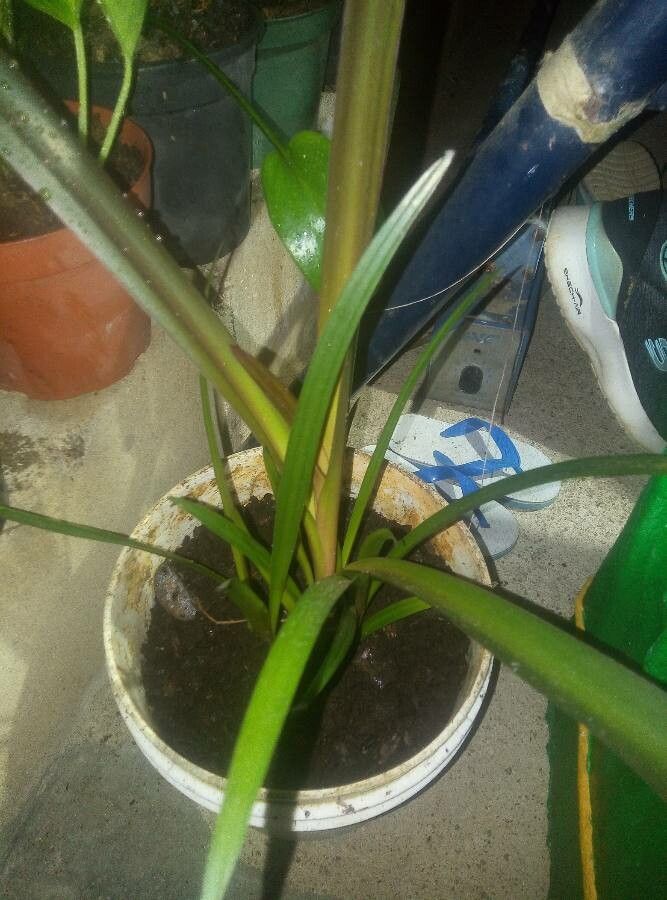
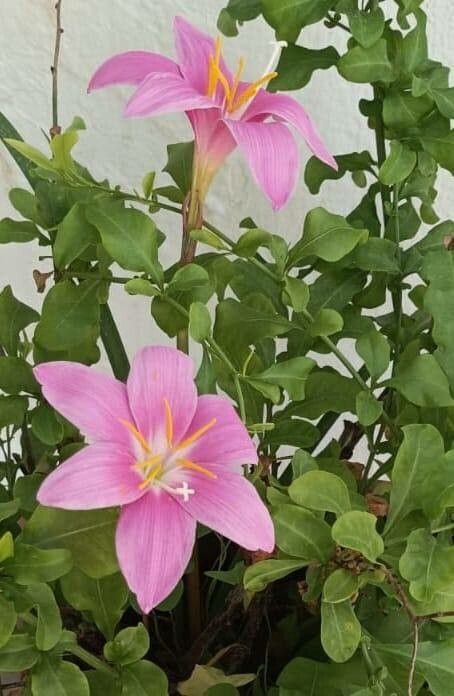
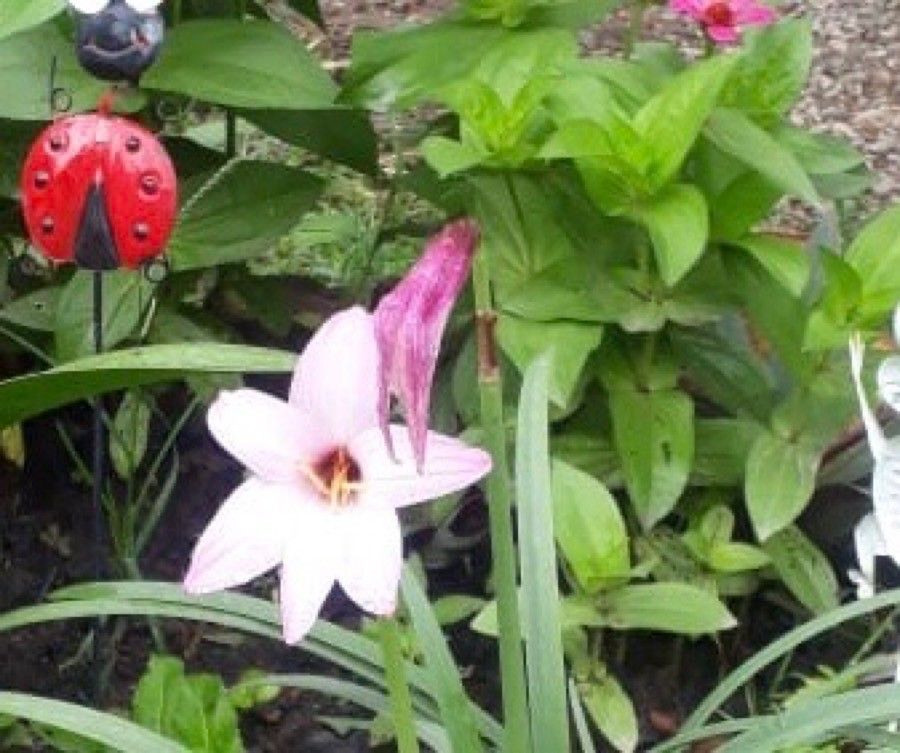
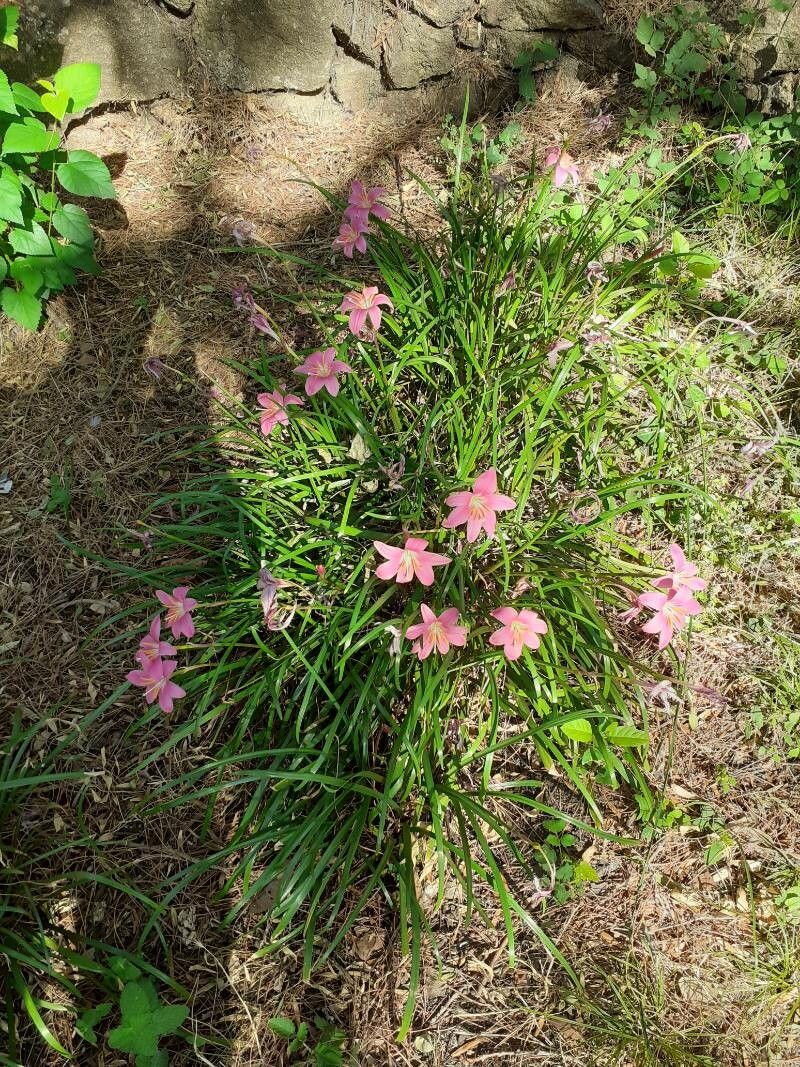
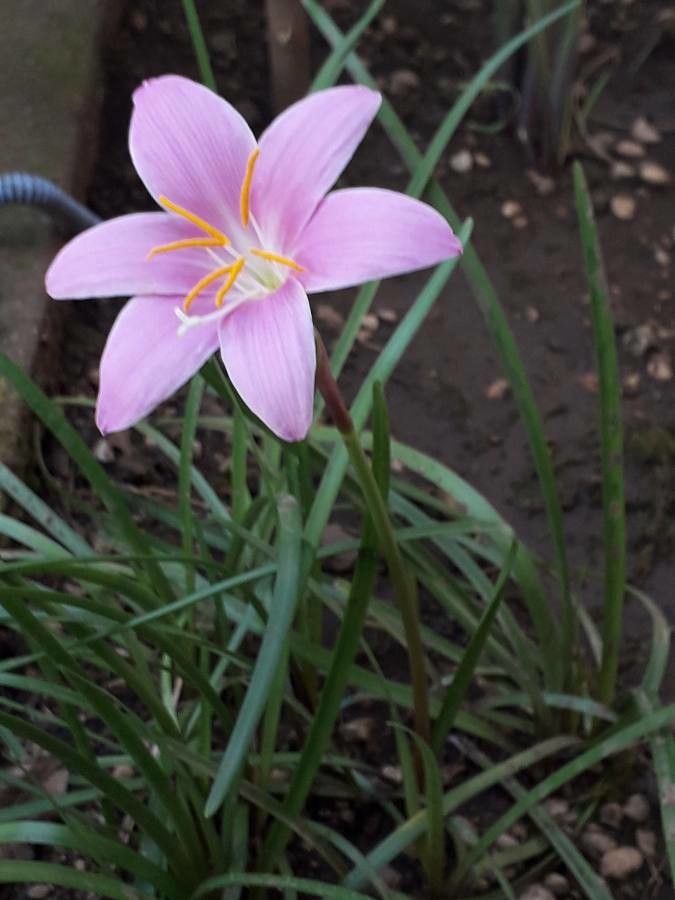
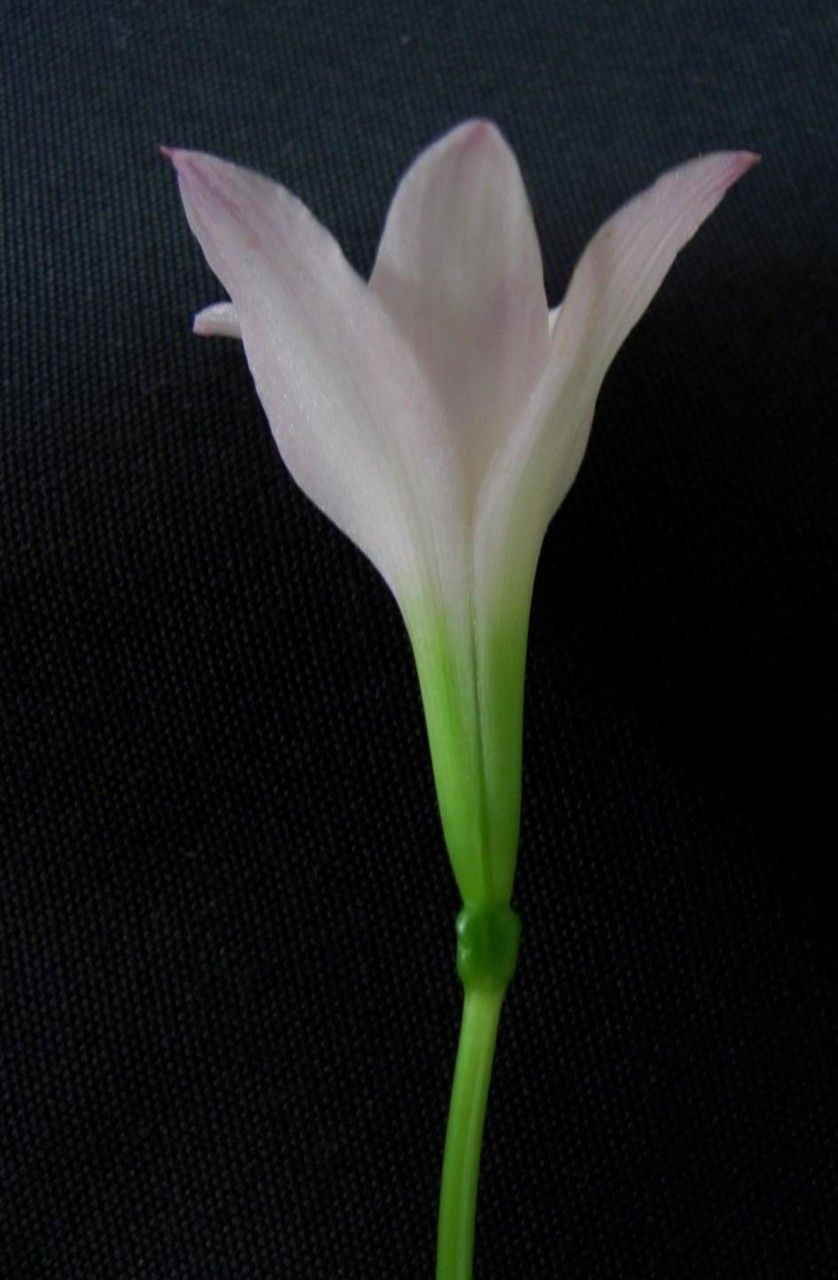
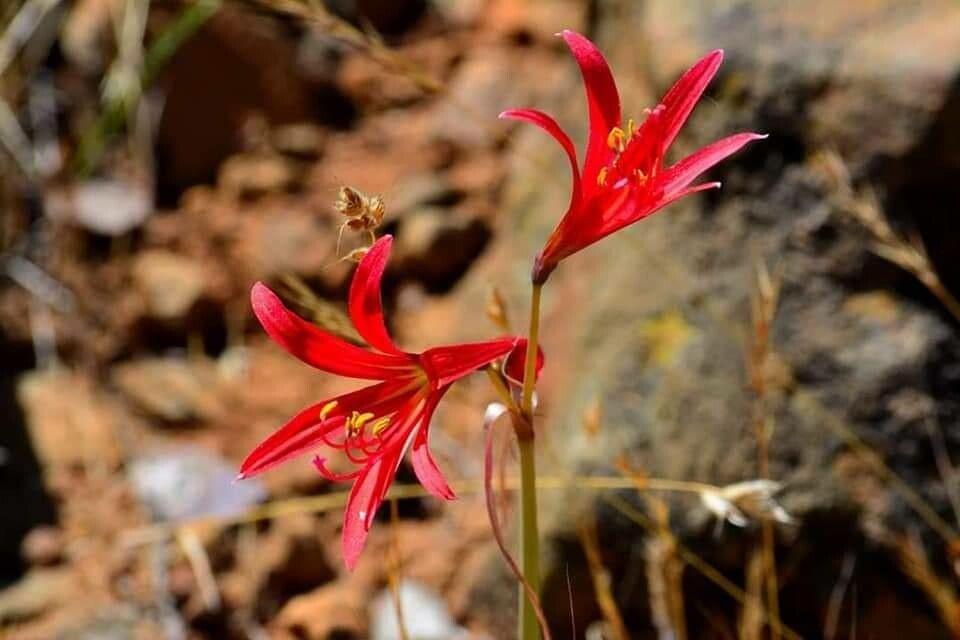
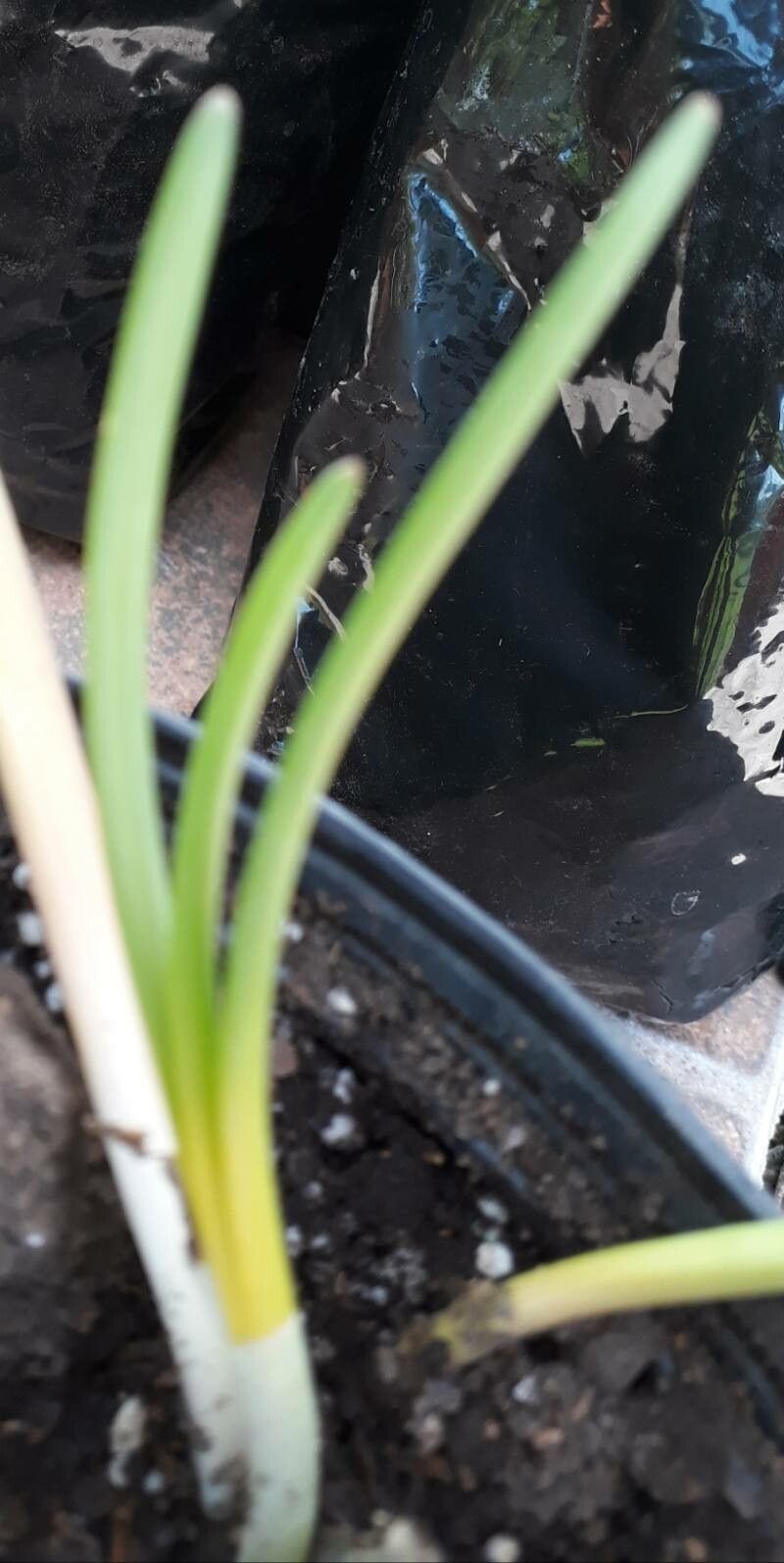
Zephyranthes carinata, commonly known as the rosepink zephyr lily or pink rain lily, is a perennial flowering plant native to Mexico, Colombia and Central America. It is also widely cultivated as an ornamental and naturalized in the West Indies, Peru, Argentina, Brazil, the southeastern United States from Texas to Florida, Zimbabwe, South Africa, China, Korea, the Ryukyu Islands, Assam, Nepal, Bhutan, Sri Lanka, Solomon Islands, Queensland, Society Islands, Kiribati, and Caroline Islands.Zephyranthes carinata has large bright pink flowers, around 10 cm (4 in), and green strap-like leaves. They are found naturally in moist, open areas, often near woodlands. Like other rain lilies, their common name refers to their habit of blooming soon after a heavy rainfall. They are widely grown in gardens as annuals and as container plants, although they will overwinter in warm climates. Zephyranthes carinata are often incorrectly referred to as Zephyranthes grandiflora, especially in horticulture.
The pink rain lily is quite disease-resistant and generally does not suffer from many illnesses. However, it can be vulnerable to pests and diseases present in its environment. Such infections are typically mild. In terms of care, this plant needs moderate maintenance. Regular pruning is required to keep a neat appearance and support healthy growth. Fertilizing can also help encourage blooming. Pink rain lily is suitable for anyone with outdoor space, like a garden or patio, and does not demand extensive gardening experience. It may need additional care if grown indoors.
How to keep Zephyranthes Carinata.
Light
The pink rain lily is a species that does well with abundant sunlight. This does not rule out its ability to survive in moderate light. Sufficient sunshine encourages vigorous growth, but too much can be harmful, while too little exposure impedes healthy development. This reflects its origin in regions rich in solar radiation.
Water
The pink rain lily originates from moist environments and thrives in high humidity with regular watering, ideally once a week. While it can withstand short dry spells, it is usually grown outdoors and has a remarkable blooming response to rainfall during its growing season.
Humidity
This plant will thrive in moderate humidity, which is probably the level in your home. However, misting it a few times a week can be very beneficial. Make sure the room has good ventilation.
Temperature
Pink rain lily is native to regions with climates where temperatures range from 59 to 100 °F (15 to 38 ℃). The plant prefers warm conditions and, while it can tolerate cooler seasons, it grows best when the temperature stays within its ideal range.
Fertilizer
The best time to fertilize a Pink rain lily is in early spring, as it comes out of dormancy and begins active growth. Fertilizing supplies essential nutrients needed for healthy development. Although Pink rain lilies need relatively little fertilizer, giving them an annual feeding can boost their survival and encourage improved, longer-lasting blooms.
Pruning
The pink rain lily benefits greatly from strategic pruning, particularly from early to late spring. During this time, removing dead or yellowing leaves can significantly improve the plant's appearance and health. Additionally, regularly trimming off spent flowers encourages more blooms, while cutting away damaged parts helps prevent infections. These practices enhance both the aesthetics and the overall vitality of the plant.
Pot & Repot
To encourage the growth of pink rain lilies, it's best to repot them every 2-3 years during spring. Choose a slightly larger container with well-draining soil. Ensure the lilies receive moderate moisture and are placed in part to full sunlight. Consistent care is crucial, but be sure to avoid overly wet conditions to achieve optimal blooming.
Botanical profile.
- Plant Type
- Herb
- Life Cycle
- Perennial
- Hardiness Zone
- 8-11
- Mature Height
- 23 cm to 30 cm
- Mature Spread
- 30 cm to 61 cm
- Leaf Color
- Green
- Leaf Type
- Semi-evergreen
- Flower Color
- Pink
- Flower Size
- 6.35 cm
- Bloom Time
- Mid summer, Late summer
- Planting Time
- Winter, Spring
- Harvest Time
- Mid summer, Late summer, Early fall
- Native Area
- Honduras, Mexico, Guatemala, Nicaragua, Costa Rica
Other names.
Reader questions.
What are the sunlight requirements for Pink Rain Lily?
Pink Rain Lily thrives best in full sunlight, requiring above 6 hours of sunlight daily for optimal growth. It can also survive in partial sun, which means about 3-6 hours of sunlight. Adequate sunlight is crucial for vibrant growth, whereas too much sunlight may cause harm, and too little can hinder its healthy development, reflecting its origin from areas abundant in solar radiation.
What is the native climate for Pink rain lily?
Pink rain lily, or Zephyranthes carinata, is native to areas where the temperature typically oscillates between 59°F to 100°F (15°C to 38°C). It's a plant that thrives in warm climates, capable of adjusting to cooler seasons, but optimal growth and health are observed when temperatures remain within its ideal range. Although it has some degree of cold tolerance, Pink rain lily usually doesn’t require special care for cold protection as long as temperatures stay above -5°C. Should the temperatures be forecasted to fall below -5°C, temporary measures such as wrapping the plant in materials like plastic film, fabric, or similar, should be implemented for cold protection. Once the temperature rises again, these protective layers should be removed to prevent any potential damage to the plant.
How can artificial lighting support Pink Rain Lily indoors?
For indoor Pink Rain Lilies or when natural sunlight is insufficient, artificial lighting becomes essential. LED lights are recommended due to their ability to provide specific wavelengths needed for plant growth. Full sun plants need 30-50W/sq ft of artificial light, partial sun plants require 20-30W/sq ft, and full shade plants need 10-20W/sq ft. The light source should be placed 12-36 inches above the plant for 8-12 hours per day to mimic natural sunlight effectively.
How does Pink rain lily respond to low temperatures, and how should it be cared for during winter?
The Pink rain lily has a moderate cold tolerance, flourishing best when the temperature remains above 15°C. In winter, it's crucial to ensure the temperature does not drop below -5°C to avoid damage. Should temperatures plunge below -10°C, the plant's leaves may begin to droop; they might recover in mild cases, but severe cold will cause wilting, and the leaves will eventually fall off. The solution for cold-damaged Pink rain lily involves trimming off the frost-affected parts of the plant. To protect it from future low-temperature damage, wrap it in non-woven fabric, cloth, or similar materials, and construct a wind barrier to shield it against cold winds.
What are common symptoms of inadequate lighting in Pink Rain Lily?
Inadequate lighting can lead to several symptoms in Pink Rain Lily, including smaller new leaves, leggy or sparse growth, faster leaf drop, slower or no new growth, lighter-colored new leaves, chlorosis, sunscald, leaf curling, wilting, and leaf scorching. These symptoms indicate that the plant is not receiving enough sunlight or is being exposed to too much direct sunlight, affecting its ability to photosynthesize and maintain healthy growth.
What care should be taken for Pink rain lily during high temperatures?
During the summer months, it's vital to ensure that the Pink rain lily does not endure temperatures above 38°C. Exposure to temperatures exceeding 43°C may result in the foliage losing its vibrant color, the tips of the leaves drying and withering, leaf curl, and an increased susceptibility to sunburn. To mitigate damage from high temperatures, trim away the affected parts of the plant, including sunburned and dried-up areas. It's beneficial to relocate the plant to a shaded area during the peak midday and afternoon sun, or alternatively, use shade cloth to provide some relief. Additionally, watering the plant in the morning and evening will help maintain soil moisture, which is crucial for the plant's well-being during hot weather.
How can you improve the sunlight exposure for Pink Rain Lily?
To optimize sunlight exposure for Pink Rain Lily, gradually move plants to a sunnier location each week until they receive at least 6 hours of direct sunlight daily. For indoor plants, use a south-facing window and keep curtains open during the day. Consider using artificial light if the plant is large or not easily movable, keeping a lamp on for at least 8 hours daily. Outdoors, avoid sudden changes in light intensity to prevent sunburn. Additionally, for plants on the ground, reduce obstructions by pruning blocking trees or transplant during the plant's dormant period to a location with ample sunlight.