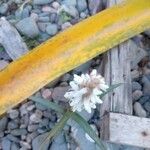
Zeuxine strateumatica
Lawn orchid · Soldier orchid · Soldier's Orchid · Green-lip Zeuxine · Terrestrial orchid
Description
Source: leafsnapZeuxine strateumatica, common names lawn orchid or soldier orchid, is a species of terrestrial orchids. It is widespread across much of Asia, including China, Japan, Turkey, Uzbekistan, Iran, the Indian Subcontinent, Afghanistan, and Southeast Asia, as well as in New Guinea and in some of the islands of the Pacific. It is naturalized in Saudi Arabia, Brazil, Tamaulipas (in northeastern Mexico), West Indies, Hawaii, California, and the southeastern United States from Texas to Georgia.Zeuxine strateumatica is a perennial herb up to 25 cm tall. Leaves are linear or narrowly lanceolate, up to 9 cm long. Flowers are borne in an erect panicle of as many as 50 flowers, each white with a yellow lip.In its natural habitat in Asia, Zeuxine strateumatica grows in grasslands, and along streambanks. In places where it is introduced, it frequently grows in lawns and agricultural fields, and is thus considered a nuisance weed.
Care Guide
💧 Water
The Soldier's orchid flourishes when it has consistent soil moisture and stable humidity, a nod to its tropical roots. To keep the plant healthy, water it weekly. As a valued indoor plant, it thrives in high ambient humidity, which promotes lush growth and more abundant flowering during its active growing season.
How should I water my Soldier's orchid?
Watering your Soldier's orchid will vary depending on its growth phase. During active growth, water the soil and occasionally water overhead if it's warm to allow the leaves to absorb moisture. In winter or cool, wet weather, stick to watering the soil directly. Watch for signs of needing water like thin, dry roots and leaves or discoloration. Be cautious of overwatering, which can make the plant mushy and limp. Ensure the pot has good drainage and use a potting mix that drains well. During the growing season, water multiple times per week, making sure each watering drains quickly. Watering frequency depends on pot size, with larger pots needing less frequent watering. Rainwater or distilled water is best, matching the water temperature to the air as closely as possible.
If I give too much water or too little water to my Soldier's orchid, what should I do?
To keep your Soldier's orchid healthy, it's important to avoid leaving the soil too wet for too long. Although these plants need regular watering during growth, they also require well-draining soil. If you overwater the plant, it will become mushy and develop root rot. In such cases, you should use sterile pruning shears to remove any rotted roots. Then, repot the orchid in a container with good drainage and fill it with fast-draining potting mix. However, the Soldier's orchid doesn't respond well to excessive repotting, so it's crucial to find the right watering balance. If the plant is underwatered, it will shrivel and feel dry to the touch. In this scenario, the soil is drying out faster than expected, and you should increase the watering frequency.
How many times should I water my Soldier's orchid?
During the spring and summer months, when the Soldier's orchid is in its active growth stage, it is recommended to water it once or twice a week. However, if the weather is hot and dry for extended periods, you may need to water it three times a week or more. In the winter, you still need to water the orchid, but not as frequently. Generally, watering it two to three times a month should be enough during the coldest months. However, if you keep the orchid indoors during winter, be aware that indoor growing locations can dry out the soil faster than usual. This may require you to increase the number of monthly waterings. During the fall, you can gradually reduce the watering frequency from multiple times per week to match the reduced winter watering schedule.
What things should I think about when watering my Soldier's orchid during different seasons and growth times?
When planning the watering schedule for your Soldier's orchid, it is important to consider two important growth phases. The first phase is the active growth period, which occurs in spring and summer. During this time, the plant should be watered multiple times per week. The second phase is the rest period, which occurs during winter and lasts for about two to three months. During this period, the Soldier's orchid requires less water and fertilization. It is recommended to water the plant about once or twice per month. In the fall, it is advisable to gradually reduce watering frequency from multiple times per week to once or twice per month to prepare the plant for its winter rest period.
If I grow my Soldier's orchid indoors, how should I change the way I water it?
The Soldier's orchid needs a relatively humid environment to thrive. However, it may struggle in most indoor locations due to the lack of moisture in the air. This can cause the plant and its soil to dry out faster than if it were outside. To help solve this issue, using a humidifier in the room where you grow the orchid can be beneficial. Additionally, you may need to water it more often. It is important to note that while the orchid prefers humidity, it also requires proper air circulation to prevent excess moisture and diseases. Installing a fan in the room can help maintain the necessary air flow for the plant to stay healthy.
☀️ Light Full sun
Soldier's orchid thrives under an open sky that is bathed in sunlight for most of the day. It can also survive in spots where the sunlight is dappled by shade. Too much shadow, however, can inhibit its growth, while overly strong sunlight may scorch it. Its place of origin features those conditions.
What are the sunlight requirements for Soldier's Orchid?
Soldier's Orchid, or Zeuxine strateumatica, thrives best in full sun conditions, which means it should receive above 6 hours of sunlight daily for optimal growth. It can also grow in partial sun, requiring about 3-6 hours of sunlight. It's essential to observe the movement of sunlight through your garden to choose the best spots for your plants, providing the perfect balance of light and shade to ensure their health and happiness.
What are the essential care tips for Soldier's Orchid?
The Soldier's Orchid prospers under open skies with abundant sunlight but can also adapt to dappled sunlight areas. It's crucial to avoid placing the plant in too much shade, as it can stunt growth, or in excessively bright sunlight, which can cause scorching. For indoor plants that can't get natural sunlight, especially during winter or in less sunny spaces, artificial lighting is vital. LED lights are recommended as they can be customized to provide the specific wavelengths needed. Full sun plants require 30-50W/sq ft, partial sun plants need 20-30W/sq ft, and full shade plants need 10-20W/sq ft of artificial light. Ensure the light source is 12-36 inches above the plant and provide 8-12 hours of light per day to mimic natural daylight hours.
What are the common symptoms of insufficient lighting in Soldier's Orchid?
Insufficient lighting can significantly affect Soldier's Orchid, leading to symptoms such as small leaves, leggy or sparse growth, faster leaf drop, slower or no new growth, and lighter-colored new leaves. Additional issues like chlorosis, sunscald, leaf curling, wilting, and leaf scorching could indicate either excessive sunlight or inadequate light. These symptoms show the plant’s struggle to adapt to its lighting environment, affecting its overall health and growth.
How can I address lighting issues for my Soldier's Orchid?
For lighting issues, consider gradually moving your plant to receive at least 6 hours of direct sunlight daily if it's indoors, using a south-facing window with curtains open during the day for maximum exposure. Supplement with artificial lighting such as professional grow lights or even a desk lamp for at least 8 hours daily if the plant is large or not easily movable. Outdoors, gradually adapt your plants to sunlight to avoid sunburn. Reduce obstructions like overhanging branches and, if necessary, transplant smaller plants during their dormant period to spots with better sunlight and drainage. Note that parts of the plant affected by insufficient sunlight may not recover, but new growth should be healthy with corrected lighting.
🌡️ Temperature 20–37.8°C
Soldier's orchid is native to temperate regions and prefers temperatures between 68 and 100 °F (20 and 38 ℃). Seasonal adjustment may be necessary, since temperatures outside this range could hinder growth.
What is the ideal temperature range for growing Soldier's orchid?
Soldier's orchid thrives in a temperate climate with ideal temperatures ranging between 68 to 100°F (20 to 38°C). It's crucial to adjust care seasonally as temperatures outside this range may impede the plant's growth. Despite being a tropical plant, during the winter, if temperatures drop below 5°C, it is advisable to bring the Soldier's orchid indoors to maintain a conducive growth environment, preferably keeping indoor temperatures above 20°C. Positioning the plant near a south-facing window will ensure it receives sufficient sunlight, and employing a humidifier or misting the plant regularly will help maintain the required humidity levels. For outdoor overwintering orchids, they should be placed in a sheltered sunny spot, potentially with a temporary greenhouse setup or wrapped with plastic film or fabric to protect them from the cold.
How should you care for Soldier's orchid in low temperatures?
In low temperatures, Soldier's orchid is at risk, as it best grows when the temperature remains above 20°C and needs to be kept above 5°C during winter to avoid damage. Exposure to temperatures below 1°C can cause the leaves to suffer from water-soaked necrosis, leading to wilting and drooping. If such damage occurs, the frostbitten areas should be trimmed off immediately, and the plant should be brought indoors to a warm environment. Positioning the orchid near a south-facing window will ensure it gets enough sunlight while being careful to avoid placing it near heaters or air vents, which could cause the air around the plant to become excessively dry.
What steps should be taken if a Soldier's orchid is exposed to high temperatures?
During the summer, it's crucial to ensure the Soldier's orchid doesn't get too hot; temperatures should remain below 38°C to prevent stress and damage. Exposure to temperatures above 43°C will halt growth, cause the leaves to wilt, increase susceptibility to root rot, and can lead to sunburn if the plant is in direct sunlight. To mitigate these issues, trim away any sunburned or dried parts of the plant. Move the orchid to a shaded area, especially avoiding the direct midday and afternoon sun. Watering the plant in the morning and evening can help keep it and its surrounding environment moist, reducing the risk of heat-related stress.
💨 Humidity
🪴 Soil 6-7
🌱 Fertilizer
The soldier's orchid needs the most fertilizer during its active growing period, which occurs mainly in spring, summer, and early fall. Fertilizing supplies essential nutrients the soil may lack, encouraging healthy root and stem development and producing attractive foliage, a key characteristic of this plant.
🪴 Pot & Repot
✂️ Pruning
To help your soldier's orchid thrive, prune it in the spring. This pruning removes dead leaves and encourages healthy growth. By doing this, you minimize stress on the plant and boost its vigor. Pruning also helps prevent overcrowding, which improves air circulation and reduces the risk of disease. Be sure to use sterilized tools to keep your soldier's orchid healthy and flourishing.
🌿 Propagating
🐛 Diseases & pets
☠️ Toxicity
Characteristics
- Plant Type
- Herb
- Life Cycle
- Perennial
- Genus
- Zeuxine
- Family
- Orchidaceae
- Hardiness Zone
- 10-11
- Mature Height
- 15 cm
- Mature Spread
- 10 cm to 30 cm
- Leaf Color
- Light Green, Dark Green
- Leaf Type
- Semi-evergreen
- Flower Color
- White
- Flower Size
- 1.02 cm to 7.62 cm
- Bloom Time
- Summer, Early fall, Mid fall
- Planting Time
- Spring, Autumn
- Harvest Time
- Late summer, Fall, Early winter
- Native Area
- Nepal, Sri Lanka, Tajikistan, India, Malaysia, Philippines, Bangladesh, Pakistan, Laos, Thailand, China, Uzbekistan, Afghanistan, Indonesia, Cambodia, Vietnam, Myanmar, Japan, Papua New Guinea, Bhutan, Singapore, Iran, Turkmenistan