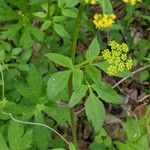
Zizia aurea
Golden Alexanders · Golden Zizia · Golden Alexander · Common Alexanders · Golden Meadowparsnip
Description
Source: leafsnapZizia aurea (golden alexanders, golden zizia) is a flowering herbaceous perennial plant of the carrot family Apiaceae. It is native to eastern Canada and the United States, from the eastern Great Plains to the Atlantic Coast. It is named for Johann Baptist Ziz, a German botanist.
🌳 Golden alexanders fulfills a frequently overlooked but crucial role in the life cycles of some butterfly species, notably the Black Swallowtail. As a host plant, it supplies food for the larvae as they develop into butterflies. This role helps support local biodiversity and benefits gardeners who want to boost pollinator populations. Although it is not widely known for other human uses, its ecological importance is considerable, acting as a guide for gardeners aiming to cultivate wildlife-friendly habitats.
Care Guide
💧 Water Every week
Golden Alexanders thrive in moist environments and need weekly watering to stay healthy. Being a deciduous plant, they shed their leaves during the dormant season. This leaf shedding conserves water and energy, reflecting the plant's adaptation to regions with frequent rainfall.
☀️ Light Full sun
Golden alexanders prefers a setting with plenty of light for healthy growth. It can, however, endure partly shaded spots, though reduced illumination may cause slower development and fewer flowers. Native to sunny habitats, both too little and too much light can harm golden alexanders, producing drooping in low light and yellowing leaves in excessive light.
What are the sunlight requirements for Golden Alexanders?
Golden Alexanders (Zizia aurea) requires full sun, meaning it thrives in areas that receive more than 6 hours of direct sunlight daily. It can also grow in partial sun, which is about 3-6 hours of sunlight. However, it's crucial to observe the movement of sunlight through your garden to find spots that offer the right balance of light and shade, ensuring the plants' health and happiness.
What are the essential growing conditions for Golden Alexanders?
Golden Alexanders prefers areas with abundant light for healthy growth but can tolerate partially lit areas. Despite its preference for sun-rich habitats, both too little and too much light can harm the plant, leading to symptoms like droopiness or leaf yellowing. For indoor plants, artificial lighting can compensate for insufficient natural light, with recommended intensities varying based on the type of plant (full sun, partial sun, full shade) and involving considerations around the type of light, distance from the plant, and duration of exposure.
What symptoms indicate insufficient or excessive sunlight in Golden Alexanders?
Symptoms of insufficient light in Golden Alexanders include smaller new leaves, leggy or sparse growth, faster leaf drop, no new growth, and lighter-colored leaves. Excessive sunlight can cause chlorosis (yellowing of leaves), sunscald, leaf curling, wilting, and leaf scorching. Each of these symptoms reflects the plant's struggle with improper light conditions, emphasizing the need for the correct balance of sunlight for optimal health.
How can I improve light conditions for my indoor Golden Alexanders?
For indoor Golden Alexanders, gradually moving the plant to a sunnier spot each week until it receives at least 6 hours of direct sunlight daily can significantly improve its growth. Using a south-facing window and keeping curtains open maximizes sunlight exposure. If moving the plant isn't feasible or it's still not receiving enough light, artificial lighting such as desk lamps or professional grow lights for at least 8 hours a day can provide supplementary light, helping to mimic the optimal conditions found in the plant's natural habitat.
What are the solutions for managing Golden Alexanders outdoors or in the ground?
To optimize sunlight exposure for Golden Alexanders outdoors or in the ground, gradually move your plants to sunnier locations each week, avoiding sudden changes in light intensity to prevent sunburn. Observing which areas block sunlight can help in minimizing obstructions. For example, pruning trees that shade your plants too much or transplanting smaller plants to a sunnier location during their dormant period can ensure they receive ample sunlight. It's important to note that while parts of the plant damaged by insufficient sunlight may not recover, new growth should be healthy with improved light conditions.
🌡️ Temperature 5–35°C
Golden alexanders is native to temperate climates and can tolerate temperatures between 41 and 95 ℉ (5 and 35 ℃). In winter, temperatures below 23 ℉ (-5 ℃) can damage the plant, so it is advisable to cover it with mulch or leaves for protection. In hot summer months, Golden alexanders can benefit from partial shade to prevent heat stress.
What is the native climate of Golden Alexanders, and how does it cope with temperature variations?
Golden Alexanders (Zizia aurea) is native to temperate climates and is well-adapted to temperatures ranging from 41 to 95°F (5 to 35°C). It has a notable cold resistance, allowing it to generally withstand winter conditions without special frost protection measures. However, during winters when temperatures are expected to dip below 23°F (-5°C), or even to extremes below -30°C, it's crucial to safeguard the plant. Covering it with mulch or leaves helps protect against cold damage, and in very cold conditions, additional covering with soil or straw is recommended. Also, watering the plant abundantly before the first freeze of autumn to moisten the soil can help prevent drought stress during the colder months.
How should Golden Alexanders be protected from low temperature effects?
Golden Alexanders demonstrates a significant tolerance to cold, thriving best when temperatures stay above 5°C and ideally kept from dropping below -25°C. If temperatures plummet below -30°C, the plant might show no immediate signs of distress, but this could lead to reduced or even no sprouting in spring. To mitigate potential damage from low temperatures, any non-sprouting parts should be removed at the onset of spring to encourage healthy growth and recovery.
What measures should be taken to protect Golden Alexanders from high temperature?
During the summer months, Golden Alexanders should ideally be kept below 35°C to prevent heat stress. Exposure to temperatures above 38°C can lead to symptoms such as leaves becoming lighter in color, curling, becoming prone to sunburn, and, in severe cases, the entire plant might wilt and dry out. To combat the effects of high temperatures, it's advisable to trim away any sunburned or dried parts of the plant. Moving the plant to a partially shaded area, especially away from the midday and afternoon sun, or using a shade cloth can provide relief from excessive heat. Additionally, watering the plant in the morning and evening to maintain soil moisture can help alleviate stress from high temperatures.
💨 Humidity
🪴 Soil 6-7
🌱 Fertilizer
A single fertilizer application in spring is generally adequate for Golden alexanders, though several feedings can increase growth. Fertilize once every month to a month and a half. Feeding improves the leaves’ appearance and function, helping maintain even color and a healthy texture. It also encourages root development and nutrient uptake, supporting the plant’s long-term health.
🪴 Pot & Repot 2-3 years
When repotting Golden alexanders, pick a pot 1–2 inches (2.5–5.1 cm) larger with good drainage. Use a well-draining potting mix. Repot in spring or fall, making sure the root ball is slightly lower than the rim of the flower pot. Water thoroughly after repotting and place in a warm spot with indirect sunlight.
✂️ Pruning
Golden Alexanders display vibrant golden-yellow umbels and greatly benefit from annual pruning between early and late spring. Pruning removes dead stems, enhances air circulation, encourages blooming, improves aesthetics, and helps prevent diseases and pests, all contributing to healthier growth.
🌿 Propagating
🐛 Diseases & pets
☠️ Toxicity
The plant is not toxic but is sometimes confused with wild parsnip or wild carrot (aka Queen Anne's Lace). Both of these can be toxic skin irritants, possibly causing severe skin dermatitis with a blistering rash, and should be avoided.
Characteristics
- Plant Type
- Herb
- Life Cycle
- Perennial
- Genus
- Zizia
- Family
- Apiaceae
- Hardiness Zone
- 4-9
- Mature Height
- 40 cm to 76 cm
- Mature Spread
- 46 cm to 61 cm
- Leaf Color
- Green, Purple
- Leaf Type
- Deciduous
- Flower Color
- Yellow
- Flower Size
- 10.16 cm
- Bloom Time
- Late spring, Early summer
- Planting Time
- Spring
- Harvest Time
- Early summer, Mid summer
- Native Area
- Eastern Canada and US