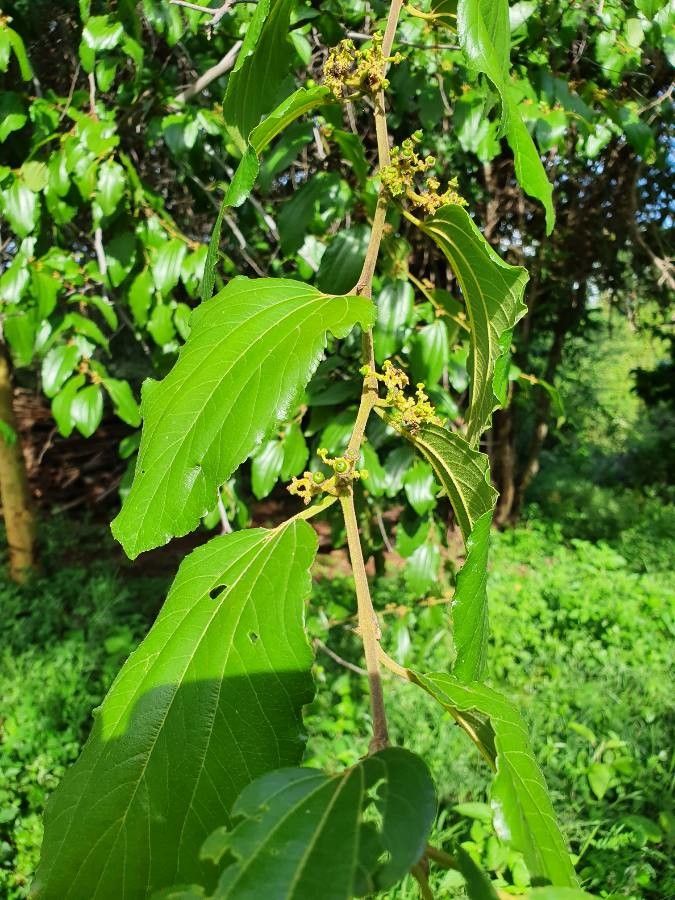
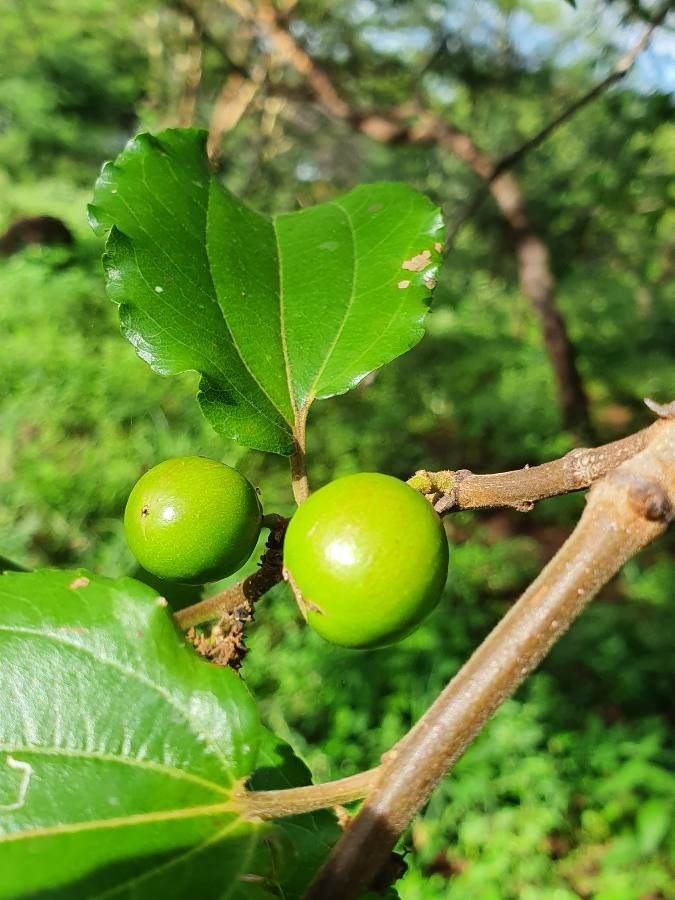
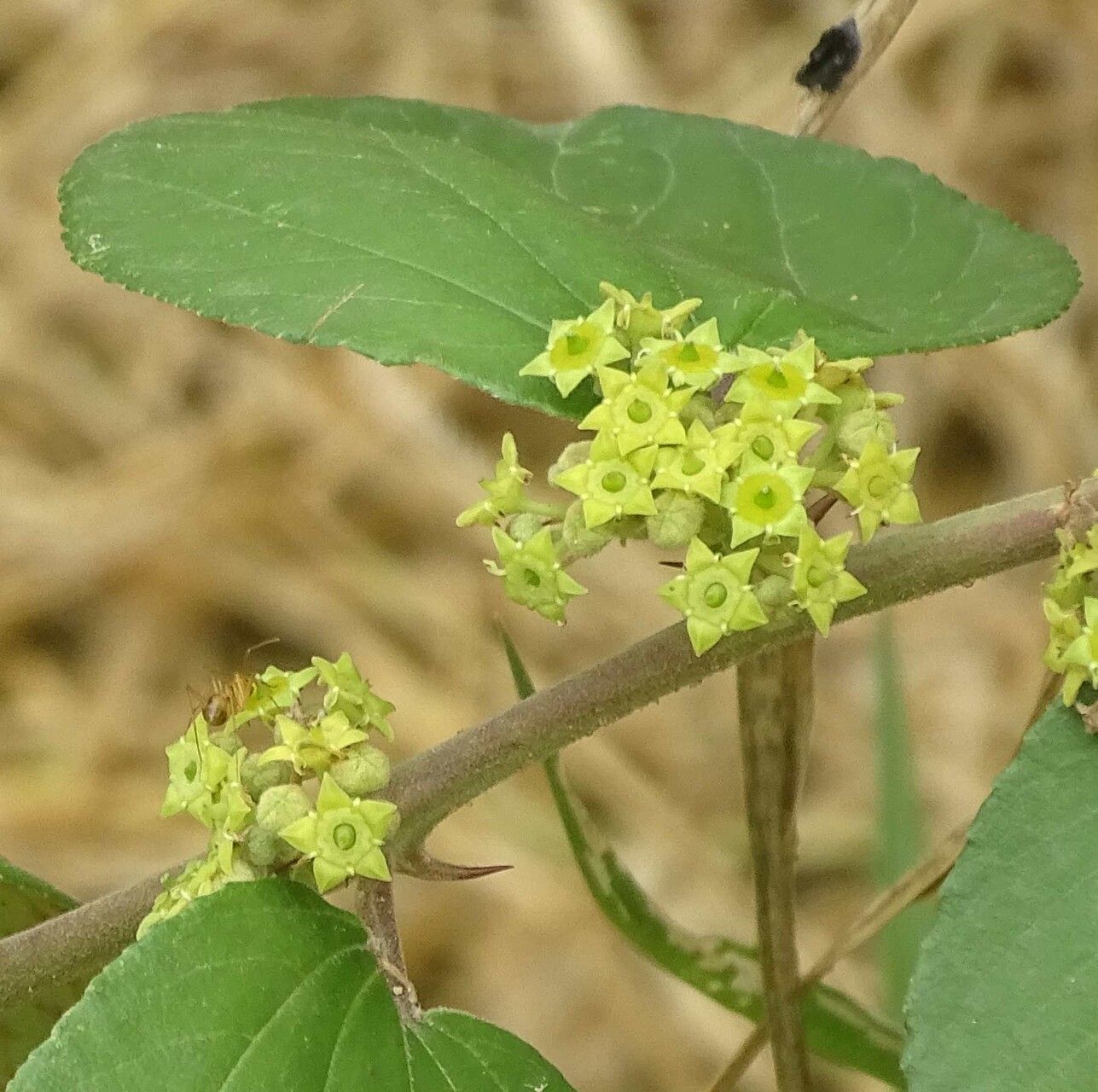
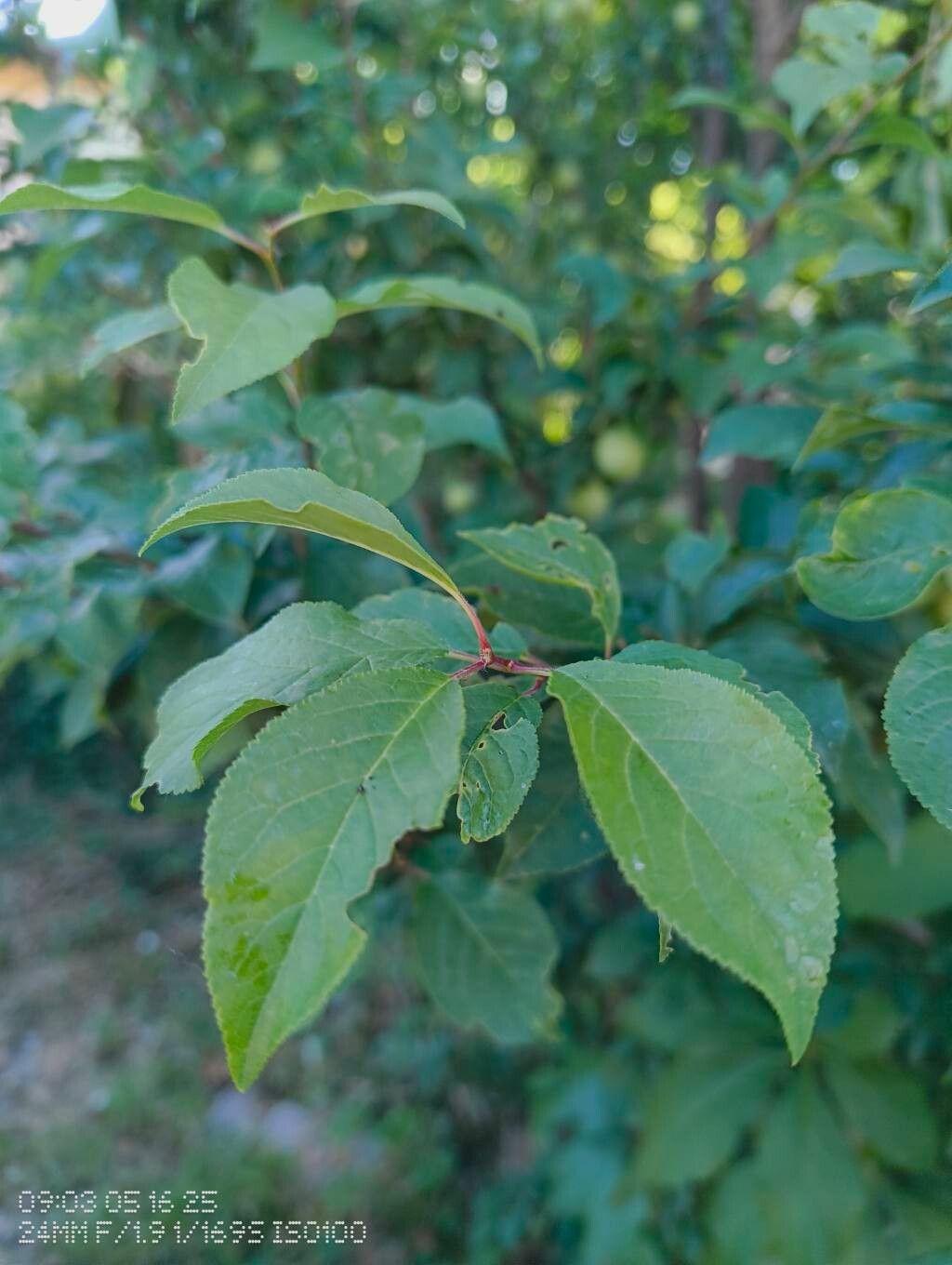
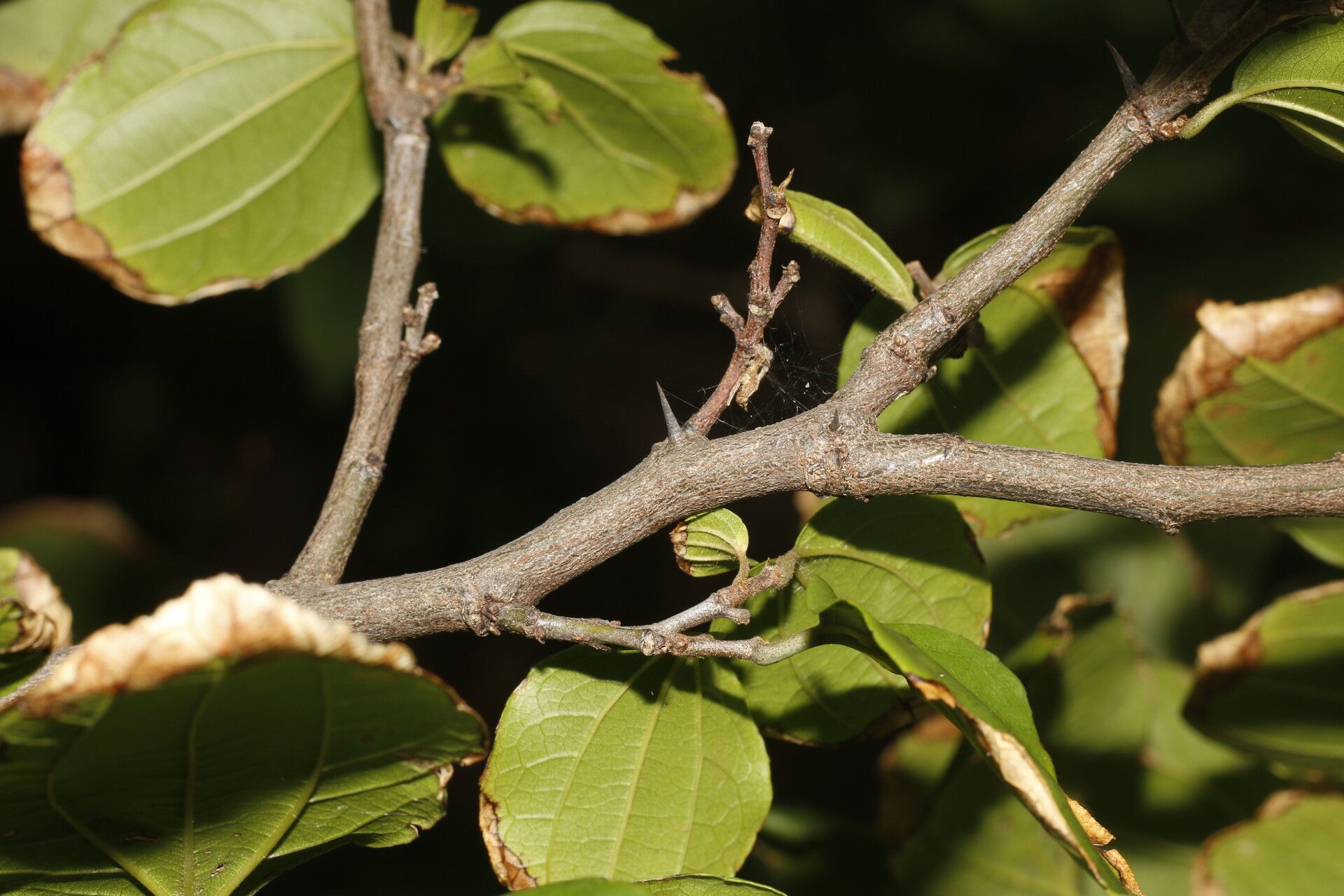
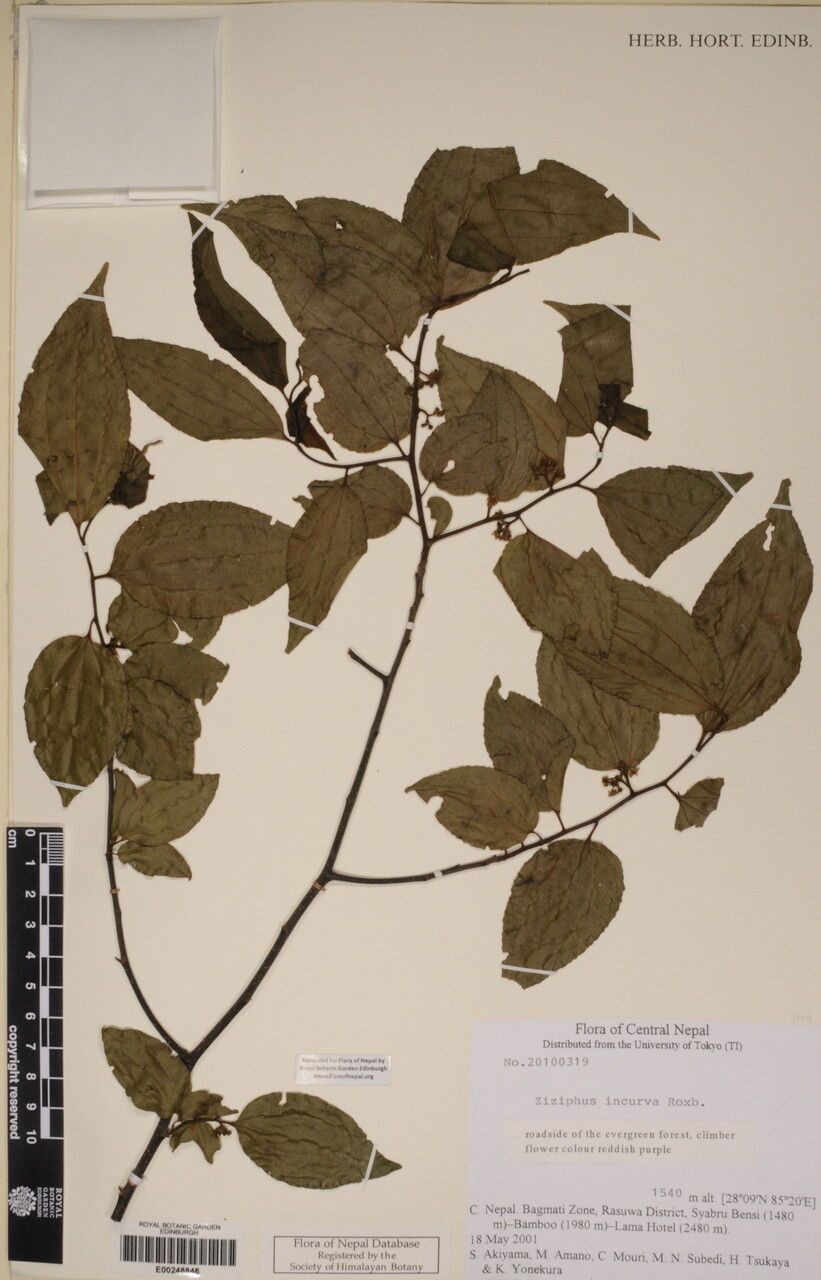
Ziziphus mucronata, known as the buffalo thorn, is a species of tree in the family Rhamnaceae, native to southern Africa. It is deciduous and may grow up to 17 metres tall. It can survive in a variety of soil types, occurring in many habitats, mostly open woodlands, often on soils deposited by rivers, and grows frequently on termite mounds. Its Zulu name “umLahlankosi” alludes to its use as a grave marker for tribal chiefs, while the Afrikaans name “Blinkblaar-wag-'n-bietjie” alludes to the shiny light green leaves and the hooked thorns.
Buffalo thorn is highly resistant to disease and generally not susceptible to illnesses. In terms of care, this plant is fairly low-maintenance. Planted outdoors it needs minimal watering, and larger specimens typically do not require pruning. Smaller plants, however, should be trimmed after they have finished blooming. Buffalo thorn is appropriate for anyone with an outdoor area, such as a garden or deck, and does not require extensive gardening experience.
How to keep Ziziphus Mucronata.
Light
Buffalo thorn grows best in full sun, though it can tolerate moderately shaded conditions. Its native habitats are usually sunny places. Although it can manage with less light, that often results in poorer growth. Both excessive light and too little light can seriously harm the plant's health.
Water
The buffalo thorn is well-suited to semi-arid regions due to its drought tolerance. It requires minimal watering, typically thriving with just one watering every 2 to 3 weeks. It is usually grown outdoors and benefits from a growing season that aligns with natural rainfall, which helps optimize water uptake and reduce the need for additional irrigation.
Temperature
Buffalo thorn is fairly adaptable to temperature, able to tolerate high heat and wide temperature fluctuations. In hot conditions, attention should be paid to watering and providing suitable shade to prevent sunburn. However, Buffalo thorn is fairly sensitive to low temperatures; while it can endure some cold, excessively low temperatures can cause frost damage.
Fertilizer
Fertilize your Buffalo thorn in early spring to encourage healthy growth. Regular feeding boosts overall health, leading to vigorous growth, increased resilience to harsh conditions, and improved resistance to pests and diseases. Keep to a specific fertilization schedule for your Buffalo thorn to maintain vibrant, deeply colored foliage and a lush appearance.
Pruning
The Buffalo Thorn is a hardy shrub characterized by its thorny branches and distinct Z-shaped stems. To maintain its health and shape, it is best to prune it in early spring. Focus on removing any dead branches and shaping the plant to create an open canopy, which will improve air circulation and encourage healthy growth. Always use clean tools when pruning, and refer to horticultural guides for the best practices.
Botanical profile.
- Plant Type
- Tree
- Life Cycle
- Perennial
- Genus
- Ziziphus
- Family
- Rhamnaceae
- Hardiness Zone
- 8-11
- Mature Height
- 10.06 m to 17.07 m
- Mature Spread
- 2.13 m to 4.88 m
- Leaf Color
- Green
- Leaf Type
- Deciduous
- Flower Color
- Yellow, Green
- Flower Size
- 0.51 cm
- Bloom Time
- Summer
- Planting Time
- Spring
- Harvest Time
- Late summer, Fall
Other names.