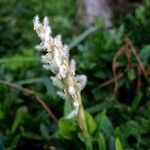
Zoysia japonica
Japanese lawn grass · Korean grass · Korean lawn grass · Zoysia · Korean lawngrass
Description
Source: leafsnapZoysia japonica (commonly known as Korean lawngrass, zoysia grass or Japanese lawngrass) is a species of creeping, mat-forming, short perennial grass that grows by both rhizomes and stolons. It is native to the coastal grasslands of southeast Asia and Indonesia. The United States was first introduced to Z. japonica in 1895. It received its first import from the Chinese region of Manchuria. Today, Z. japonica has become one of the most widely used species of turfgrass in the United States and other countries worldwide such as in Brazil, serving as a close and cheaper alternative to bermudagrass.
🌳 The small beige seed of japanese lawngrass holds more potential than its size suggests: it can be processed into an oil high in oleic acid. Despite benefits for health — such as reducing inflammation and lowering the risk of heart disease — the seed's very small size has made extraction uneconomical and limited awareness of its oil-producing potential. Technological improvements could still convert japanese lawngrass seeds into a prominent, healthful oil source in food markets.
Care Guide
💧 Water Twice per week
Japanese lawngrass is well-suited to moist grassland environments and thrives in evenly moist soil. To maintain its health, it should be watered twice a week, ensuring that the soil never dries out completely. This resilient turfgrass does well outdoors, but requires extra irrigation during periods of rapid growth to offset increased evaporation rates.
☀️ Light Full sun
Japanese lawngrass does best with steady, abundant sunlight, though it can tolerate areas of lightly diffused light. Consistent strong sun supports its health and vigorous growth. It is seldom harmed by too much sun, but poor lighting reduces its vigor. This reflects its native habitat, which generally has high sun exposure.
What are the sunlight requirements for Japanese lawngrass?
Japanese lawngrass thrives in full sun, needing above 6 hours of sunlight daily, but it can also manage in partial sun with about 3-6 hours of sunlight. The plant's health and growth are significantly influenced by the amount of sunlight it receives, with a preference for continuous and abundant exposure. Watch the movement of sunlight through your garden carefully to ensure the plants receive an ideal balance of light and shade, fostering their well-being.
How does insufficient sunlight affect Japanese lawngrass, and what are the symptoms?
Insufficient sunlight can lead to several issues for Japanese lawngrass, including smaller leaves, leggy or sparse growth, faster leaf drop, slower or no new growth, lighter-colored new leaves, chlorosis, sunscald, leaf curling, wilting, and leaf scorching. These symptoms indicate that the plant is not receiving enough light, which affects its ability to photosynthesize and maintain its health.
What solutions are available for Japanese lawngrass struggling with inadequate light?
To address inadequate light for Japanese lawngrass, gradually increase sunlight exposure to at least 6 hours daily by moving the plant to sunnier locations each week. For indoor plants, consider using artificial light, such as desk lamps or grow lights, for at least 8 hours a day. For outdoor plants, avoid sudden changes in light to prevent sunburn. Reduce obstructions by pruning trees or transplanting the plant to a sunnier location. Note that parts of the plant affected by insufficient light may not recover, but new growth should be healthy with proper sunlight.
Can artificial lighting be used for Japanese lawngrass, and how?
Yes, artificial lighting can support Japanese lawngrass's growth when natural sunlight is insufficient. LED lights are a favorable option as they can provide specific wavelengths needed for plant growth. Full sun plants require 30-50W/sq ft of artificial light, partial sun plants need 20-30W/sq ft, and full shade plants require 10-20W/sq ft. The light source should be placed 12-36 inches above the plant to mimic natural sunlight conditions, and the lights should be on for 8-12 hours per day.
🌡️ Temperature 5–37.8°C
Japanese lawngrass prefers temperatures between 41 and 100 ℉ (5 to 38 ℃) to thrive. It is native to warm, humid regions such as Asia. In cooler regions, Japanese lawngrass can be grown as a warm-season grass and may need winter protection.
What temperatures can Japanese lawngrass thrive in?
Japanese lawngrass, also known as Zoysia japonica, thrives in temperatures ranging from 41 to 100°F (5 to 38°C). Native to warm, humid climates like those found in Asia, it can tolerate cooler environments as a warm-season grass. Although it possesses strong cold resistance, in regions where winter temperatures may drop below -25°C, precautions should be taken to protect the grass from frost by using soil or straw coverings. Ensuring the soil remains moist before the onset of winter helps prevent drought and water scarcity during the colder months.
How does Japanese lawngrass handle low temperatures?
Japanese lawngrass is notably cold-tolerant and performs best when temperatures remain above 5°C. In winter, it's vital to keep the temperature above -20°C to prevent damage. If temperatures fall below -25°C, the grass might not show immediate damage but could experience reduced or absent sprouting come springtime. To manage these issues, any non-sprouting parts should be removed in the spring to encourage new growth.
What should be done if Japanese lawngrass experiences high temperatures?
During the summer months, it's essential to keep Japanese lawngrass below 38°C, as temperatures exceeding 43°C can cause the leaves to lighten, curl, become susceptible to sunburn, and, in severe cases, lead to the wilting and drying of the entire plant. To mitigate these risks, trim away any sunburned or dried parts. Relocating the plant to a shaded area during the midday and afternoon sun or using a shade cloth can provide necessary protection. Also, maintaining morning and evening watering routines will keep the soil adequately moist.
💨 Humidity
🪴 Soil 5-7
🌱 Fertilizer
Japanese lawngrass is a warm-season turf that does well in summer and becomes dormant in winter. Fertilizing is important for promoting thick growth, a bright green color, and resistance to stresses like heat, drought, and cold. Neglected lawns lose vigor and density and become more prone to invasion by unwanted grasses, weeds, insects, and diseases.
🪴 Pot & Repot
✂️ Pruning
Japanese lawngrass is a resilient, low-maintenance grass that benefits from regular mowing. To promote healthy growth, reduce thatch, and improve pest resistance, mow the grass to a height of 1-2 inches from early to late spring. For optimal maintenance, always use sharp and clean tools.
🌿 Propagating
🐛 Diseases & pets
☠️ Toxicity
Characteristics
- Plant Type
- Grass
- Life Cycle
- Perennial
- Genus
- Zoysia
- Family
- Poaceae
- Hardiness Zone
- 5-11
- Mature Height
- 15 cm to 20 cm
- Mature Spread
- 30 cm to 61 cm
- Leaf Color
- Green
- Leaf Type
- Deciduous
- Flower Color
- Green, Brown
- Flower Size
- 0.25 cm to 0.51 cm
- Bloom Time
- Late spring, Early summer, Mid summer
- Planting Time
- Spring, Summer
- Harvest Time
- Mid summer
- Native Area
- Russia, Japan, Koppen, South Korea, China