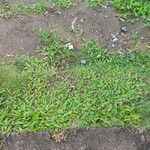
Zoysia matrella
Japanese carpet grass · Korean grass · Manila grass · Siglap grass · Zoysia
Description
Source: leafsnapZoysia matrella, commonly known as Manila grass or Korean velvet grass, is a warm-season turfgrass species native to Southeast Asia. It is a popular choice for lawns, golf courses, and sports fields due to its fine texture and dense growth habit. This plant boasts a deep green color and can withstand high temperatures, drought conditions, and heavy foot traffic. Zoysia matrella thrives best in full sun but can also tolerate partial shade. It requires low maintenance, with minimal water needs and infrequent mowing or fertilization compared to other turfgrass species. While it may take longer to establish due to its slow growth rate, once established, it forms an attractive lawn that demands minimal care.
Care Guide
💧 Water Every 7 days
Manila grass flourishes in tropical climates, as it enjoys consistent humidity and is also drought-tolerant. For lush growth, it is recommended to water the grass twice a week. During the active growing season, you should increase the watering frequency to encourage deep root development and maintain optimal health.
☀️ Light Full sun
Manila grass is a sun-loving perennial herbaceous plant native to open habitats, commonly flourishing in meadows and grasslands. It prefers full sun but can also tolerate partial sun.
What are the sunlight requirements for Manila Grass?
Manila grass requires full sun exposure, meaning it needs more than 6 hours of sunlight daily, but it can also tolerate partial sun conditions, which is about 3-6 hours of sunlight. Observing the movement of sunlight through your garden can help in choosing spots that provide a balance of light and shade, which is essential for the happiness and growth of your plants.
What are the essential facts about Manila Grass?
Manila grass is a sun-loving perennial and herbaceous plant that originates from open habitats such as meadows and grasslands. It thrives in conditions of full sun but is also capable of growing under partial sun. For indoor plants lacking natural sunlight, especially during winter or in less sunny spaces, artificial lighting such as LED lights provide a vital growth solution. Full sun plants require 30-50W/sq ft of artificial light, partial sun plants need 20-30W/sq ft, and full shade plants require 10-20W/sq ft. The light source should be placed 12-36 inches above the plant, mimicking natural sunlight conditions for 8-12 hours per day.
What symptoms indicate Manila Grass is receiving inadequate light?
In conditions of inadequate lighting, Manila grass may exhibit symptoms like smaller new leaves, leggy or sparse growth, faster leaf drop, slower or ceased growth, pale new leaves, chlorosis, sunscald, leaf curling, wilting, and leaf scorching. These symptoms point towards either too little light or excessive exposure to sunlight, which affects the plant's ability to photosynthesize and thus its overall health and development.
How can one address the lighting needs of Manila Grass both indoors and outdoors?
For indoor care, gradually moving plants to sunnier spots until they receive at least 6 hours of direct sunlight is recommended, alongside using a south-facing window for maximum exposure. Artificial lighting options, like keeping a desk or ceiling lamp on for at least 8 hours daily or investing in grow lights, can supplement light intake. Outdoors, plants should be transitioned to sunnier locations gradually to avoid sunburn. If sunlight is blocked by obstructions like trees, consider pruning to allow more light through. For smaller plants, transplanting during their dormant period in a location with ample sunlight and good drainage could significantly benefit their growth and health.
🌡️ Temperature 15–37.8°C
Manila grass is well suited to temperatures from 59 to 100°F (15 to 38°C), flourishing in warm regions. It achieves optimal growth within that temperature range and requires adaptations for cooler seasons.
💨 Humidity
🪴 Soil 6-7
🌱 Fertilizer
Manila grass is a warm-season turf that performs well in summer and becomes dormant during winter. Applying fertilizer is essential for a thick stand, a bright green appearance, and resistance to stressors such as heat, drought, and cold. Lawns that are ignored become weak, sparse, and more prone to invasion by unwanted grasses, weeds, insects, and diseases.
🪴 Pot & Repot Every 12 months
✂️ Pruning
Manila grass flourishes in warm climates and has dense, low-growing blades. To keep it healthy, prune it in early spring to remove any winter damage and stimulate new growth. Regular mowing helps prevent thatch buildup and promotes denser growth. Make sure to use sharp tools for clean cuts and mow when the grass is dry for the best results.
🌿 Propagating
🐛 Diseases & pets
☠️ Toxicity
Characteristics
- Plant Type
- Grass
- Life Cycle
- Perennial
- Genus
- Zoysia
- Family
- Poaceae
- Hardiness Zone
- 7-11
- Mature Height
- 11 cm to 20 cm
- Mature Spread
- 30 cm to 61 cm
- Leaf Color
- Light Green, Dark Green
- Leaf Type
- Evergreen
- Flower Color
- Green
- Flower Size
- 0.20 cm
- Bloom Time
- Summer
- Planting Time
- Spring, Summer
- Harvest Time
- Mid summer, Late summer, Early fall
- Native Area
- Sri Lanka, India, Malaysia, Philippines, Madagascar, Bangladesh, Laos, Brunei, China, Solomon Islands, Indonesia, Vietnam, Myanmar, Japan, Singapore, South Korea, Thailand