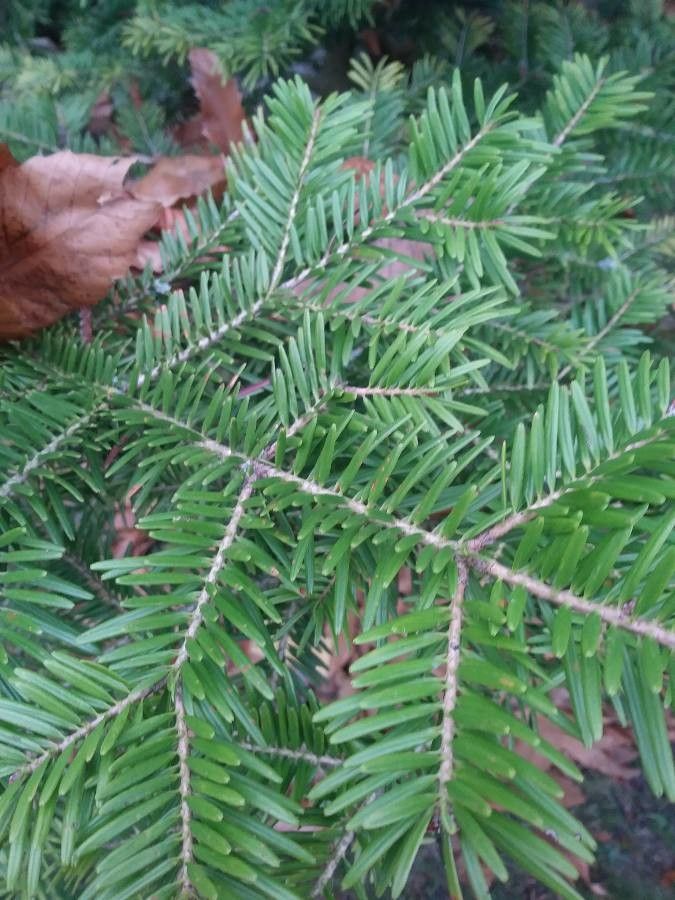
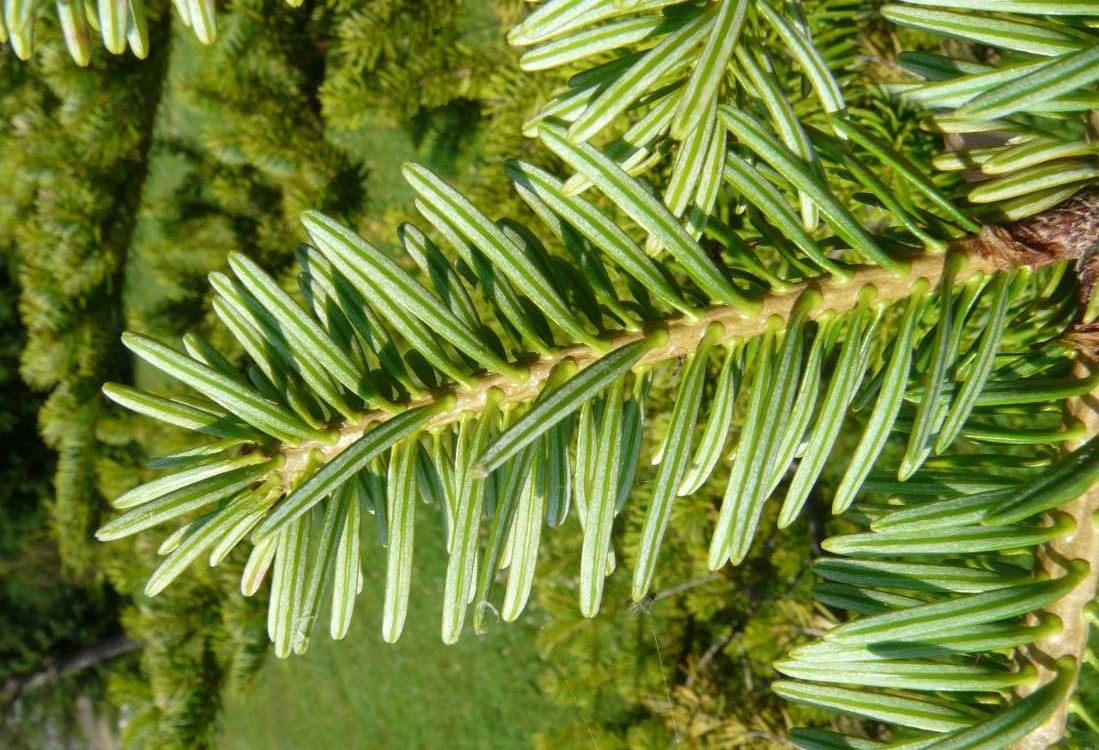
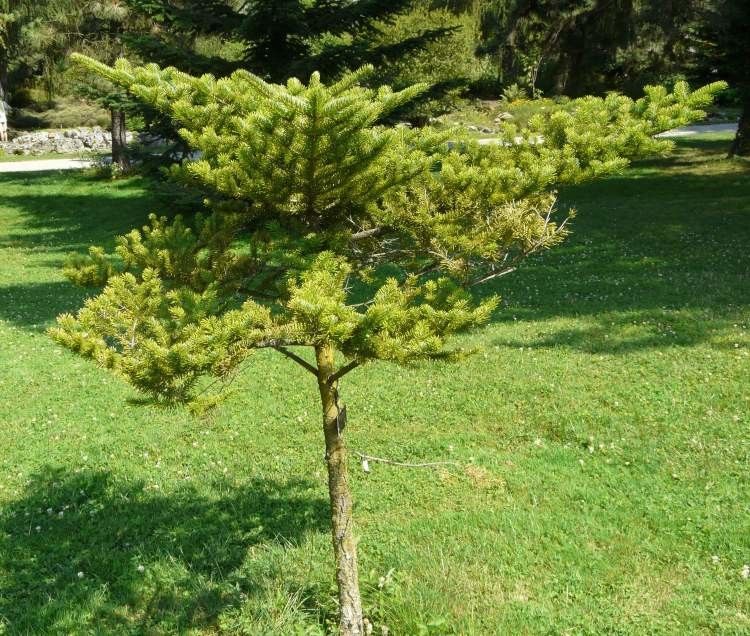
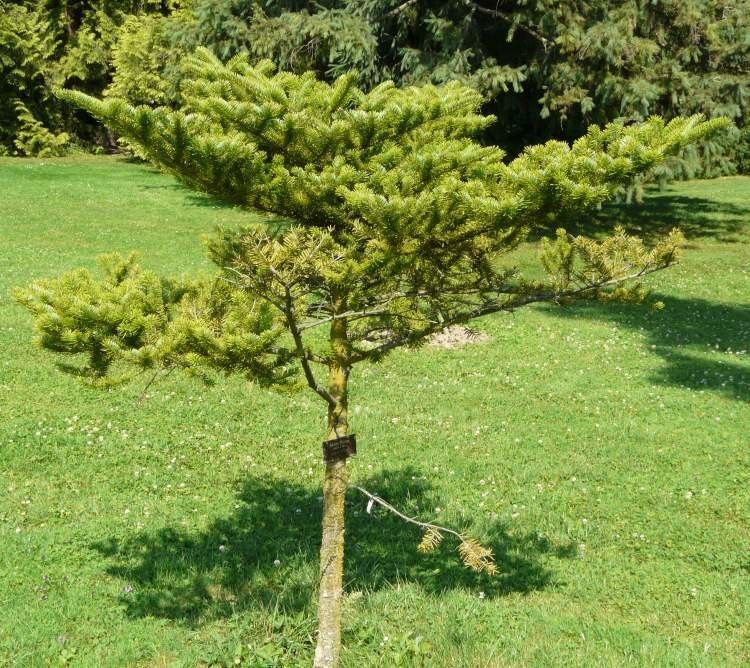
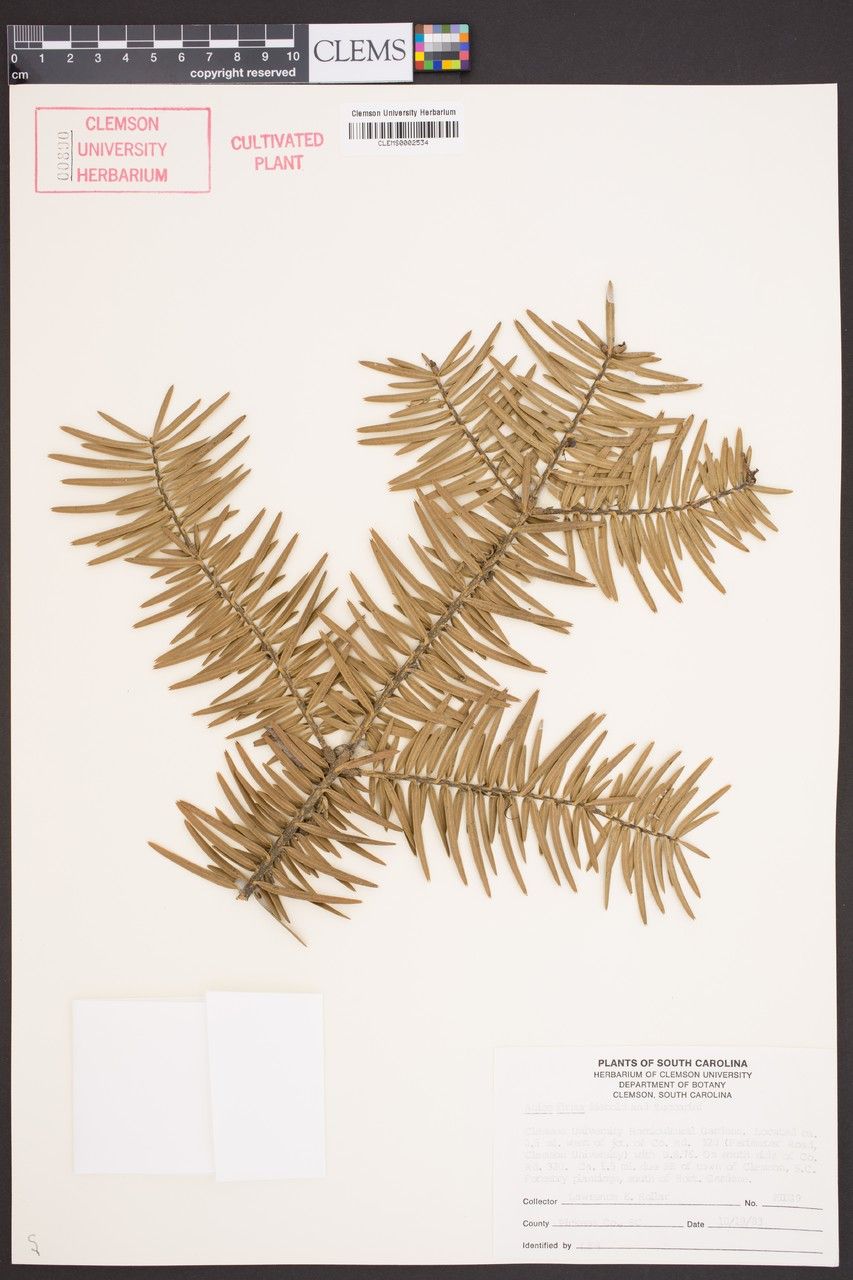
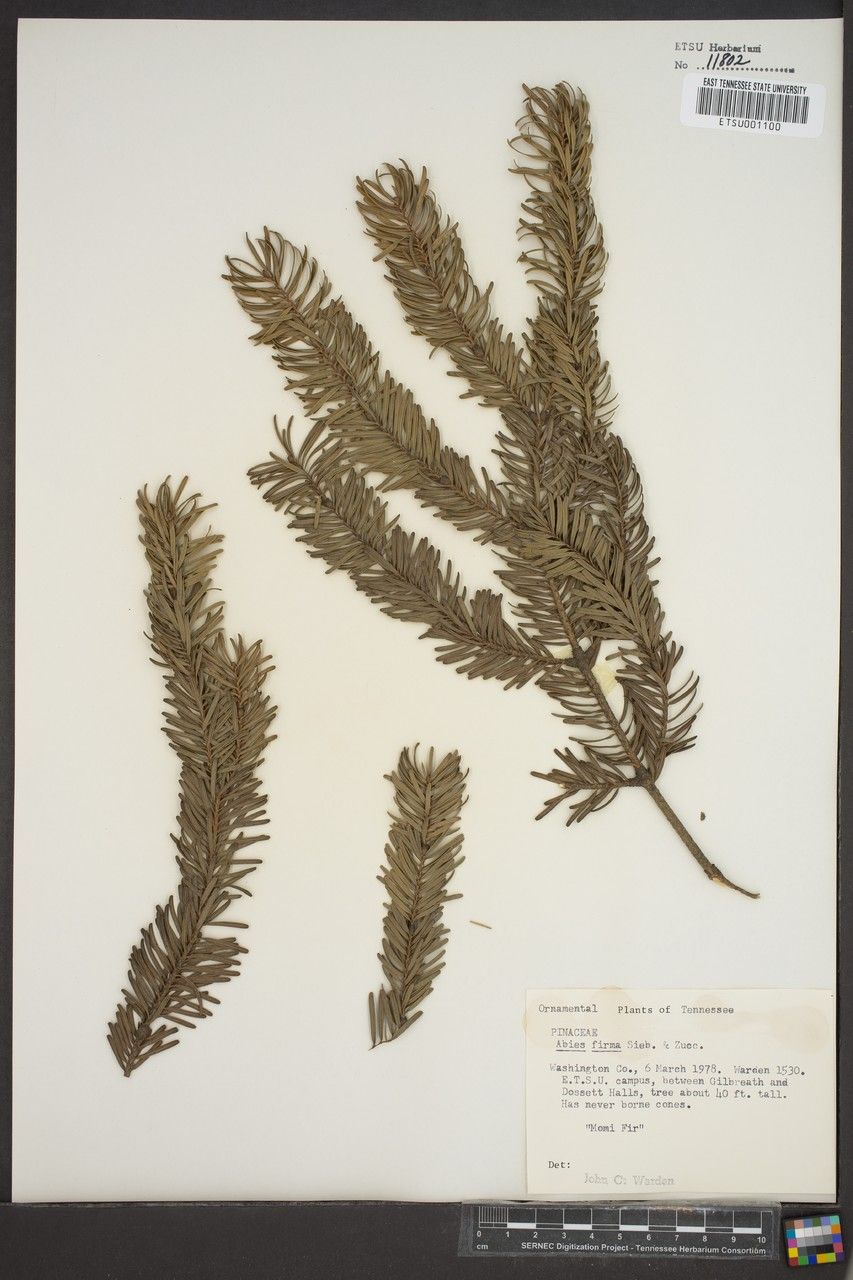
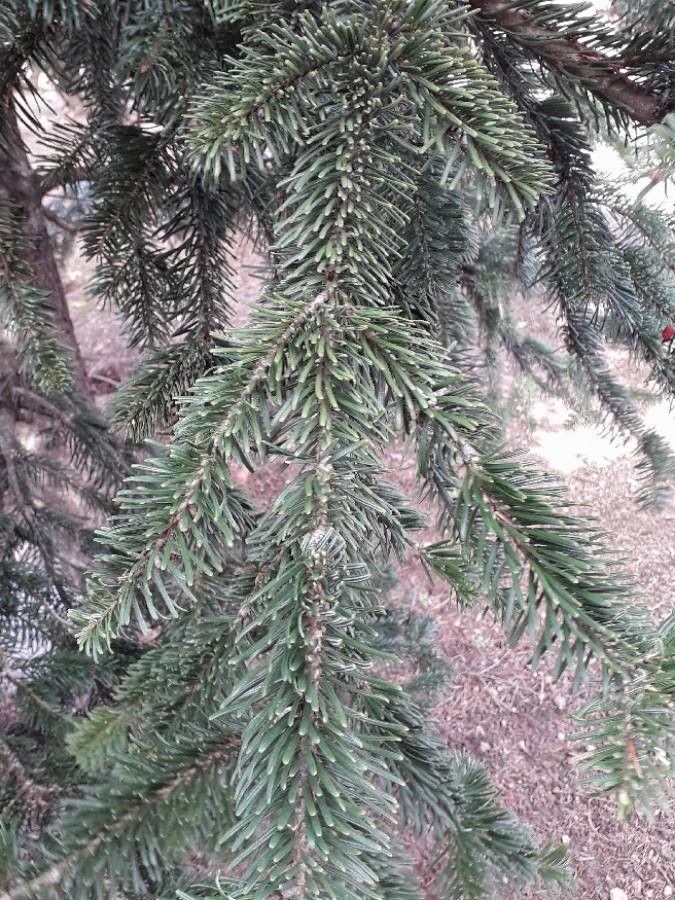
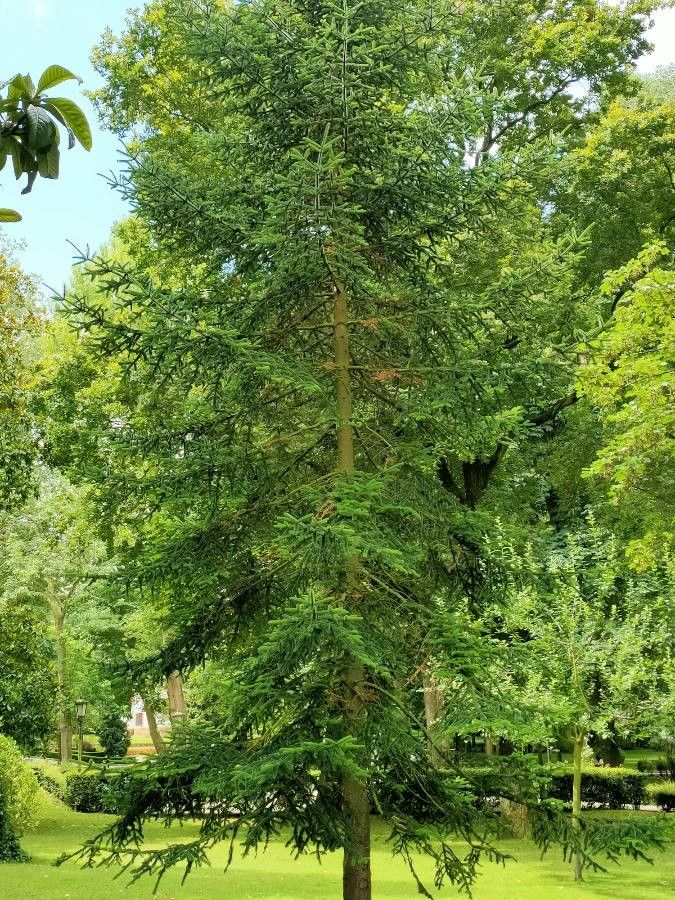
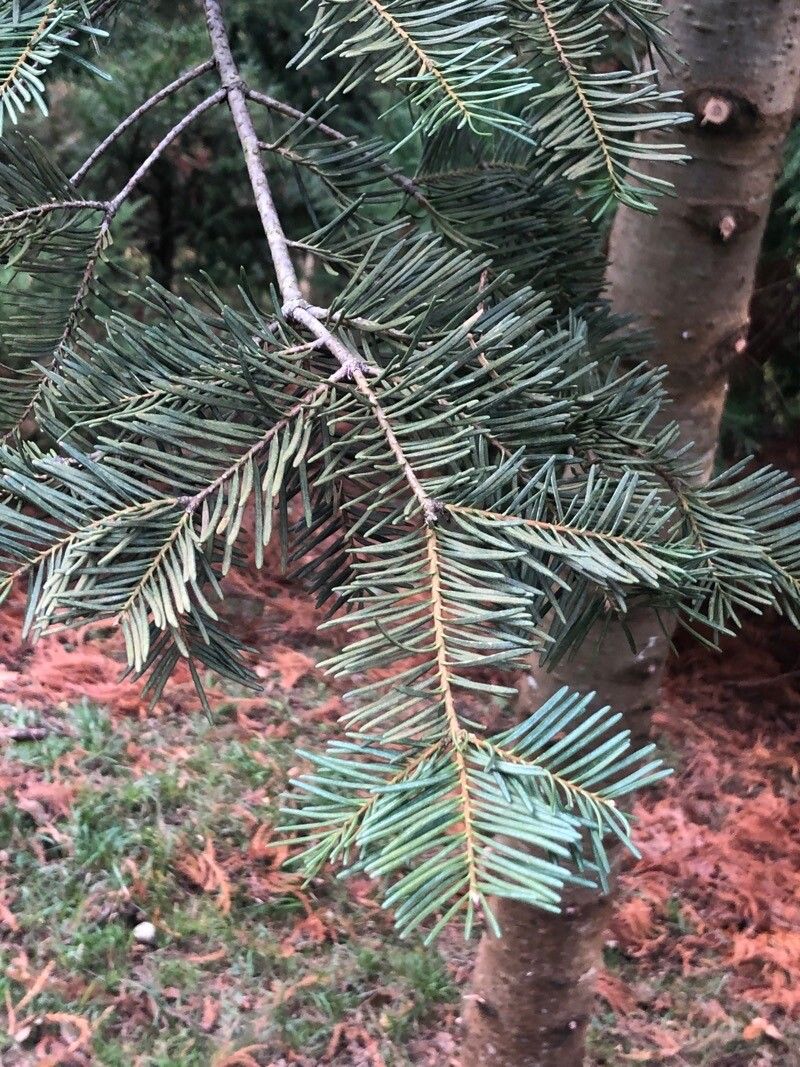
Abies firma, the momi fir, is a species of fir native to central and southern Japan, growing at low to moderate altitudes of 50–1600 m. Abies firma is a medium-sized to large evergreen coniferous tree growing to 50 metres (160 ft) tall and 2 metres (6 ft 7 in) in trunk diameter, with a broad conical crown of straight branches rising at an angle of about 20° above horizontal. The bark is scaly grey-brown, with resin blisters on young trees. The shoots are grooved, buff to grey-brown, glabrous or finely pubescent. The leaves ("needles") are flattened, 2–5 centimetres (0.79–1.97 in) long and 2–4 millimetres (0.079–0.157 in) broad, spread at nearly right angles from the shoot; the apex is sharp, bifid (double-pointed) on the leaves of young trees, single-pointed on mature trees. They are bright green above, and greyish-green below with two broad stomatal bands. The cones are 7–15 centimetres (2.8–5.9 in) long by 3–5 centimetres (1.2–2.0 in) wide, green maturing yellow-brown, tapering to a 2–3 centimetres (0.79–1.18 in) broad bluntly rounded apex. The scale bracts are exserted 3–6 millimetres (0.12–0.24 in), triangular. The seeds are 7–9 millimetres (0.28–0.35 in) long with a wedge-shaped wing 1.5 centimetres (0.59 in) long, are released after the cones disintegrate at maturity in October. Momi fir is sometimes, but not commonly, used as an ornamental tree, particularly in warm temperate regions with hot, humid summers such as the southeastern United States. It is also used as a grafting understock for fir cultivars in these areas.
Momi fir has strong resistance to disease and is generally unlikely to be affected by illnesses. Regarding care, this plant is relatively low-maintenance. Planted outdoors it needs only minimal watering, and larger specimens typically do not require pruning. Smaller plants, however, should be pruned after they have finished blooming. Momi fir is suitable for anyone with an outdoor area, such as a garden or deck, and does not demand a lot of horticultural experience.
How to keep Abies Firma.
Light
Momi fir comes from open habitats, such as sunny meadows and the edges of forests, which supply plenty of light. It performs best in Full Sun but can also tolerate Partial Sun, adapting well to a range of light conditions.
Water
The Momi fir thrives in mountainous terrains and is adaptable to both moist and dry conditions. For optimal growth, it should be watered every 1-2 weeks. As an evergreen, the Momi fir retains its needles best when the soil has sufficient moisture, which enhances its foliage display year-round.
Temperature
Momi fir comes from environments where temperatures generally fall between 50 to 95 °F (10 to 35 °C). It does well in those conditions; any temperature adjustments should be made carefully according to seasonal changes.
Fertilizer
Momi fir has particular nutrient needs and does not require heavy fertilization. Spring is the best time to fertilize for optimal growth. Supplying nutrients improves its health, increases its resistance to pests and diseases, and helps maintain its long lifespan.
Pruning
The Momi fir is a coniferous evergreen tree known for its strong, symmetrical shape and dense foliage. To keep it healthy, you should prune it from early to late winter, focusing on removing any dead or damaged branches. It's best to avoid heavy pruning. Instead, perform regular thinning to improve air circulation and overall health. Always use clean, sharp tools to prevent infections.
Botanical profile.
- Plant Type
- Tree
- Life Cycle
- Perennial
- Genus
- Abies
- Family
- Pinaceae
- Hardiness Zone
- 6-9
- Mature Height
- 12.19 m to 21.34 m
- Mature Spread
- 3.05 m to 4.57 m
- Leaf Color
- Dark Green
- Leaf Type
- Evergreen
- Bloom Time
- Mid spring, Late spring
- Planting Time
- Spring, Summer, Autumn
- Harvest Time
- Late summer, Early fall, Mid fall
- Native Area
- Japan
Other names.
Reader questions.
What are the sunlight requirements for Momi fir?
Momi fir, or Abies firma, thrives in various sunlight conditions. For full sun exposure, it requires above 6 hours of sunlight daily, whereas for partial sun, about 3-6 hours of sunlight is sufficient. It's important to observe how sunlight moves through your garden throughout the day. Selecting the optimal spots that offer a perfect balance of light and shade will ensure the well-being of your Momi fir.
What is the origin of Momi fir?
Momi fir, scientifically known as Abies firma, originates from environments where the temperatures typically range from 50 to 95 °F (10 to 35 °C). It thrives in these conditions, suggesting that it is well-suited to a fairly wide range of moderate temperatures. When caring for Momi fir, it is important to consider adjustments in temperature, especially with the changing seasons, to ensure that the environment remains conducive for its growth.