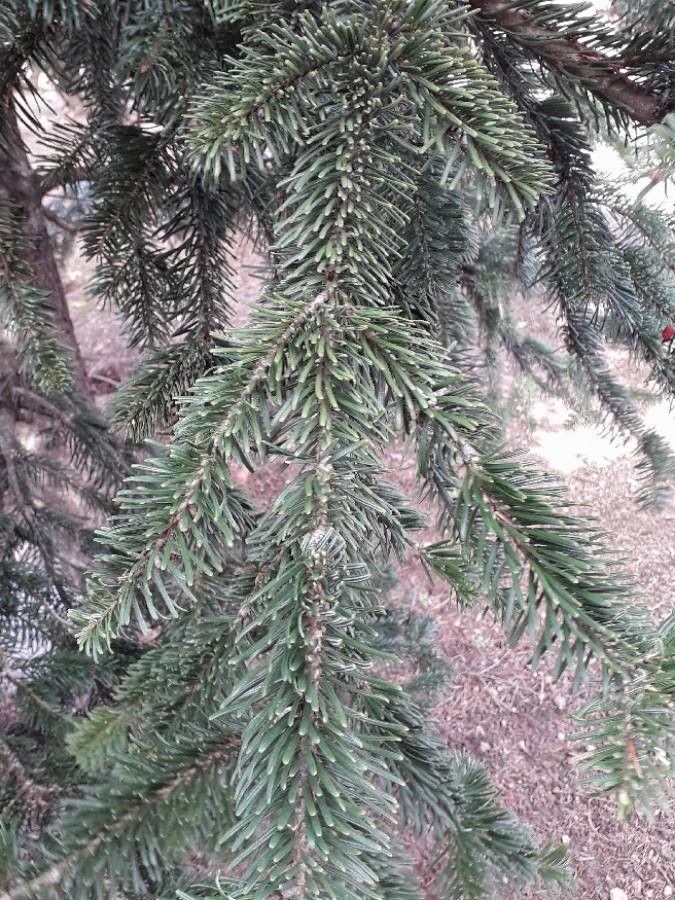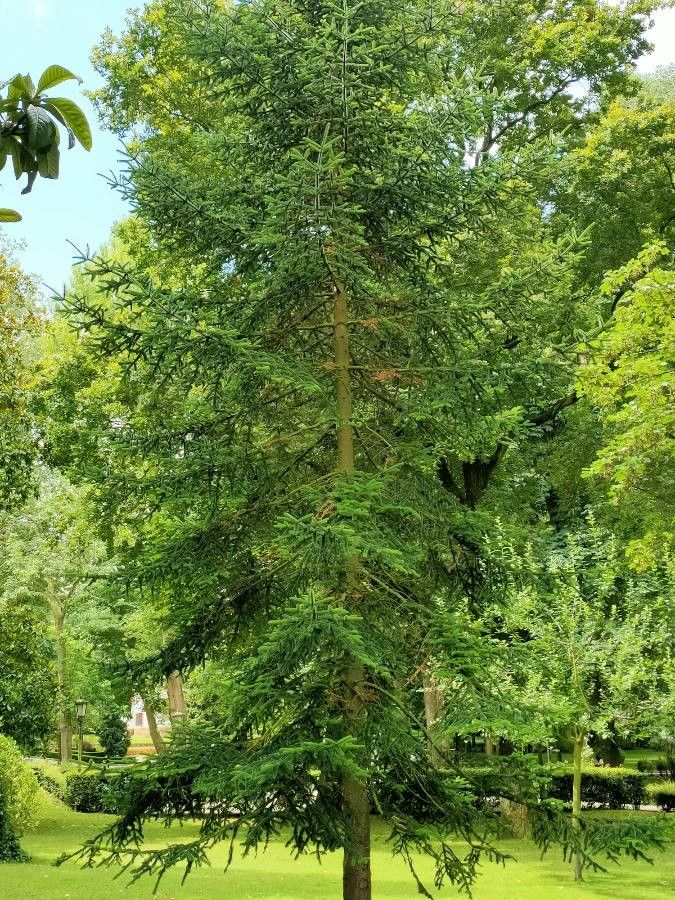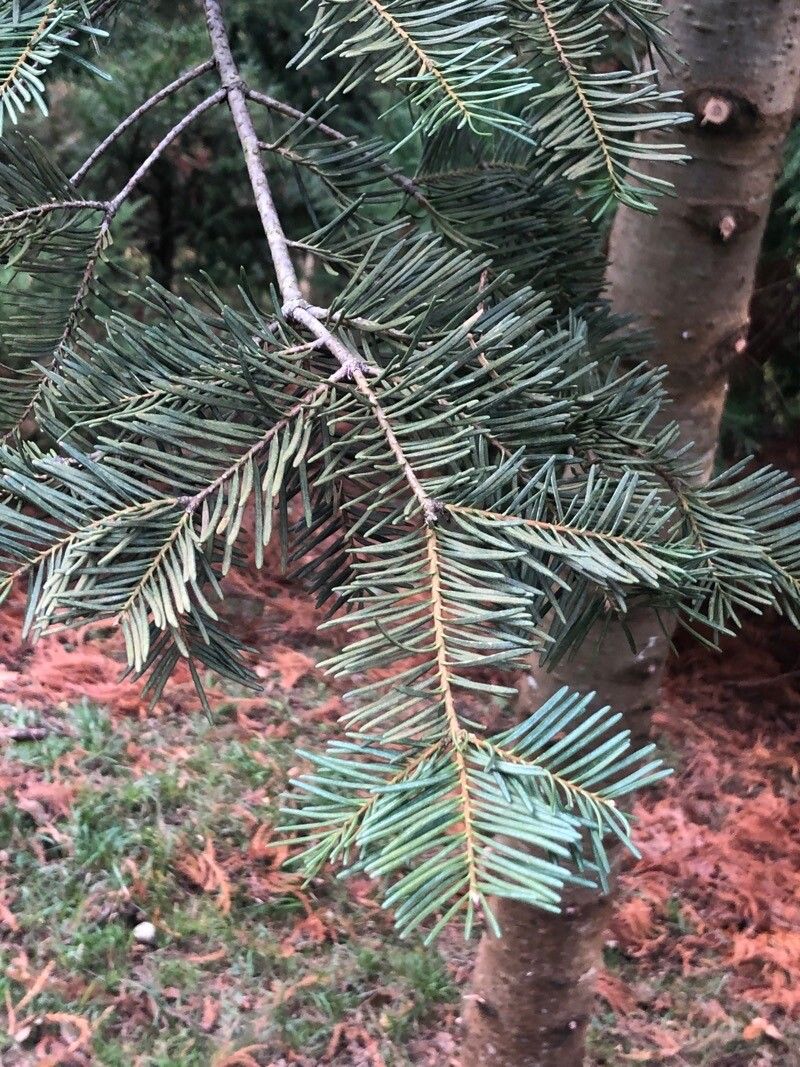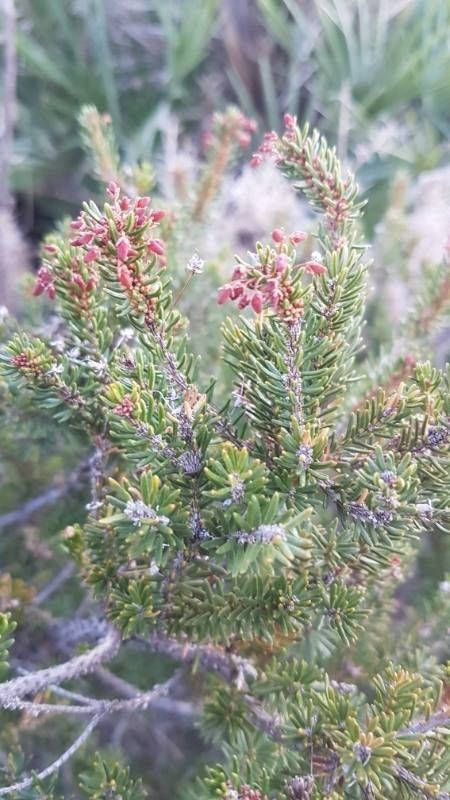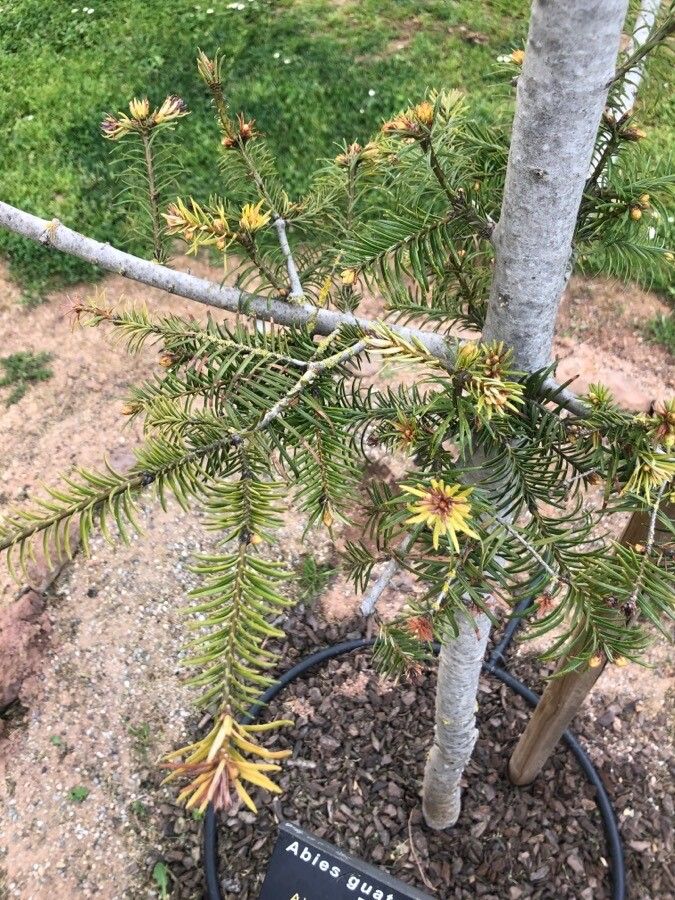
Abies guatemalensis, the Guatemalan fir or pinabete, is an evergreen tree native to Central America and is the southernmost member of the genus Abies being spread to the south lower than 14° N. Its range is from southern (less from western and central) Mexico in the north to Honduras and El Salvador in the south. It is a warm-loving and moisture-loving tree of the tropical mountain coniferous and mixed cloud forests of these countries. The Guatemalan fir is an almost completely non-frost-resistant tree. Due to logging and loss of habitat, the tree is considered threatened and is protected in CITES Appendix I.
The Guatemalan fir is resistant to disease and is typically not susceptible to illnesses. Regarding care, this plant is fairly low-maintenance. When grown outdoors it needs minimal watering, and larger plants generally do not need pruning. However, smaller plants should be pruned after they have finished blooming. The Guatemalan fir is suitable for anyone with an outdoor area, such as a garden or deck, and does not require much prior care experience.
How to keep Abies Guatemalensis.
Light
The Guatemalan fir naturally grows in habitats like forest understories or rocky sites, where it occurs in natural shade. It prefers partial sun but can adjust to full sun or full shade, showing its versatile, hardy nature.
Water
During the summer, water the Guatemalan fir more frequently, ideally twice a week. Make sure the soil stays moist but not waterlogged. In the spring and fall, watering once a week is sufficient. Adjust the watering schedule based on the climate and the soil's moisture levels. Avoid watering in the winter or after rainfall.
Fertilizer
The Guatemalan fir has specific nutrient needs and does not require heavy fertilization. Fertilizing in spring is best for achieving optimal growth. Providing nutrients improves its health, increases its resistance to pests and diseases, and helps sustain a long lifespan.
Pruning
The Guatemalan fir features dense, pyramidal foliage and should be pruned in early spring. Important techniques to follow include removing dead branches and thinning the tree to maintain its natural shape, ensuring you use clean tools. This process improves air circulation, reduces the risk of disease, and encourages strong growth. For optimal healing, make cuts just outside the branch collar.
Botanical profile.
- Plant Type
- Tree
- Life Cycle
- Perennial
- Genus
- Abies
- Family
- Pinaceae
- Hardiness Zone
- 7-10
- Mature Height
- 29.87 m to 45.11 m
- Mature Spread
- 6.1 m to 10.06 m
- Leaf Color
- Dark Green, Forest Green
- Leaf Type
- Evergreen
- Bloom Time
- Mid spring, Late spring
- Planting Time
- Spring, Autumn
- Harvest Time
- Late summer, Early fall, Mid fall
- Native Area
- El Salvador, Honduras, Mexico, Guatemala