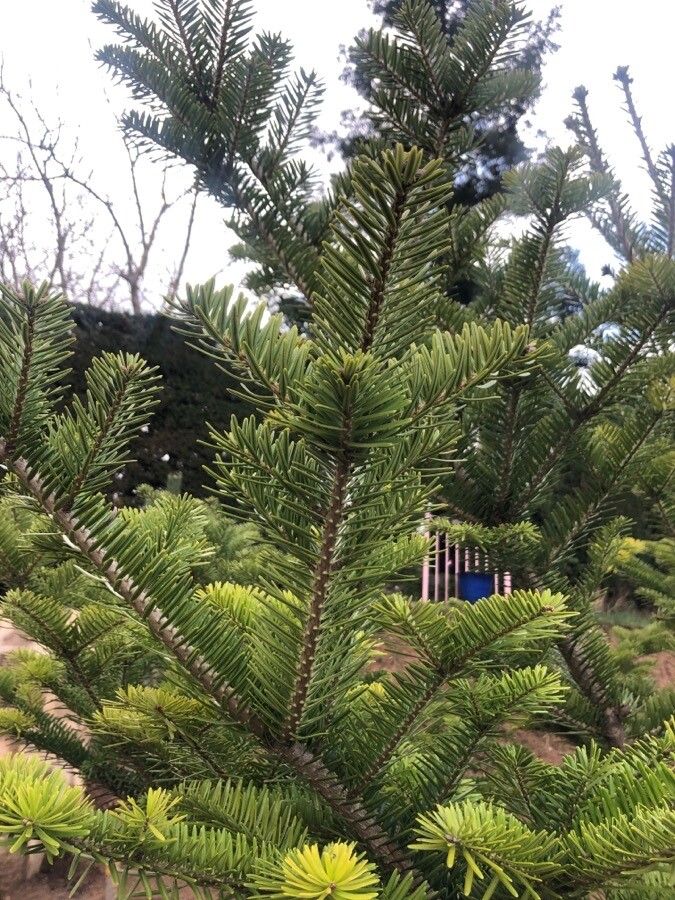
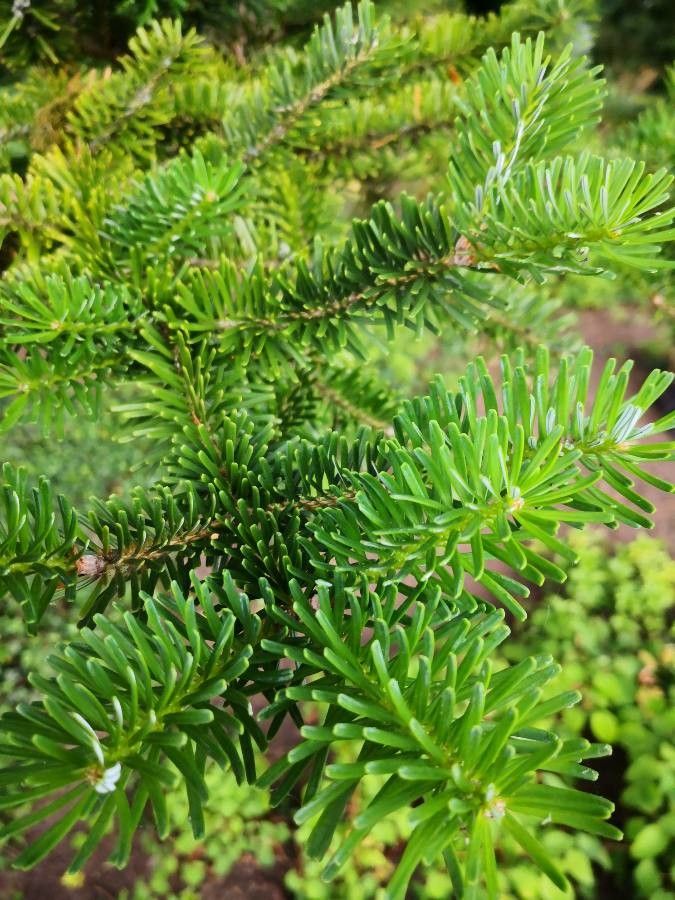
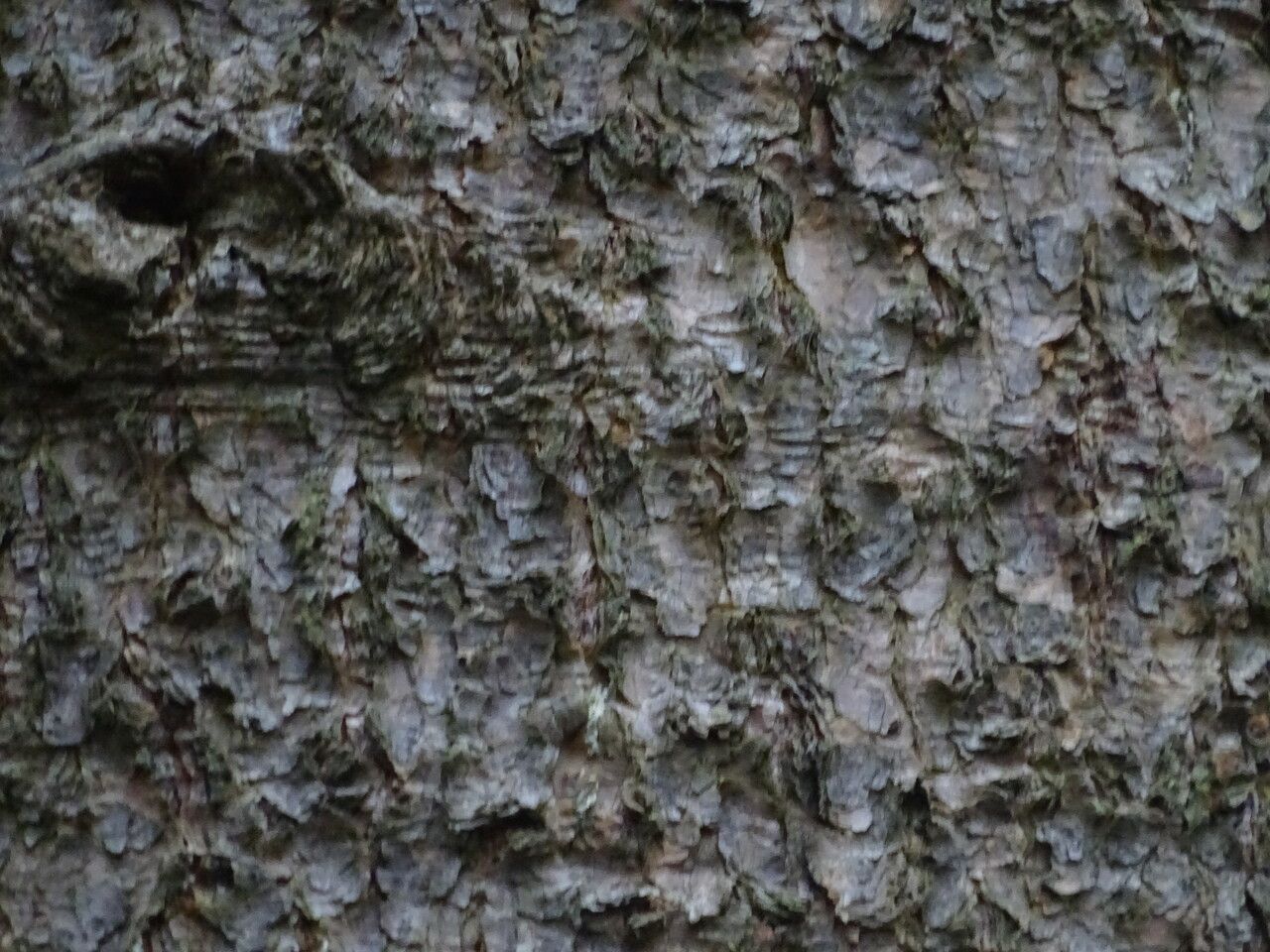
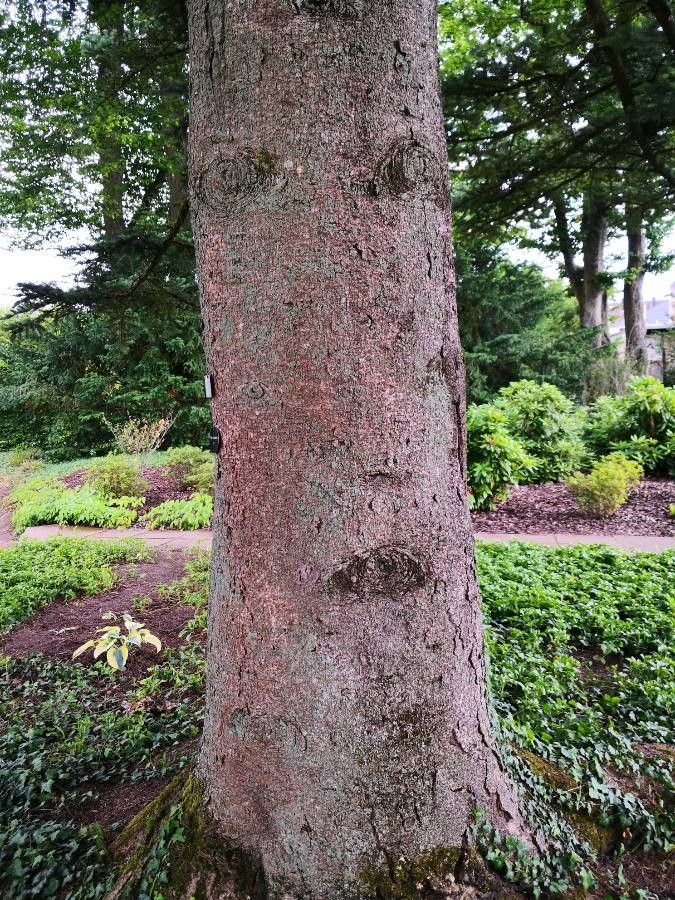
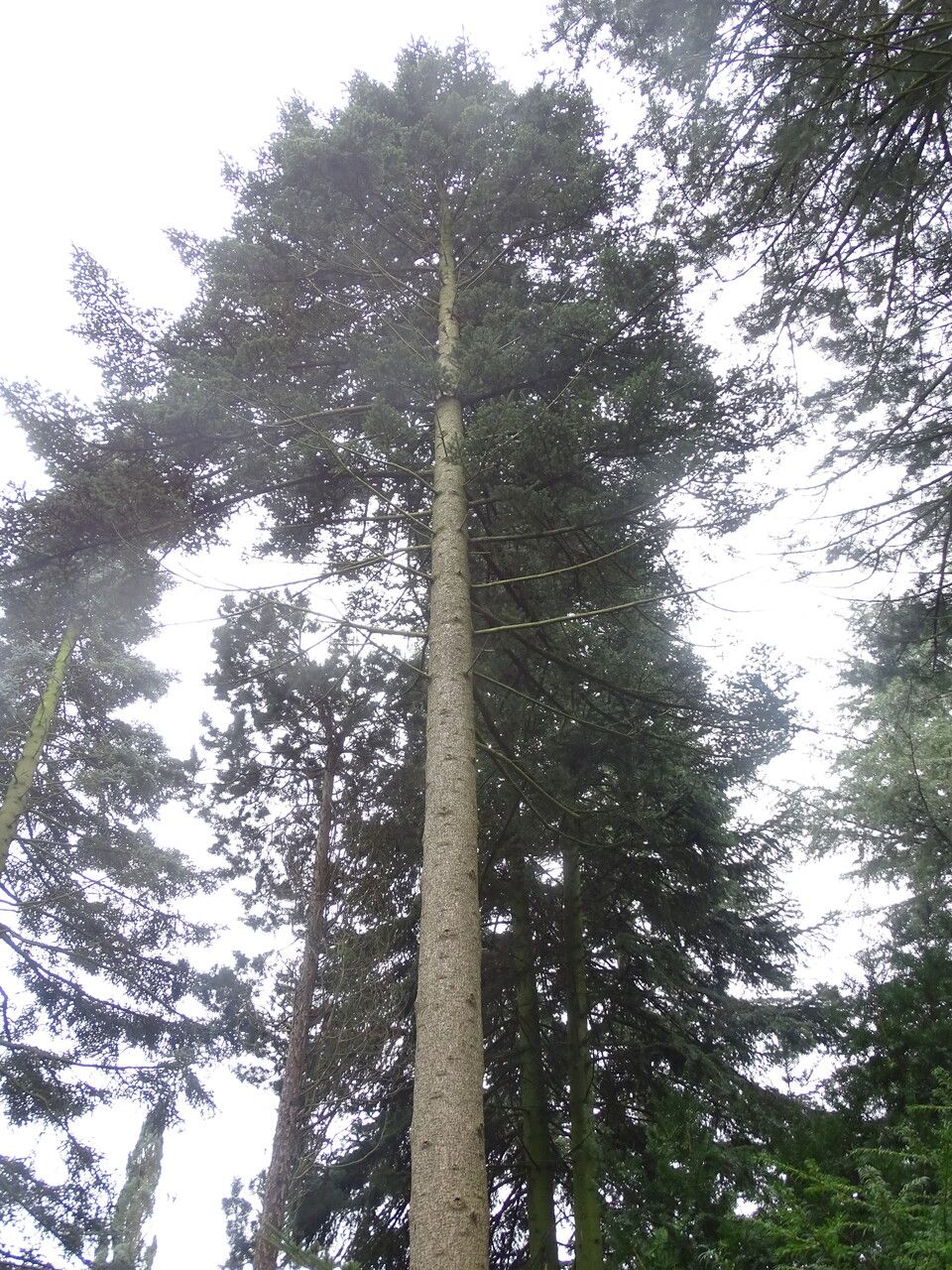
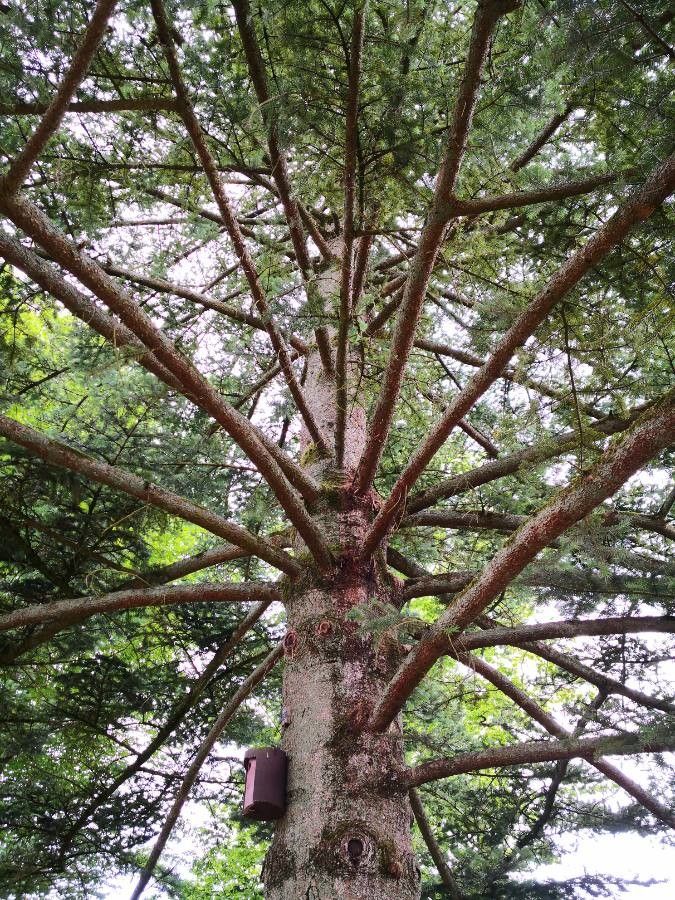
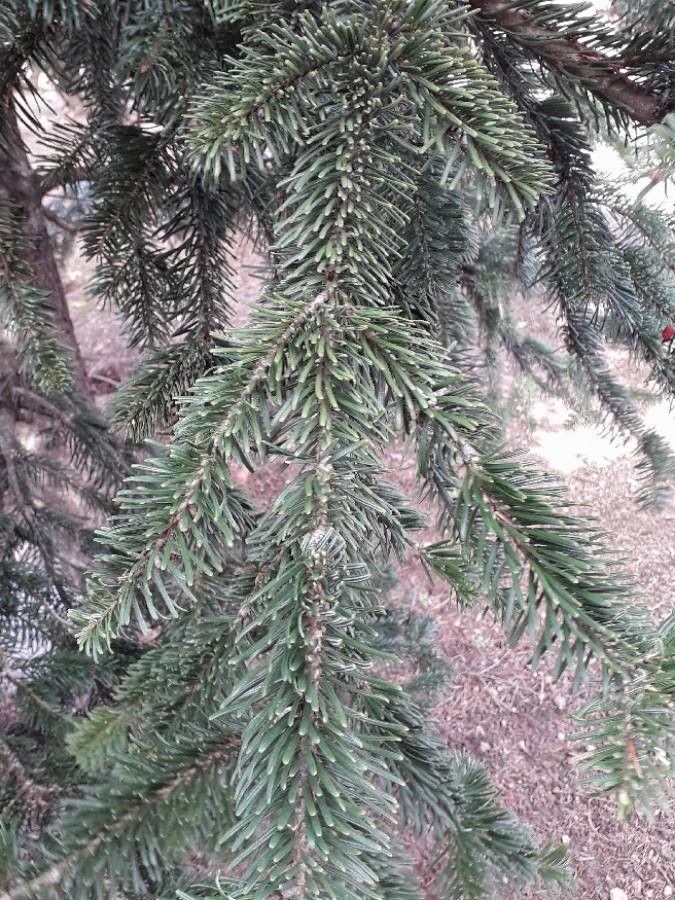
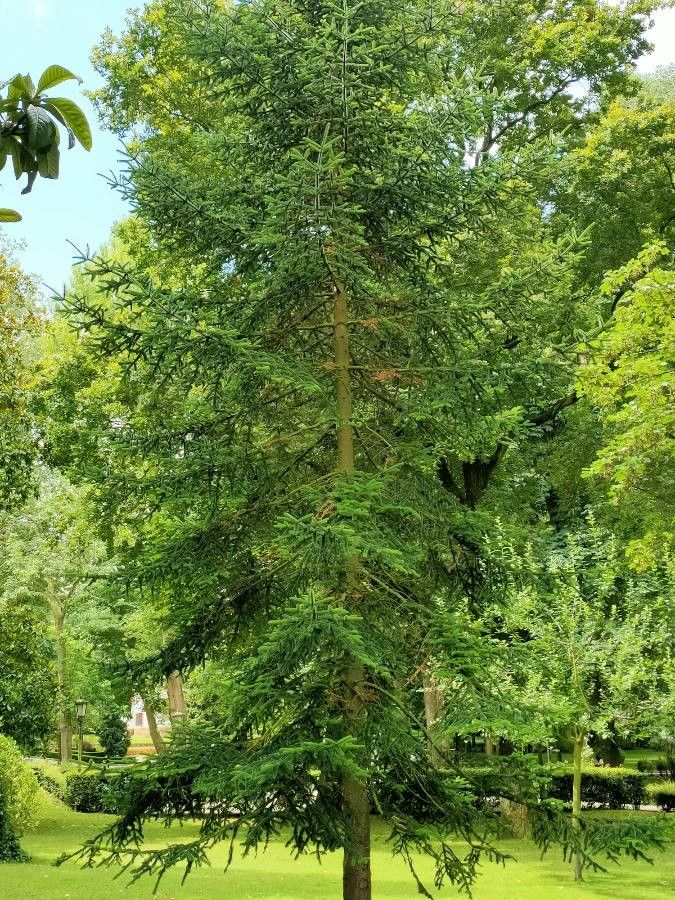
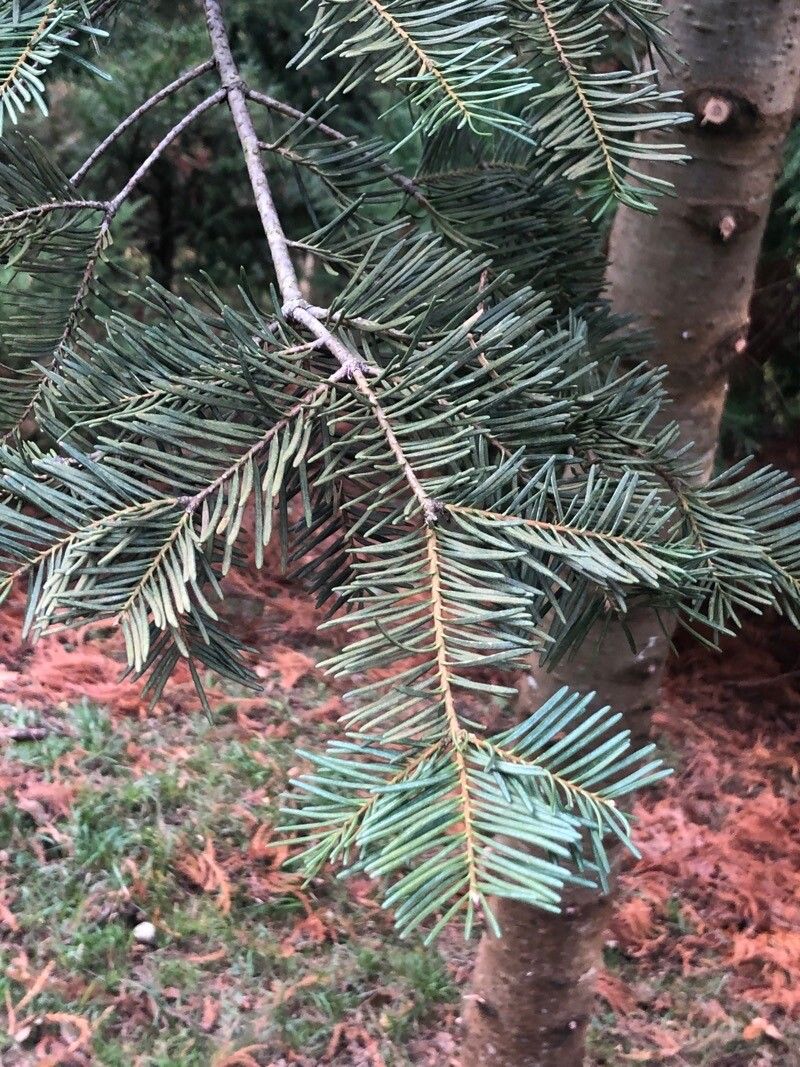
Abies homolepis, the Nikko fir (in Japanese ウラジロモミ, urajiro-momi) is a fir native to the mountains of central and southern Honshū and Shikoku, Japan. It grows at altitudes of 700–2,200 m, often in temperate rain forest with high rainfall and cool, humid summers, and heavy winter snowfall. It is a medium-sized to large evergreen coniferous tree growing to 30–40 m tall with a trunk diameter of up to 1.5 m. The leaves are needle-like, flattened, 1.5–3.5 cm long and 2–3 mm wide by 0.5 mm thick, glossy green above, and with two white bands of stomata below, and rounded or slightly notched at the tip. The leaf arrangement is spiral on the shoot, but with each leaf variably twisted at the base so they lie partially flattened to either side of and above the shoot, with few below the shoot. The shoots are yellow-buff, glabrous, and often conspicuously grooved. The cones are 6–12 cm long and 3–4 cm broad, purple-blue before maturity; the scale bracts are short, and hidden in the closed cone. The winged seeds are released when the cones disintegrate at maturity about 6–7 months after pollination.
Nikko fir has strong disease resistance and is generally not susceptible to illnesses. In terms of care, this plant is fairly low-maintenance. When grown outdoors it needs only minimal watering, and larger plants typically do not require pruning. Smaller plants, however, should be pruned after they have finished blooming. Nikko fir is suitable for anyone with an outdoor area, such as a garden or deck, and does not need much prior plant-care experience.
How to keep Abies Homolepis.
Light
Nikko fir originates in open habitats, such as sunny meadows and forest margins, which supply abundant light. It thrives in Full Sun but can also tolerate Partial Sun, adapting well to a range of sunlight conditions.
Water
The Nikko fir thrives in cool, humid climates and prefers evenly moist soil. It needs watering every 1-2 weeks. Adequate moisture is especially important for its health and needle retention, particularly during its active growth period in cooler conditions.
Temperature
Nikko fir shows strong adaptability to a range of climate conditions, whether facing scorching summers or chilly winters. However, it still has an optimal temperature range for growth. If temperatures become excessively high, the plant is susceptible to heat and humidity stress that can lead to its death. In areas where temperatures near the lower limit of its cold tolerance, it is important to apply insulating measures to protect the plant.
Fertilizer
Nikko fir has specific nutrient needs and does not require heavy fertilization. Spring is the best time to apply fertilizer for peak growth. Supplying nutrients enhances its health, raises its resistance to pests and diseases, and helps sustain a long lifespan.
Pruning
The Nikko fir is an excellent choice for ornamental purposes, thanks to its dense, pyramid-shaped green foliage. For best results, prune the tree from early to late winter. During pruning, focus on removing dead branches and thinning out overcrowded areas to enhance air circulation. Be careful not to prune too heavily, as this can hinder robust growth and increase the risk of disease.
Botanical profile.
- Plant Type
- Tree
- Life Cycle
- Perennial
- Genus
- Abies
- Family
- Pinaceae
- Hardiness Zone
- 5-7
- Mature Height
- 9.14 m to 15.24 m
- Mature Spread
- 4.88 m to 7.92 m
- Leaf Color
- Green, White
- Leaf Type
- Evergreen
- Bloom Time
- Mid spring, Late spring
- Planting Time
- Spring, Autumn
- Harvest Time
- Late summer, Early fall, Mid fall
- Native Area
- Japan
Other names.
Reader questions.
How should I water my Nikko fir tree in the best way?
Watering a Nikko fir is a simple task. You can easily do this by using a garden hose to slowly soak the soil. For larger trees, the garden hose is the best tool as they require more water. However, for smaller trees, a watering can or other small tool will suffice. It's important to avoid overhead watering to prevent disease, especially for young trees.
Why should I put fertilizer on my Nikko fir tree?
To promote healthy growth, it is recommended to fertilize Nikko fir in the spring. As this plant has a long lifespan, it requires support. By adding nutrients to the soil, the plant's health can be improved, which in turn helps it resist common pests and diseases that can hinder growth or shorten its lifespan.
How many hours of sunlight does Nikko need each day to grow in a healthy way?
To promote healthy growth in Nikko fir, it needs a minimum of 3-6 hours of sun each day. While most plants that can tolerate part sun can also thrive in full sun, they are more adaptable than plants that specifically require full sun or part shade because they require less light for photosynthesis.
What is the botanical name of Nikko fir?
The botanical name of Nikko fir is Abies homolepis.
What should I do if I give my Nikko fir tree too much water or too little water?
Overwatering can be caused by poor soil that does not allow water to drain effectively when growing a Nikko fir. In this case, you can either improve the soil drainage or move the plant to a more suitable location. If you are growing the Nikko fir in a pot, you may need to repot it with looser soil and a container that allows for better drainage. Overwatered plants can also be prone to diseases, which should be treated promptly. To determine if your Nikko fir is overwatered, you can examine the foliage, especially the new growth. If the new growth is discolored or easily breaks, it may indicate excessive moisture. Standing water or slow drainage in the plant's growing area can also be signs of overly moist soil. On the other hand, underwatered Nikko fir trees may have sparse, brown leaves. If you notice these symptoms, consider if there has been excessive rainfall or consistently high temperatures, which can help you make the right assessment. To revive an underwatered Nikko fir, simply increase the frequency of watering, and the plant should recover and return to full health.
When should I fertilize my Nikko fir tree?
The growing medium may not always have enough nutrients for healthy growth, but Nikko fir is unique. It doesn't need a lot of extra nutrients like your typical garden plants. If you want to fertilize Nikko fir, it's best to do it in the spring before new growth starts.
What kind of sunlight does Nikko fir tree need?
Nikko fir thrives in full or partial sun. It prefers direct morning light but should be shielded from the intense afternoon sun during summer. Too much hot afternoon sun in temperate environments can scorch the leaves and harm the plant's overall look and well-being.
How often should I give water to my Nikko fir?
A mature Nikko fir is drought tolerant and mainly relies on rainfall for survival. During the hottest months, it may need to be watered about once a week, but during other seasons, watering may not be necessary. However, if the tree is newly planted, regular watering is important to establish its roots. It's crucial to avoid overwatering, as Nikko fir does not tolerate standing water. When unsure, it's better to skip watering rather than risking overwatering.
When is it best to not add fertilizer to my Nikko fir?
Certain plants benefit from regular fertilization, such as on a monthly or weekly basis. However, this is not the case for the Nikko fir. It actually does not need a high amount of additional nutrients. If too much fertilizer is applied, it can cause the Nikko fir to decline and begin dying. It is best to only use fertilizer in the spring while avoiding any application during the summer, fall, and winter seasons. Additionally, refrain from adding any organic matter to the soil during these times.
Can the sun harm Nikko fir trees? How can we prevent sun and heat damage to Nikko fir trees?
When moving Nikko fir plants from indoors to outdoors, direct sunlight can cause damage. To prevent sunburn, it is recommended to gradually move the pots from a shaded area to a brighter spot. However, even when acclimated to the sun, extreme heat can still harm the plants. To cope with excessive heat, it is crucial to keep the soil consistently moist. During a heatwave, relocating container plants to areas with afternoon shade or placing a shade cloth over them can provide protection for sensitive Nikko fir.
How much water does my Nikko fir tree need?
During the height of summer, it is important to water your Nikko fir. Normally, giving it about one inch of water per week is sufficient. However, if it has rained one inch or more that week, you don't need to water it. Keep in mind that newly planted Nikko fir requires more water during the establishment period. Usually, watering it once every one to two weeks for the first few growing seasons is recommended.
What kind of fertilizer does my Nikko fir tree need?
When considering the fertilizer for your plant, remember that the age of your plant is important. Despite this, it is good to know that Nikko fir does not need excessive nutrients. Look for a balanced plant food that promotes healthy root development and growth, but avoid fertilizers with high levels of nitrogen.