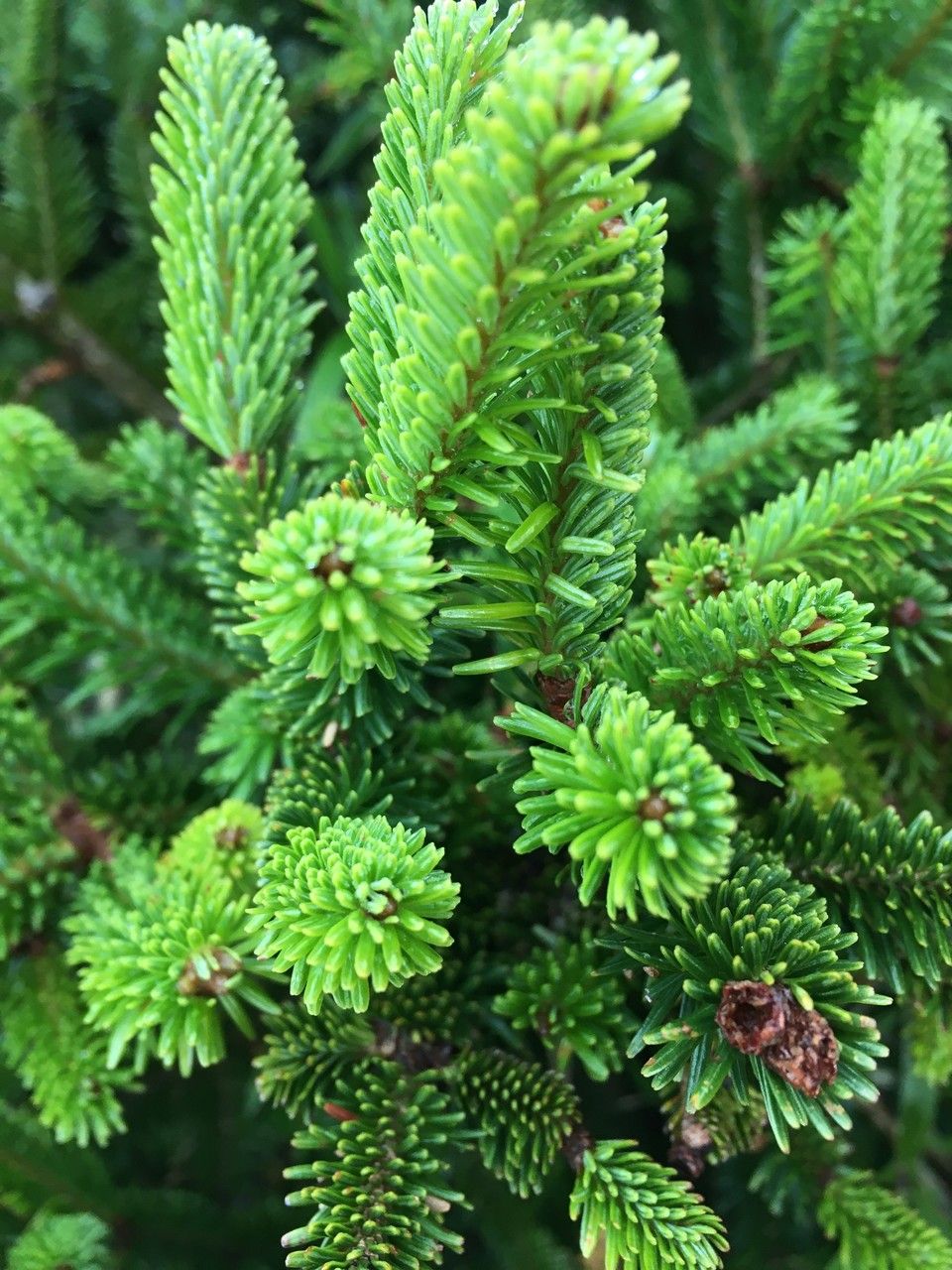
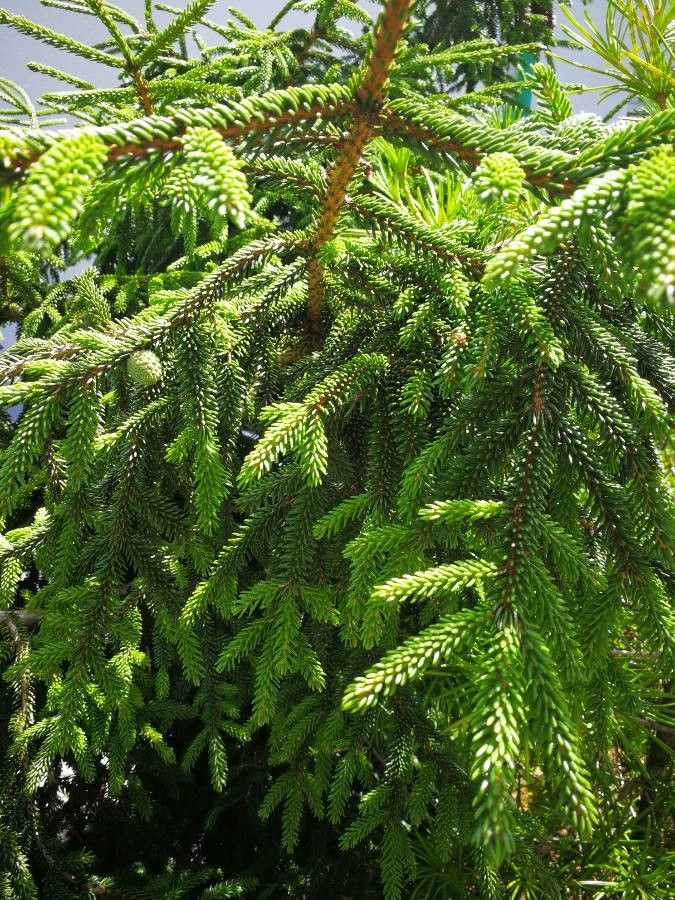
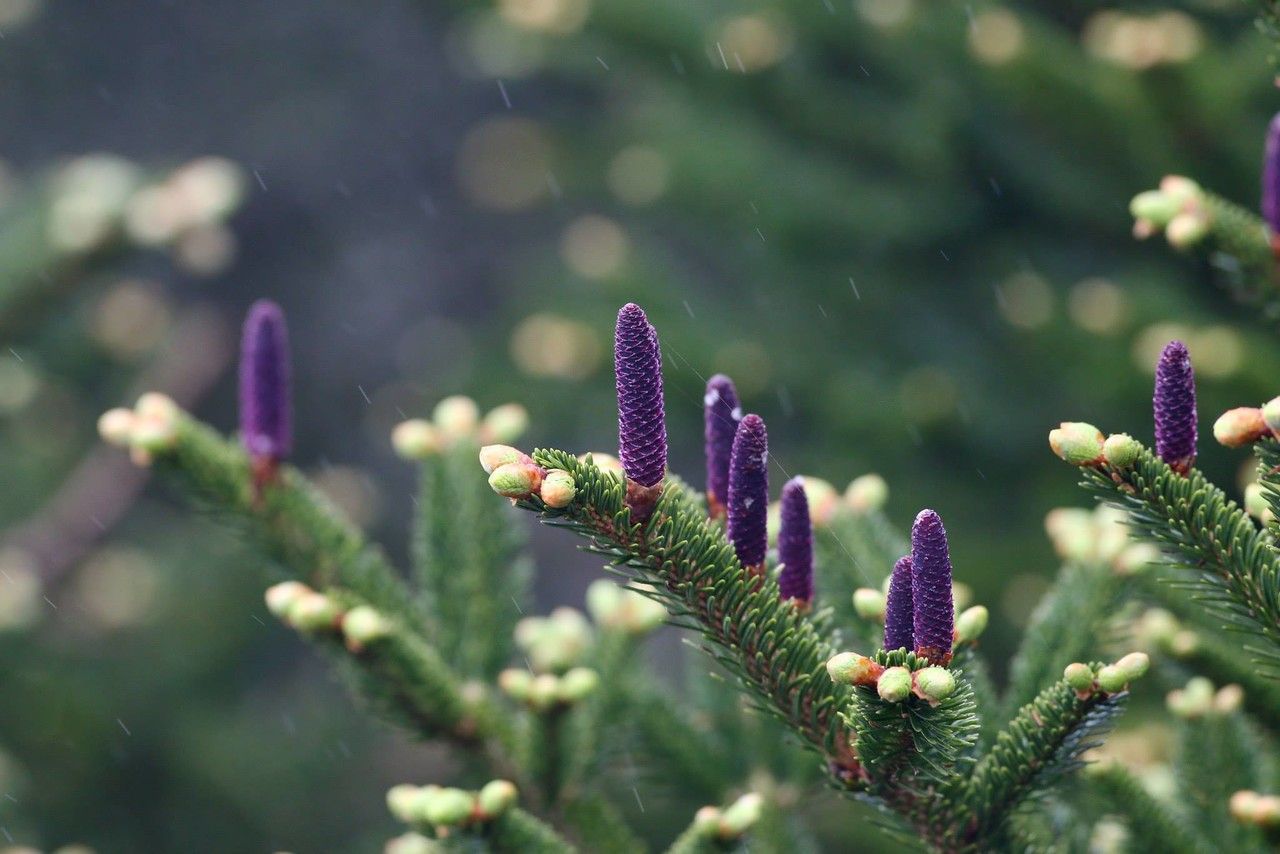
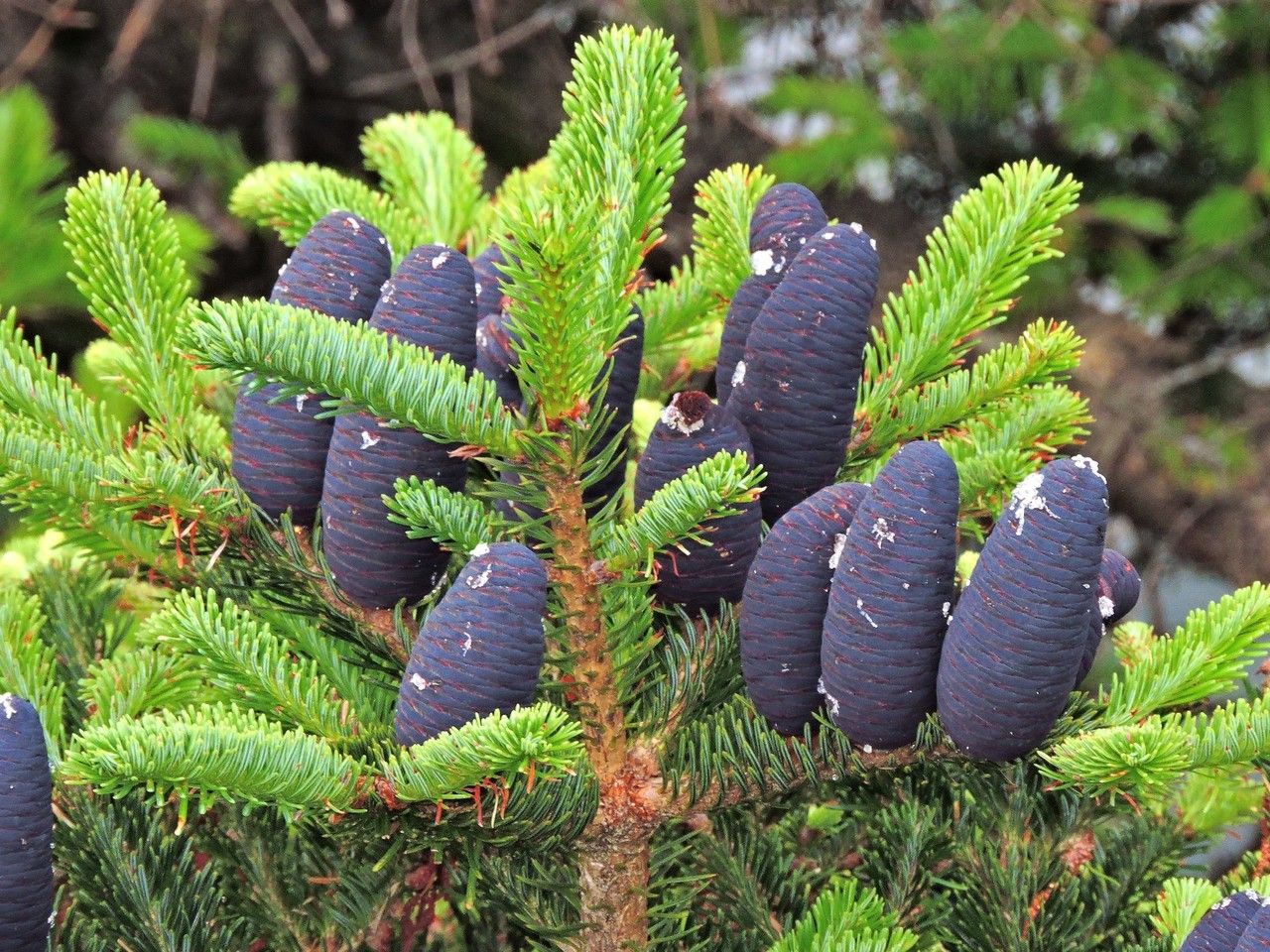
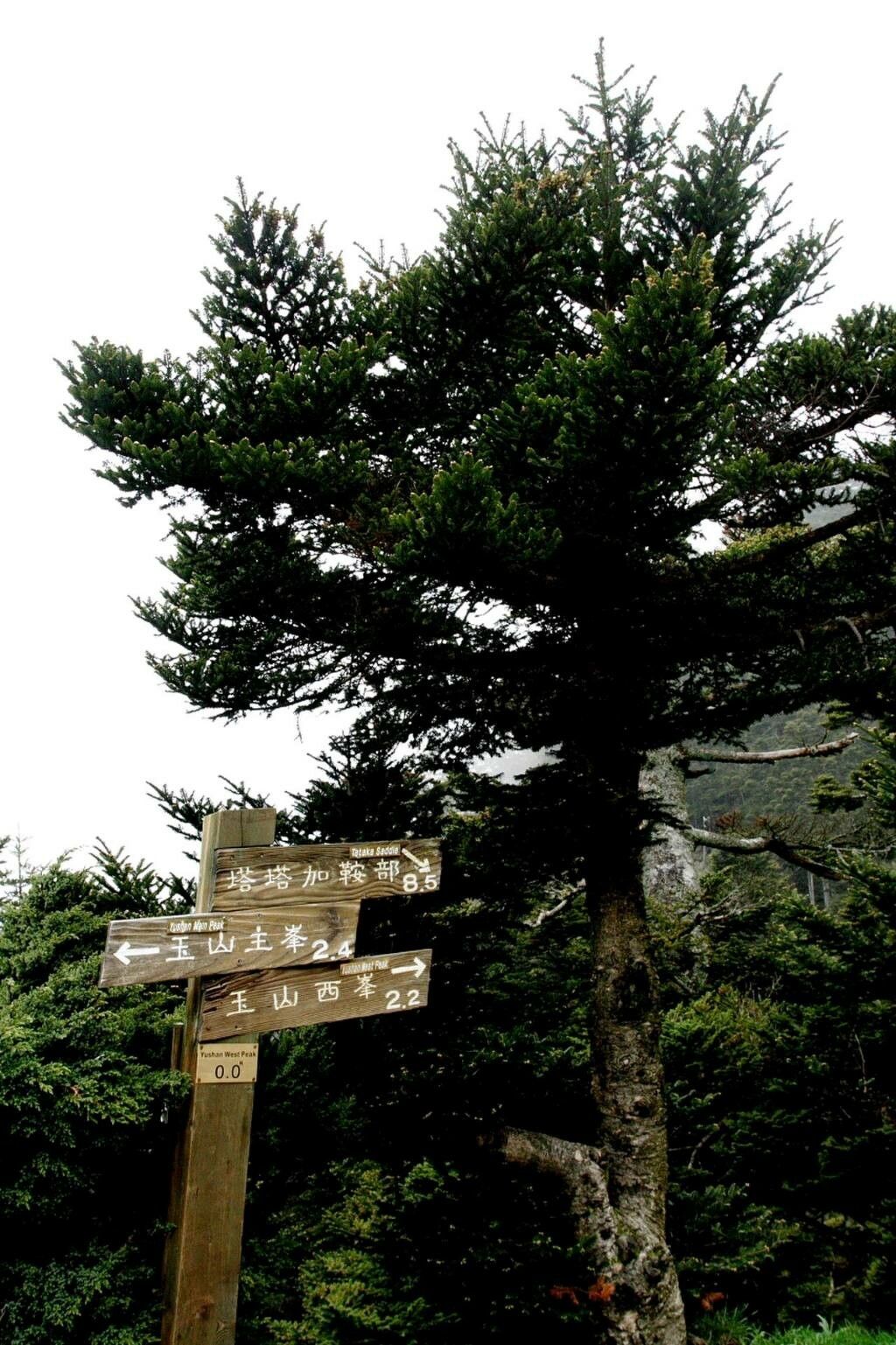
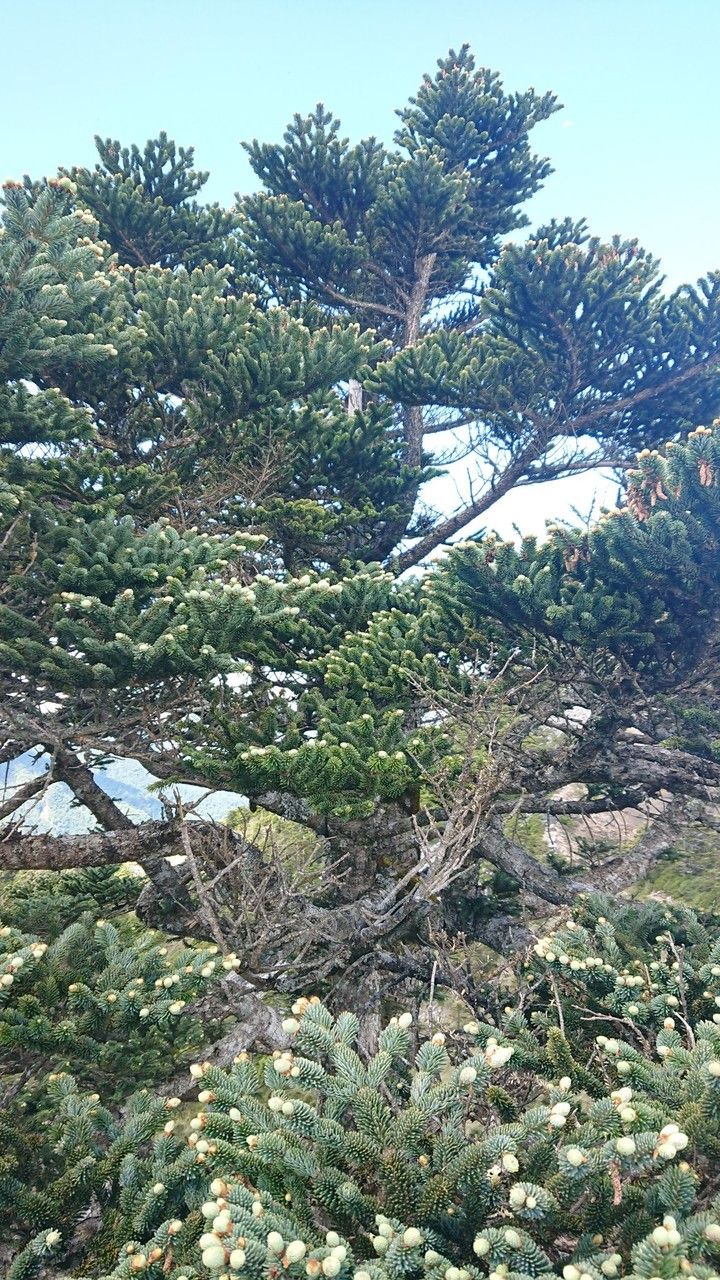
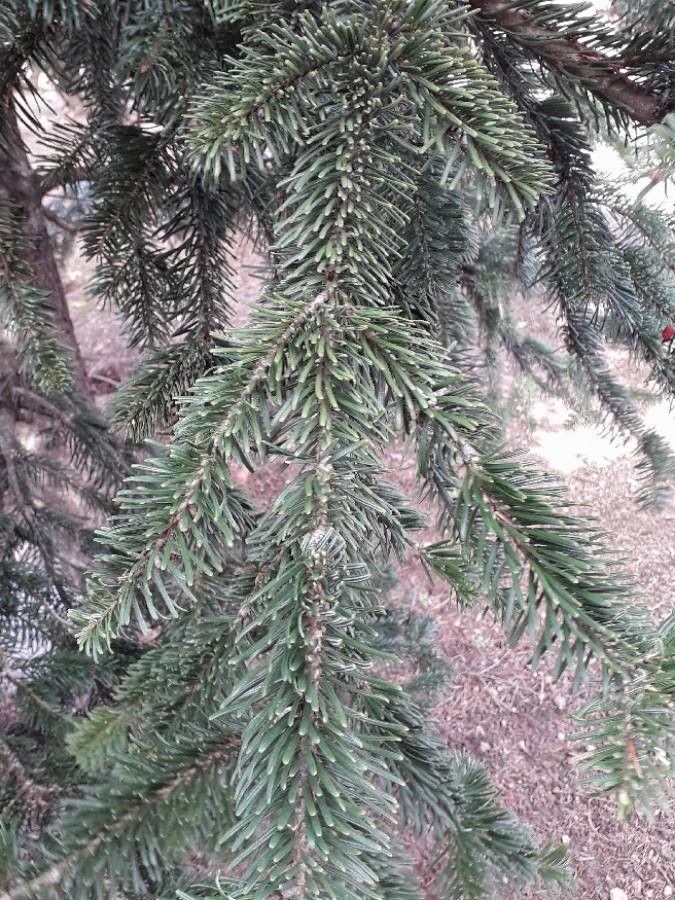
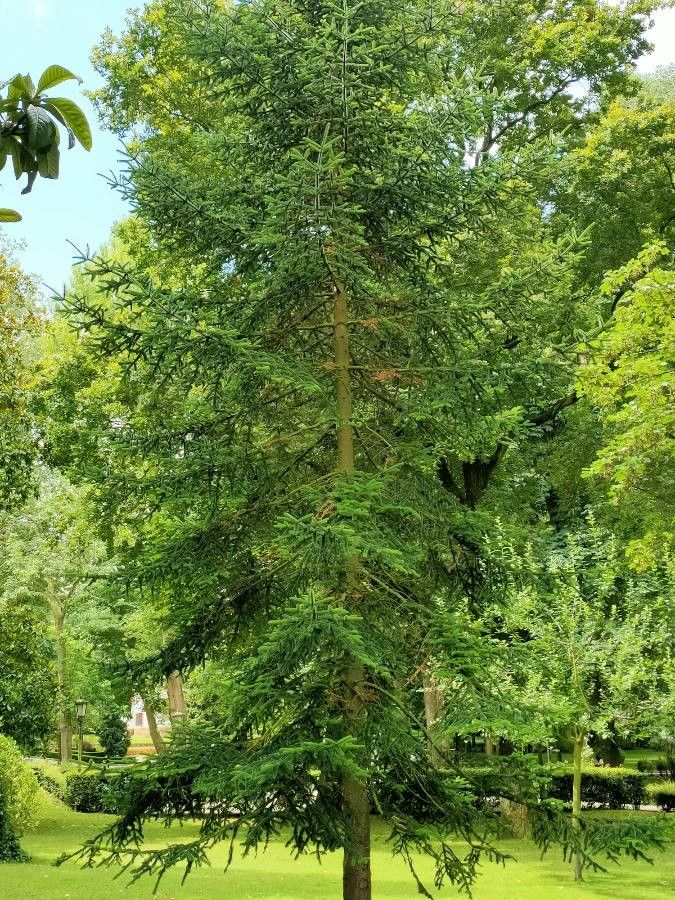
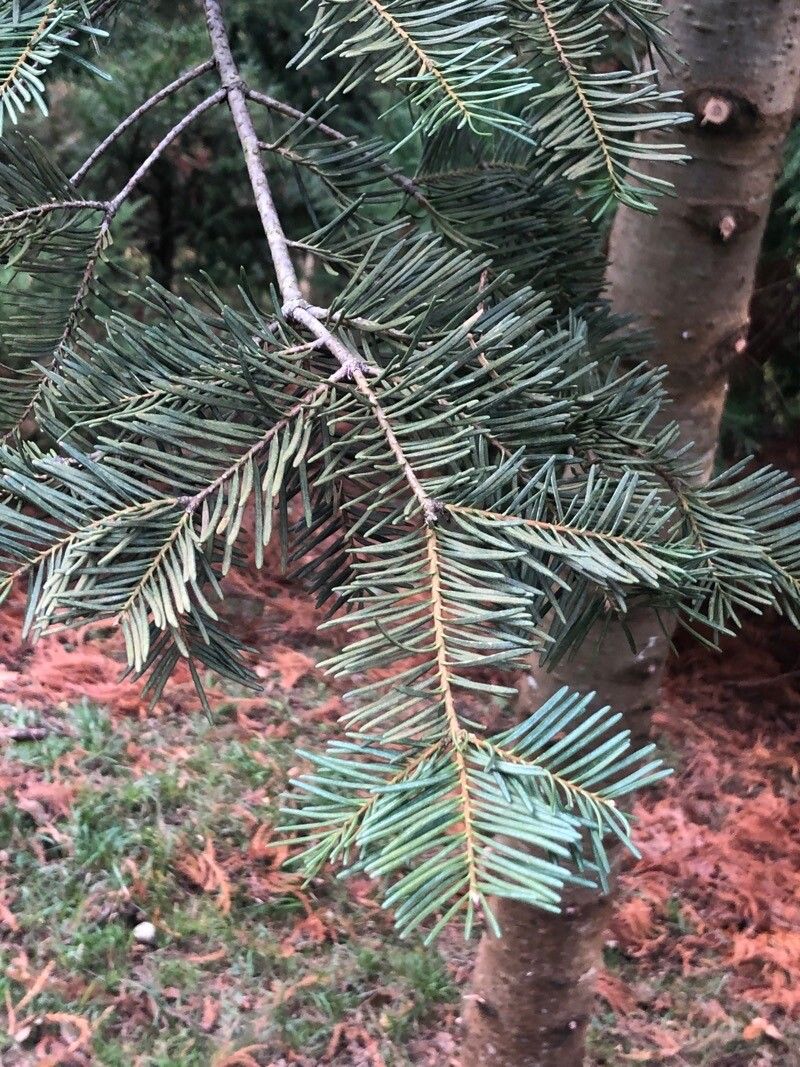
Abies kawakamii is a species of conifer in the family Pinaceae. It is found only in Taiwan. First described in 1908 by Bunzō Hayata as a variety of Abies mariesii, a high-mountain fir native to Japan; the next year it was elevated to species rank by Tokutarô Itô. Abies kawakamii is exclusively native to the island of Taiwan, and is one of the southernmost true firs (together with A. fansipanensis, native to Vietnam, and A. guatemalensis, from Mexico and Guatemala). It is a high-mountain species occurring in northern and central Taiwan at elevations between 2400 and 3800 m in association with other temperate plants, dominantly conifers, including Juniperus formosana var. formosana, Tsuga formosana, and Juniperus morrisonicola.Taiwan fir is a small to medium-sized tree sometimes reaching a height of 35 m and trunk diameter of 1 m. Initially, the bark is scurfy or scaly, lenticellate, later detaching in elongated plates. The branchlets are yellowish-brown when mature, furrowed, hairy. The needles are 1–2.8 cm long, pruinose, with stoma-lines above and 2 stomatal bands below. It has rather small cones 5–7.5 cm long, cylindrical or conical-cylindrical, dark blue, with included bracts.
The Taiwan fir is resistant to disease and generally not susceptible to illnesses. As for care, this plant is fairly low maintenance. When grown outdoors it needs only light watering, and larger plants usually do not require pruning. Smaller plants, however, should be pruned after they finish blooming. The Taiwan fir is suitable for anyone with an outdoor area, such as a garden or deck, and does not need much caretaking experience.
How to keep Abies Kawakamii.
Light
The taiwan fir does best in areas that receive plentiful sunlight each day. Still, it can tolerate situations where sunlight isn’t present for the whole day. In its natural surroundings, the amount of light affects its healthy development, and too much or too little sunlight can influence its vigor and growth rate.
Water
The Taiwan fir, native to high altitudes, has moderate water requirements and adapts well to different levels of humidity. It should be watered every 1 to 2 weeks and is not tolerant of drought conditions. As an evergreen, the Taiwan fir maintains its foliage throughout the year, so it needs a consistent supply of moisture even during the colder months.
Fertilizer
Taiwan fir has particular nutrient needs and does not require heavy fertilization. Fertilizing in spring is best for promoting optimal growth. Supplying nutrients enhances its health, increases its resistance to pests and diseases, and helps maintain a long lifespan.
Pruning
The Taiwan fir is a coniferous tree that thrives with proper pruning, such as the removal of dead branches and thinning of dense areas. The best time to prune is in the winter, as this encourages strong growth in the spring and helps minimize pests and diseases. As a result, you get a healthier and more attractive tree.
Botanical profile.
- Plant Type
- Tree
- Life Cycle
- Perennial
- Genus
- Abies
- Family
- Pinaceae
- Hardiness Zone
- 5-9
- Mature Height
- 35.05 m
- Mature Spread
- 7.92 m
- Leaf Color
- Green
- Leaf Type
- Evergreen
- Flower Color
- Blue
- Flower Size
- 5.08 cm to 7.62 cm
- Bloom Time
- Mid spring, Late spring
- Planting Time
- Winter, Spring
- Harvest Time
- Late summer, Early fall, Mid fall
- Native Area
- China
Other names.
Reader questions.
How should I water my Taiwan fir plant?
Watering your Taiwan fir is a simple task. The easiest method is to use a garden hose to slowly soak the soil. This is especially effective for larger trees that require a lot of water. Alternatively, for smaller trees, you can use a watering can or another smaller tool. Keep in mind that overhead watering should be avoided to prevent excessive moisture on the leaves, which can lead to disease, especially in young trees.
Why do I have to put fertilizer on my Taiwan fir?
To promote healthy growth of Taiwan fir, it is recommended to fertilize the plant in the spring. It is important to remember that this type of plant has a long lifespan and requires proper support. Additionally, enriching the soil with nutrients can enhance the plant's overall health, enabling it to better resist common pests and diseases that could impede its growth or reduce its lifespan.
What are the sunlight requirements for Taiwan fir?
Taiwan fir thrives in environments that receive full sunlight, defined as above 6 hours of sunlight per day, but it can also tolerate partial sun, about 3-6 hours of sunlight. This variation influences its growth rate and overall health, making adequate sunlight exposure a crucial aspect of its care. It is recommended to observe your garden's sunlight patterns to find the ideal balance of light and shade, ensuring the well-being of your Taiwan fir.
What is the botanical name of Taiwan fir?
The botanical name of Taiwan fir is Abies kawakamii.
What do I do if I give my Taiwan fir tree too much or too little water?
Overwatering can be caused by poor soils, especially if the soil doesn't drain well. This can lead to the decline of your Taiwan fir plant. To remedy this, you should either improve the soil's drainage or move the plant to a better location. If your Taiwan fir is in a pot, you may also need to repot it with looser soil in a container that drains properly. Overwatering can also make the plant more susceptible to diseases, which should be treated promptly. On the other hand, if your Taiwan fir is underwatered, simply increase the frequency of watering to restore its health. You can easily determine if your Taiwan fir is overwatered by examining its foliage, particularly new growth. If the plant is getting too much water, the new growth may be discolored or prone to breakage. Standing water or slow drainage in the plant's growing area is another indication of overly moist soil. Conversely, underwatered Taiwan fir trees will have sparse, brown leaves. Consider factors like recent heavy rainfall or consistently high temperatures when assessing these symptoms.
When should I fertilize my Taiwan fir?
The growing medium may not provide sufficient nutrients for healthy growth, but Taiwan fir is an exception. Unlike garden plants, it does not need a lot of extra nutrients. It is best to fertilize Taiwan fir in the spring, before new growth begins.
What should I do if natural sunlight is insufficient?
When natural sunlight is insufficient, especially during winter or in less sunny spaces, artificial lighting can be a vital solution for indoor Taiwan firs. LED lights are recommended because they can provide specific wavelengths needed for plant growth. The artificial light requirement varies depending on the type of plants: full sun plants need 30-50W/sq ft, partial sun plants need 20-30W/sq ft, and full shade plants require 10-20W/sq ft. Position the light 12-36 inches above the plant to mimic natural sunlight and ensure it receives 8-12 hours of light daily for optimal growth.
How much water does my Taiwan fir tree need?
The Taiwan fir is a mature tree that doesn't need a lot of water. It can survive solely on rainfall, with the exception of the hottest months when you may need to water it once a week. However, during other seasons, you likely won't need to water it at all. The only time you should regularly water a newly planted Taiwan fir is to help the roots establish themselves. It's important to avoid overwatering as this species cannot tolerate standing water. When unsure, it's better to not water the Taiwan fir rather than risk watering it too much.
When should I not put fertilizer on my Taiwan fir?
While some plants benefit from regular fertilization, Taiwan fir does not require excessive nutrients. Applying too much fertilizer can actually harm it, leading to wilting. Therefore, it is best to only fertilize Taiwan fir in the spring and avoid doing so during the other seasons: summer, fall, and winter. Additionally, refrain from adding any organic matter to the soil during these latter seasons.
How do I recognize and address light deficiency in Taiwan fir?
Symptoms of light deficiency in Taiwan fir include smaller new leaves, leggy or sparse growth, faster leaf drop, slower or no new growth, and lighter-colored or yellowing leaves (chlorosis). To resolve these issues for indoor plants, gradually move them to a sunnier location each week until they receive at least 6 hours of sunlight daily. Consider using artificial light for additional support. For outdoor plants, similarly, adjust their location gradually to avoid sunburn, aiming for the best spot with ample sunlight. Reducing obstructions, such as pruning nearby trees, can also improve sunlight access. However, parts of the plant that have suffered from insufficient sunlight may not recover, but new growth should be healthy once lighting conditions improve.
How much water does my Taiwan fir tree need?
During the summer, you will typically need to water your Taiwan fir once a week, giving it about one inch of water. However, this amount can vary depending on how much rain there has been. If it has rained one inch or more in a week, you don't need to water the fir. When the Taiwan fir is newly planted, it will need more water for the first few growing seasons, usually about once every one to two weeks.
What kind of fertilizer does my Taiwan fir tree need?
When considering fertilizers for your Taiwan fir plant, it's important to consider its age. While this plant doesn't need excessive nutrients, using a balanced plant food can enhance root development and growth. However, it's best to avoid fertilizers with high nitrogen contents.