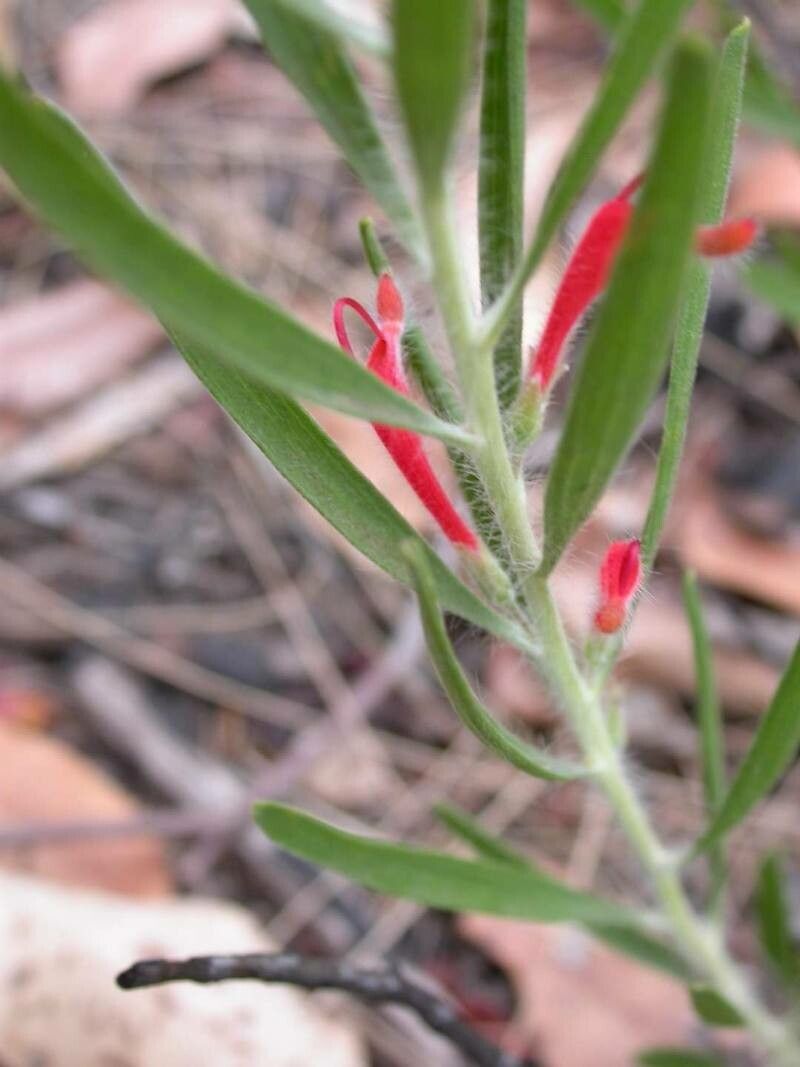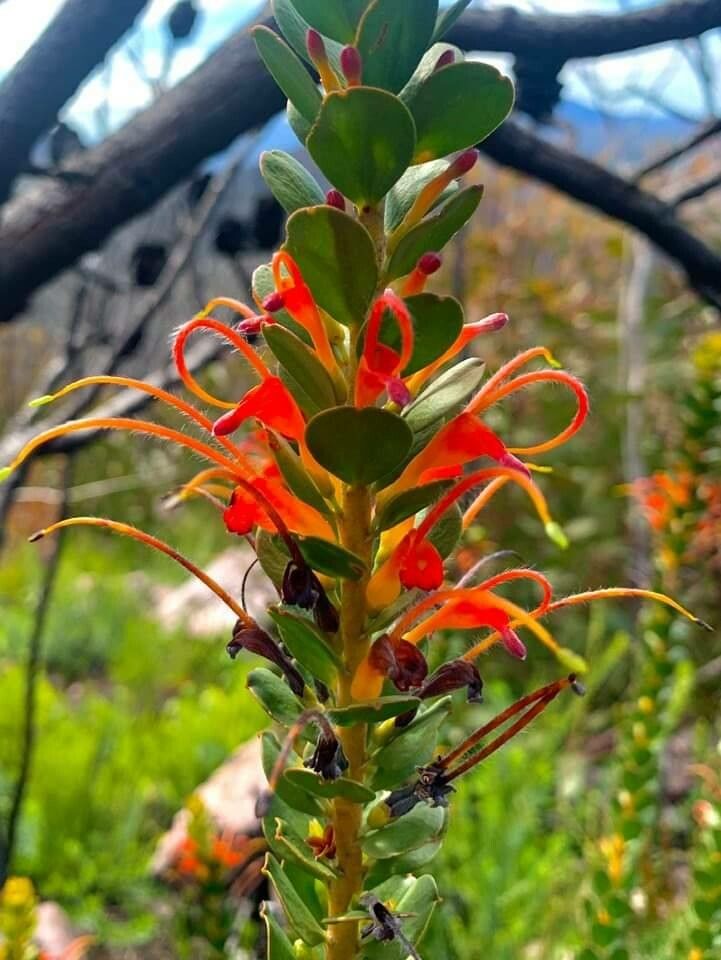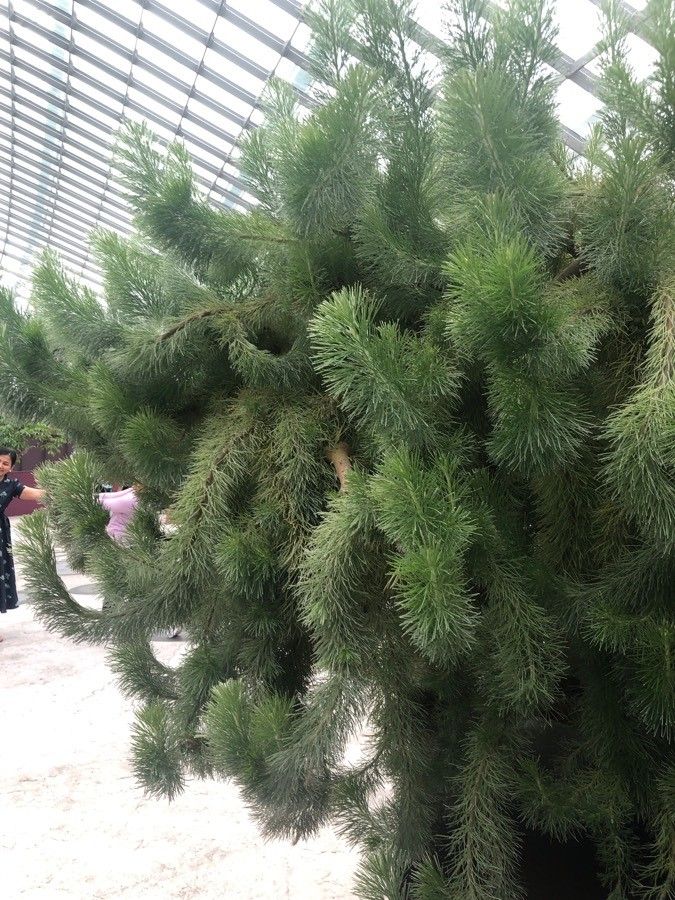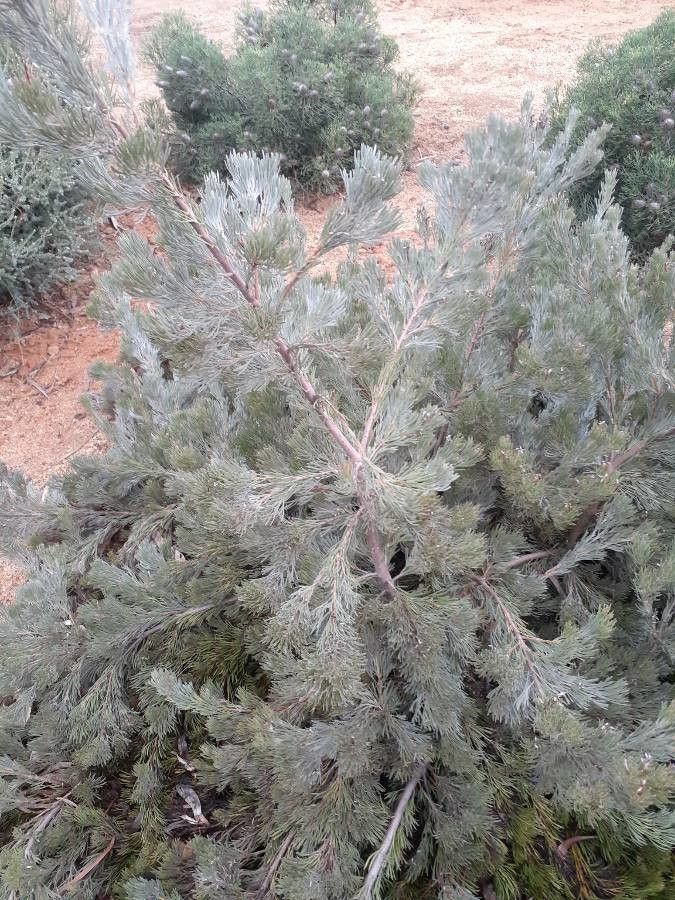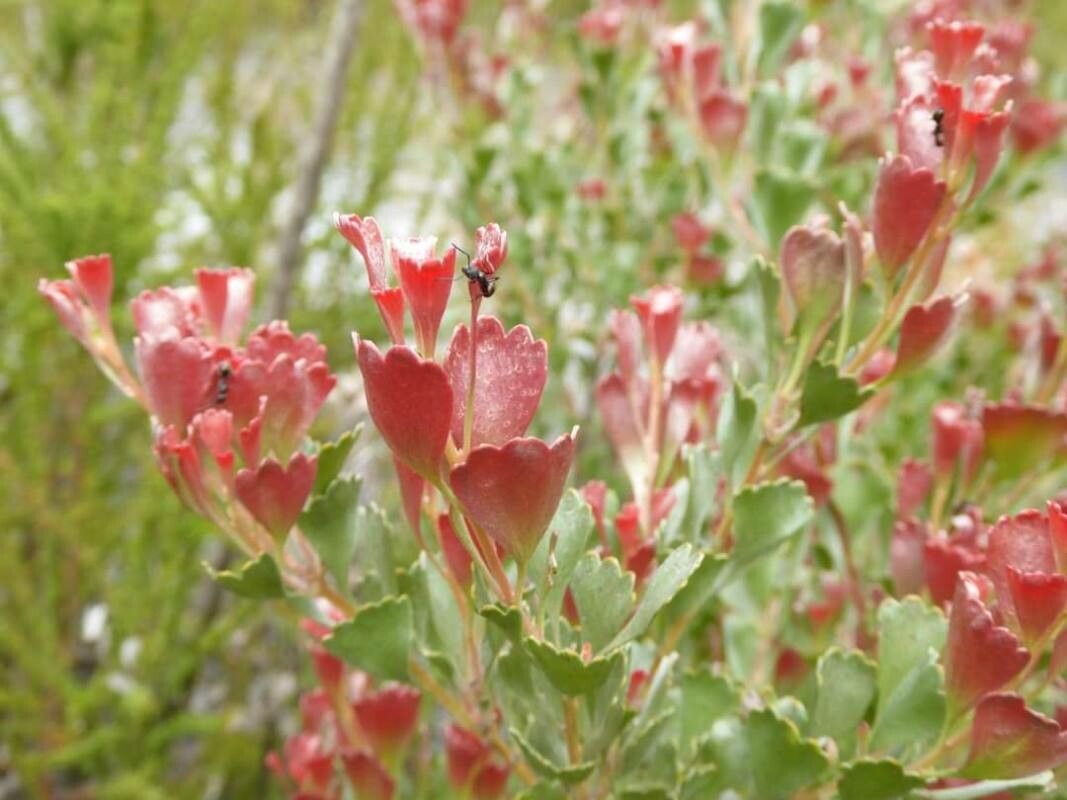
Adenanthos cuneatus, also known as coastal jugflower, flame bush, bridle bush and sweat bush, is a shrub of the family Proteaceae, native to the south coast of Western Australia. The French naturalist Jacques Labillardière originally described it in 1805. Within the genus Adenanthos, it lies in the section Adenanthos and is most closely related to A. stictus. A. cuneatus has hybridized with four other species of Adenanthos. Growing to 2 m (6 ft 7 in) high and wide, it is erect to prostrate in habit, with wedge-shaped lobed leaves covered in fine silvery hair. The single red flowers are insignificant, and appear all year, though especially in late spring. The reddish new growth occurs over the summer. It is sensitive to Phytophthora cinnamomi dieback, hence requiring a sandy soil and good drainage to grow in cultivation, its natural habitat of sandy soils in heathland being an example. Its pollinators include bees, honey possum, silvereye and honeyeaters, particularly the western spinebill. A. cuneatus is grown in gardens in Australia and the western United States, and a dwarf and prostrate form are commercially available.
Flame bush is highly resistant to disease and is usually not susceptible to illnesses. As for care, this species is fairly low-maintenance. Planted outside, it needs only occasional watering, and larger specimens typically do not require pruning. Smaller plants, however, should be trimmed after they have finished blooming. The flame bush is well suited to anyone who has outdoor space—such as a garden or a deck—and does not demand extensive gardening experience.
How to keep Adenanthos Cuneatus.
Light
The flame bush is native to open habitats like sunny fields and woodland borders, where there's an abundance of light. It flourishes in direct sunlight but is also capable of enduring semi-shaded areas, showcasing adaptability to different levels of sun exposure.
Temperature
The flame bush exhibits significant versatility in adjusting to different weather conditions, from blistering summers to freezing winters. Nevertheless, there is an ideal temperature range that supports its growth. When the heat becomes overwhelmingly high, the bush is susceptible to heat and humidity stress, which can lead to its death. In areas where the temperatures near the border of its cold endurance, it becomes necessary to apply insulation techniques for the bush's safeguard.
Fertilizer
The timing for fertilizing Flame bush is quite essential. Start fertilizing at the beginning of spring and continue monthly until the early summer. The fertilizer assists in producing beautiful blossoms and offers energy during the periods of dormant and active growth.
Pruning
The flame bush benefits greatly from pruning in early spring. This process involves removing dead branches to encourage new growth and thinning the plant to improve air circulation, which helps reduce the risk of disease. It's important to use sharp tools to ensure clean cuts. Proper pruning not only enhances the health, vigor, and appearance of the flame bush but also adds to the overall beauty of the garden.
Botanical profile.
- Plant Type
- Shrub
- Life Cycle
- Perennial
- Genus
- Adenanthos
- Family
- Proteaceae
- Hardiness Zone
- 9-11
- Mature Height
- 49 cm to 91 cm
- Mature Spread
- 0.91 m to 2.13 m
- Leaf Color
- Gray, Silver
- Leaf Type
- Evergreen
- Flower Color
- Red
- Flower Size
- 2.03 cm to 3.05 cm
- Bloom Time
- All year round
- Planting Time
- Spring, Summer, Autumn
- Harvest Time
- All year round