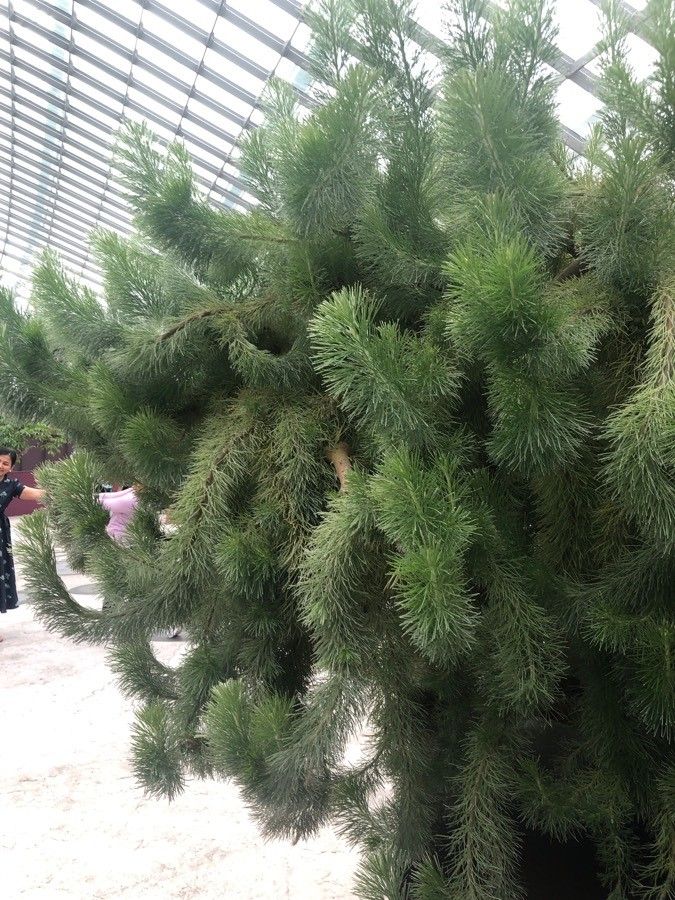
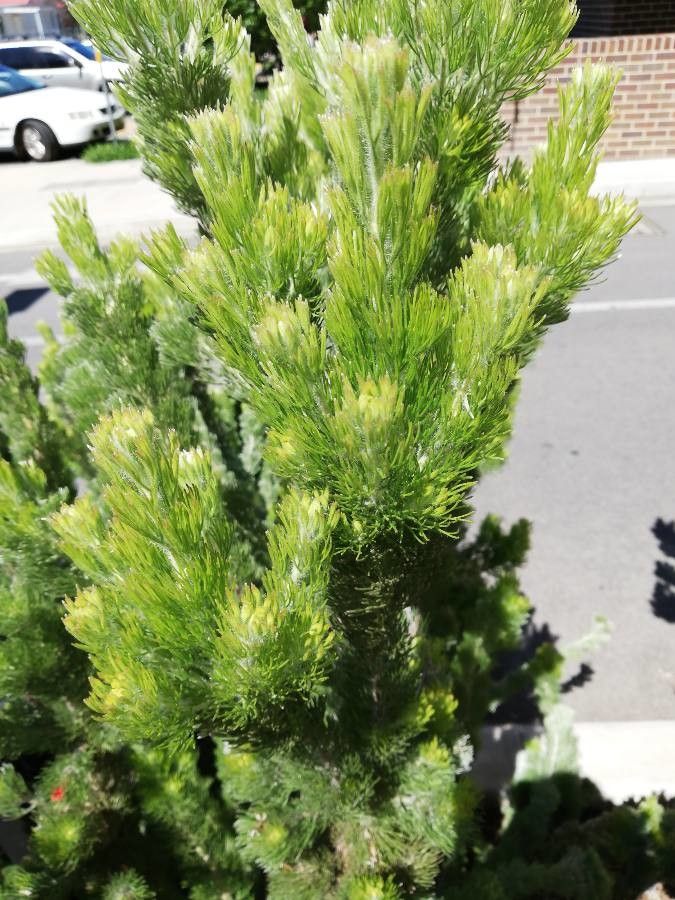
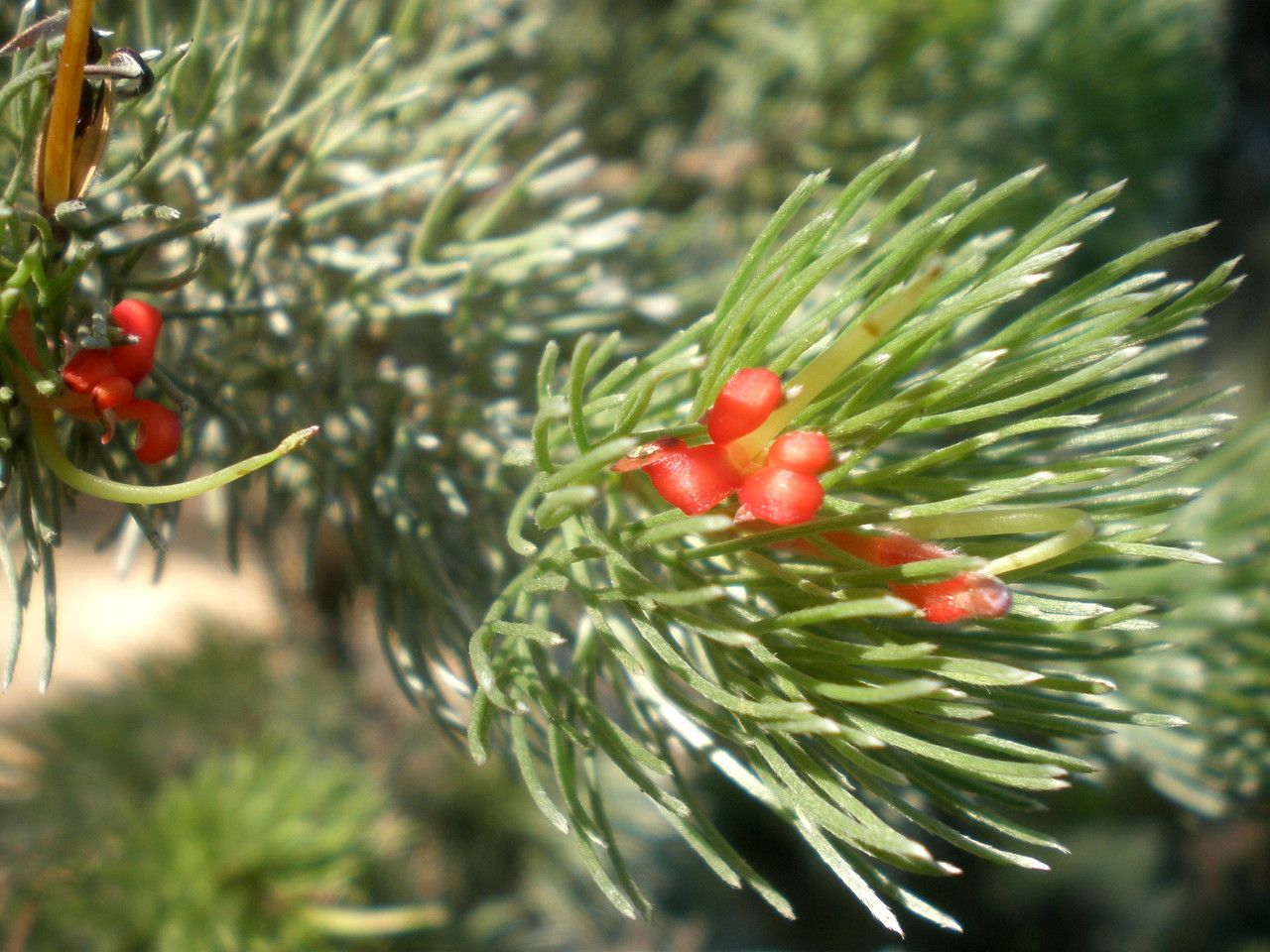
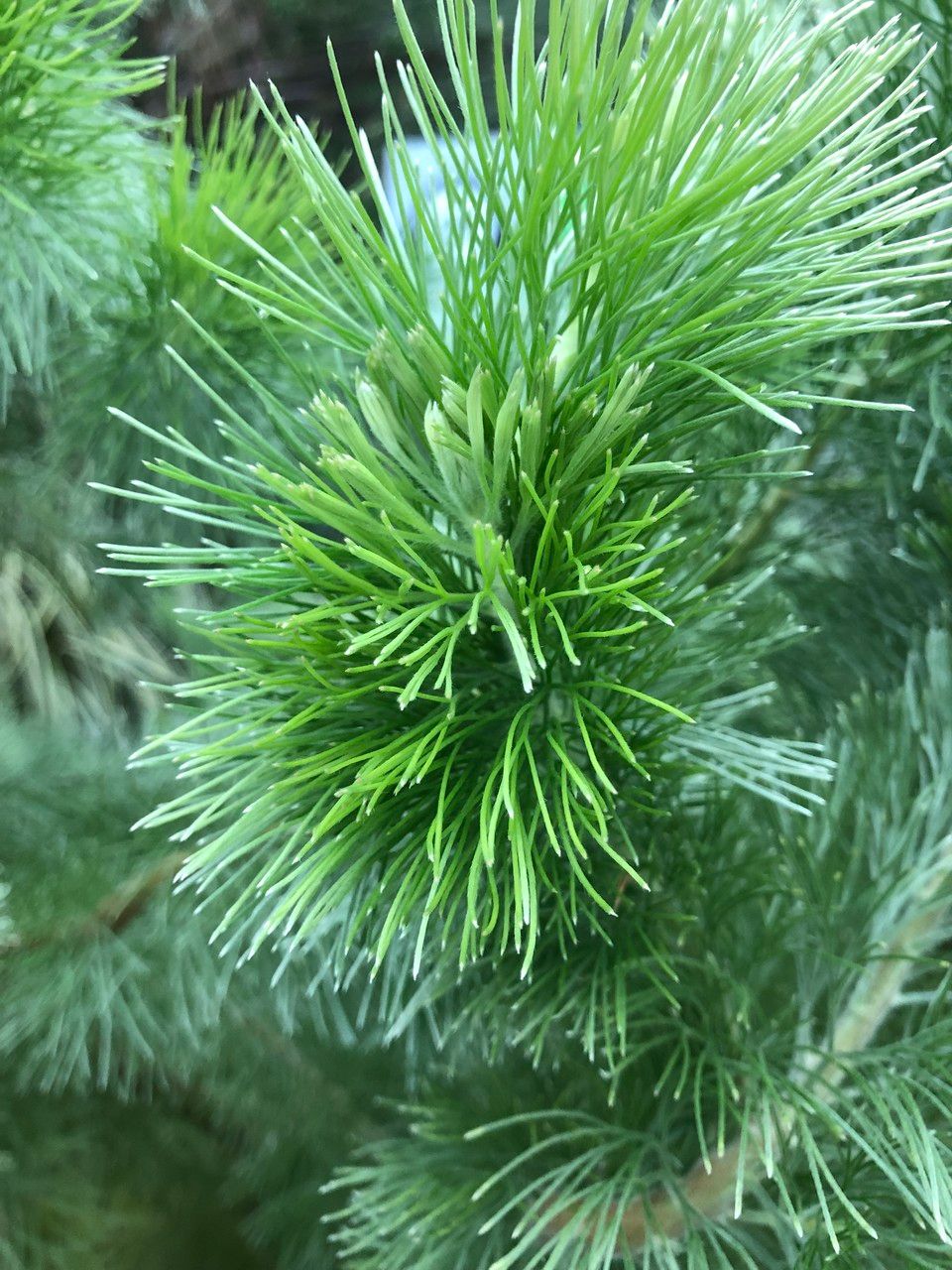
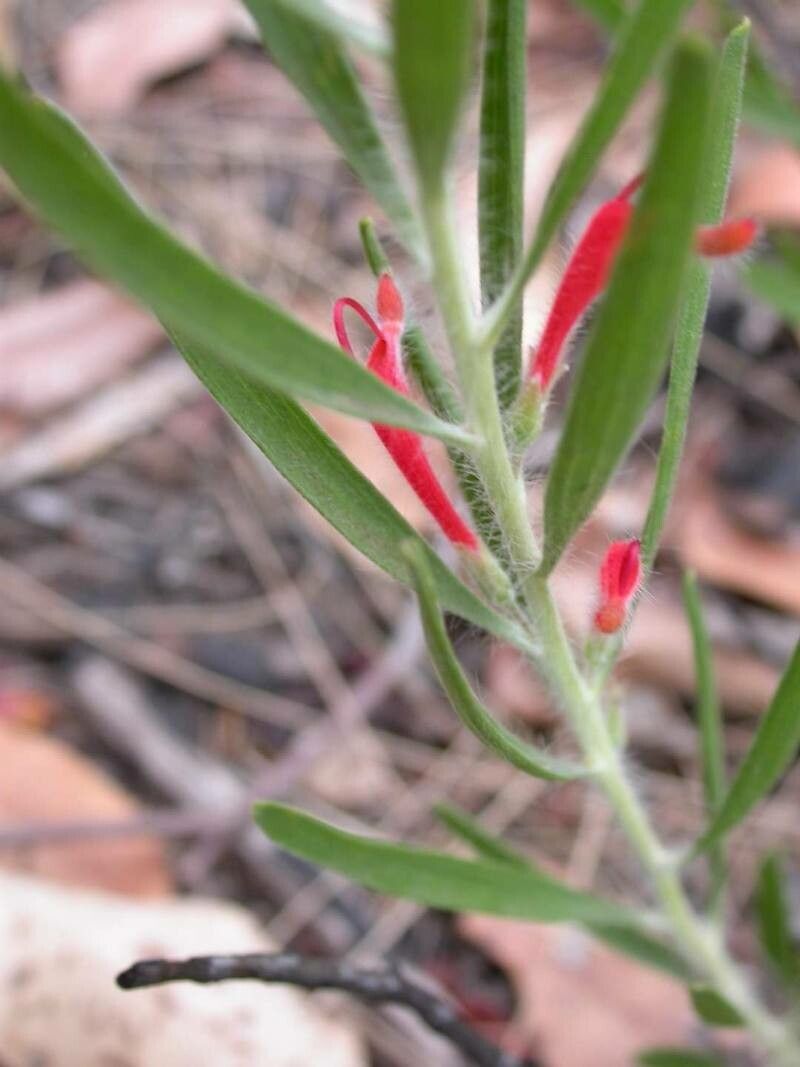
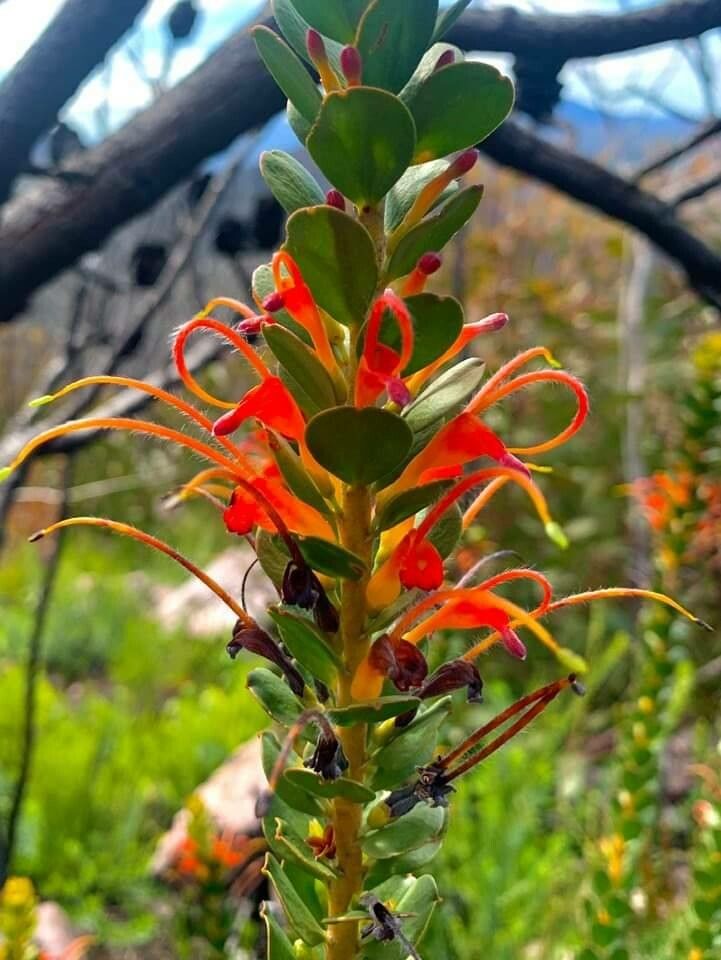
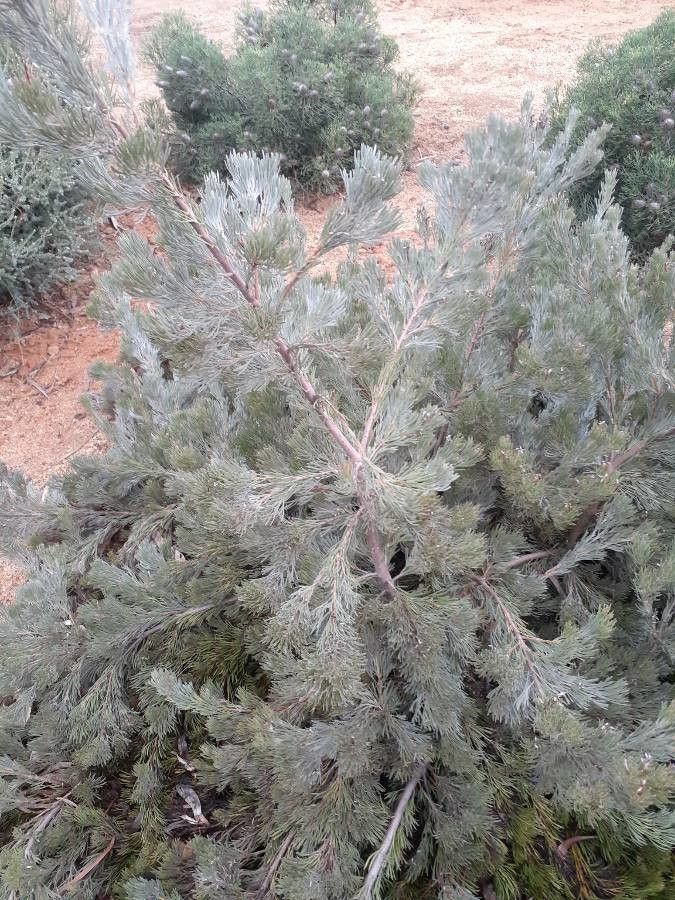
Adenanthos sericeus, commonly known as Woolly Bush or Silver Streak, is a shrub native to Western Australia. Belonging to the Proteaceae family, this remarkable plant can grow up to 3 meters tall. Its standout feature is the silver-gray foliage, covered in fine hairs that give it a distinctive woolly texture. The narrow, elongated leaves have serrated edges, adding to its unique appearance.
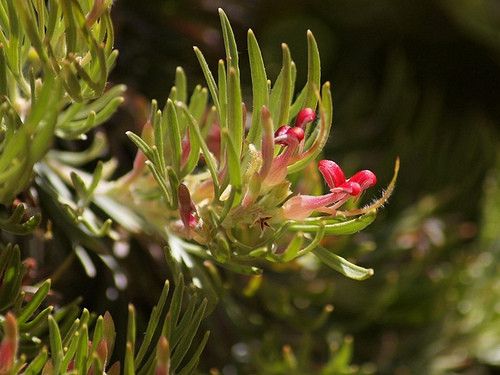
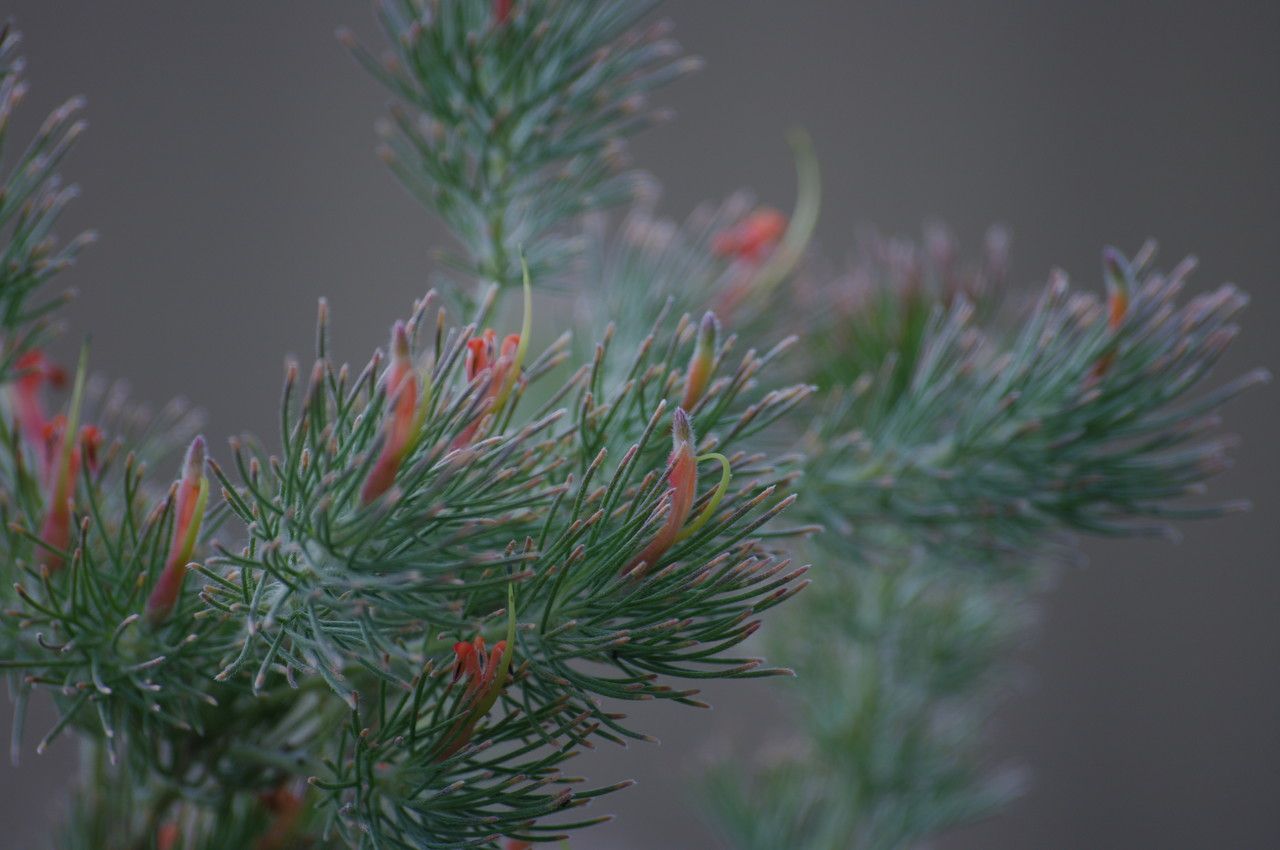
During the spring and summer months, Woolly Bush produces small red flowers, which eventually give way to small woody fruits containing seeds for propagation.
Adenanthos sericeus thrives in well-drained soils and does well in full sun or partial shade. Once established, it is drought-tolerant, making it a popular choice for low-maintenance landscaping. Its unique appearance and durability make it an excellent ornamental plant.
The Adenanthos sericeus is favored in the floral industry due to its soft texture and silvery foliage. One of its standout features is its exceptionally long vase life, lasting up to 30 days regardless of conditions or season, making it an ideal choice for cut flowers. In the Albany region of Western Australia, its branches or small potted plants are popularly used as Christmas trees. FUN FACT · FROM THE LIBRARY
In addition to its ornamental value, Woolly Bush holds cultural significance. Indigenous Australians have traditionally used it for medicinal purposes, such as treating coughs, colds, sore throats, and skin irritations.
Overall, Adenanthos sericeus is an attractive shrub that not only enhances any garden or landscape with its distinctive foliage but also carries cultural importance within Indigenous Australian communities.
The Coastal Woollybush gets its name from its soft, spine-like foliage, which gives the plant a fuzzy or "woolly" appearance and texture. The Latin name also reflects this characteristic, as the specific epithet comes from the Latin word for "silky." The term "coastal" indicates that this shrub typically grows along the coastline in its native habitat.
Woollybush resists disease well and is generally not prone to illnesses. In terms of care, this plant is relatively low-maintenance. When planted outdoors it needs minimal watering, and larger plants typically do not require pruning. Smaller plants, however, should be pruned after they have finished blooming. Woollybush is suitable for anyone with an outdoor space, such as a garden or deck, and does not require much care experience.
How to keep Adenanthos Sericeus.
Light
Woollybush prefers a site that gets sunlight all day to grow well. Coming from a habitat with plentiful light, the plant benefits from sun for most of the day. However, too much exposure can scorch the leaves, while too little light may hinder growth and result in spindly or weak plants.
Water
Woollybush, a plant native to Australia's sandy coastal soils, is well-suited for low-water conditions and is drought-tolerant, thanks to its silvery foliage. Water it every 1–2 weeks, allowing the soil to partially dry between waterings. As an evergreen, it needs careful watering to prevent root rot while ensuring healthy growth.
Humidity
This plant prefers dry conditions, so don't mist it. However, watering it less often can also thrive in higher humidity.
Temperature
Woollybush originates from mild, warm habitats and performs best in temperatures between 68 and 100 °F (20 to 38 ℃). In colder regions, it is important to modify its surroundings by providing shelter or employing grow lights to recreate its natural warmth.
Fertilizer
The best time to fertilize a Woollybush is in early spring as it breaks dormancy. This encourages overall growth and flower development. Fertilizing improves the foliage, stems, and branches, and supports flowers that are large, vivid, and long-lasting. It helps transfer nutrients from the roots to the blooms and enhances the plant’s health and resistance to disease.
Pruning
The Woollybush is known for its soft, silvery-green foliage. To keep it healthy and attractive, it's beneficial to regularly prune the plant, preferably between early and late winter. This practice encourages bushier growth, improves air circulation, and reduces the risk of disease. When pruning, make sure to use clean tools. Light trimming will help maintain the plant's aesthetic appeal.
Pot & Repot
To ensure optimal growth, repot your woollybush every 2 to 3 years during autumn. Choose slightly larger pots that provide good drainage. After repotting, place the plant out of direct sunlight and water it sparingly to encourage strong root development. Proper care is crucial for maintaining a healthy and thriving woollybush.
Botanical profile.
- Plant Type
- Shrub
- Life Cycle
- Perennial
- Genus
- Adenanthos
- Family
- Proteaceae
- Hardiness Zone
- 9-11
- Mature Height
- 4.88 m
- Mature Spread
- 0.91 m to 1.52 m
- Leaf Color
- Green, Gray
- Leaf Type
- Evergreen
- Flower Color
- Red
- Flower Size
- 2.03 cm to 3.05 cm
- Bloom Time
- All year round
- Planting Time
- Spring, Autumn
- Harvest Time
- All year round
Other names.
Reader questions.
How should I water my Woollybush plant?
Your Woollybush is not fussy about how you water it, so you can use any common watering tool. This means watering cans, hoses, or even cups will work just fine. Regardless of the tool you choose, it's best to water the soil directly. Make sure to evenly moisten all areas of the soil to provide water to all parts of the root system. Using filtered water instead of tap water is helpful, as tap water can contain harmful particles. Also, using water at or slightly above room temperature is ideal, as very cold or hot water can shock the Woollybush. However, the Woollybush generally responds well to any water you give it.
Why should I put fertilizer on my Woollybush plant?
Woollybush requires regular fertilization primarily because its showy leaves demand a significant amount of energy to thrive. However, it also needs to allocate enough energy for the growth and maintenance of its stems, branches, roots, and other essential structures. Neglecting fertilization can lead to two probable outcomes. Firstly, the leaves of the Woollybush will lose their natural color and texture, resulting in an overall unhealthy appearance that diminishes its decorative value. Secondly, the plant's overall growth may slow down, and it may produce weak and fragile growth prone to breakage.
What are the sunlight requirements for Woollybush?
Woollybush, or Adenanthos sericeus, thrives in locations that offer full sun, which means the plant requires more than 6 hours of sunlight daily. It's essential to observe your garden's light and shade patterns to ensure your Woollybush gets the right balance for optimal growth. Although Woollybush originates from habitats with abundant sunlight and prefers daylong sunshine, it's vital to protect it from excessive exposure that could cause scorched leaves, while too little sunlight may result in weak or spindly growth.
What is the ideal temperature range for Woollybush to thrive?
Woollybush, botanically known as Adenanthos sericeus, flourishes in mild to warm environments, favoring temperatures between 68°F (20°C) and 100°F (38°C). In regions experiencing colder conditions, it's essential to replicate its preferred warmth through means such as positioning it indoors near bright windows while avoiding overexposure to heaters, or utilizing grow lights. Particularly during winter, maintaining an ambient temperature above 20°C can significantly benefit the Woollybush's health, whereas temperatures near or below freezing are harmful.
What should I do if I give my Woollybush plant too much or too little water?
When it comes to outdoor plants, especially newly planted ones or seedlings, they can easily suffer from lack of watering. It's important to remember to keep watering adequately for the first few months while the tree is still small or newly planted. Once the roots are established, the Woollybush can usually rely on rain for its water needs. However, if you have a Woollybush planted in a pot, overwatering is more likely to occur. In the event that you accidentally overwater your Woollybush, it's essential to take immediate action to address the situation. First, stop watering the plant right away to minimize the negative effects. Then, carefully remove the Woollybush from its pot and inspect the roots. If you don't find any signs of root rot, you can return the plant to its container. However, if root rot is present, trim away the affected roots and consider applying a fungicide to prevent further damage. Lastly, repot the Woollybush in well-draining soil. On the other hand, if your Woollybush is underwatered, simply water it more frequently. Underwatering is usually an easy problem to fix. When a Woollybush is not getting enough water, the leaves will droop, dry out, and fall off. However, with sufficient watering, the leaves will quickly recover and return to their fullness. It's important to correct your watering frequency as soon as you notice underwatering occurring.
When should I fertilize my Woollybush?
Woollybush plants benefit from occasional feedings, so there is no need for a set feeding schedule when you plant them. One easy method to fertilize your Woollybush is to apply fertilizer while watering the plant occasionally. Additionally, during the growing season, your Woollybush will require a good amount of water. To feed the plant properly, you can do so every two to three weeks. It is important to maintain this feeding rate throughout the entire period when the plant is producing new growth.
What artificial lighting requirements do Woollybush plants have when grown indoors?
When natural sunlight is not sufficient, especially during winter or in less sunny indoor spaces, artificial lighting becomes crucial for Woollybush's growth. It's recommended to use LED lights, which can be customized to provide specific wavelengths needed by the plants. For full sun plants like Woollybush, 30-50W/sq ft of artificial light is ideal. The light source should be placed 12-36 inches above the plant to mimic natural sunlight, and the duration should replicate natural daylight hours, typically 8-12 hours per day.
How should you care for Woollybush in low temperature conditions?
Woollybush is not tolerant of cold and prefers warm conditions, ideally above 20°C. Should temperatures dip below -5°C, it may exhibit signs of distress such as a lightening of leaf color, which eventually turns brown or black as frost damage progresses. Symptoms like wilting or drooping are common after exposure to frost. To mitigate damage, affected parts of the plant should be trimmed away, and the plant should be moved indoors to a warmer environment, ideally near a south-facing window for sufficient sunlight. It's also crucial to keep the plant away from direct heat sources like heaters or air conditioning vents to avoid drying out the air excessively.
How frequently should I give water to my Woollybush?
For most outdoor plants, rainfall is usually enough to sustain their growth. However, if your area lacks rainfall, you will need to provide adequate watering every two weeks in spring and fall. In summer, more frequent watering is necessary, while in winter, when growth slows down, less water should be given. During winter, additional watering may not be needed at all. If your Woollybush is young or newly planted, it will require more frequent watering to help it establish and grow. Determining how often to water potted Woollybush plants can be done in two main ways. The first way is to follow a set watering schedule, such as watering once a week or once every other week. However, this approach may not take into account the specific conditions of your plant's environment. Watering frequency can also vary depending on the season. A predetermined schedule may not be sufficient during summer when the plant's water needs are highest. An alternative method is to monitor the moisture of the soil. It is generally best to wait until the top two to four inches of soil, about one-third to one-half depth of the pots, have completely dried out before watering again.
When is it not a good idea to fertilize my Woollybush?
For most of the year, it is fine to fertilize your Woollybush regularly. This includes spring, summer, and early fall when the plant is actively growing. However, during the winter months, you should not fertilize the plant. During this time, the Woollybush enters a dormant phase with little or no new growth. Because the plant is not expending much energy during this period, fertilization is unnecessary.
What are the signs of insufficient light in Woollybush and how do they affect the plant?
When Woollybush doesn't receive enough light, particularly during indoor winter cultivation, several symptoms may appear. These include: smaller new leaves, leggy or sparse growth, premature leaf drop, slower or halted growth, lighter-colored new leaves, chlorosis (yellowing leaves), sunscald, leaf curling, wilting, and leaf scorching. These symptoms indicate light deficiency, which impairs the plant’s ability to photosynthesize properly, affecting its overall health.
What steps should be taken if Woollybush is exposed to high temperatures?
During the hotter summer months, it's important to ensure that Woollybush does not remain exposed to temperatures above 38°C to prevent overheating and sunburn, which become more likely if temperatures exceed 43°C. The signs of sunburn include a lightening of the leaves and increased susceptibility to damage. To care for a sunburned Woollybush, trim away the affected parts and relocate it to a spot where it can enjoy shade during the harshest midday and afternoon sun. Additionally, watering the plant in the cooler morning and evening hours helps maintain soil moisture, offering further relief from high temperatures.