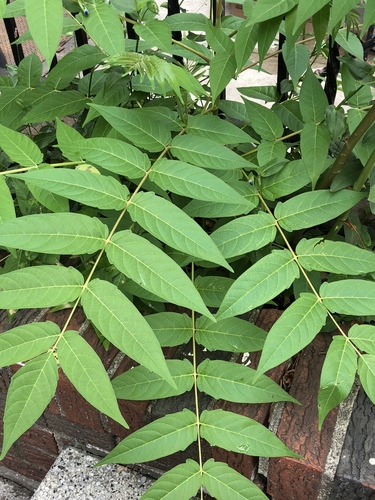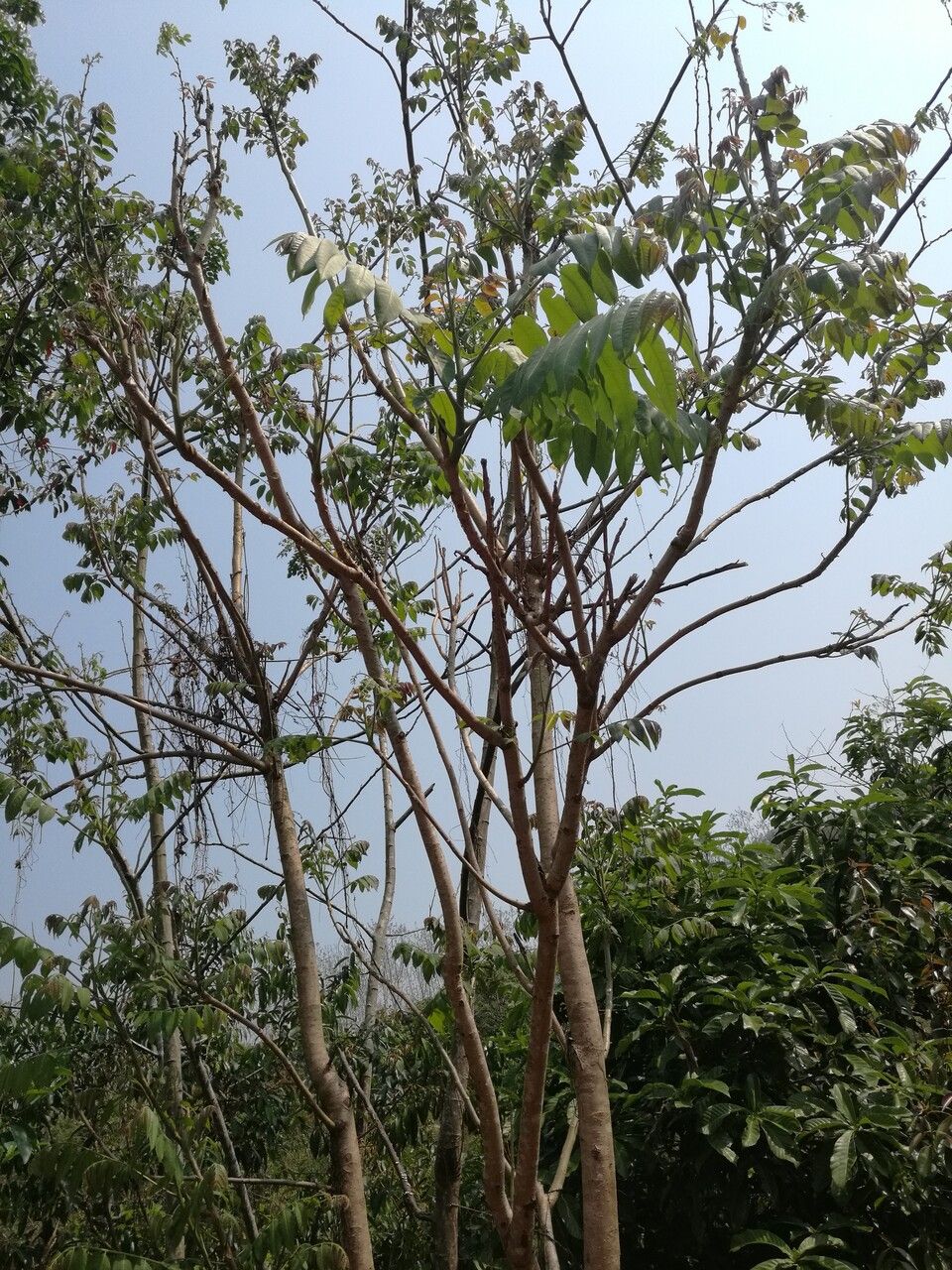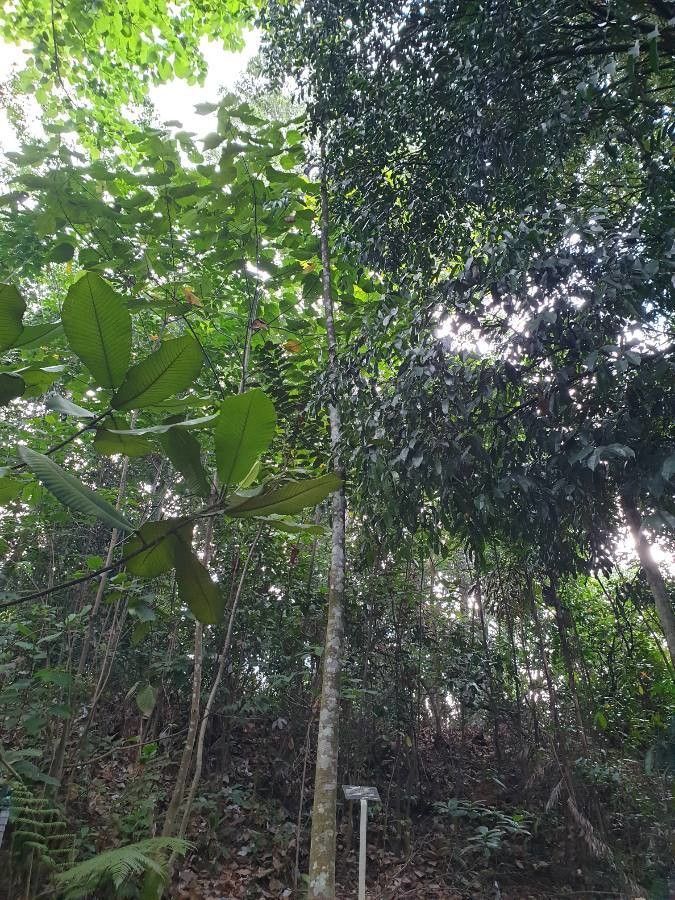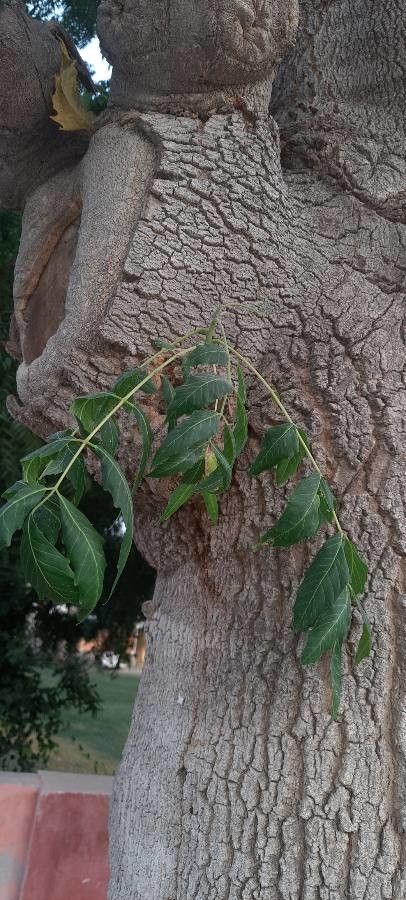
Ailanthus excelsa, commonly known as tree of heaven, is a large deciduous tree found in India and Sri Lanka. In Tamil, it is also known as Pi-Nari Maram due to its disagreeable odor. The trees are grown along the edges of fields and rivers to mark boundaries and prevent soil erosion.The tree has several uses in medicine as the gum and the bitter, aromatic leaves are reported to have medicinal properties. The bark is a febrifuge and can be used as a treatment against asthma, bronchitis and dysentery. The leaves and bark are also in good repute as a tonic that is used after labor. The juice of the leaves and fresh bark is used as a remedy for after-pains.The tree is also used in matchstick industry, as fodder for goats, and is one of the best tree used to trap Suspended Particulate Matter (SPM).
Tree of heaven is fairly resistant to disease and is generally not prone to illnesses. Regarding care, this plant is relatively low-maintenance. Planted outdoors, it needs little watering and larger specimens usually do not require pruning. Smaller plants, however, should be pruned after they have bloomed. Tree of heavent is suitable for anyone with an outdoor area, such as a garden or deck, and does not require much care experience.
How to keep Ailanthus Excelsa.
Light
Tree of heaven is native to open habitats, like sunny meadows and forest margins, which offer abundant light. It does best in full sun but can also tolerate partial sun, demonstrating good adaptability to different light levels.
Temperature
The tree of heaven comes from tropical areas, where the climate is normally warm and humid. Consequently, it is suited to high temperatures and humidity. It is sensitive to sudden temperature shifts and prefers a consistent temperature, so indoor temperature fluctuations should be avoided. It generally cannot endure cold and needs warmer conditions to grow. If the surrounding temperature becomes too low, the plant may stop growing or even die.
Fertilizer
Fertilization is essential for caring for the Tree of Heaven. Regular feeding during the growing season maintains the energy needed for its showy leaves and supports overall growth. If fertilization is neglected, leaves can become unhealthy, its ornamental appeal can decline, and growth may be stunted or weak and prone to breaking.
Botanical profile.
- Plant Type
- Tree
- Life Cycle
- Perennial
- Genus
- Ailanthus
- Family
- Simaroubaceae
- Hardiness Zone
- 9-11
- Mature Height
- 20.12 m to 29.87 m
- Mature Spread
- 10.06 m to 14.94 m
- Leaf Color
- Dark Green, Olive Drab
- Leaf Type
- Deciduous
- Flower Size
- 0.51 cm to 0.76 cm
- Bloom Time
- Mid spring, Late spring
- Planting Time
- Spring, Summer, Autumn
- Harvest Time
- Mid summer, Late summer, Early fall
- Native Area
- Sri Lanka, Bangladesh, India