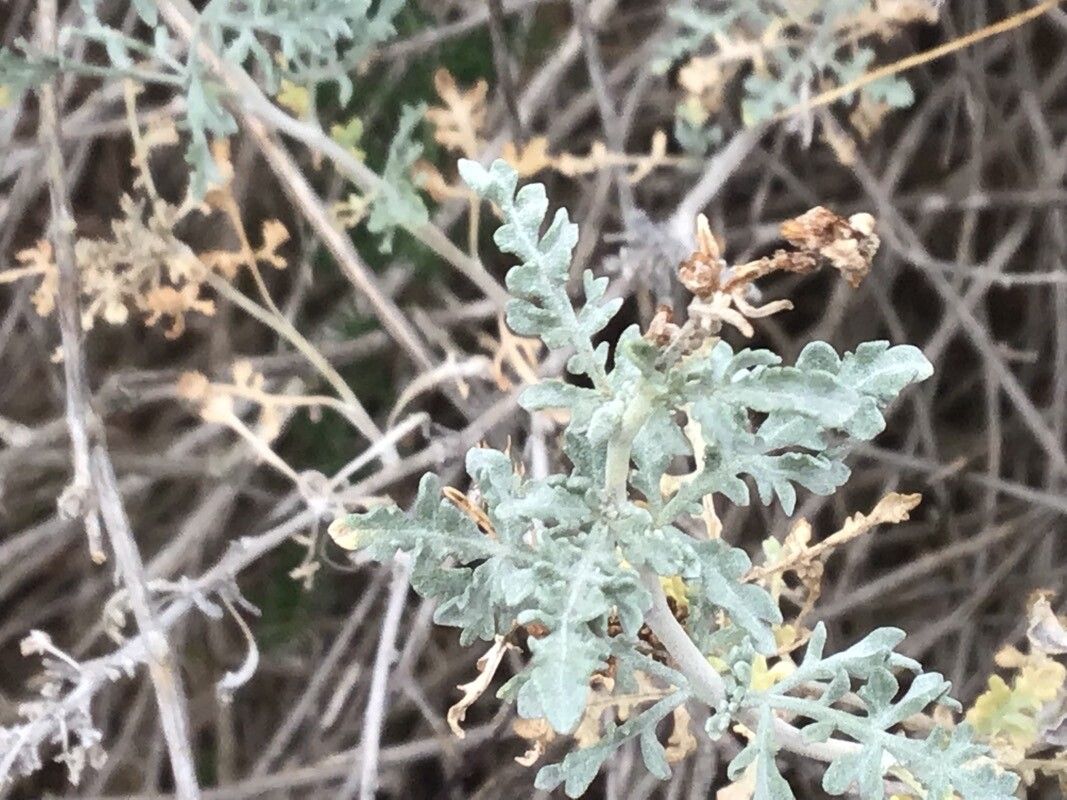
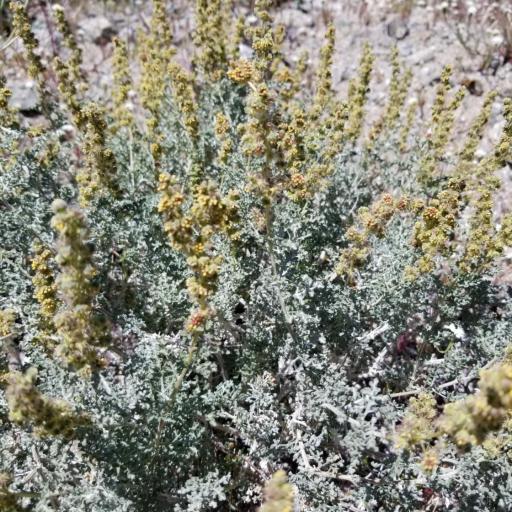
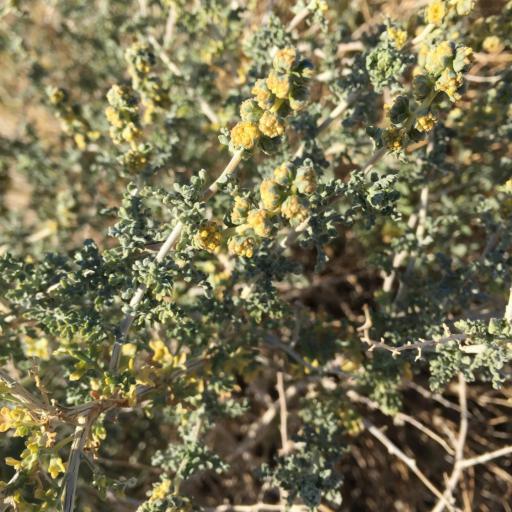
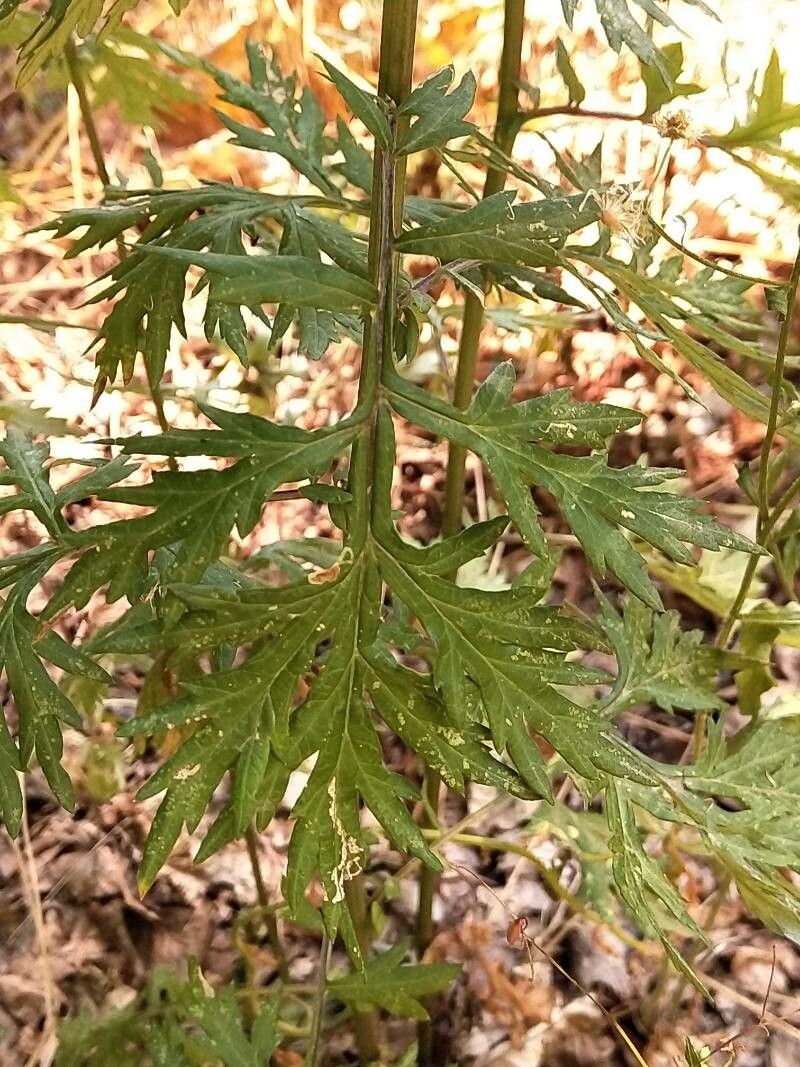
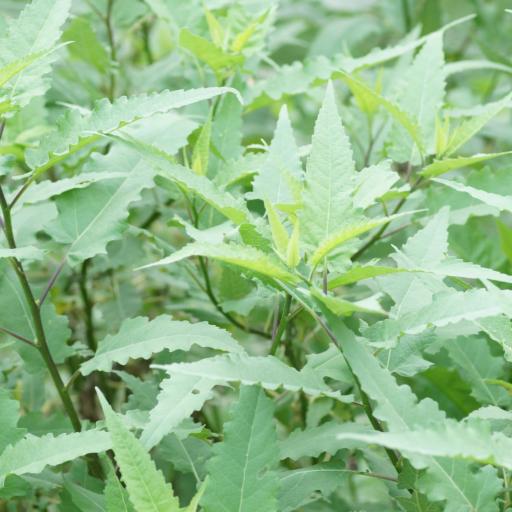
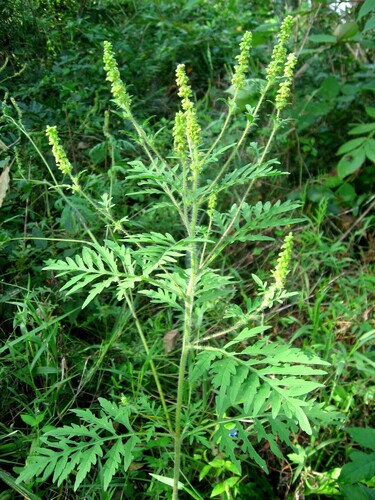
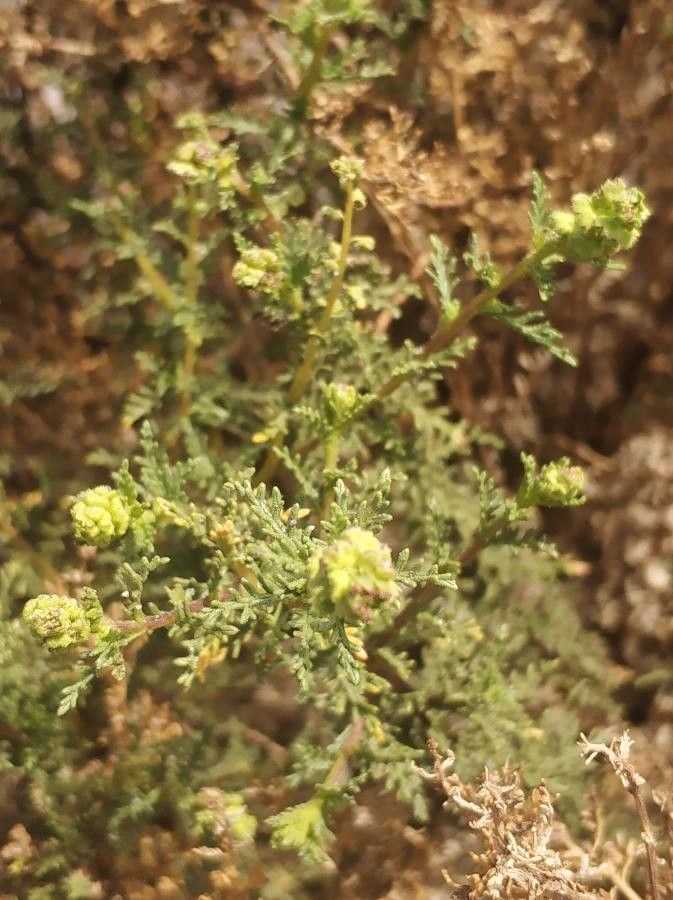
Ambrosia dumosa, the burro-weed or white bursage, a North American species of plants in the sunflower family. It is a common constituent of the creosote-bush scrub community throughout the Mojave desert of California, Nevada, and Utah and the Sonoran Desert of Arizona and northwestern Mexico (Baja California, Baja California Sur, Sonora, Chihuahua). Ambrosia dumosa has been studied to determine allelopathic interactions with creosote bush, Larrea tridentata, which produces a chemical that inhibits the growth of A. dumosa. Other studies have suggested that A. dumosa roots produce a chemical that causes them to grow away from conspecific roots, preventing competition for water resources. In addition to burrow-weed, A. dumosa is also commonly called bur sage, burro weed, and burro bush.
White bursage is fairly resistant to disease and is generally unlikely to develop health problems. As for care, this plant is relatively low-maintenance. When grown outdoors it needs only minimal watering, and larger plants typically do not require pruning. Smaller plants, however, should be pruned after they finish blooming. White bursaget is suitable for anyone with an outdoor space, such as a garden or deck, and does not demand much prior care experience.
How to keep Ambrosia Dumosa.
Light
White bursage does best when given plentiful sunlight. It can tolerate situations with reduced light. Originating from habitats with abundant sun, it needs adequate light to grow properly. Both too little and too much light can influence its health and growth. Its light needs remain the same throughout its growth stages.
Water
White bursage is well adapted to arid desert conditions, making it highly drought-tolerant and requiring minimal water to thrive. It's best to water the plant every 2–3 weeks, ensuring that the soil dries out completely between waterings. This plant has the remarkable ability to maximize water uptake during infrequent rainfalls and can survive with limited water resources.
Temperature
White bursage naturally occurs in areas where temperatures range from 59 to 100.4 °F (15 to 38 ℃). It does well in these warm conditions and is capable of adjusting to temperature changes between seasons. Watch temperatures and keep conditions warm, particularly in colder months.
Fertilizer
Fertilize your White bursage in early spring to encourage healthy growth. Regular feeding improves the plant’s overall health, producing vigorous growth, greater toughness in adverse conditions, and enhanced resistance to disease and pests. Follow a consistent fertilization schedule for your White bursage to keep the foliage vibrant, deeply colored, and lush in appearance.
Pruning
White bursage is a drought-tolerant shrub known for its rounded shape and fine gray-green leaves. It's best to prune this plant from early to late winter to remove any dead branches and promote new growth. To keep the shrub healthy and resilient in dry climates, avoid heavy pruning, which can cause stress.
Botanical profile.
- Plant Type
- Shrub
- Life Cycle
- Perennial
- Genus
- Ambrosia
- Family
- Compositae
- Hardiness Zone
- 8-11
- Mature Height
- 30 cm to 61 cm
- Mature Spread
- 61 cm to 91 cm
- Leaf Color
- Gray, Light Gray
- Leaf Type
- Evergreen
- Flower Color
- Yellow
- Flower Size
- 2.54 cm
- Bloom Time
- Early spring, Mid spring
- Planting Time
- Spring, Summer
- Harvest Time
- Late spring, Early summer, Mid summer
- Native Area
- Mexico
Other names.