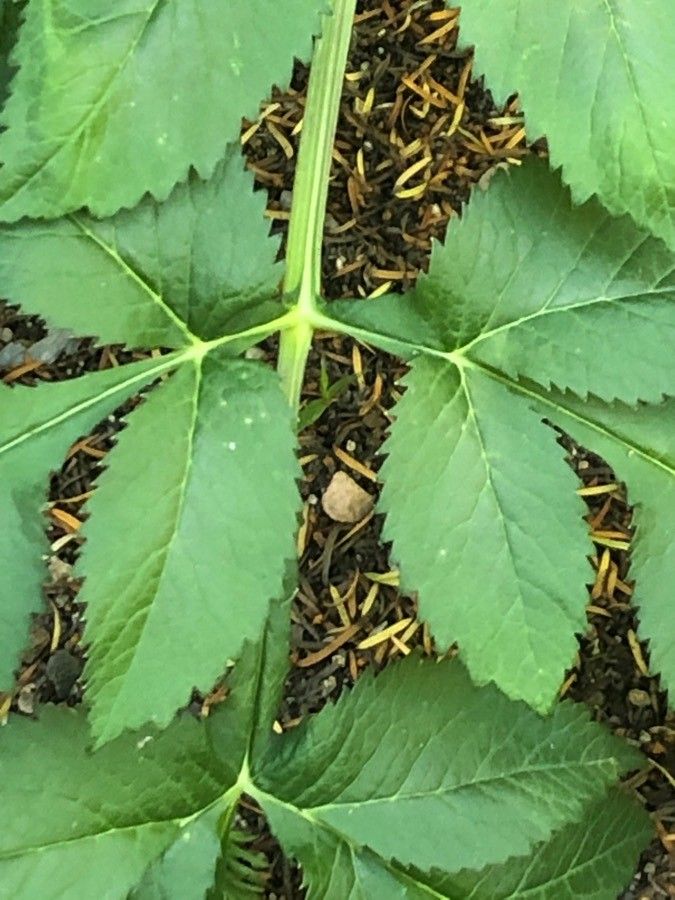
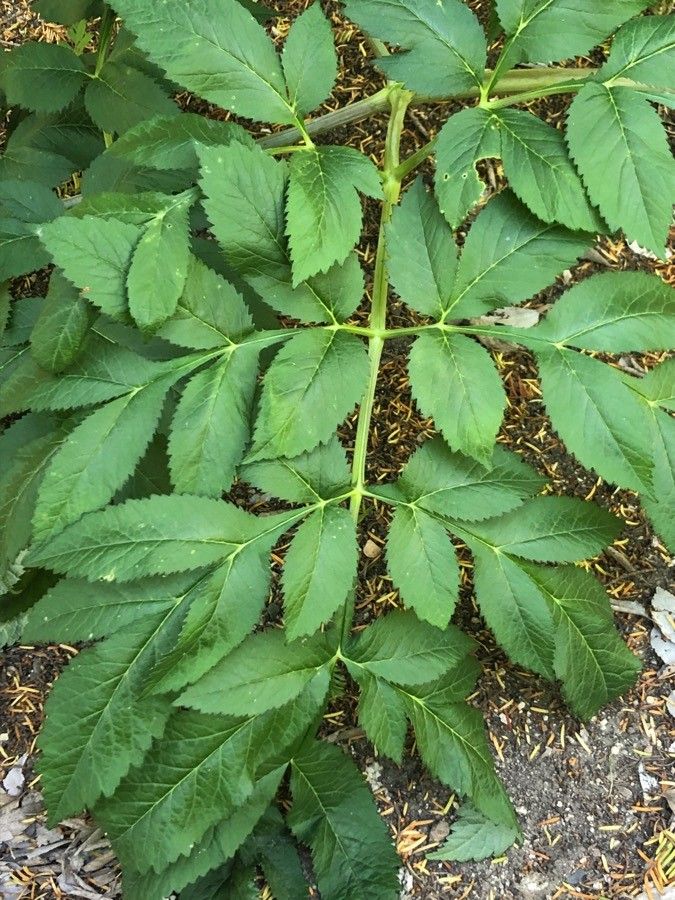
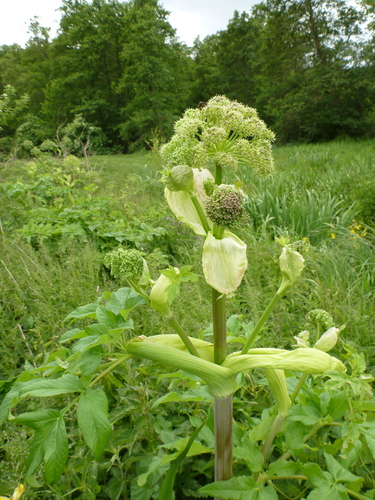
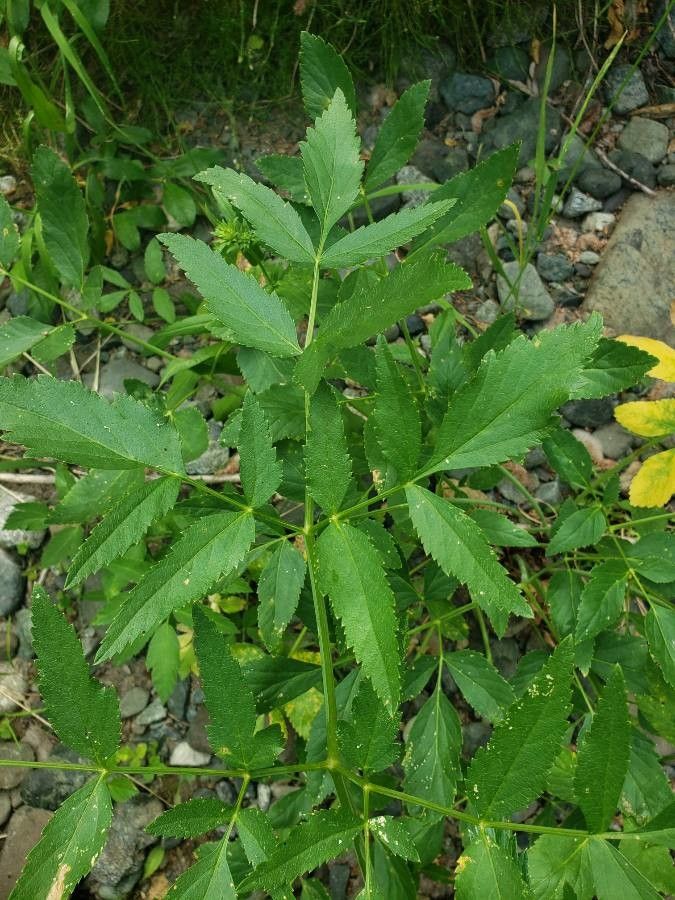
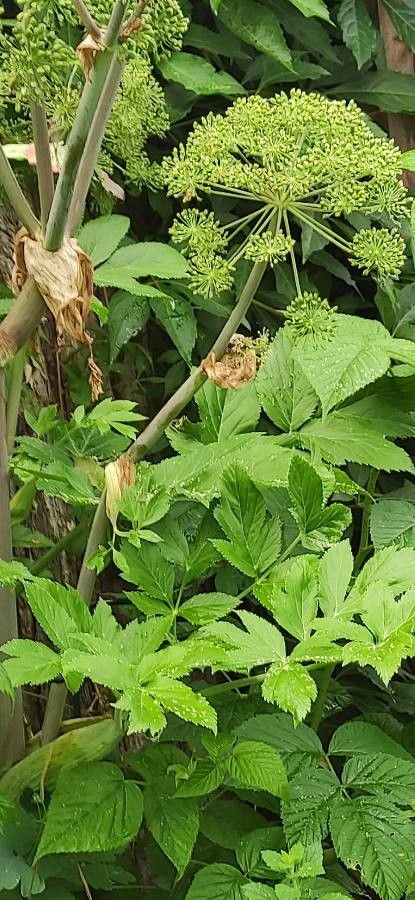
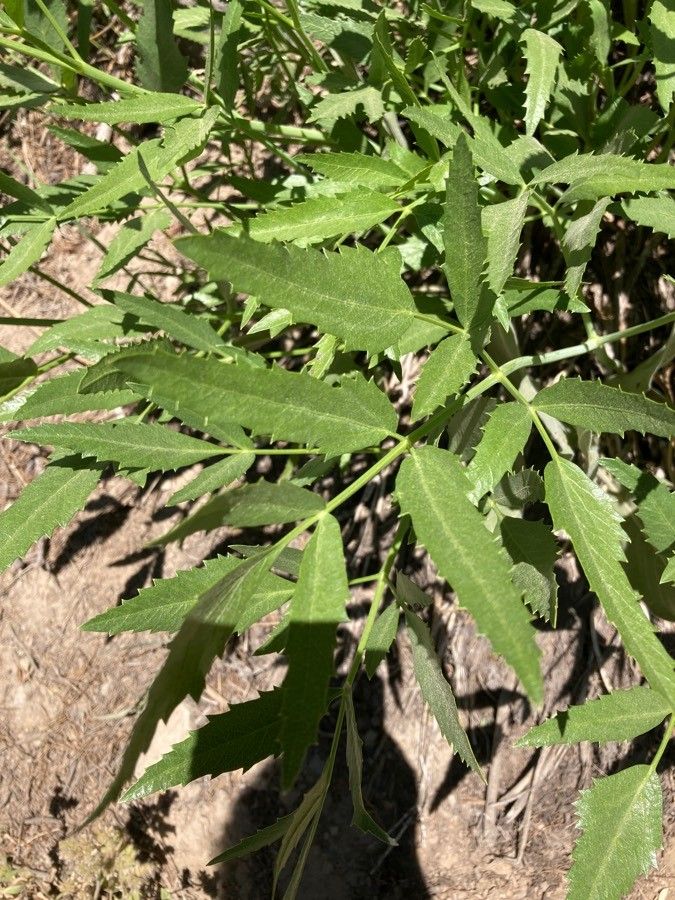
Angelica dahurica, commonly known as Dahurian angelica, is a wildly grown species of angelica native to Siberia, Russia Far East, Mongolia, Northeastern China, Japan, Korea, and Taiwan. This species tend to grow near river banks, along streams and among rocky shrubs. The root of the plant is widely used for its medicinal properties and is known to contain furanocoumarins and angelicotoxin.Angelica dahurica is also commonly known as Chinese angelica, the garden angelica, root of the Holy Ghost, and wild angelica, as well as its Chinese name, bai zhi (白芷).
Chinese angelica has strong disease resistance and typically isn't prone to illnesses. However, it can still be affected by pests and diseases present in its surroundings. Such infections are generally mild. Regarding care, the plant needs moderate maintenance. Regular pruning is necessary to preserve an attractive appearance and encourage healthy growth. Applying fertilizer can also help stimulate flowering. Chinese angelica is suitable for anyone with outdoor space, such as a garden or patio, and does not require extensive care experience. When grown indoors, it may demand more attentive care.
How to keep Angelica Dahurica.
Light
Chinese angelica needs plenty of sunlight to thrive. It can, however, tolerate moderately sunny conditions as well. Its native habitat, which benefits from abundant sunlight, helps explain this trait. Too much or too little sun exposure can lead to poorer growth.
Water
Chinese angelica, native to moderate climates, thrives in environments where it receives consistent hydration. It prefers a regular watering schedule, ideally on a weekly basis. Although it has a moderate tolerance for drought, it grows best in somewhat humid conditions. Its water needs can vary with seasonal rainfall patterns, which affect its growth during different stages.
Temperature
Chinese angelica originates from areas with moderate temperatures and does best at 68 to 95 °F (20 to 35 ℃). In colder climates, supplemental heat may be needed to maintain optimal growth.
Fertilizer
The optimal time to fertilize a Chinese angelica is in early spring, when it is coming out of dormancy and beginning active growth. Fertilizing supplies essential nutrients for healthy development. Although Chinese angelica has relatively low fertilizer requirements, applying fertilizer annually can improve its survival and encourage better, longer-lasting flowers.
Pruning
Chinese angelica has large leaves and a delightful aroma. To encourage growth and flowering, prune it between early and late spring. Use light trimming to remove any dead stems, but avoid heavy pruning, as it can stress the plant. It's important to use clean tools to prevent the spread of disease and to promote healthy structure and growth.
Botanical profile.
- Plant Type
- Herb
- Life Cycle
- Perennial, Biennial
- Genus
- Angelica
- Family
- Apiaceae
- Hardiness Zone
- 4-7
- Mature Height
- 0.91 m to 2.44 m
- Mature Spread
- 0.91 m to 1.22 m
- Leaf Color
- Green, Dark Green
- Leaf Type
- Deciduous
- Flower Color
- White
- Flower Size
- 30.48 cm
- Bloom Time
- Summer
- Planting Time
- Spring, Summer, Autumn
- Harvest Time
- Early fall, Mid fall
- Native Area
- Vietnam, Japan, Mongolia, Koppen, South Korea, China
Other names.
Reader questions.
What are the sunlight requirements for Chinese angelica?
Chinese angelica thrives best in ample sunlight exposure but can tolerate moderately sunlit environments as well. Originating from habitats with abundant sunlight, this plant can flourish healthily under full sun, which is above 6 hours of sunlight, or partial sun, about 3-6 hours of sunlight daily. It's crucial to monitor the movement of sunlight through your garden to find spots that offer a balanced light and shade, ensuring the plant's happiness and growth. Inadequate or overly intense sun exposure may lead to suboptimal growth conditions.
How can artificial lighting be used for indoor Chinese angelica plants?
For indoor Chinese angelica plants, when natural sunlight is insufficient, especially during winter or in less sunny spaces, artificial lighting serves as a crucial solution for promoting faster and healthier growth. LED lights are recommended due to their ability to provide specific wavelengths of light that plants need. Full sun plants require 30-50W/sq ft of artificial light, partial sun plants need 20-30W/sq ft, and full shade plants need 10-20W/sq ft. The light source should be placed 12-36 inches above the plant, mimicking natural sunlight, and most plants need 8-12 hours of light per day.
What are the symptoms of inadequate lighting for Chinese angelica?
Inadequate lighting can cause several symptoms in Chinese angelica, including smaller new leaves, leggy or sparse growth, faster leaf drop, slower or no new growth, lighter-colored new leaves, chlorosis (leaves turning yellow), sunscald (damage from intense sunlight exposure), leaf curling (as a defense mechanism to minimize water loss), wilting (loss of turgor pressure causing droop), and leaf scorching (brown, dry edges on leaves due to excessive sunlight). These symptoms indicate the plant is struggling with its current light conditions.
What solutions exist for Chinese angelica facing insufficient sunlight?
To address insufficient sunlight, gradually transition your Chinese angelica to sunnier locations, aiming for at least 6 hours of direct sunlight daily. For indoor plants, use a south-facing window or consider artificial light sources like desk lamps or professional grow lights for at least 8 hours daily. Outdoors, avoid sudden changes in light intensity to prevent sunburn. Removing obstructions and transplanting smaller plants to brighter locations can also help. While parts of the plant damaged by low light may not recover, new growth should be healthy with improved light conditions.