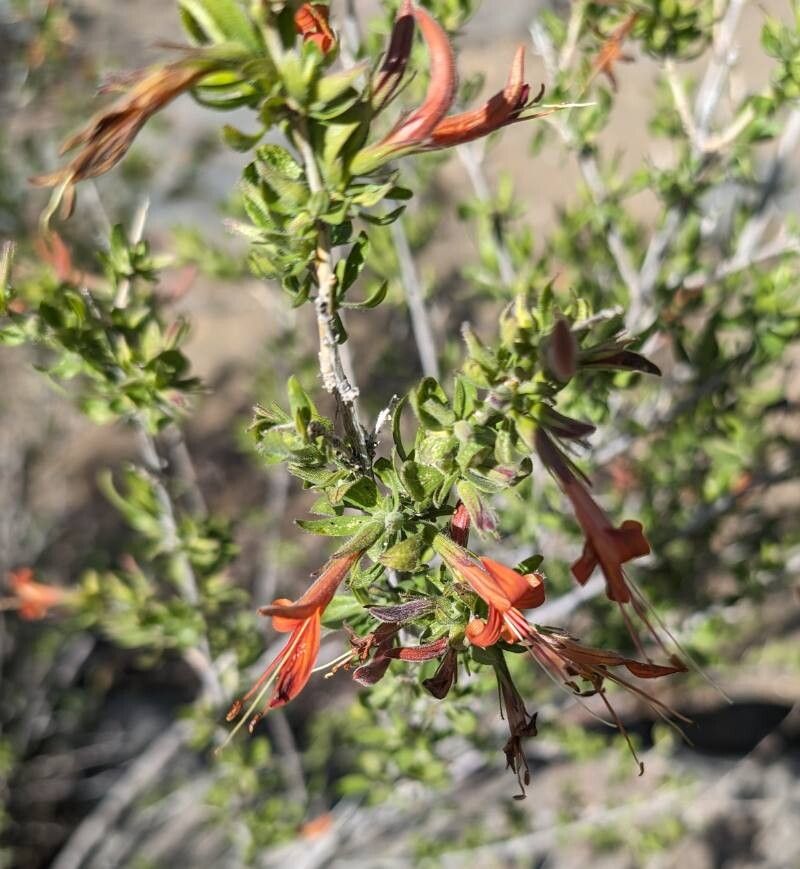
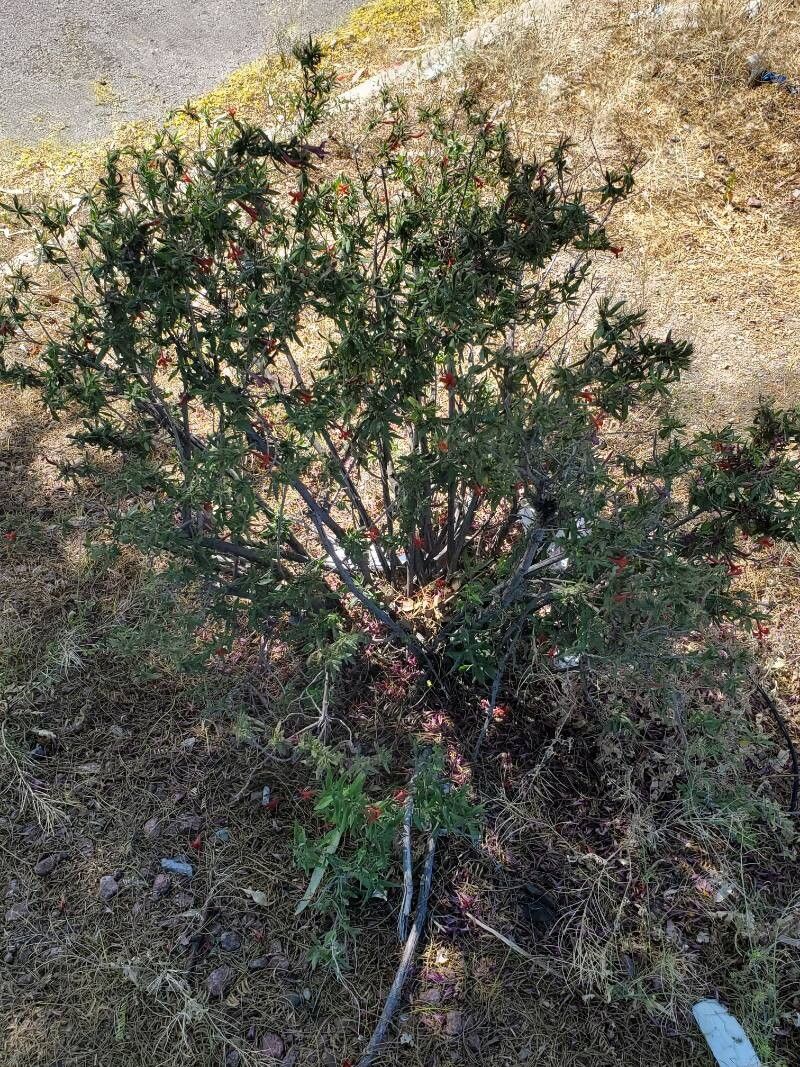
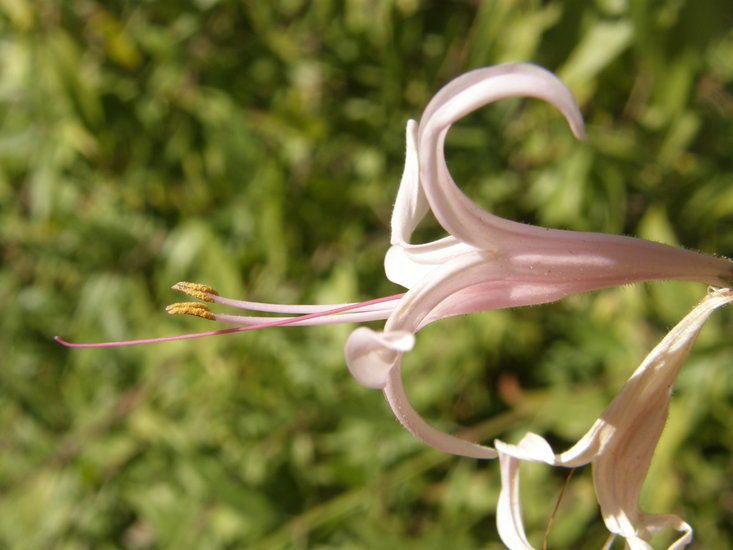
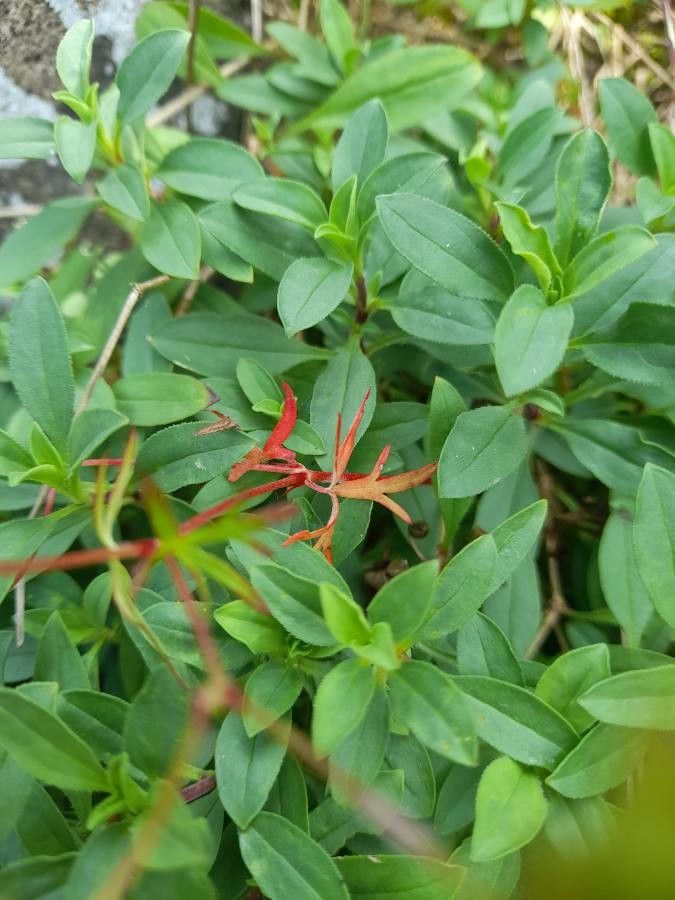
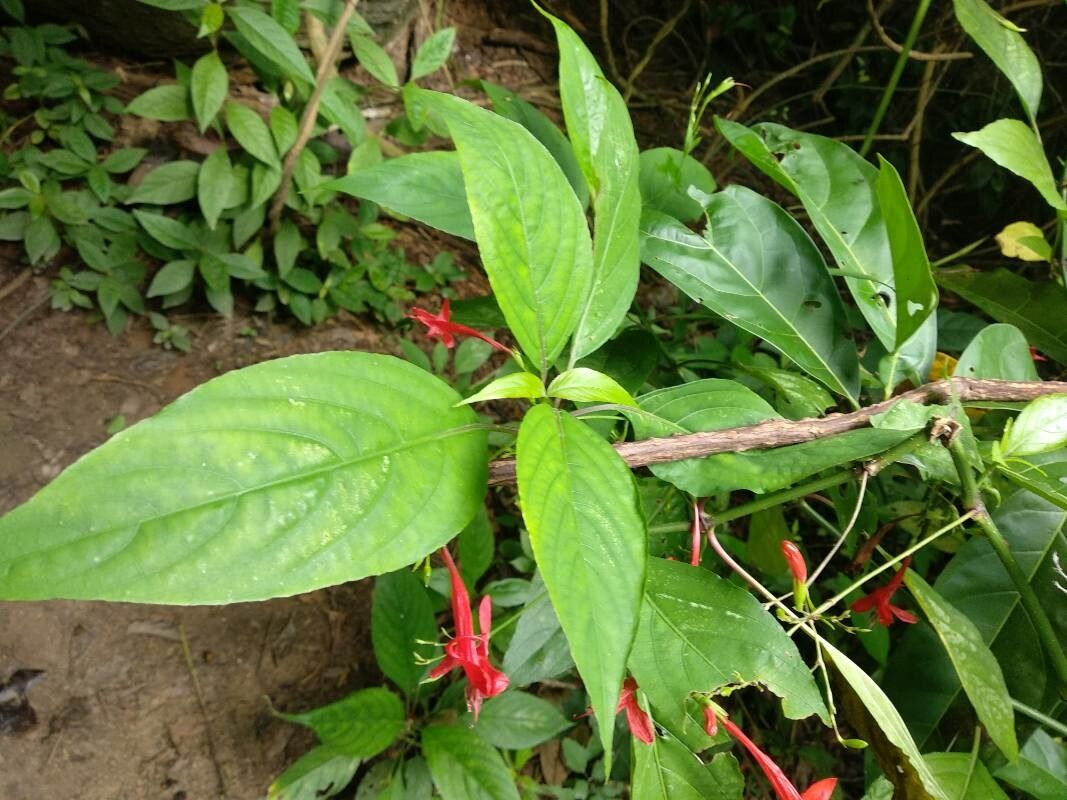
Anisacanthus thurberi, commonly known as Thurber's desert honeysuckle or Thurber's trumpet, is a flowering plant native to the southwestern United States and northern Mexico. It belongs to the Acanthaceae family and typically grows to a height of 3 to 6 feet, with a spread of 2 to 4 feet. The plant features bright green, oval-shaped leaves with serrated edges, and it produces tubular flowers that are a striking red-orange color. These flowers bloom from late spring through fall, attracting hummingbirds and butterflies to the garden.
Anisacanthus thurberi prefers full sun exposure but can tolerate partial shade in hot climates. It is drought-tolerant once established but benefits from occasional watering during extended dry periods. This plant is an excellent choice for xeriscapes or low-water gardens, thanks to its low maintenance requirements and attractive blooms throughout the growing season.
Desert-honeysuckle shows good resistance to disease and is generally not prone to health issues. When it comes to care, this plant is fairly low-maintenance. Outdoors it needs little watering, and larger specimens usually do not require pruning. Smaller plants, however, should be pruned after they finish blooming. Desert-honeysuckle is suitable for anyone with an outdoor area, such as a garden or deck, and does not require much experience in plant care.
How to keep Anisacanthus Thurberi.
Light
Desert-honeysuckle thrives in full, unshaded sun, reflecting its native desert habitat. At every stage of growth, plenty of light is vital for ideal development and health. Both too little and too much light can negatively affect its growth. Nevertheless, desert-honeysuckle has no need for shade tolerance.
Water
Desert honeysuckle is well-suited to arid conditions, showing remarkable drought tolerance and thriving with minimal moisture. Watering it once a week provides sufficient hydration without overdoing it. This plant is commonly found in hot climates, where it efficiently uses water during its peak growth periods, allowing it to flourish in challenging environments.
Temperature
Desert-honeysuckle originates from habitats with temperatures ranging from 59 to 100.4 °F (15 to 38 ℃). These temperatures most effectively encourage growth and flowering. To maintain vitality during temperature fluctuations, seasonal adjustments should be made when necessary.
Fertilizer
Timing is essential when fertilizing Desert-honeysuckle. Apply fertilizer in early spring and continue monthly until early summer. Fertilizer encourages attractive blooms and supplies energy during both dormant and active growth stages.
Pruning
Prune desert honeysuckle in late spring, taking care to avoid the blooming period. Cut back up to one-third of the growth, focusing mainly on removing dead or damaged branches. This will improve airflow, encourage new growth, and enhance the flowers for the next season. Regular pruning also promotes a bushier and more robust plant, as well as reduces the risk of disease.
Pot & Repot
To ensure optimal growth, repot desert honeysuckle every 2 to 3 years during the spring. Use larger containers to accommodate the expanding root system. After repotting, provide moderate watering and full sunlight. When handled gently, desert honeysuckle thrives, producing vibrant blooms and attracting pollinators.
Botanical profile.
- Plant Type
- Shrub
- Life Cycle
- Perennial
- Genus
- Anisacanthus
- Family
- Acanthaceae
- Hardiness Zone
- 8-11
- Mature Height
- 1.83 m to 3.66 m
- Mature Spread
- 1.22 m
- Leaf Color
- Green, Gray
- Leaf Type
- Deciduous
- Flower Color
- Red
- Flower Size
- 2.54 cm to 5.08 cm
- Bloom Time
- Late spring, Summer
- Planting Time
- Spring, Summer
- Harvest Time
- Late summer, Fall
- Native Area
- Mexico
Other names.
Reader questions.
What are the sunlight requirements for Desert-honeysuckle?
Desert-honeysuckle thrives in full sun, requiring above 6 hours of sunlight daily to mimic its natural desert habitat for optimal growth. It's essential to observe how sunlight moves through your garden to ensure the plants are placed in areas that balance light and shade perfectly, promoting their health and well-being without the need for shade tolerance.
What is the optimal temperature range for growing Desert-honeysuckle?
Desert-honeysuckle thrives in environments with a temperature spectrum of 59 to 100.4 °F (15 to 38 °C). This range is ideal for stimulating growth and flowering of the plant. Seasonal adjustments may be needed to maintain its vitality during fluctuations in temperature.
How does artificial lighting support Desert-honeysuckle indoors?
For indoor Desert-honeysuckle plants, or when natural sunlight is inadequate, artificial lighting becomes essential for their growth, especially during winter or in less sunny locations. Using the right type of artificial light, such as LED lights, can cater to the specific light wavelengths your plants need. For full sun plants, around 30-50W/sq ft of artificial light is recommended, whereas partial sun and full shade plants require 20-30W/sq ft and 10-20W/sq ft respectively. The lights should be positioned 12-36 inches above the plants and turned on for 8-12 hours per day to mimic natural sunlight effectively.
How does Desert-honeysuckle handle cold temperatures?
Desert-honeysuckle has some cold tolerance and generally does not require additional measures when the temperature stays above -5°C. However, if temperatures are expected to drop below -5°C, protective measures such as wrapping the plant with plastic film, fabric, or other materials are necessary. These should be promptly removed once temperatures rise again.
What are the symptoms of insufficient light exposure in Desert-honeysuckle?
Desert-honeysuckle exhibits unique symptoms when exposed to inadequate light, such as small new leaves, leggy or sparse growth, faster leaf drop, slower or halted growth, paler or irregularly colored new leaves, and symptoms of overexposure like chlorosis, sunscald, leaf curling, wilting, and leaf scorching. These symptoms indicate light deficiency or excessive exposure, affecting the plant's health and growth.
What should you do if Desert-honeysuckle experiences temperatures below -10°C?
If temperatures fall below -10°C, Desert-honeysuckle's leaves may start to droop, and in severe cases, wilt and fall off. To manage this, trim off frost-damaged parts. Before facing low temperatures again, wrap the plant with non-woven fabric or cloth and construct a wind barrier to protect it from the cold.
What solutions can address light-related issues in Desert-honeysuckle?
To combat light-related issues in Desert-honeysuckle, gradually move the plant to sunnier locations to achieve at least 6 hours of direct sunlight daily. For indoor plants, use south-facing windows or artificial light sources like desk or ceiling lamps for at least 8 hours a day, or invest in professional grow lights. Outdoors, ensure gradual adaptation to prevent sunburn. If trees block sunlight, consider pruning them. For smaller plants needing more sun, transplant them during their dormant period to a location with ample sunlight and good drainage. Note that parts of the plant damaged by insufficient sunlight may not recover fully, but new growth should be healthy with improved light exposure.
How should Desert-honeysuckle be cared for during high temperatures?
During the summer, it is best to keep Desert-honeysuckle below 38°C. Exceeding 43°C can cause the leaves to lighten in color, tips to become dry and withered, leaves to curl, and increase the plant's susceptibility to sunburn. To mitigate damage, trim the sunburned and dried areas, relocate the plant to a shadier location or use a shade cloth, and water the plant in the morning and evening to maintain soil moisture.