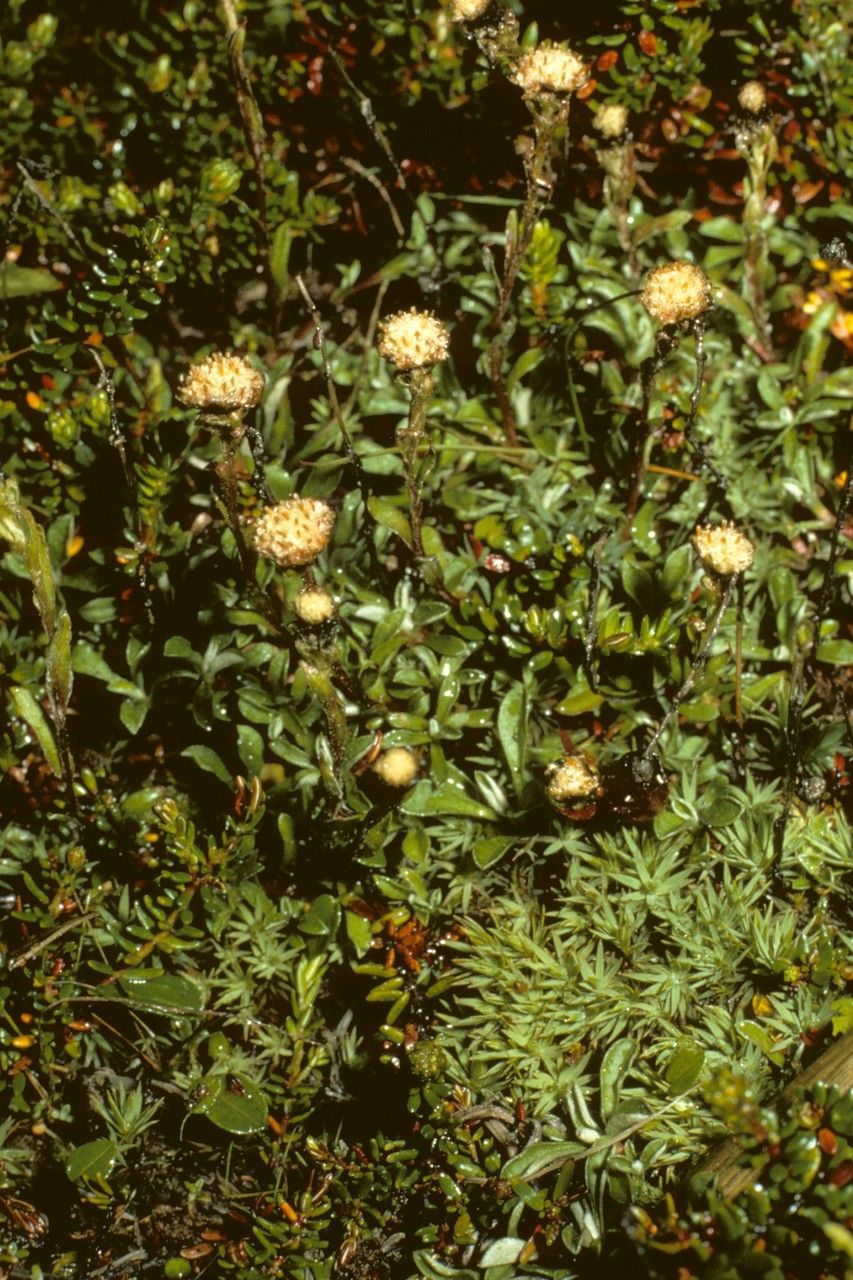
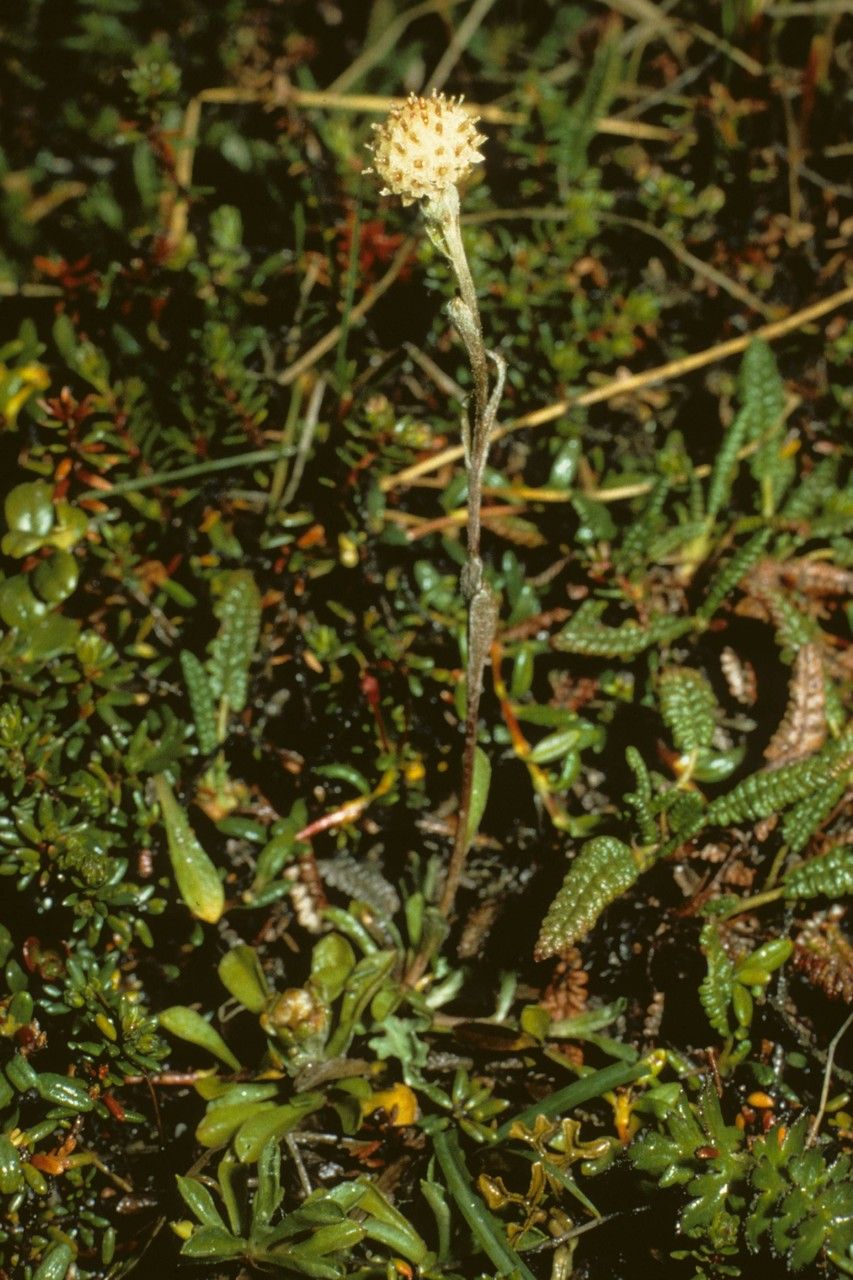
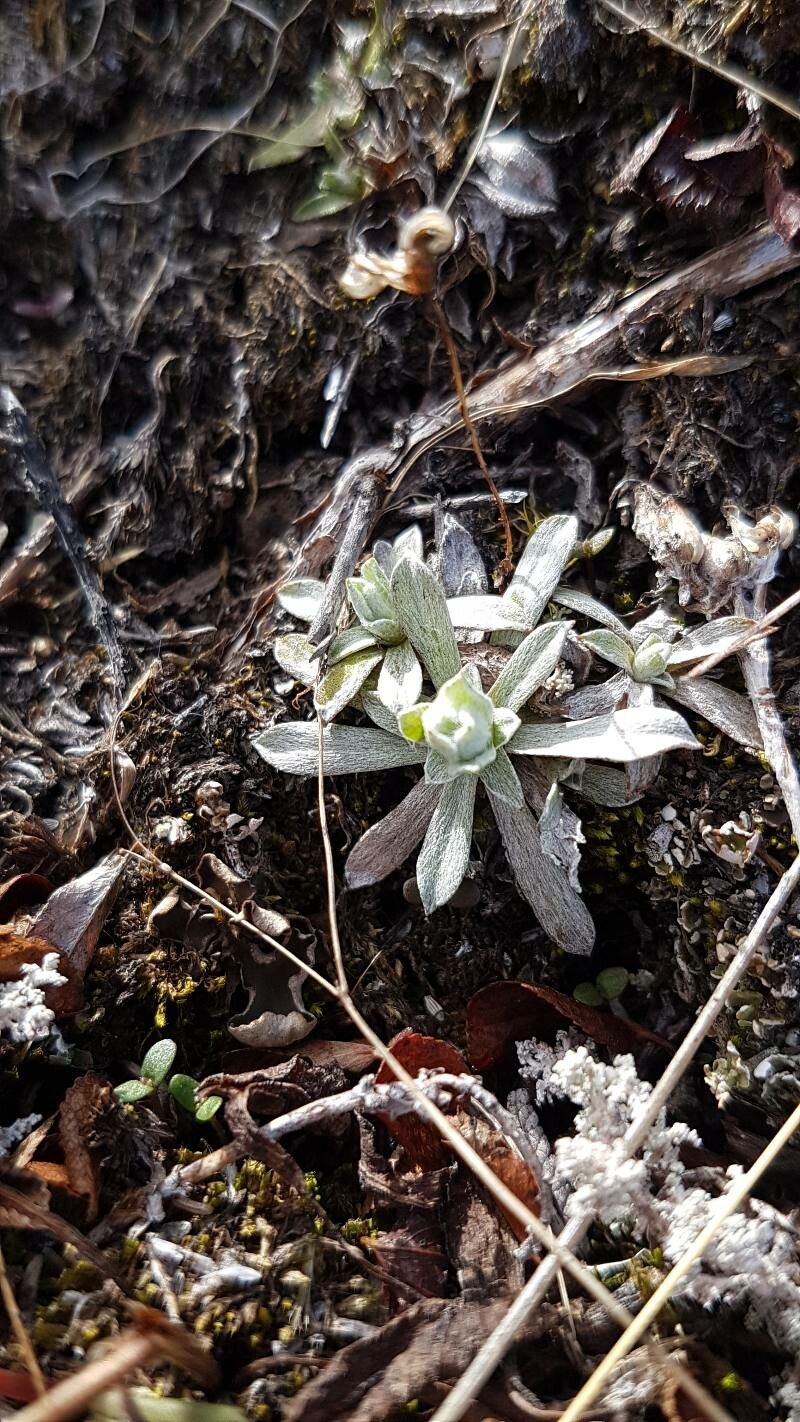
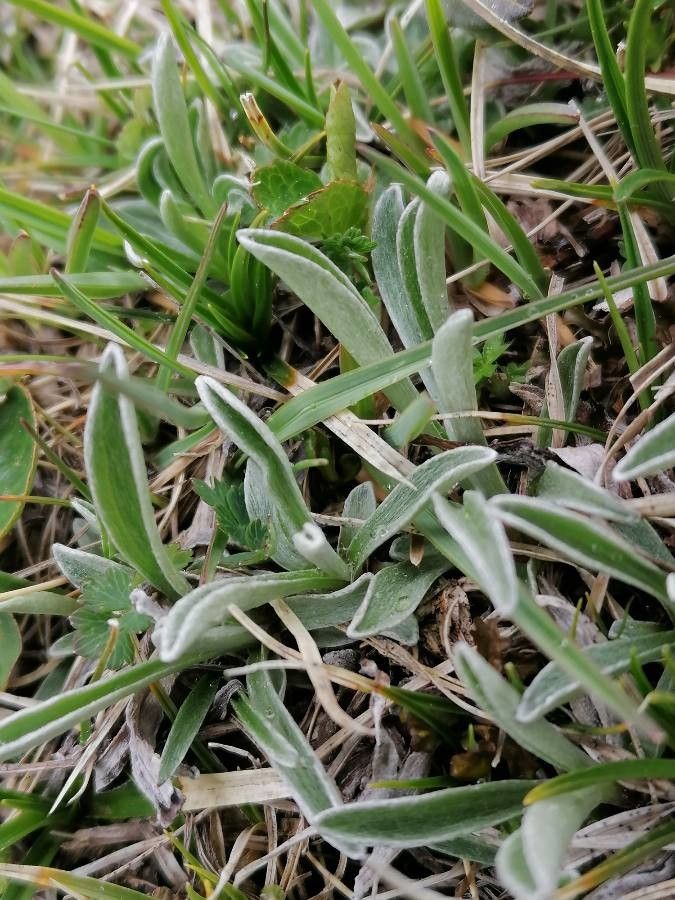
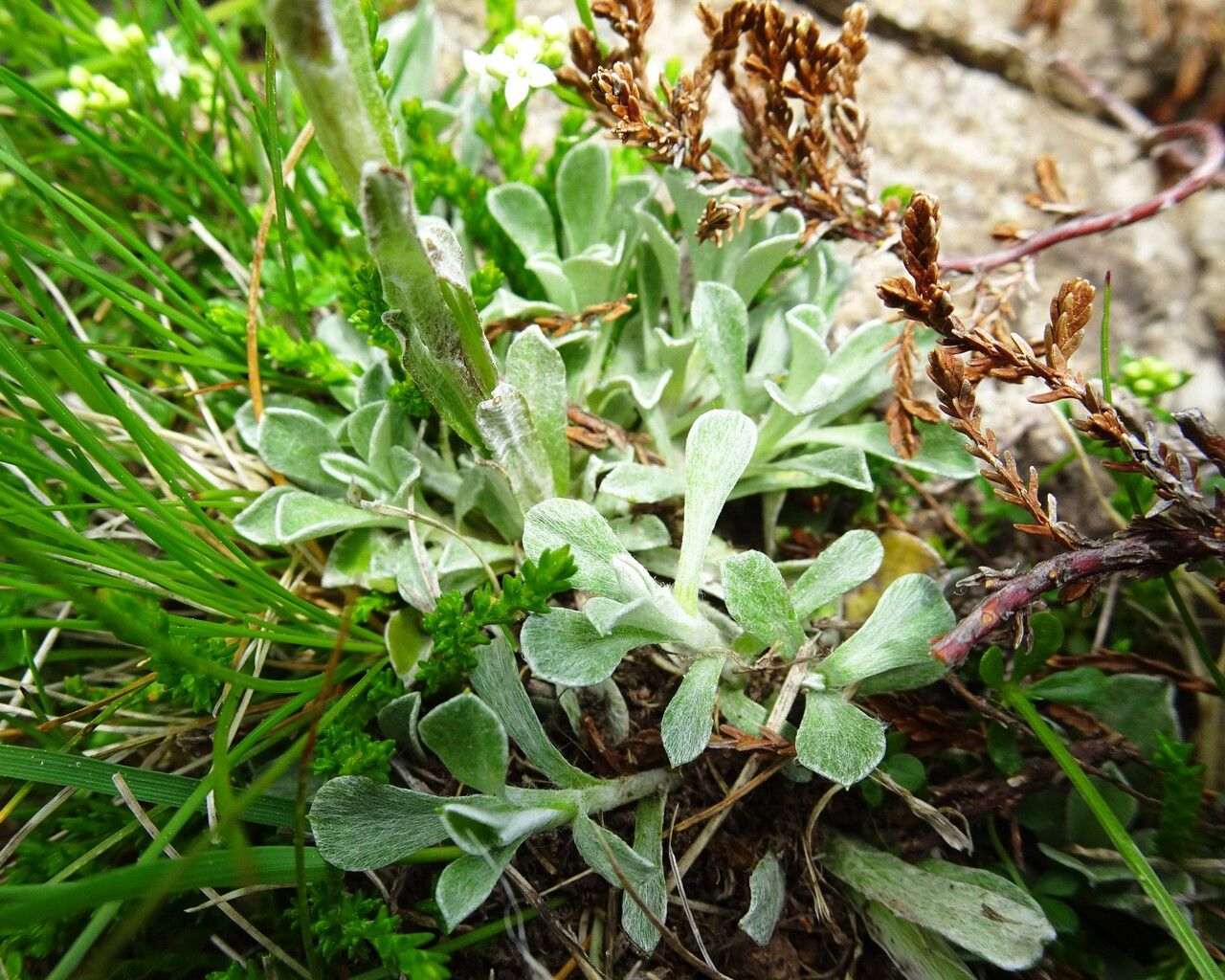
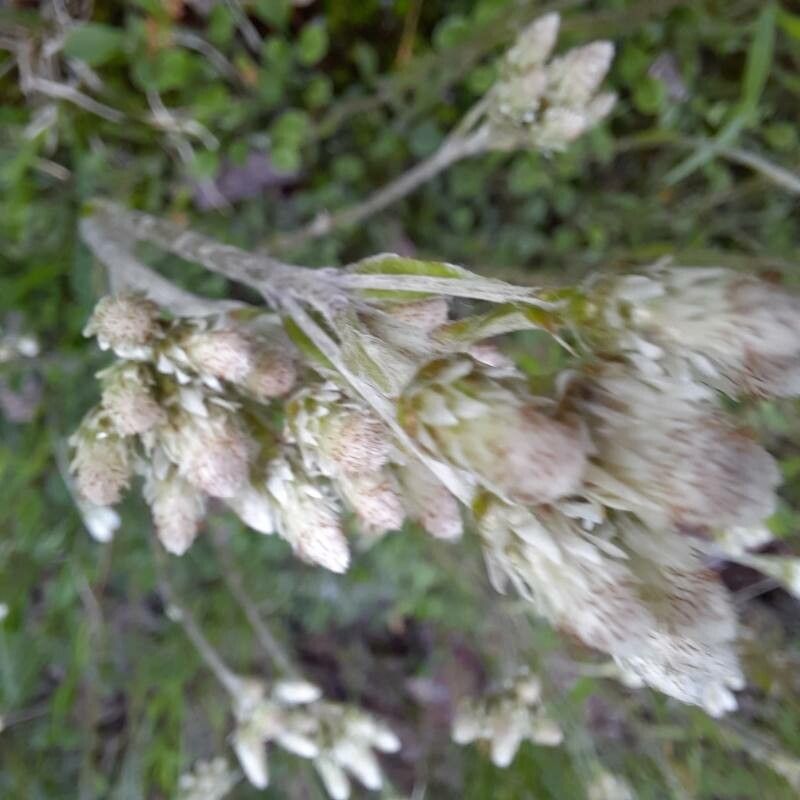
Antennaria monocephala, the pygmy pussytoes, is a flowering plant in the family Asteraceae. It is native to arctic and alpine regions of North America (Greenland, Labrador, Quebec, the three Canadian Arctic Territories, Alaska, British Columbia, Alberta, and Wyoming) as well as the Chukotka (Chukchi) Peninsula of Russia.Antennaria monocephala is a small herb rarely more than 15 cm (6 inches) tall. Male and female flowers are borne on separate plants; some populations are known in which all the individuals are female. SubspeciesAntennaria monocephala subsp. angustata (Greene) Hultén Antennaria monocephala subsp. monocephala
Single-head pussytoes has strong disease resistance and is generally not prone to illnesses. Still, it can be vulnerable to pests and diseases present in its environment. These infections are typically mild. Regarding care, this plant needs moderate maintenance. It should be pruned regularly to preserve a neat appearance and healthy growth. Applying fertilizer can also encourage flowering. Single-head pussytoes is suitable for anyone with outdoor space, such as a garden or patio, and does not demand extensive gardening experience. It may need extra attention when cultivated indoors.
How to keep Antennaria Monocephala.
Light
Single-head pussytoes is native to habitats like forest understories and rocky areas, where it grows in natural shade. It prefers partial sun but can tolerate both full sun and full shade, showing its versatility and hardiness.
Temperature
Single-head pussytoes can adapt to a broad range of temperature conditions, though its distribution may still be constrained by particular combinations of moisture and heat. It performs best in warm summer climates with sufficient rainfall or watering. Extended periods of cloudy, rainy weather or prolonged high temperatures can raise the likelihood of Single-head pussytoes dying. In winter, appropriate protection from cold can increase the plant's survival chances.
Fertilizer
The primary period to fertilize Single-head pussytoes is in the early spring when the flowers are starting to develop. Appropriate fertilizer boosts blooming and assists Single-head pussytoes in flowering beautifully. Early spring fertilization guarantees outstanding flowers throughout the season and supplies energy for the phases of dormant growth.
Pruning
Pygmy pussytoes have small, silvery leaves and grow low to the ground, requiring very little pruning. In early spring, trim any damaged stems, and after they finish blooming in late spring, lightly shear the plants to encourage fullness. To extend the blooming period, remove any faded flowers. Avoid heavy pruning to preserve their natural growth pattern.
Botanical profile.
- Plant Type
- Herb
- Life Cycle
- Perennial
- Genus
- Antennaria
- Family
- Asteraceae
- Hardiness Zone
- 4-8
- Mature Height
- 0 cm to 91 cm
- Mature Spread
- 10 cm to 20 cm
- Leaf Color
- Silver, Gray
- Leaf Type
- Evergreen
- Flower Color
- White
- Flower Size
- 1.02 cm to 2.03 cm
- Bloom Time
- Early spring, Mid spring
- Planting Time
- Spring, Summer
- Harvest Time
- Late spring, Early summer
Other names.