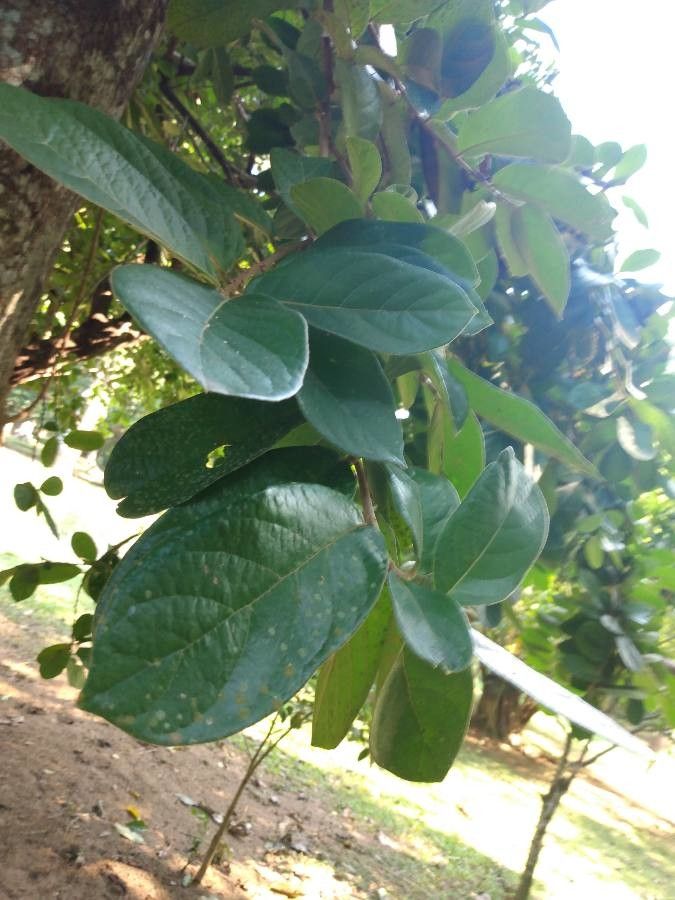
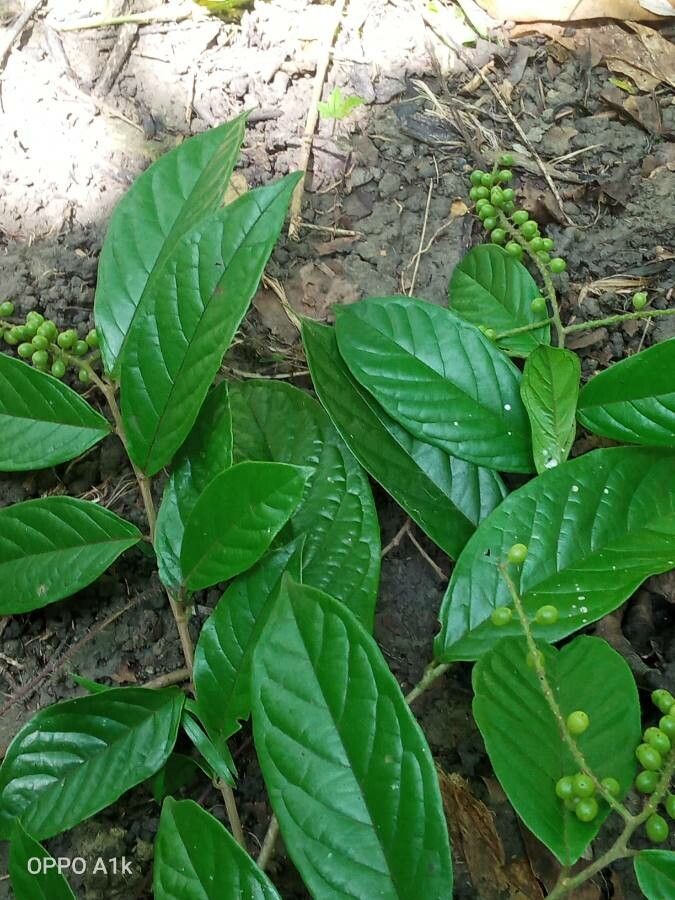
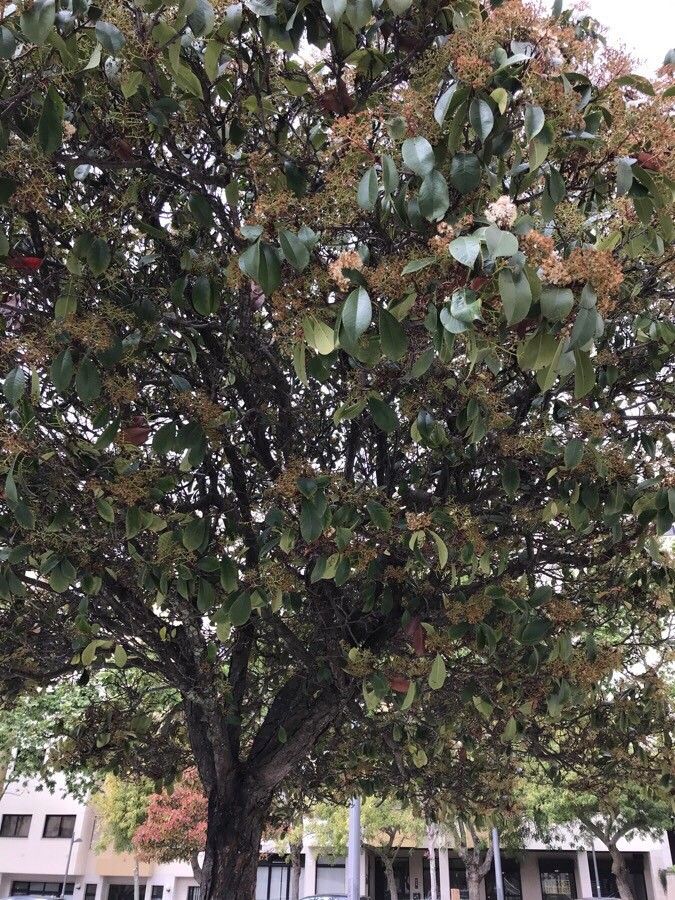
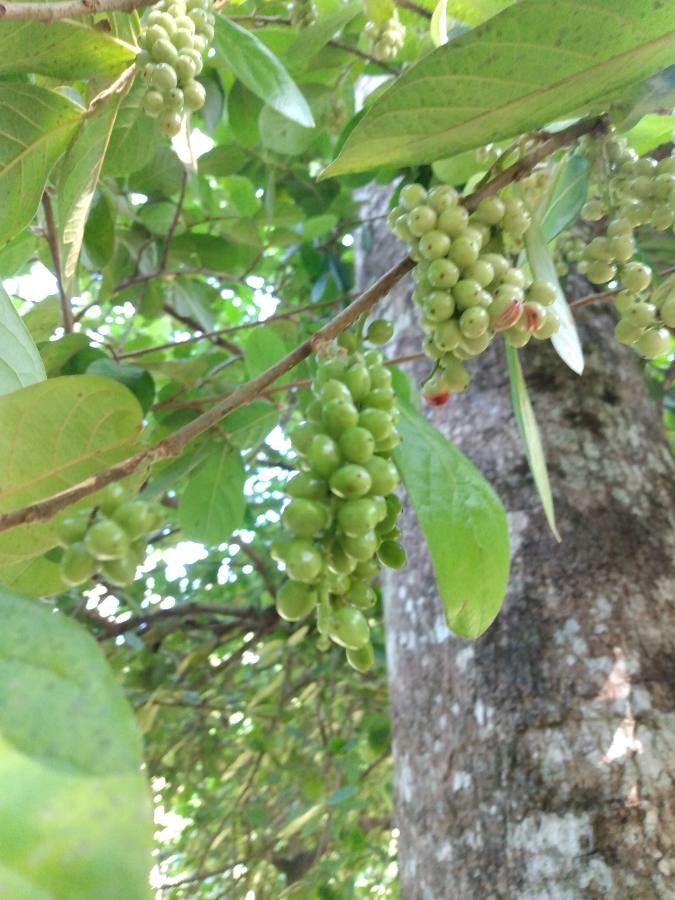
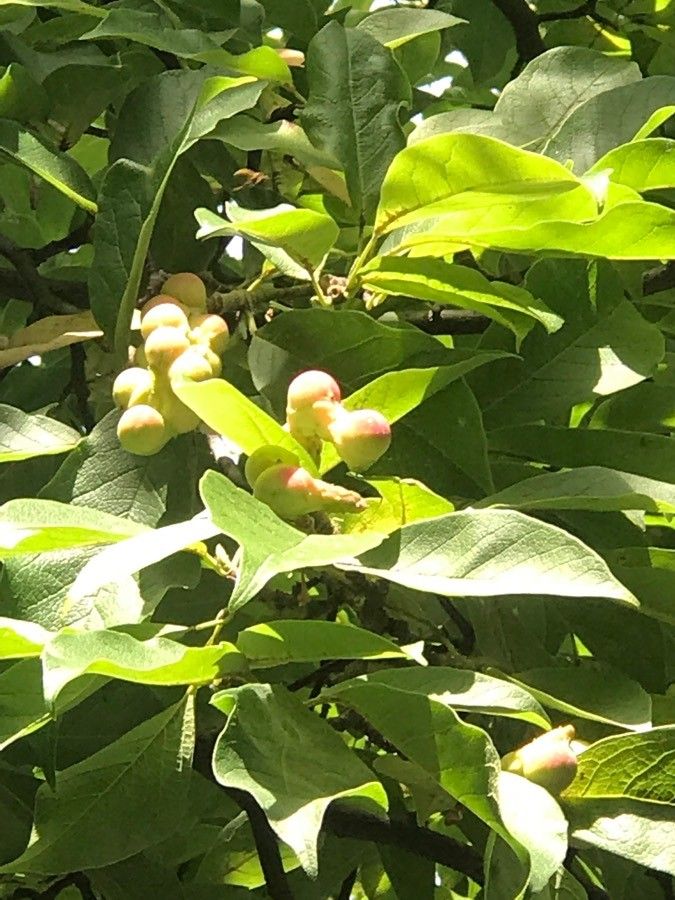
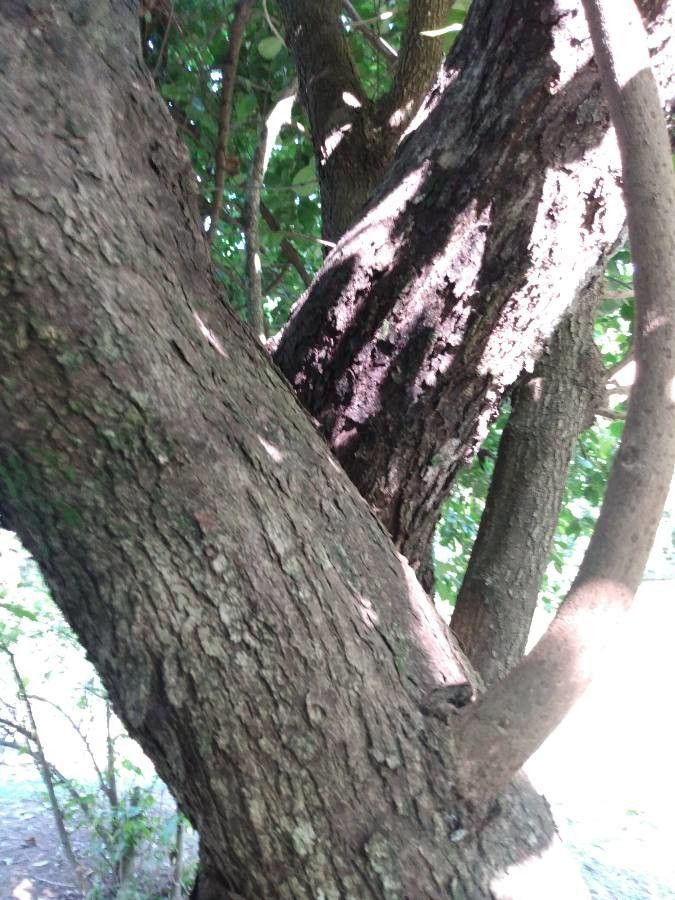
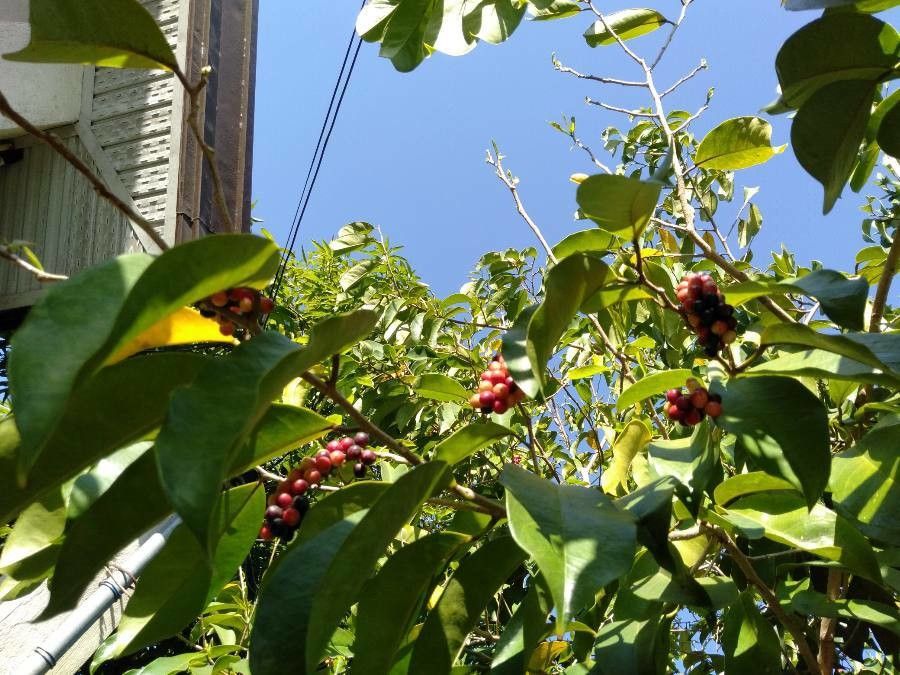
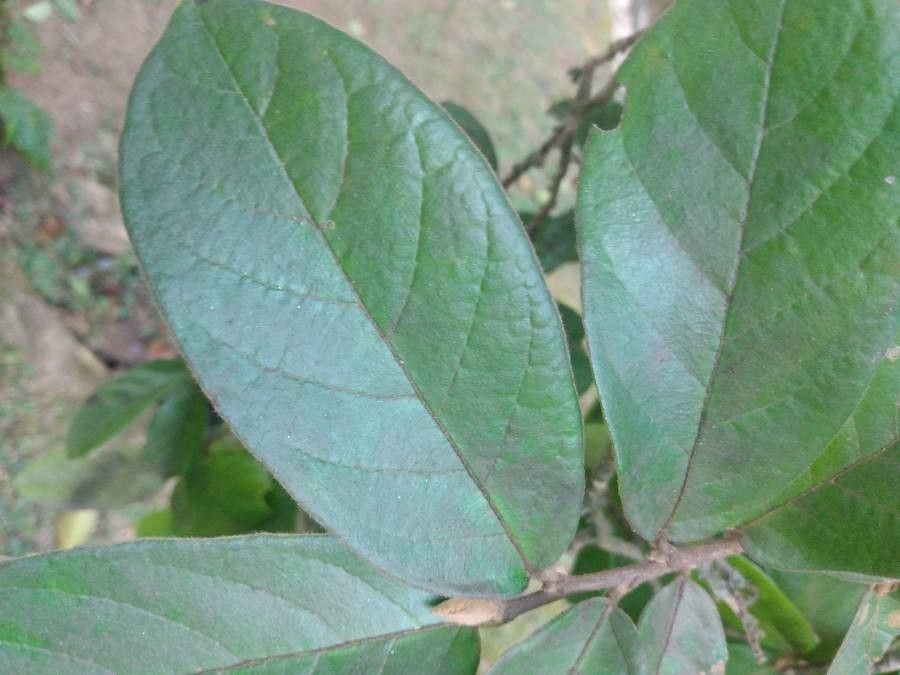
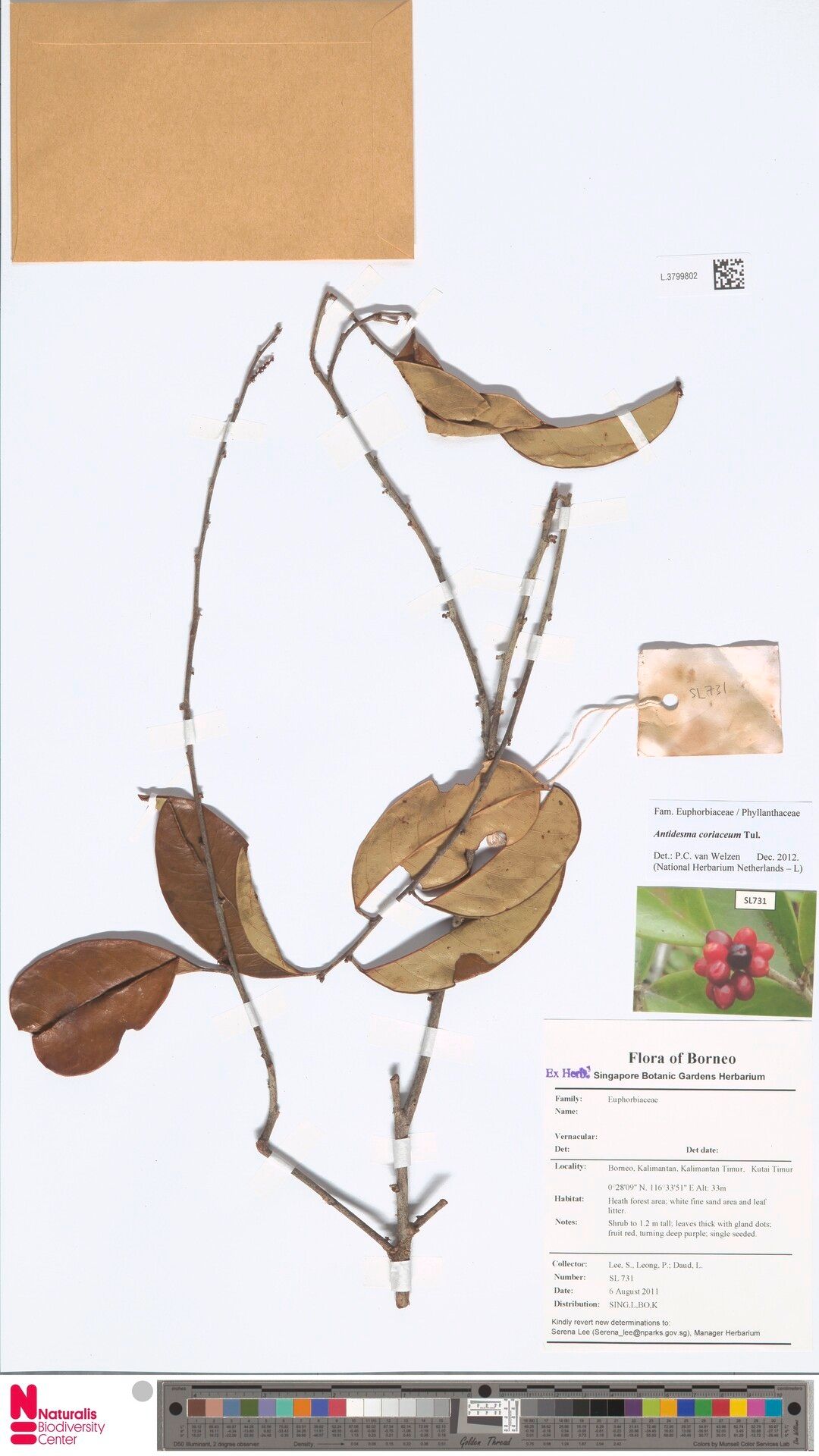
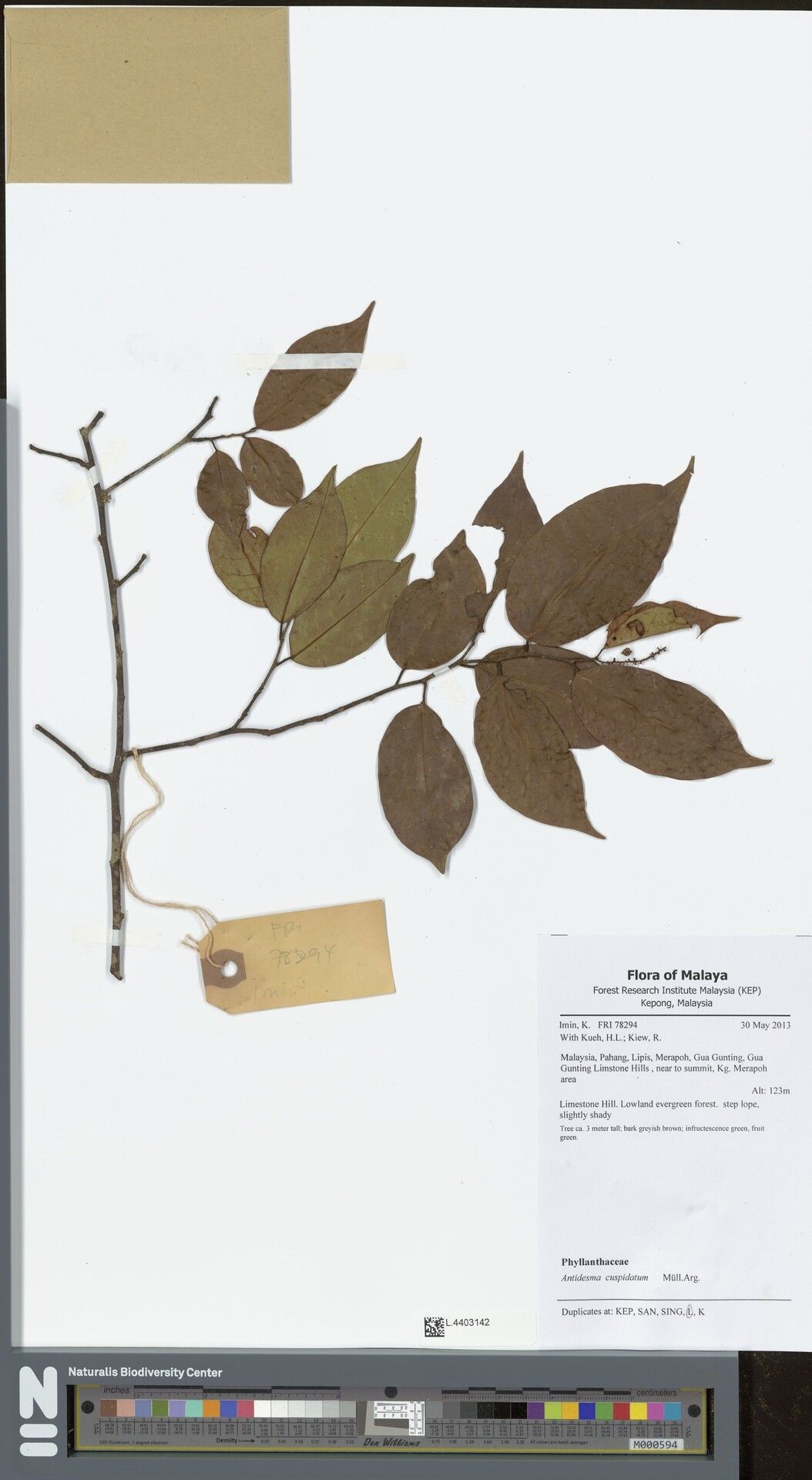
Antidesma venosum, commonly known as the tassel-berry, is a species of small dioecious tree in the family Phyllanthaceae. It is native to Africa, China and Indochina. Numerous small, sessile flowers are produced on drooping catkin-like spikes, which are about 10 cm long. The flowers produce an unpleasant smell, and the tree is in fruit for more than a month during late summer. Each small, oval-shaped fruit measures about 8 x 4 mm in size. They are initially fleshy green, and change to bright red and eventually purplish black as they ripen. The fruit are utilized by many species of animal and bird.
Tassel-berry is well resistant to disease and is generally unlikely to suffer from illnesses. In terms of care, the plant is fairly low-maintenance. When grown outdoors it needs only light watering, and larger specimens typically do not require pruning. Smaller specimens, however, should be pruned after they finish blooming. Tassel-berry is appropriate for anyone with an outdoor area, such as a garden or a deck, and does not call for much prior plant-care experience.
How to keep Antidesma Venosum.
Light
Tassel-berry does best in locations where direct sunlight reaches it for most of the day. While it can tolerate short stretches of weaker light, a sustained reduction in sunlight can diminish its vigorous growth and productivity. Its native occurrence in clear-sky habitats reflects the plant’s preference for plentiful sun. Both too little and too much light can stress the plant and negatively affect its growth.
Water
Tassel-berry, which originates from tropical understoreys, thrives in environments with high humidity and moist soil, though it can tolerate short periods of dryness. To maintain the ideal soil moisture without causing waterlogging, water the plant every 2 to 3 weeks. This plant is well-suited for indoor settings, where it benefits from plenty of indirect light to help retain moisture and support healthy growth.
Humidity
This plant will thrive in moderate humidity, which is probably the level in your home. However, misting it a few times a week can be very beneficial. Make sure the room has good ventilation.
Temperature
Tassel-berry naturally does best in a temperate environment with temperatures between 68 and 95 °F (20 and 35 °C). It prefers warmer climates. In cooler regions, seasonal temperature adjustments are necessary to replicate its native habitat.
Fertilizer
Fertilizing is essential for the care of the Tassel-berry. Regular feeding during the growing season maintains the energy needed for its showy leaves and supports overall growth. Ignoring fertilization can lead to unhealthy leaves, reduced ornamental value, and stunted or weak growth that is prone to breaking.
Pruning
The Tassel-berry plant boasts lush foliage and small fruits. To maintain its health, prune the plant from early to late winter. Focus on light trimming and remove any dead or diseased branches. This practice encourages healthy growth, enhances fruit production, and prevents overcrowding. Be sure to use clean, sharp tools to minimize damage.
Botanical profile.
- Plant Type
- Shrub
- Life Cycle
- Perennial
- Genus
- Antidesma
- Family
- Phyllanthaceae
- Hardiness Zone
- 10
- Mature Height
- 3.05 m to 10.06 m
- Mature Spread
- 2.13 m to 3.96 m
- Leaf Color
- Dark Green, Forest Green
- Leaf Type
- Evergreen
- Flower Color
- Green
- Flower Size
- 15.24 cm
- Bloom Time
- Late spring, Early summer, Mid summer
- Planting Time
- Spring, Summer, Autumn
- Harvest Time
- Mid summer, Late summer, Early fall, Mid fall
Other names.
Reader questions.
What are the sunlight requirements for a Tassel-berry?
Tassel-berry requires full sun exposure to thrive, which means it should receive above 6 hours of sunlight daily. It can also grow in partial sun, with about 3-6 hours of sunlight. The ideal location is where the sun's rays can fully reach the plant for most of the day. However, it is essential to watch how sunlight moves through your garden to provide a balance of light and shade, ensuring the plant's happiness. Short periods of less intense sun exposure are tolerable, but too little or too much sunlight can stress the plant, affecting its growth negatively.
What is the ideal temperature range for Tassel-berry?
Tassel-berry thrives in a temperate environment with ideal temperatures ranging between 68 to 95 °F (20 to 35 °C). It is a heat-loving plant that favors warmer climates. To ensure its growth, temperature adjustments are necessary in cooler areas to mimic its native habitat conditions. During winter, it's important to keep the plant in temperatures above 20°C, while ensuring it is not exposed to temperatures close to 5°C, as such cold conditions are harmful to the plant.
How does artificial lighting support Tassel-berry's growth indoors?
When natural sunlight is insufficient, especially during winter or in less sunny indoor spaces, artificial lighting can be a crucial solution for Tassel-berry's growth. Indoor plants require adequate lighting for optimal growth. LED lights are a popular choice because they can be customized to provide specific wavelengths of light that plants need. Full sun plants need 30-50W/sq ft of artificial light, while partial sun plants require 20-30W/sq ft. The light source should be placed 12-36 inches above the plant to mimic natural sunlight, and the duration should mimic natural daylight hours, with most plants needing 8-12 hours of light per day.
How should Tassel-berry be cared for during autumn and winter?
In autumn, it's recommended to bring outdoor-grown Tassel-berry indoors to protect it from cool temperatures. Placing it near a bright window helps ensure it receives enough light; however, it should be kept at a distance from heaters to avoid excessive dryness. During winter, maintaining the temperature above 20°C is crucial for the plant's growth. Any cold exposures, especially temperatures approaching 5°C, can damage the plant severely.
What are the symptoms of light deficiency in Tassel-berry?
Symptoms of light deficiency in Tassel-berry include smaller new leaves compared to mature ones, leggy or sparse growth, faster leaf drop, slower or no new growth, and lighter-colored new leaves. These symptoms indicate that the plant is not receiving adequate light, affecting its ability to grow and remain healthy. Conditions such as chlorosis, sunscald, leaf curling, wilting, and leaf scorching can also occur due to inappropriate light levels, including both insufficient and excessive sunlight exposure.
What are the symptoms of low temperature exposure in Tassel-berry, and how can they be treated?
When exposed to low temperatures, Tassel-berry shows signs of distress, such as a lightening in leaf color when the temperatures fall below 1°C. Following frost damage, leaves may turn brown or black, and the plant may show symptoms of wilting and drooping. To treat these symptoms, trim off the frost-damaged parts and move the plant immediately to a warmer environment. Choosing a spot near a south-facing window ensures ample sunlight, but avoid placing the plant near heaters or air conditioning vents to prevent dry air.
What solutions are recommended for Tassel-berry struggling with insufficient light exposure?
For Tassel-berry struggling with insufficient light, gradually moving plants to a sunnier location can help, ensuring they receive at least 6 hours of direct sunlight daily. For indoor plants, using a south-facing window and keeping curtains open during the day, or employing artificial light such as desk or ceiling lamps for at least 8 hours daily, can provide the necessary light. Outdoors, it's crucial to shift the plants to better sunlight spots gradually to avoid sunburn. Minimizing obstructions by pruning or relocating the plants to areas with more sunlight can also be beneficial. However, parts of the plant already affected by the lack of sunlight may not recover, but new growth should be healthy with improved light exposure.
How can high temperatures affect Tassel-berry and what are the solutions?
Tassel-berry should be maintained below 35°C during summer to avoid heat stress. Temperatures exceeding 41°C can cause the leaves to lighten in color and increase susceptibility to sunburn. To address high temperature stress, trim the sunburned and dried parts away and move the plant to a shaded location, especially from the midday and afternoon sun. Watering the plant in the morning and evening helps keep the soil moist, further aiding in cooling and ensuring its well-being.