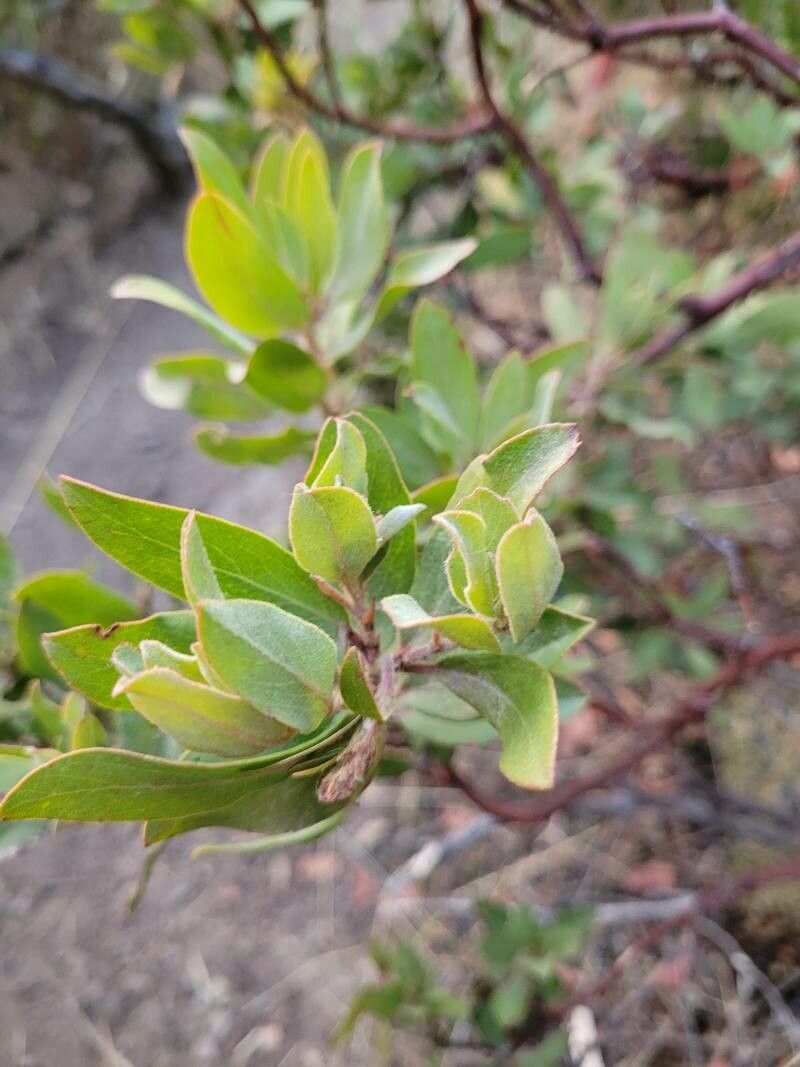
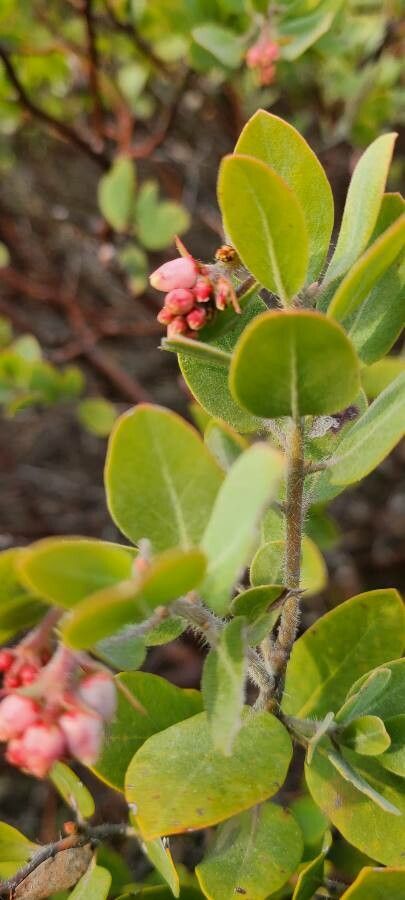
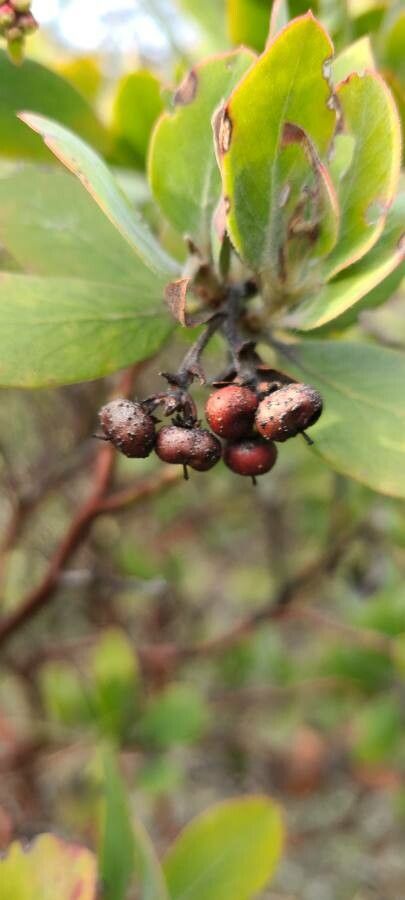
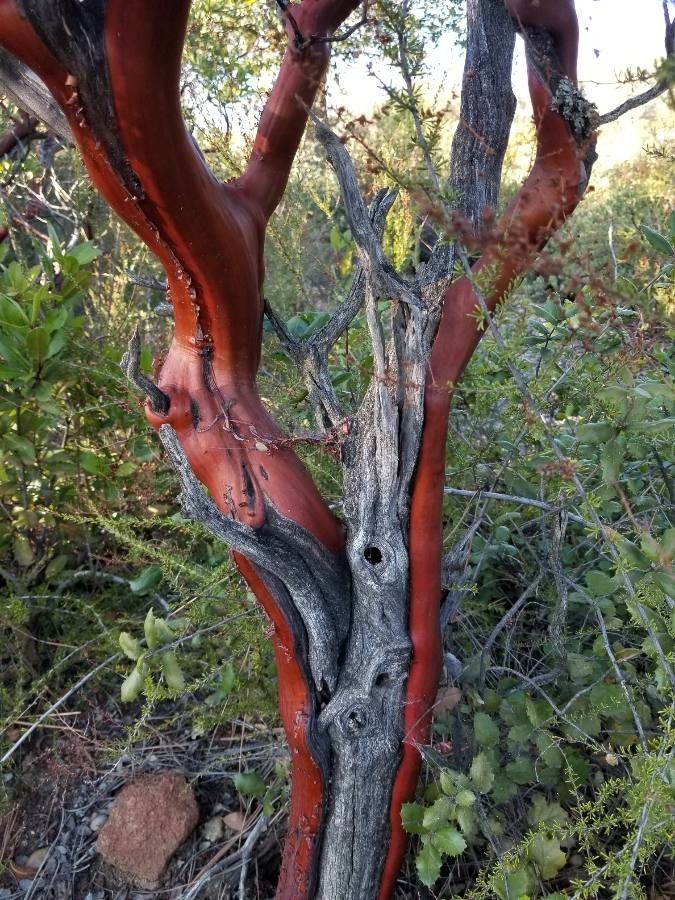
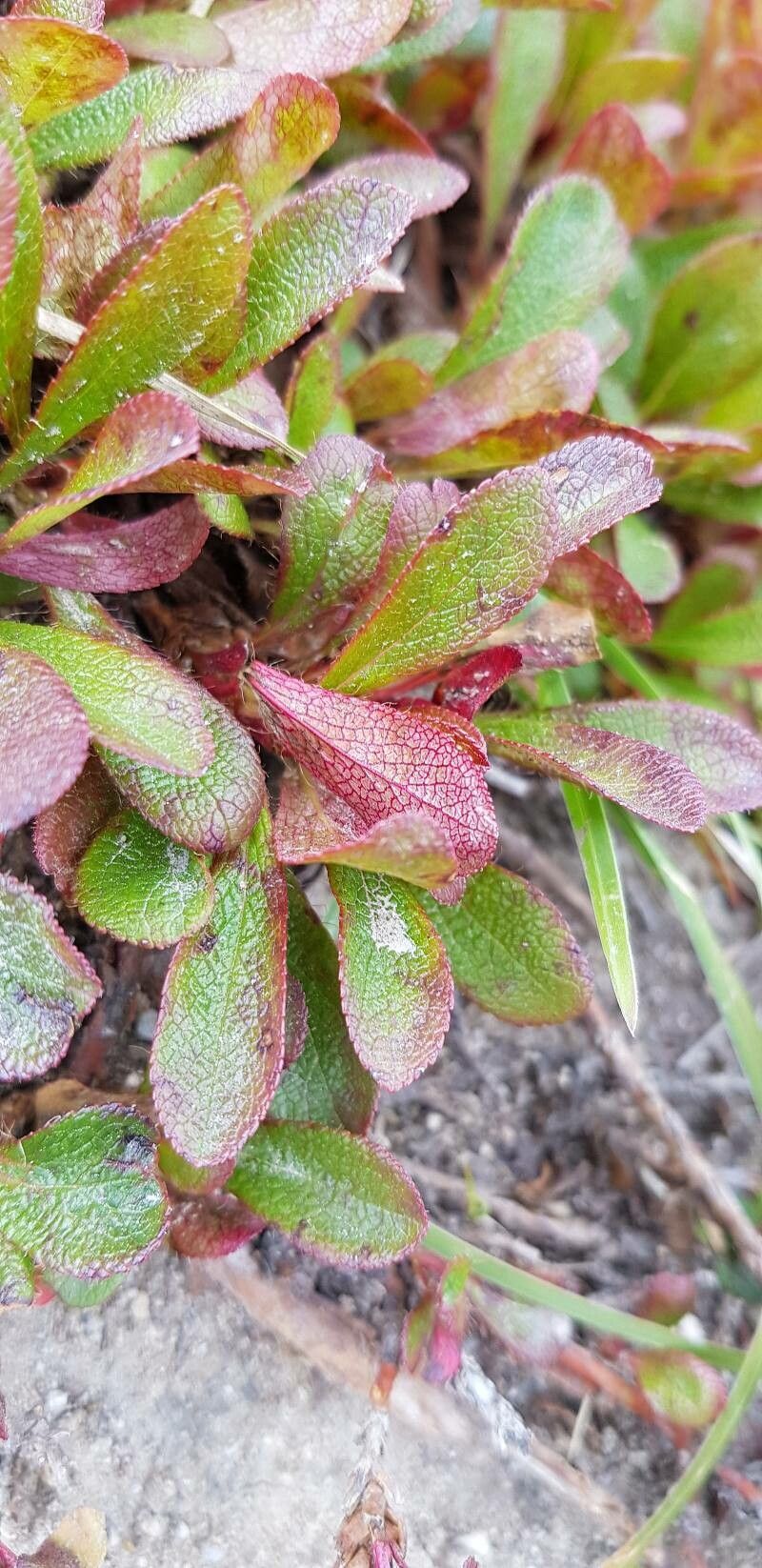
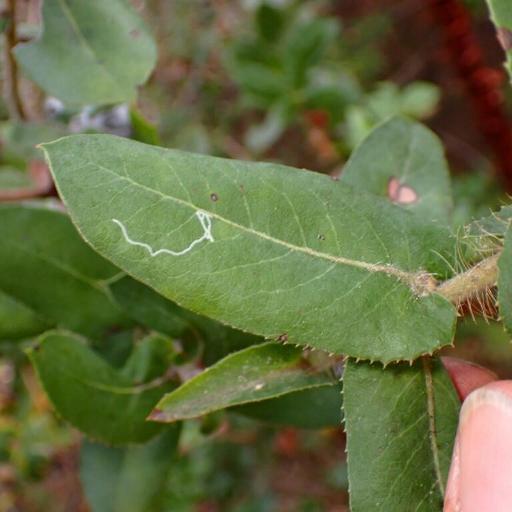
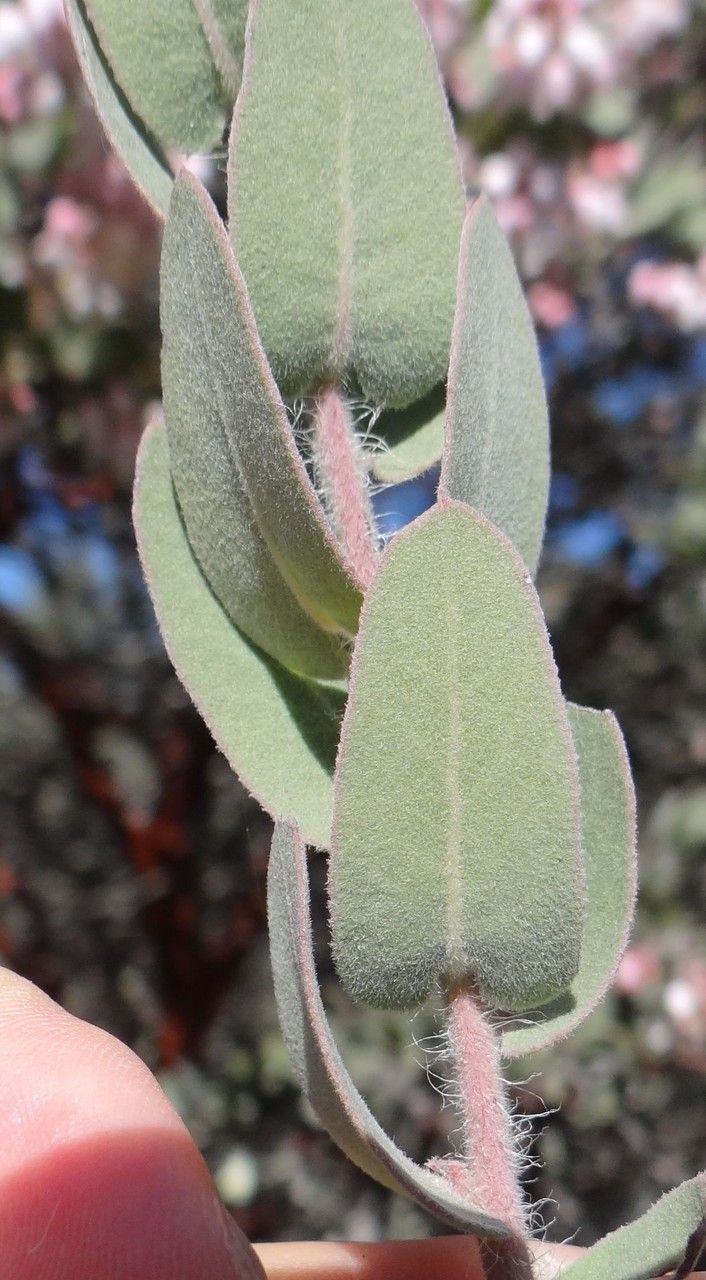
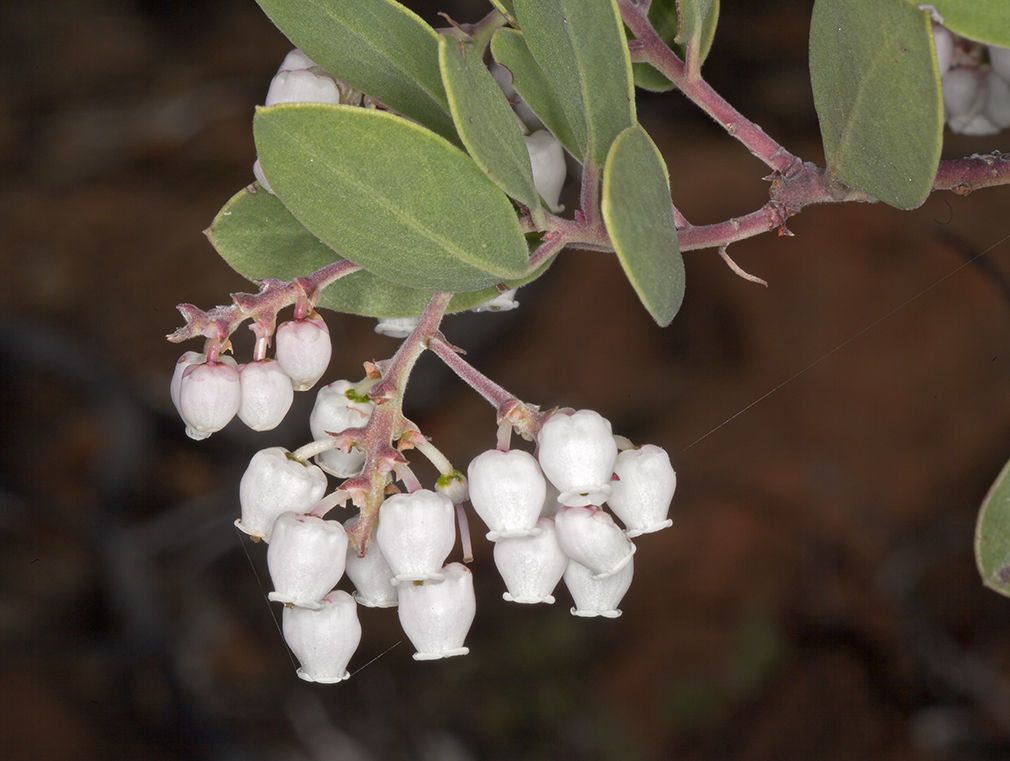
Arctostaphylos columbiana, commonly known as Hairy Manzanita, is an evergreen shrub native to the Pacific Northwest of North America. Typically, it grows to a height of 1-3 meters and has a spreading growth habit. The small, leathery leaves are dark green with fine hairs on the underside. From late winter to early spring, the plant produces small, pinkish-white flowers. By late summer, these flowers develop into red berries.
Hairy Manzanita thrives in well-drained soils and can tolerate both full sun and partial shade. It is frequently found on rocky slopes or within open forests, at elevations ranging from sea level to 1,500 meters.
Indigenous peoples have utilized this plant for its medicinal properties, particularly its antibacterial leaves, which are used to treat colds and sore throats.
Arctostaphylos columbiana plays a vital ecological role by providing habitat for wildlife. Birds feed on its berries, while small mammals, such as rodents, find shelter within its dense foliage.
In addition to its ecological importance, Hairy Manzanita offers aesthetic value, making it an excellent choice for landscaping. It is especially well-suited for native gardens and restoration projects, where it can be planted alongside other regional native species to enhance the local ecosystem.
Botanical profile.
- Plant Type
- Tree, Shrub
- Life Cycle
- Perennial
- Genus
- Arctostaphylos
- Family
- Ericaceae
- Hardiness Zone
- 7-10
- Mature Height
- 0.91 m to 4.88 m
- Mature Spread
- 0.91 m to 2.13 m
- Leaf Color
- Green
- Leaf Type
- Evergreen
- Flower Color
- Pink, White
- Flower Size
- 0.76 cm
- Bloom Time
- Early spring, Mid spring
- Planting Time
- Spring, Summer, Autumn
- Harvest Time
- Late summer, Early fall, Mid fall
Other names.