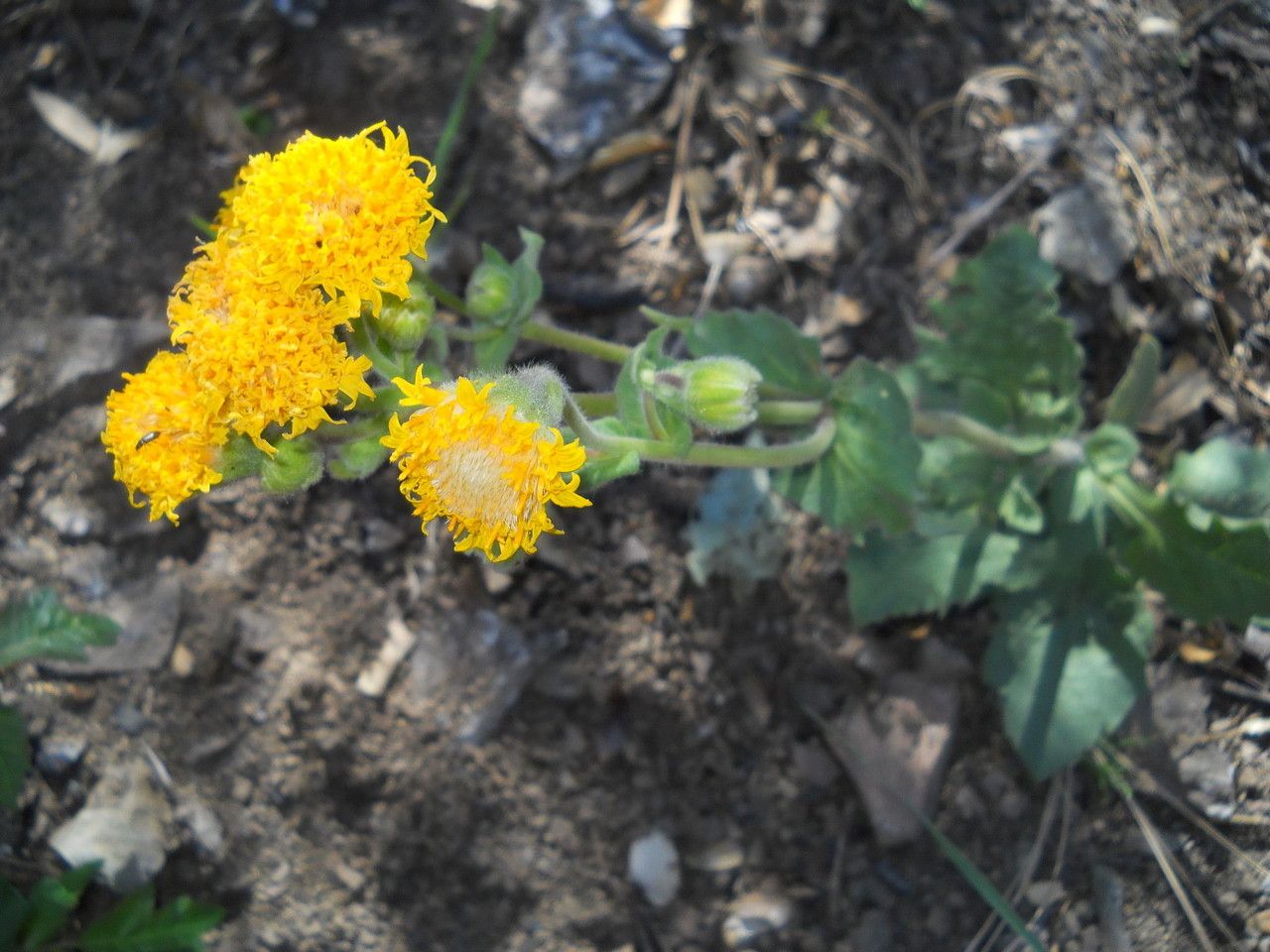
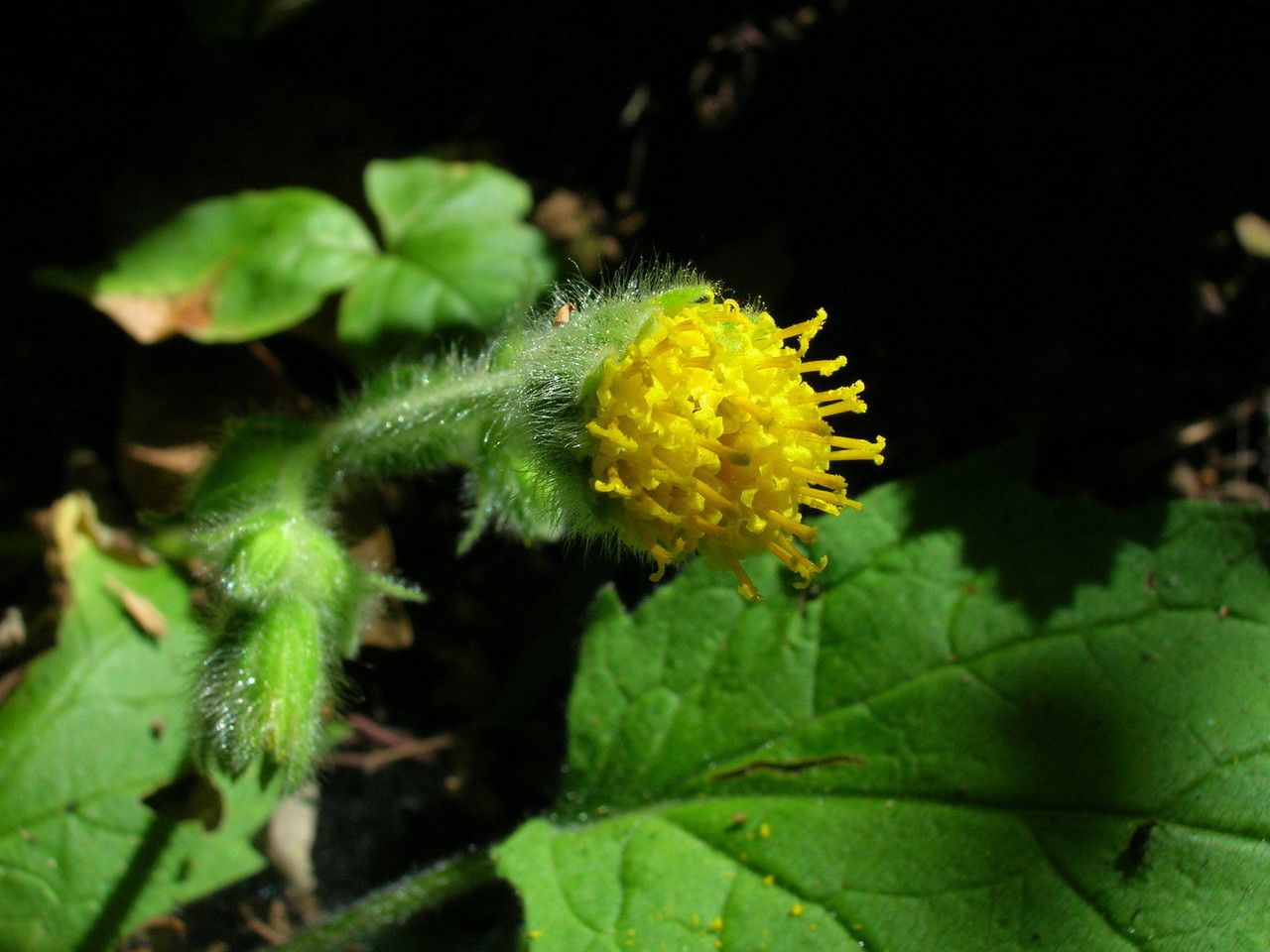
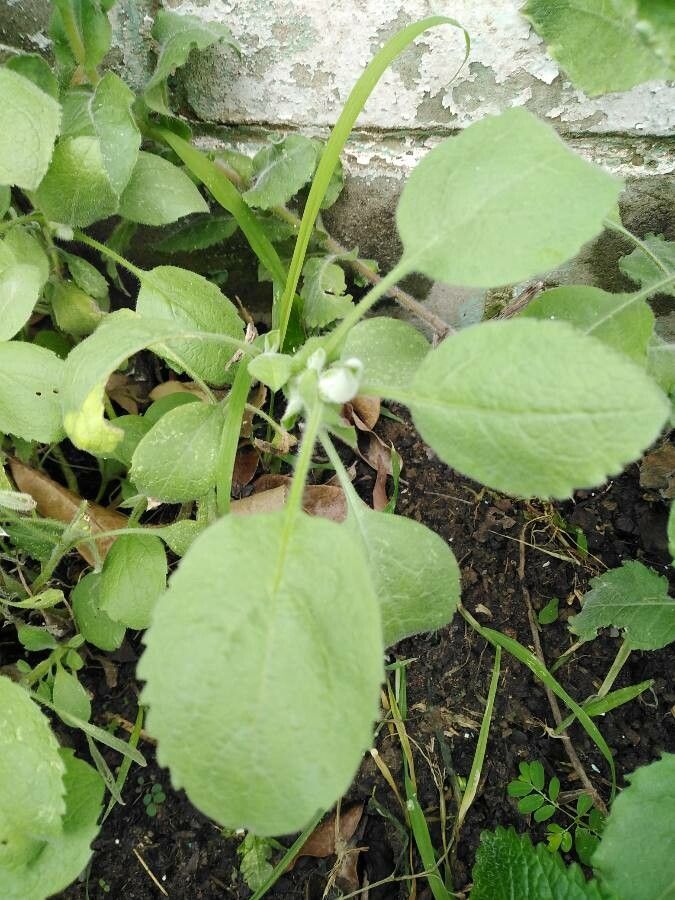
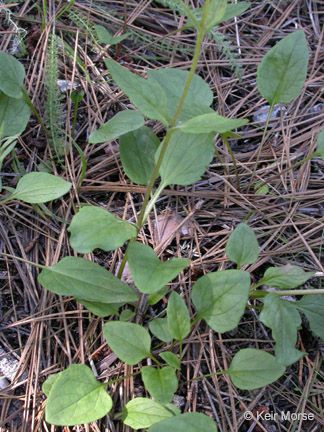
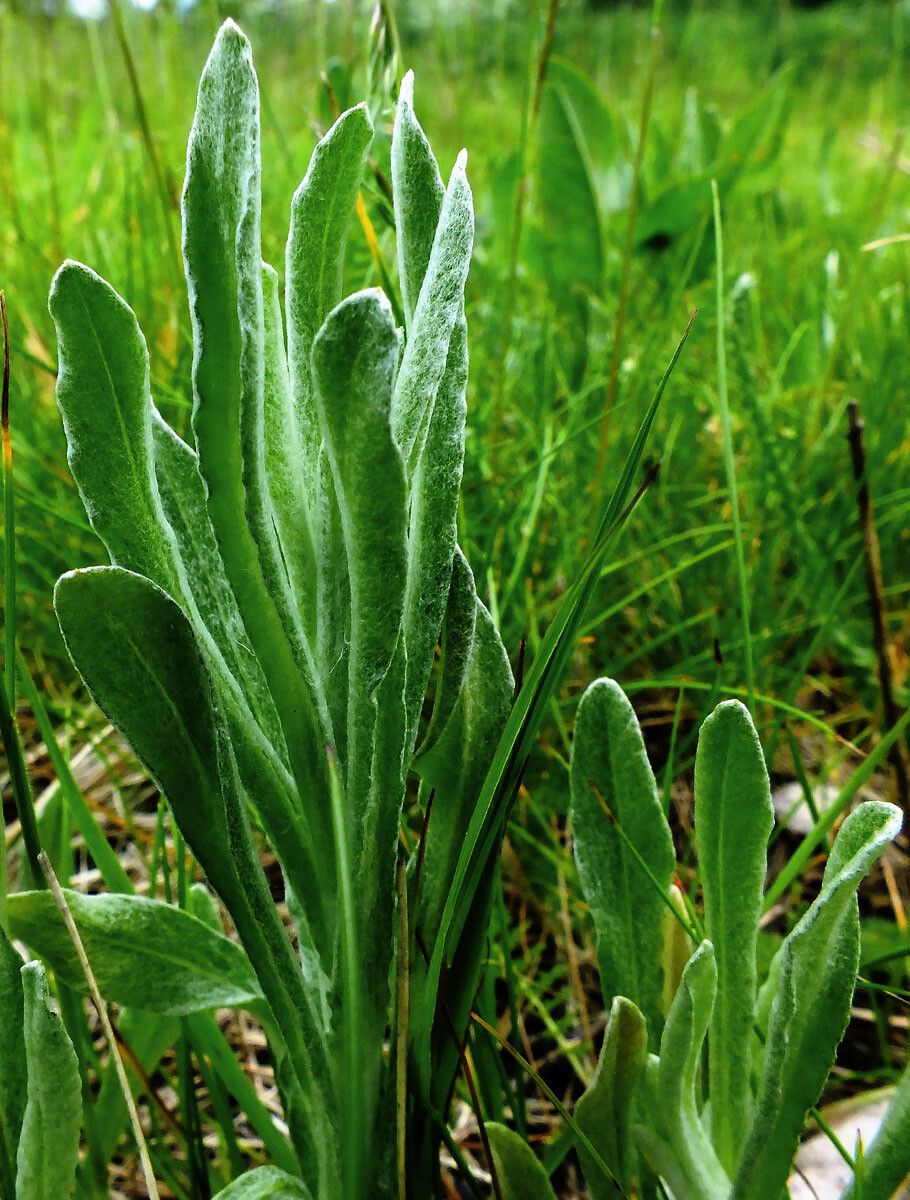
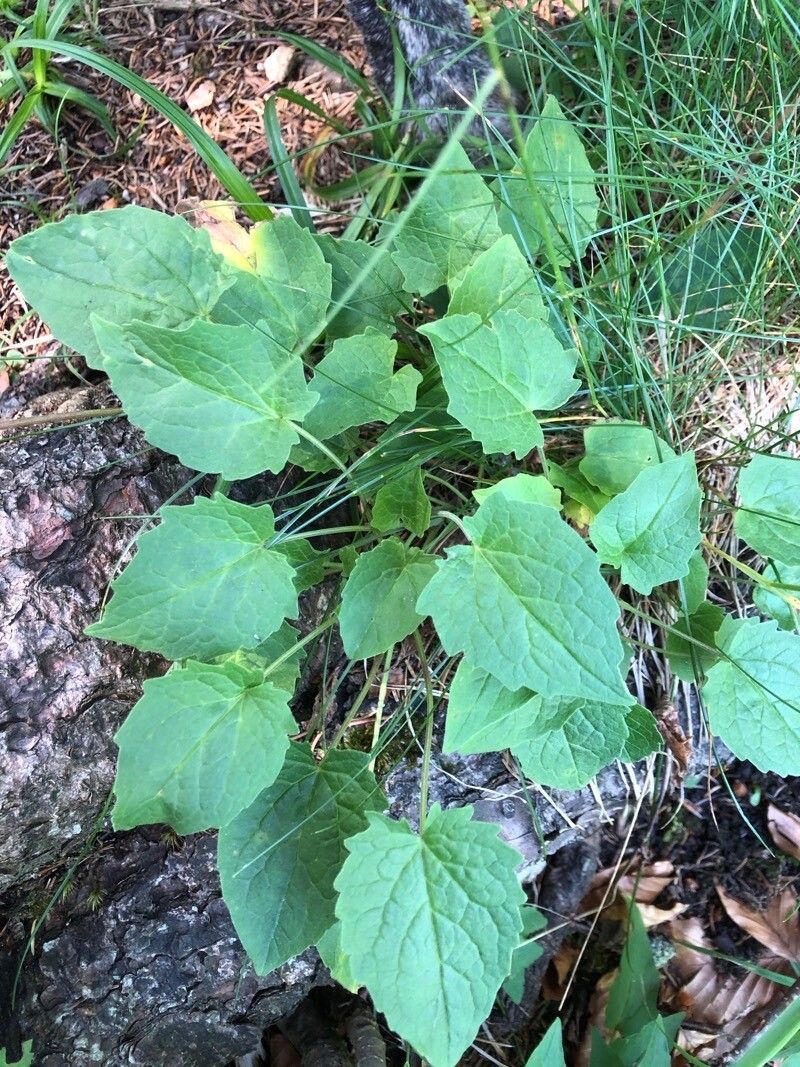
Arnica discoidea is a North American species of arnica in the sunflower family. It is known by the common name rayless arnica because its flower heads have disc florets but none of the showier ray florets. It is native to the woodlands, forests, and chaparral of the western United States (Washington, Oregon, California, and western Nevada (Washoe County).Arnica discoidea is a rhizomatous perennial herb producing a hairy, glandular stem 20 to 60 centimeters tall. There are several pairs of toothed oval to spade-shaped leaves on long petioles around the lower half of the stem. The inflorescence contains a few to many flower heads which are coated with glandular hairs. Each head contains only disc florets, but some of the florets around the edge can be expanded and resemble ray florets, making identification of the plant by its floral characteristics rather difficult.The fruit is an achene about 7 millimeters long, not counting its light-colored pappus.
Rayless arnica is fairly disease-resistant and generally does not tend to get sick. However, it can be vulnerable to pests and diseases present in its environment. Such infections are typically mild. For care, the plant requires moderate maintenance. It should be pruned regularly to keep a tidy appearance and promote healthy growth. Fertilizing can also encourage flowering. Rayless arnica is suitable for anyone with an outdoor area, like a garden or patio, and does not demand much gardening experience. It may need more attention if grown indoors.
How to keep Arnica Discoidea.
Light
The Rayless arnica is a type of perennial herb that loves the sun and is native to open environments, frequently flourishing in fields and grassy areas. While it has a preference for full sunlight, it has the capability to survive in conditions with partial sunlight as well.
Fertilizer
Typically, a lone springtime fertilizer application is all that is necessary for Rayless arnica, though several feedings can culminate into greater growth. Fertilize once every one to one and a half months. Fertilization augments the presentation and function of the leaf, encouraging steady color and wholesome texture. Moreover, it sparks root development and facilitates the absorption of nutrients, fostering an enduring wellness of the plant.
Pruning
To maintain the health and vibrancy of your rayless arnica, prune the plant in early spring. This involves removing any dead stems and thinning out the growth to enhance air circulation and allow more light to reach the plant. Use sharp tools to make clean cuts, which helps prevent disease. Proper pruning will not only stimulate robust growth but also enhance flowering, ensuring that your rayless arnica stays vibrant and resilient in your garden.
Botanical profile.
- Plant Type
- Herb
- Life Cycle
- Perennial
- Genus
- Arnica
- Family
- Asteraceae
- Hardiness Zone
- 4-8
- Mature Height
- 30 cm to 61 cm
- Mature Spread
- 20 cm to 40 cm
- Leaf Color
- Green
- Leaf Type
- Deciduous
- Flower Color
- Yellow
- Flower Size
- 2.03 cm to 3.05 cm
- Bloom Time
- Early summer, Mid summer
- Planting Time
- Spring, Autumn
- Harvest Time
- Late summer, Early fall
Other names.