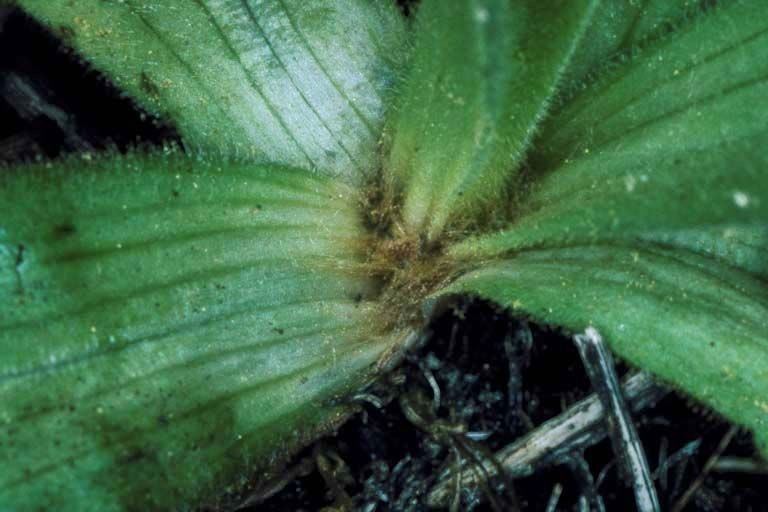
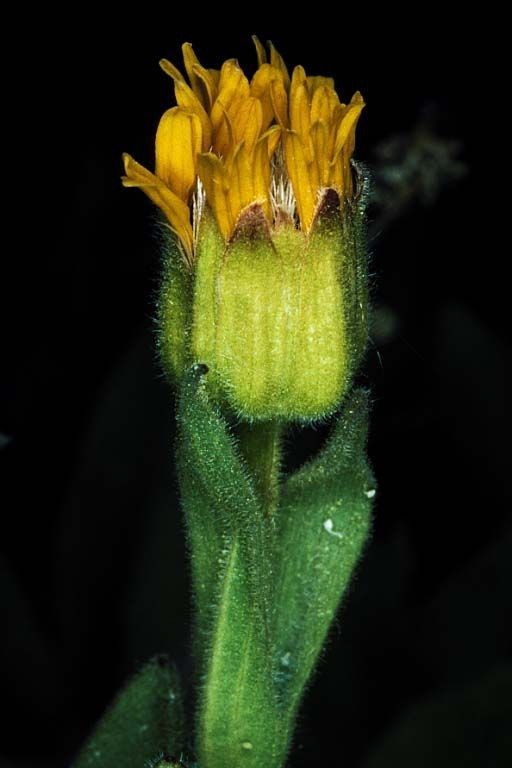
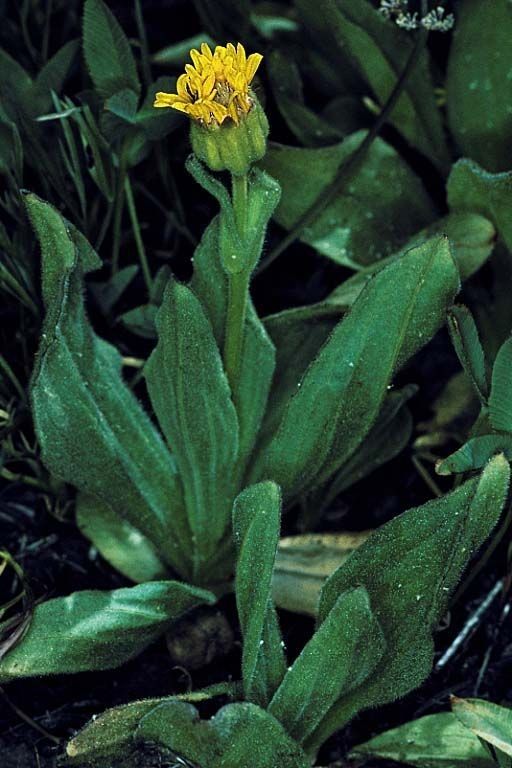
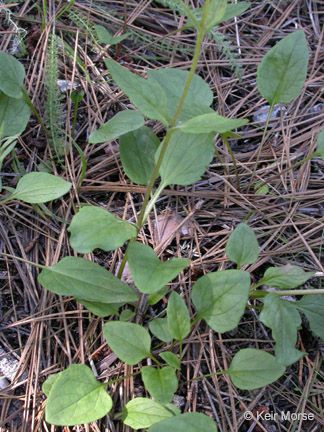
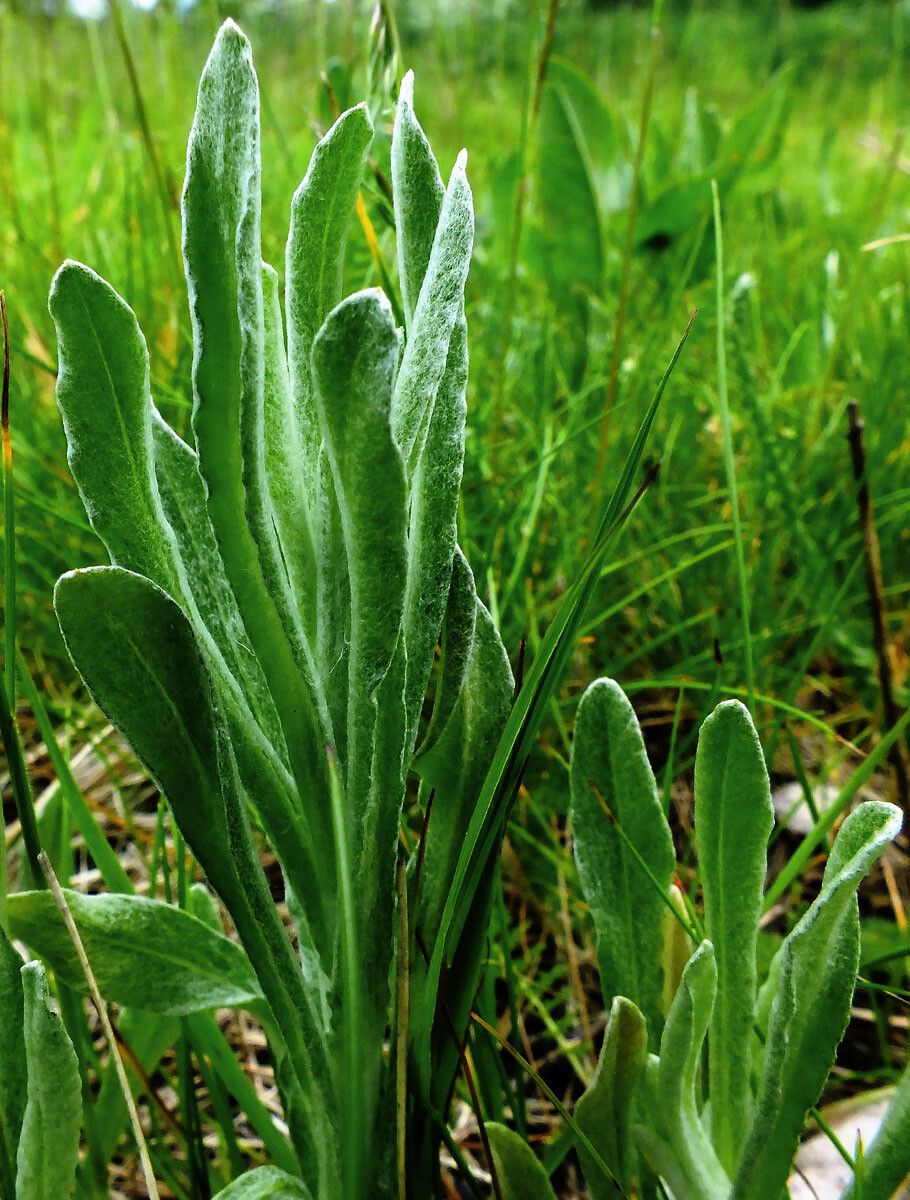
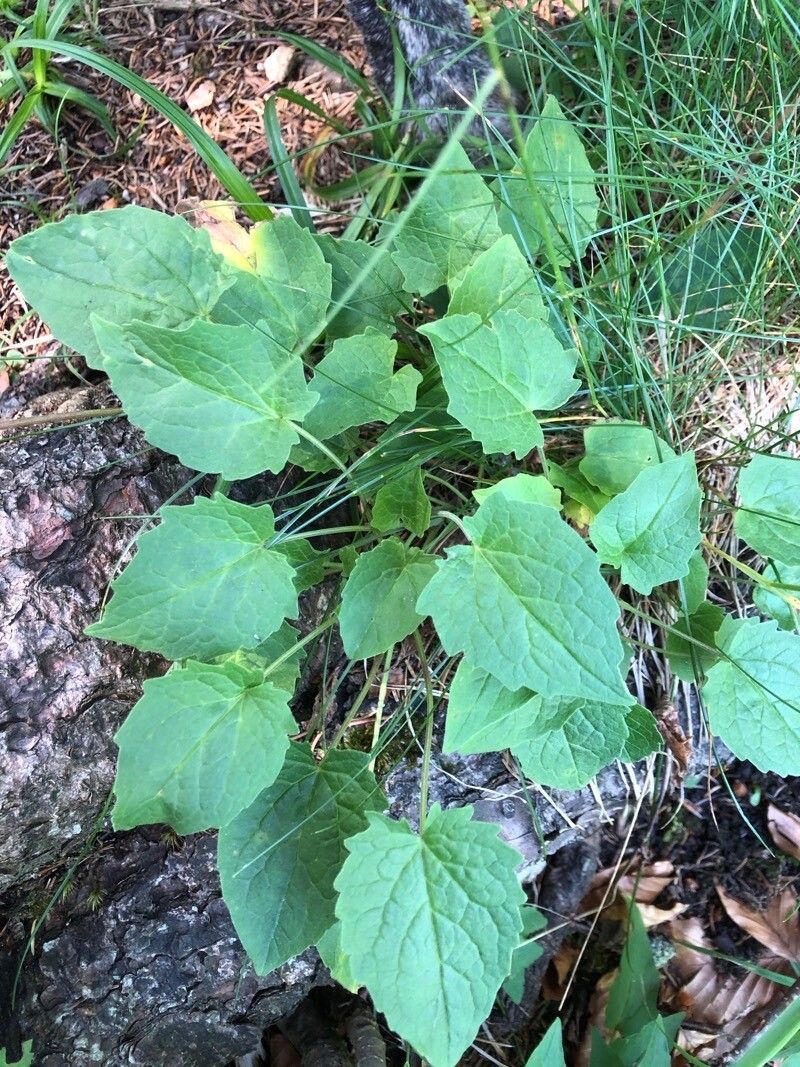
Arnica fulgens is a species of arnica known by the common names foothill arnica and hillside arnica. It is native to western North America, from British Columbia east to Saskatchewan and south as far as Inyo County, California, and McKinley County, New Mexico. It grows in open, grassy areas.Arnica fulgens is a perennial herb growing from a short, tough rhizome and producing one or more hairy, glandular, mostly naked stems to heights between 10 and 60 centimeters. The leaves are mainly located around the base of the plant. They are broadly lance-shaped to oval-shaped and have tufts of woolly fibers in their axils. They are up to 12 centimeters long, and there may be a few much shorter ones further up the stem.The inflorescence holds usually one, but sometimes 2 or 3, daisylike flower heads lined in hairy phyllaries. Each head has a center of glandular golden disc florets lined with golden ray florets which are 1 to 3 centimeters long. The fruit is an achene with a hairy body half a centimeter long and a light-colored pappus. Flowers bloom May to July.
Foothill arnica is fairly resistant to disease and typically does not suffer from illnesses. Still, it can be affected by pests and diseases present in its environment. When infections occur, they are generally mild. Regarding care, this plant needs moderate maintenance. It should be pruned on a regular basis to keep a neat appearance and encourage healthy growth. Feeding the plant can also aid in boosting flowering. Foothill arnica is appropriate for anyone with an outdoor area, such as a garden or patio, and does not demand extensive care experience. It may need more attention if cultivated indoors.
How to keep Arnica Fulgens.
Light
Foothill arnica does best with a moderate amount of sunlight, which allows it to grow healthily. This preferred condition is common in its native habitat. Too much sun can harm the plant, while too little light can also negatively affect its wellbeing. Its sunlight needs do not change substantially at different stages of growth.
Water
Foothill arnica thrives best with consistent moisture that mimics its natural rainfall environment, though it can withstand short dry spells. To maintain its vitality and appeal to pollinators, it's crucial to water it weekly. This practice enhances its symbiotic role in the ecosystem, making it a popular choice as an outdoor herbaceous perennial.
Temperature
Foothill arnica is native to temperate climates and does best at temperatures between 41 and 89.6 °F (5 to 32 ℃). In colder or hotter seasons, it is advisable to adjust environmental temperatures to match these ranges for optimum growth.
Fertilizer
The best time to fertilize a Foothill arnica is in early spring, when it is coming out of dormancy and starting active growth. Fertilizing supplies essential nutrients for healthy development. Although Foothill arnica has relatively low fertilization needs, applying fertilizer once a year can boost its survival and encourage healthier, longer-lasting flowers.
Pruning
Foothill arnica showcases bright yellow flowers and benefits from strategic pruning. The best time for pruning is from early to late spring. During this period, you should prune to remove any damaged parts, shape the plant, and encourage new growth. Additionally, deadheading spent blooms can extend the flowering season. However, be careful not to over-prune, as this can cause stress and affect the plant's vitality.
Botanical profile.
- Plant Type
- Herb
- Life Cycle
- Perennial
- Genus
- Arnica
- Family
- Asteraceae
- Hardiness Zone
- 4-8
- Mature Height
- 10 cm to 61 cm
- Mature Spread
- 15 cm to 30 cm
- Leaf Color
- Green
- Leaf Type
- Deciduous
- Flower Color
- Yellow
- Flower Size
- 1.02 cm to 3.05 cm
- Bloom Time
- Mid spring, Late spring
- Planting Time
- Spring, Summer, Autumn
- Harvest Time
- Early summer, Mid summer
Other names.
Reader questions.
What are the sun requirements for Foothill arnica?
Foothill arnica thrives under a moderate amount of sun, requiring about 3-6 hours of sunlight per day to maintain healthy growth. Its ideal environment provides a perfect balance of light and shade, which is crucial for the plant's happiness and wellbeing. Too much sun or insufficient light can both negatively affect the plant. Whether indoors or outdoors, it's important to observe the movement of sunlight through your space and choose locations that meet these sunlight requirements to ensure the plant's optimal growth.
What is the native climate for Foothill arnica, and how can its growth be optimized?
Foothill arnica is indigenous to temperate climates and flourishes in temperatures between 41 to 89.6 °F (5 to 32 °C). For optimal growth, it's important to maintain environmental temperatures within this range throughout its growing season. Although Foothill arnica exhibits strong resistance to cold, requiring no special frost protection in most cases, it’s crucial to provide adequate cold protection if winter temperatures are expected to plummet below -30°C. This protection can be administered by covering the plant with insulating materials like soil or straw. Additionally, to combat drought and water scarcity during winter and early spring, it’s advised to water the plant thoroughly before the first freeze in autumn, ensuring the soil is moist and ready to freeze.
How do I provide adequate lighting for indoor Foothill arnica plants?
For indoor Foothill arnica plants, adequate lighting is essential, especially when natural sunlight is not sufficient. Artificial lighting becomes a vital solution, particularly during the winter or in less sunny spaces. LED lights are recommended because they can be customized to provide specific wavelengths needed by your plants. For indoor plants, the amount of artificial light needed varies based on the plant's sunlight needs; full sun plants require 30-50W/sq ft, partial sun plants need 20-30W/sq ft, and full shade plants need 10-20W/sq ft. The light source should be placed 12-36 inches above the plant to mimic natural sunlight, and most plants will thrive with 8-12 hours of artificial light per day.
How does Foothill arnica react to low temperatures, and what measures should be taken?
Foothill arnica is considerably tolerant of cold, thriving best when the temperature stays above 5°C. Throughout the winter, it's crucial to keep the temperature above -25°C to prevent adverse effects. Should temperatures fall below -30°C, Foothill arnica may not exhibit noticeable changes during the winter but is likely to experience decreased or no sprouting in spring. To mitigate these effects, in spring, it's advisable to remove any parts of the plant that have failed to sprout.
What are the symptoms of light deficiency in Foothill arnica?
When Foothill arnica is grown indoors or under insufficient light, it may display symptoms signaling a need for more sunlight. These symptoms include small new leaves, leggy or sparse growth, faster leaf drop, slower or stopped growth, and lighter-colored leaves. Additionally, chlorosis may occur, presenting as a loss of leaf greenness, while sunscald can damage plant tissues exposed to intense sunlight. Leaf curling, wilting, and leaf scorching are other symptoms that can arise from extreme sunlight conditions or deficiencies.
What are the implications of high temperatures on Foothill arnica, and how can the plant be protected?
Foothill arnica is suited to temperatures below 32°C during the summer months. Exposure to temperatures above 35°C can result in significant stress, including lighter-colored leaves, tendencies to curl, susceptibility to sunburn, and, in severe instances, wilting and drying of the entire plant. To protect Foothill arnica under such conditions, it's essential to trim away sunburned and dried-up parts immediately. Relocating the plant to a shaded area or using a shade cloth can offer protection from the intense midday and afternoon sun. Ensuring that the plant is watered in the morning and evening will help maintain soil moisture and overall plant health.
How can I address lighting issues for Foothill arnica?
To address lighting issues for Foothill arnica, gradually acclimating the plant to sunnier spots or providing additional light is key. For outdoor plants, move them weekly to sunnier locations to avoid sunburn. Indoors, if moving the plant is not feasible, use a desk or ceiling lamp for at least 8 hours daily or invest in grow lights. Additionally, for ground plants, minimizing obstructions by pruning trees or transplanting the plant during its dormant period can help achieve optimal sunlight exposure. Note, parts of the plant affected by insufficient light may not recover, but new growth should be healthy following these adjustments.