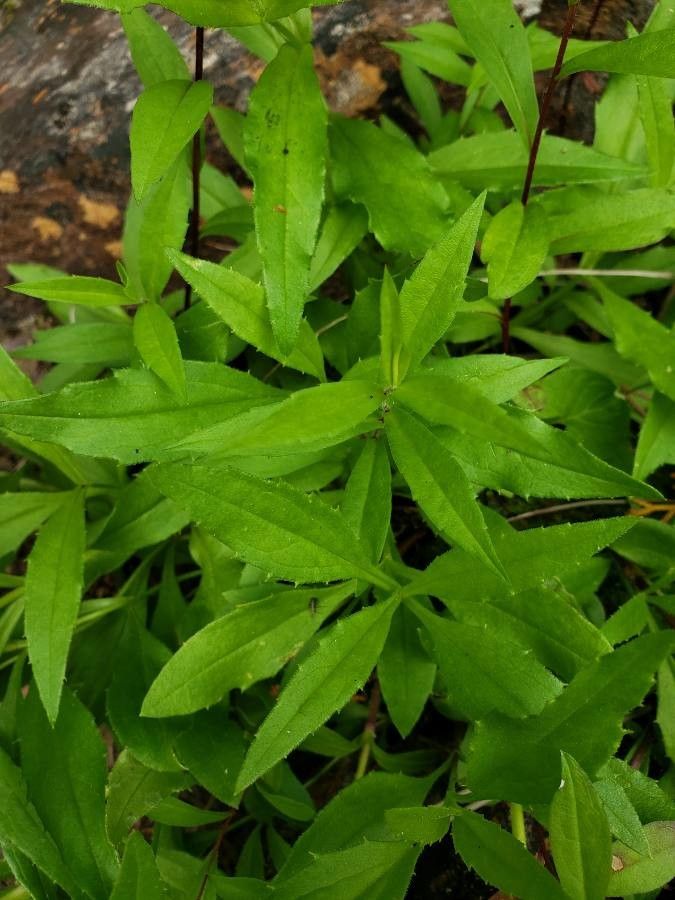
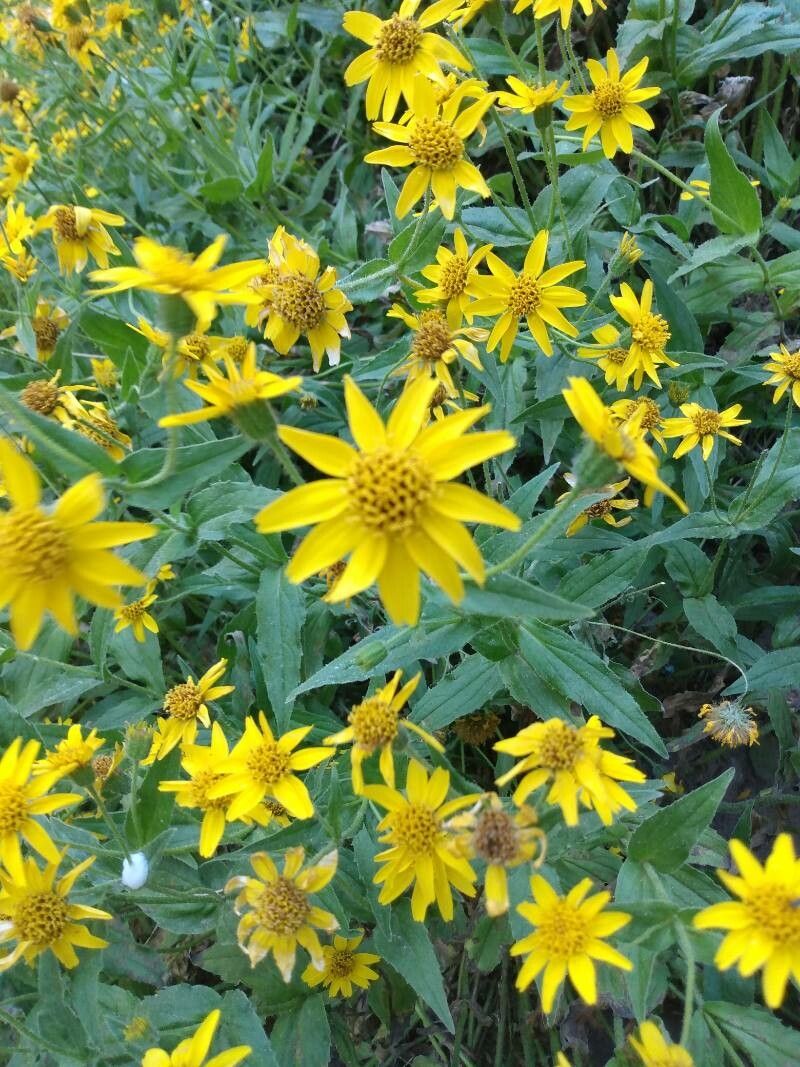
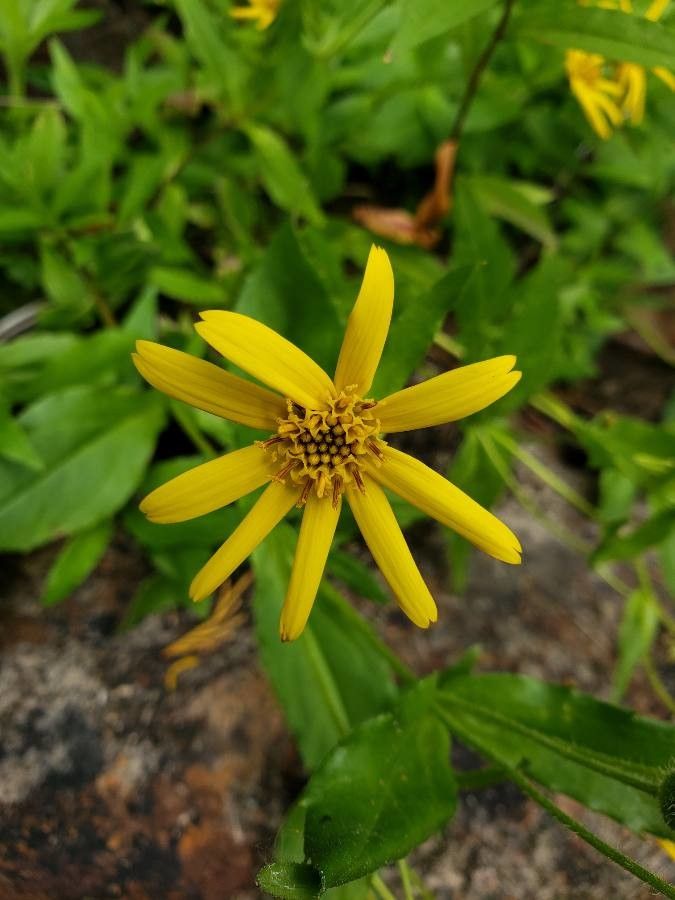
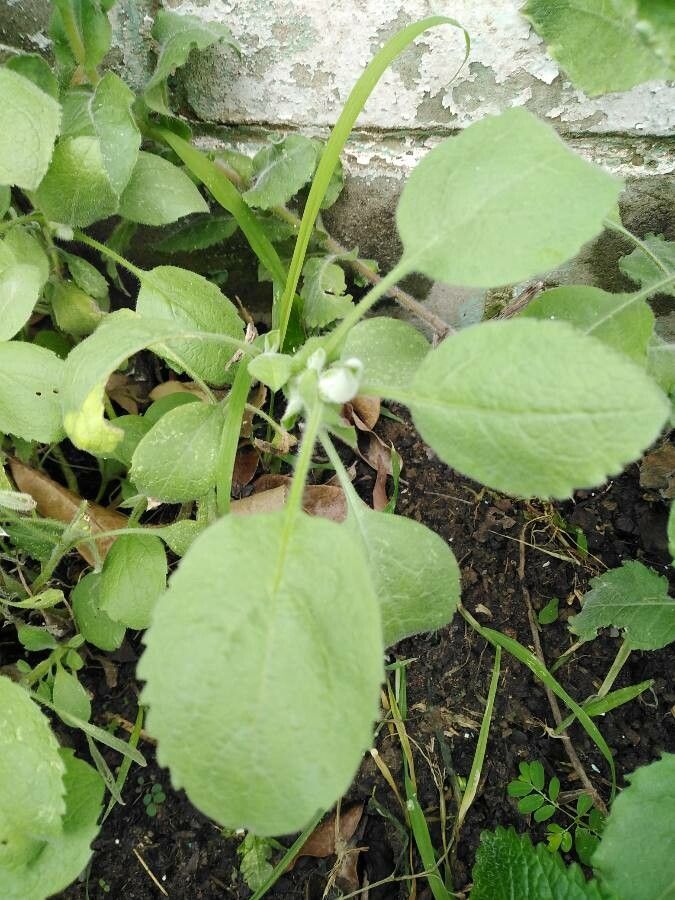
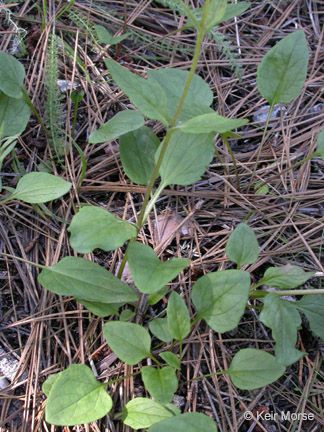
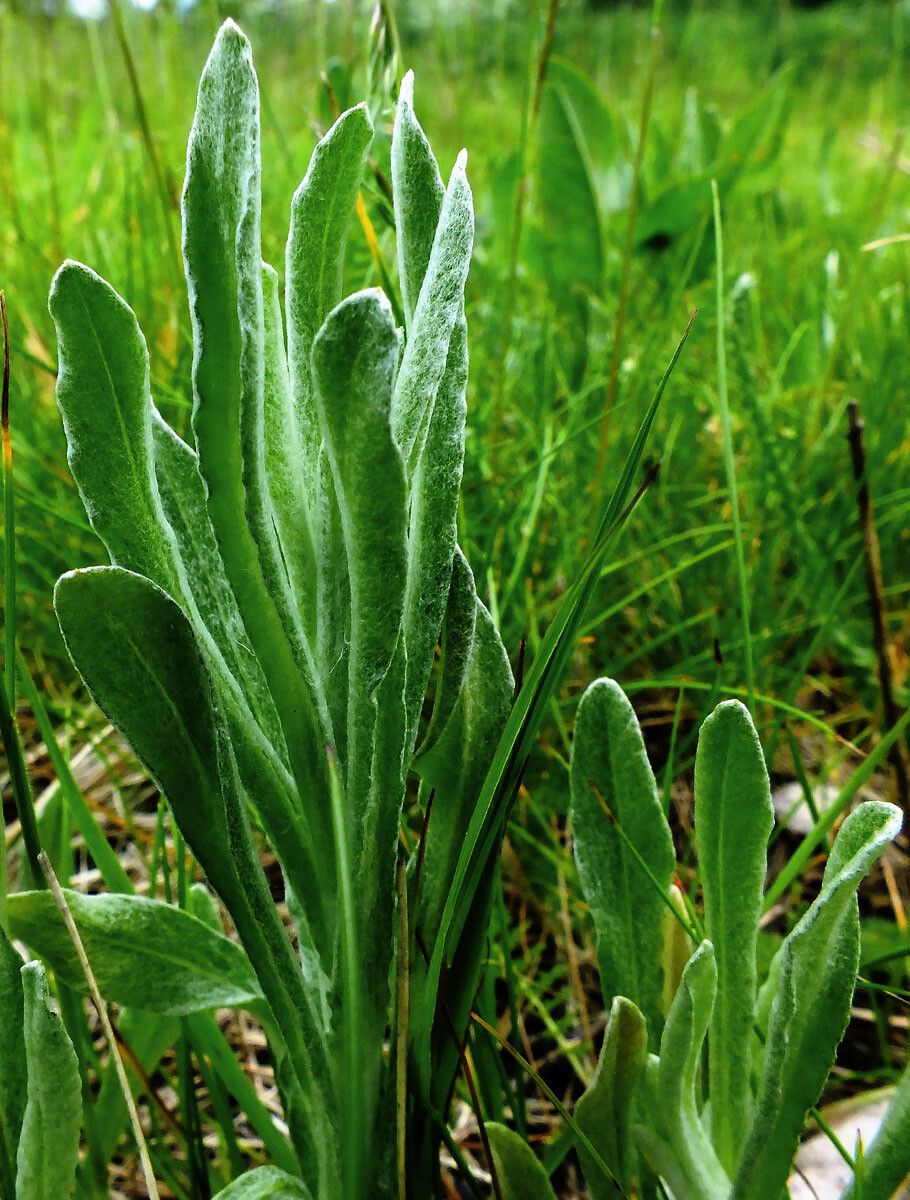
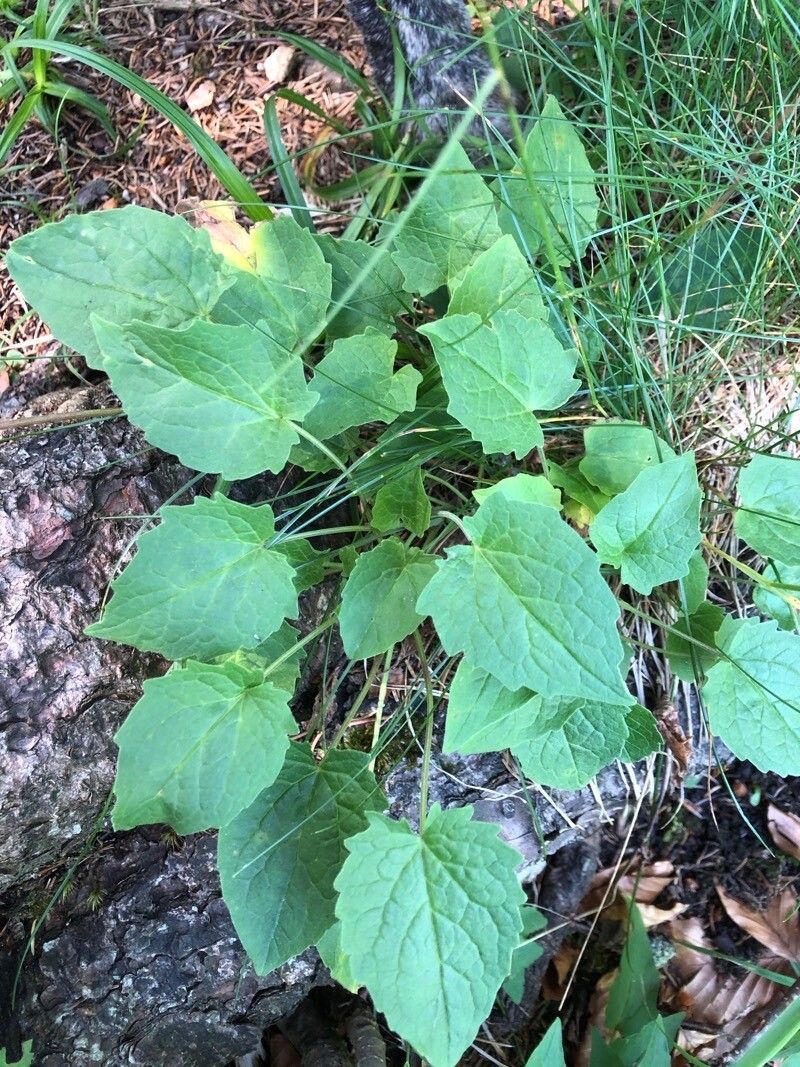
Arnica lanceolata is a North American species of flowering plant in the family Asteraceae, known by the common name clasping arnica or lanceleaf arnica. It has a disjunct (discontinuous) distribution in western North America and northeastern North America.Arnica lanceolata is a perennial herb usually growing from a small rhizome and producing one or more hairy, glandular stems. The stems are lined with 5 to 10 pairs of oval-shaped, toothed leaves up to 12 centimeters long. The inflorescence is a cluster of several daisy-like flower heads with a center of brownish disc florets and a fringe of yellow ray florets 1 to 2 centimeters long. The fruit is a cylindrical achene covered in hairs and with a light brown pappus at one end. It grows in moist areas, along stream banks, and montane to alpine meadows. SubspeciesArnica lanceolata subsp. lanceolata - Quebec, New Brunswick, Maine, New Hampshire, Vermont, New York Arnica lanceolata subsp. prima (Maguire) Strother & S.J.Wolf - Alaska, Yukon, Northwest Territories, Alberta, British Columbia, Washington, Oregon, California, Idaho, Montana, Utah, Wyoming, Nevada
Lanceleaf arnica is fairly disease-resistant and usually not prone to illnesses. Still, it can be affected by pests and diseases present in its environment. These issues are typically mild. For care, the plant has moderate maintenance needs. It should be pruned regularly to maintain a neat appearance and encourage healthy growth. Fertilizing can also help stimulate flowering. Lanceleaf arnica is suitable for people with outdoor spaces like a garden or patio and does not require extensive gardening experience. It may need more attention when grown indoors.
How to keep Arnica Lanceolata.
Fertilizer
Usually one fertilizer application in spring is enough for Lanceleaf arnica, though repeated feedings can boost growth. Apply it about once a month to every six weeks. Fertilizing improves the leaves' appearance and function, keeping color even and texture healthy. It also encourages root growth and increases nutrient uptake for long-term plant health.
Botanical profile.
- Plant Type
- Herb
- Life Cycle
- Perennial
- Genus
- Arnica
- Family
- Asteraceae
- Mature Height
- 0 cm to 91 cm
- Leaf Type
- Semi-evergreen
- Flower Color
- Yellow, Gold
Other names.