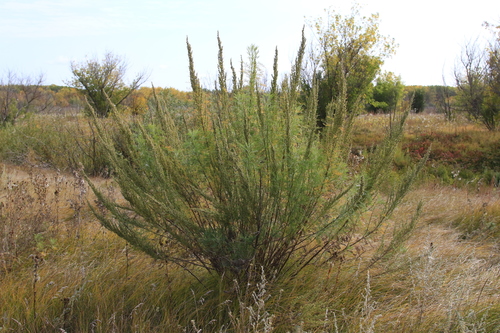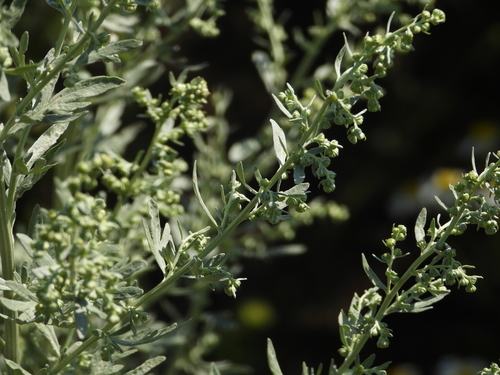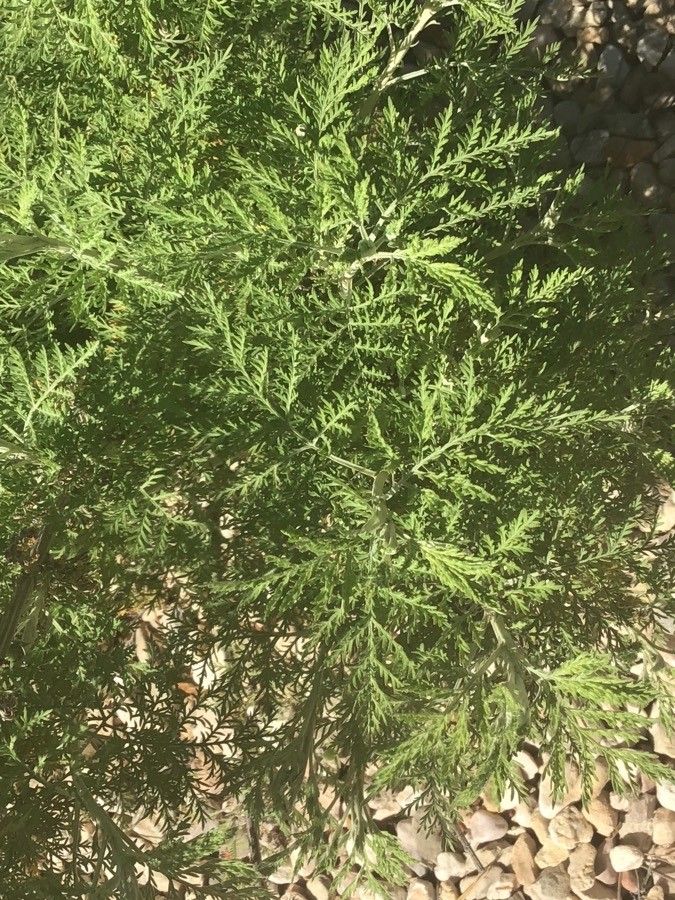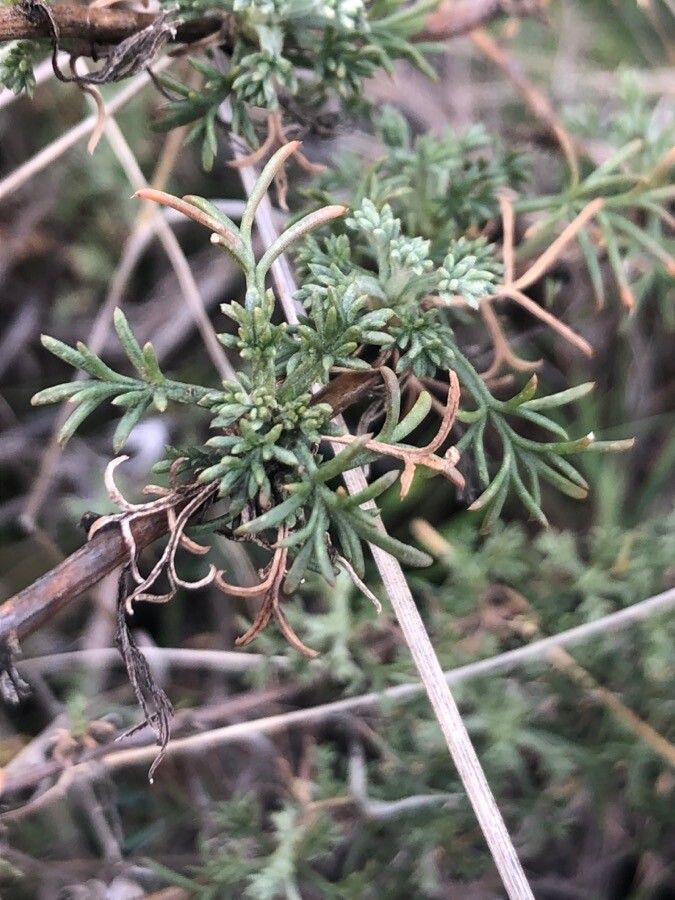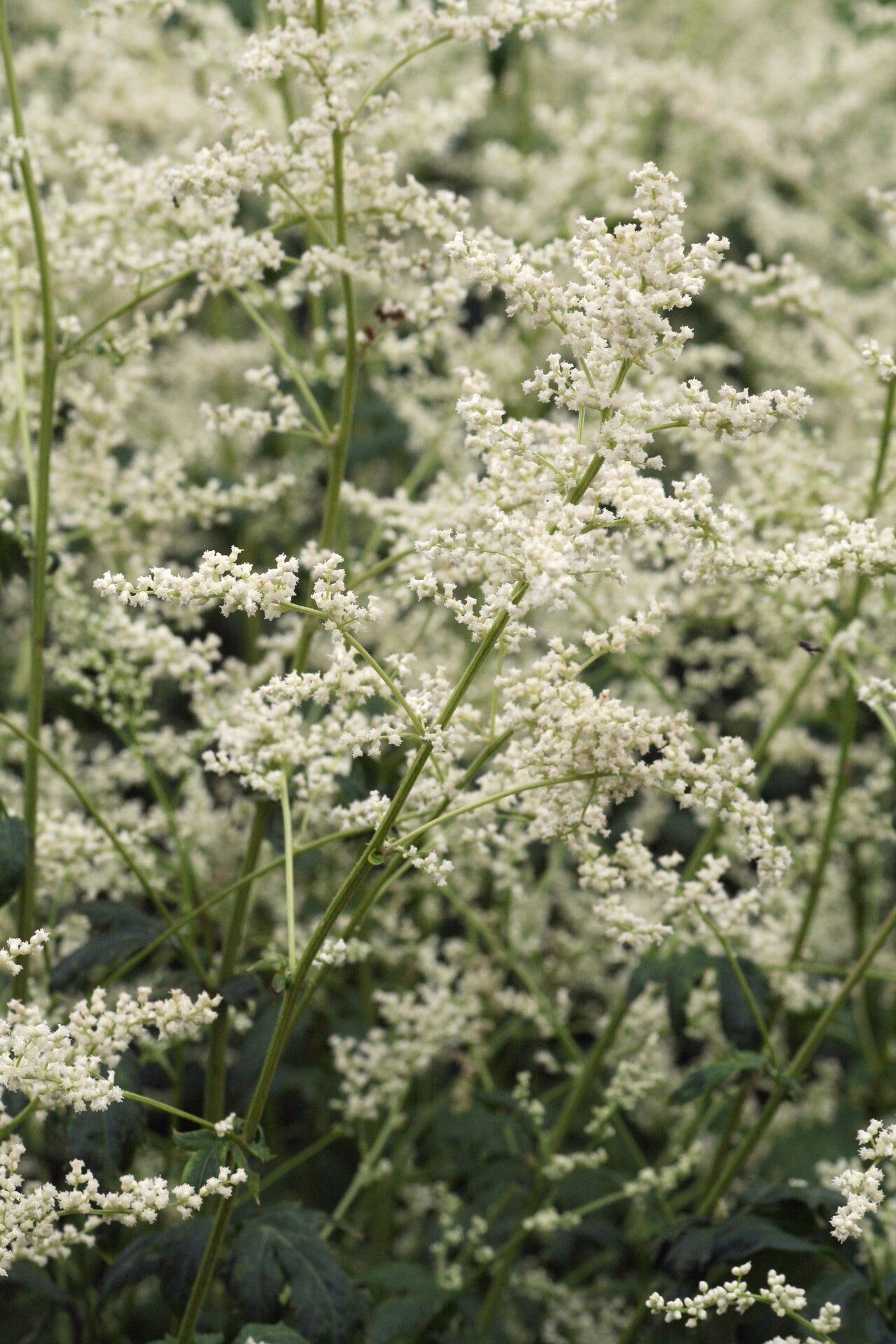
Artemisia lactiflora, the white mugwort, is a species of flowering plant in the daisy family, native to western China. It is a vigorous clump-forming herbaceous perennial growing to 1.5m, with plumes of creamy-white flower heads appearing in summer and autumn above dark green leaves. This is the only artemisia which is cultivated as much for its flowers as for its foliage. Plants grown in poor dry soil are hardier and last longer than those grown in heavy, damp soil.The specific epithet lactiflora means "milk-white flowers".This plant has gained the Royal Horticultural Society's Award of Garden Merit.
White mugwort has strong resistance to disease and is usually not vulnerable to major illnesses. However, it can be affected by pests and diseases present in its environment, and these problems are typically mild. For care, this plant requires a moderate level of attention. It benefits from regular pruning to keep a neat appearance and support healthy growth. Fertilizing can also help encourage flowering. White mugwort is well suited for anyone with outdoor areas like a garden or patio and does not demand extensive gardening experience. It may need extra care when grown indoors.
How to keep Artemisia Lactiflora.
Light
White mugwort naturally occurs in habitats like forest understories or rocky areas, where it grows in natural shade. It prefers partial sun but can adapt to both full sun and full shade, showing its versatile, hardy nature.
Water
White mugwort flourishes in moisture-rich environments and requires moderate watering. To maintain its health, it's important to water it once a week. Being an herbaceous perennial, white mugwort can withstand rain during its growing season without any adverse effects.
Temperature
White mugwort can tolerate a wide range of temperatures, but its occurrence may still be restricted by particular combinations of moisture and heat. It does best in warm summer climates with sufficient rainfall or irrigation. Long periods of cloudy, rainy weather, as well as prolonged high temperatures, can raise the chance of White mugwort dying. In winter, protecting the plant from cold can increase its survival rate.
Fertilizer
The best time to fertilize a White mugwort is in early spring, as it comes out of dormancy and begins active growth. Fertilization supplies essential nutrients for healthy development. Although White mugwort has fairly low fertilizer requirements, applying fertilizer once a year can improve its survival and encourage better, longer-lasting flowers.
Pruning
White mugwort benefits from pruning between early and late spring to maintain its shape and promote new growth. Concentrate on removing dead stems to improve airflow and lower the risk of disease. Ensure you use clean, sharp tools for the task. Regular pruning encourages a healthier, more vigorous plant, contributing to a more attractive landscape.
Botanical profile.
- Plant Type
- Herb
- Life Cycle
- Perennial
- Genus
- Artemisia
- Family
- Asteraceae
- Hardiness Zone
- 4-9
- Mature Height
- 1.22 m to 1.52 m
- Mature Spread
- 91 cm
- Leaf Color
- Purple, Green
- Leaf Type
- Deciduous
- Flower Color
- White
- Flower Size
- 0.25 cm to 0.51 cm
- Bloom Time
- Late summer, Early fall, Mid fall
- Planting Time
- Spring, Summer, Autumn
- Harvest Time
- Mid fall, Late fall
- Native Area
- India, Indonesia, Cambodia, Vietnam, Laos, Thailand, China
Other names.
Reader questions.
What are the sun requirements for White mugwort (Artemisia lactiflora)?
White mugwort (Artemisia lactiflora) thrives in various sunlight conditions. For full sun exposure, it requires above 6 hours of sunlight daily. If positioned in partial sun, about 3-6 hours of sunlight is sufficient. It's important to observe the movement of sunlight through your garden to select the optimal spots that offer a perfect balance of light and shade, ensuring your plants' well-being. This consideration will help cater to the happiness and growth of your White mugwort plants.