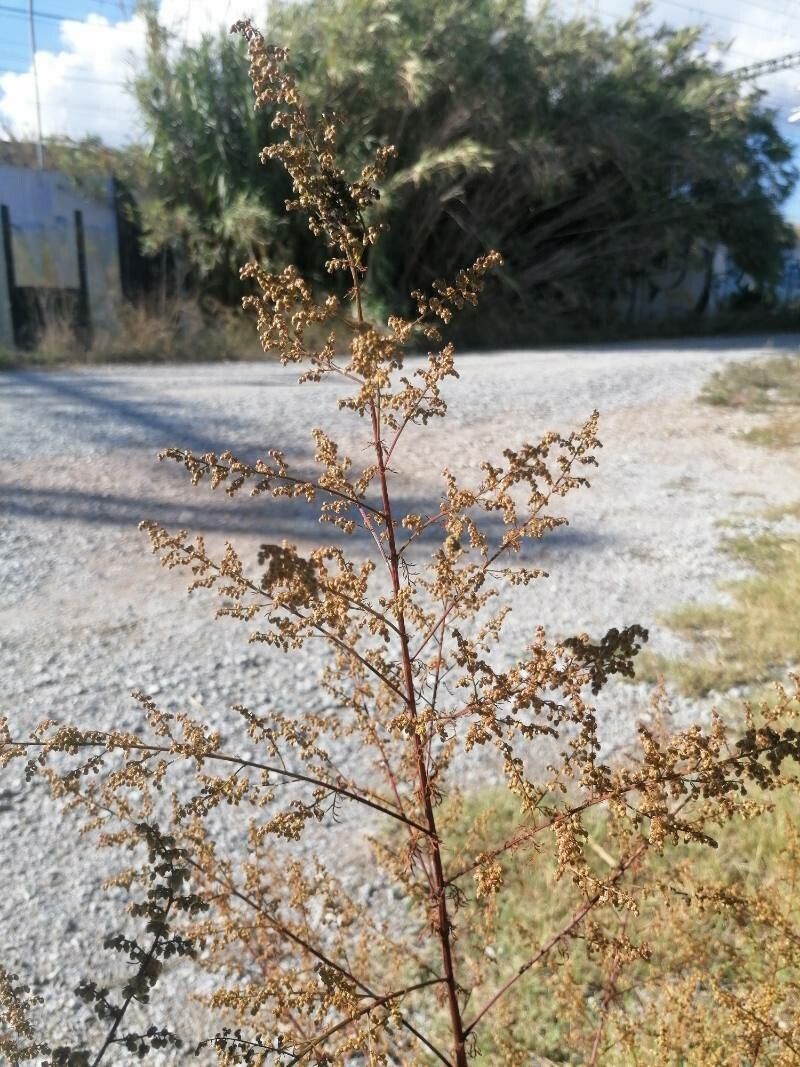
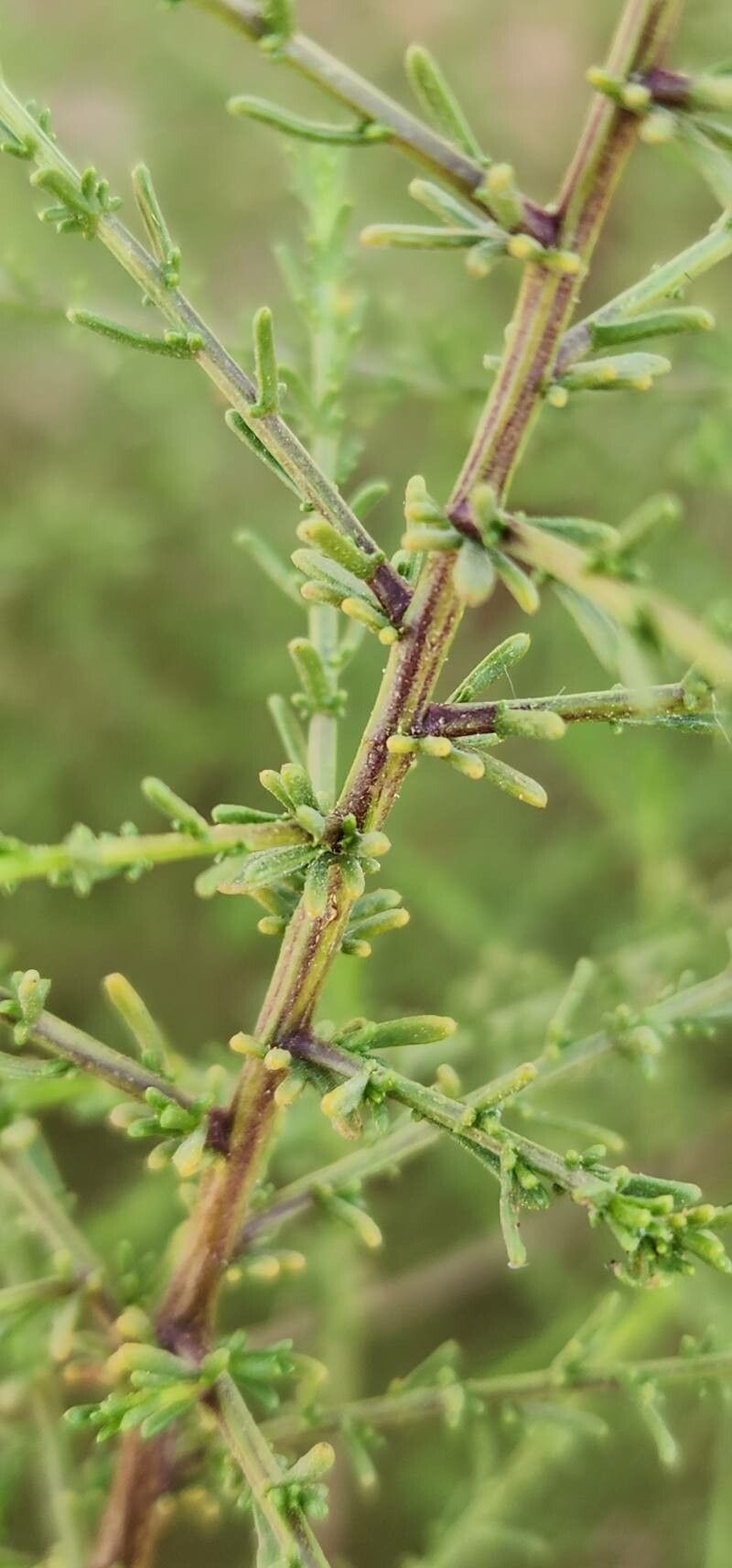
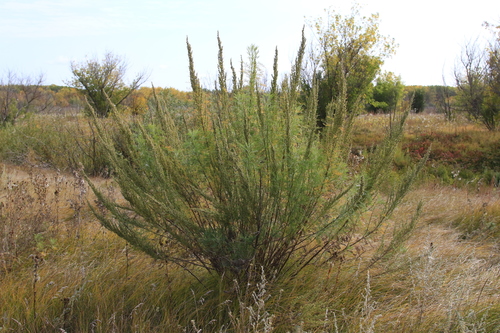
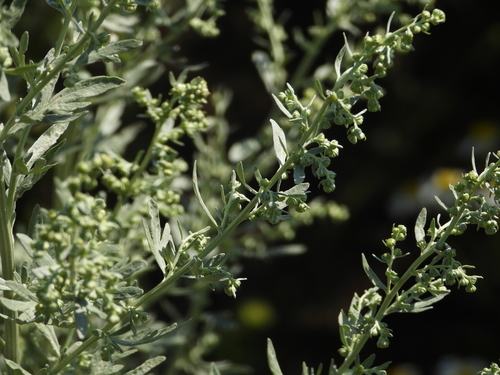
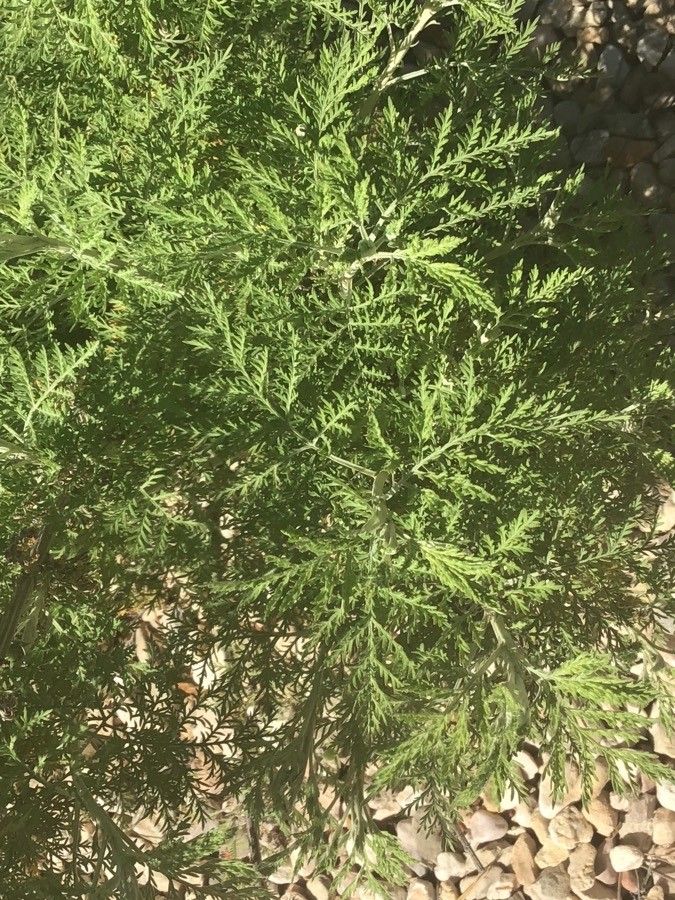
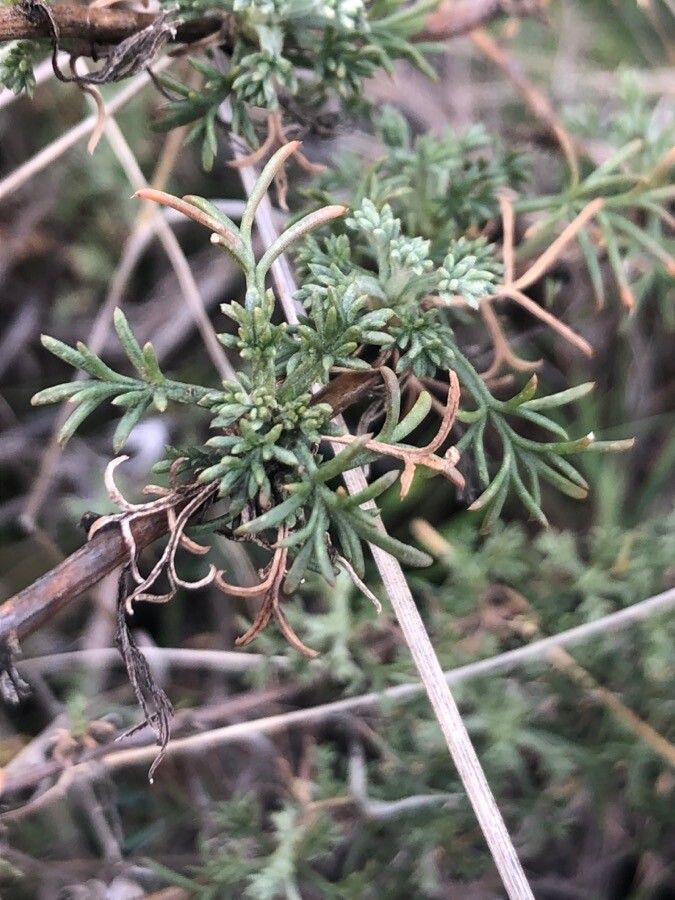
Artemisia scoparia, commonly known as redstem wormwood or redstem mugwort, is a perennial herbaceous plant in the Asteraceae family. Native to Asia and Europe, it has also been introduced to North America as an ornamental plant.
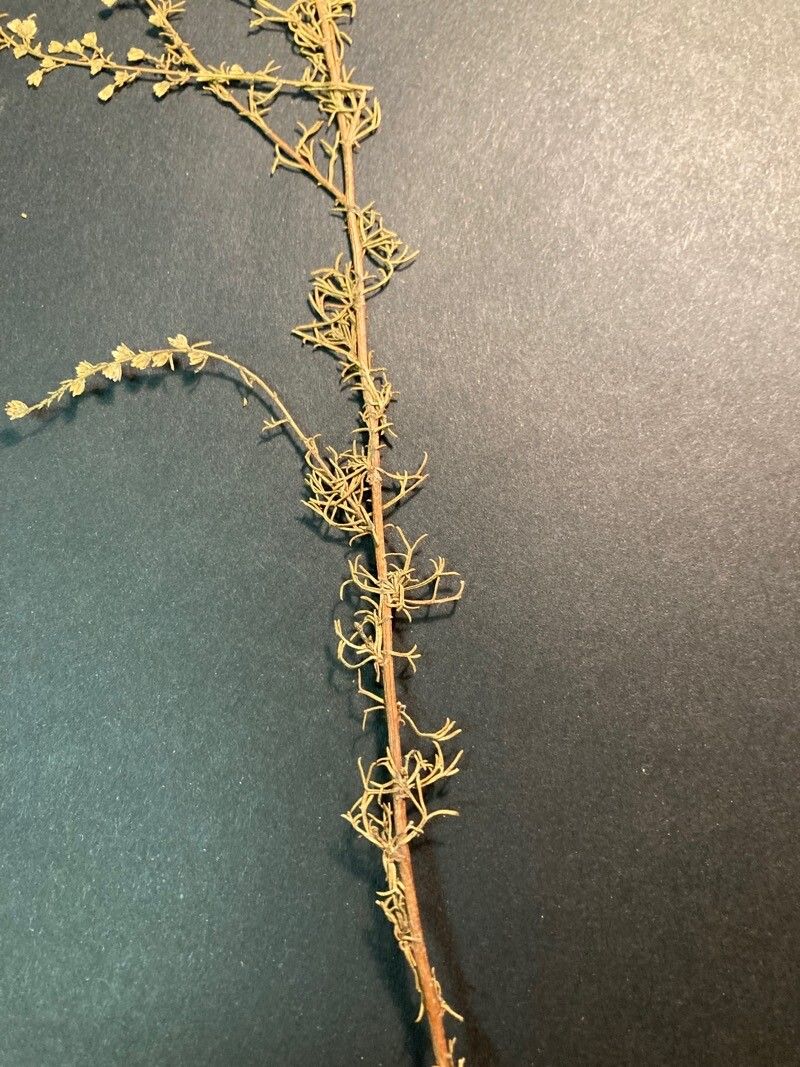
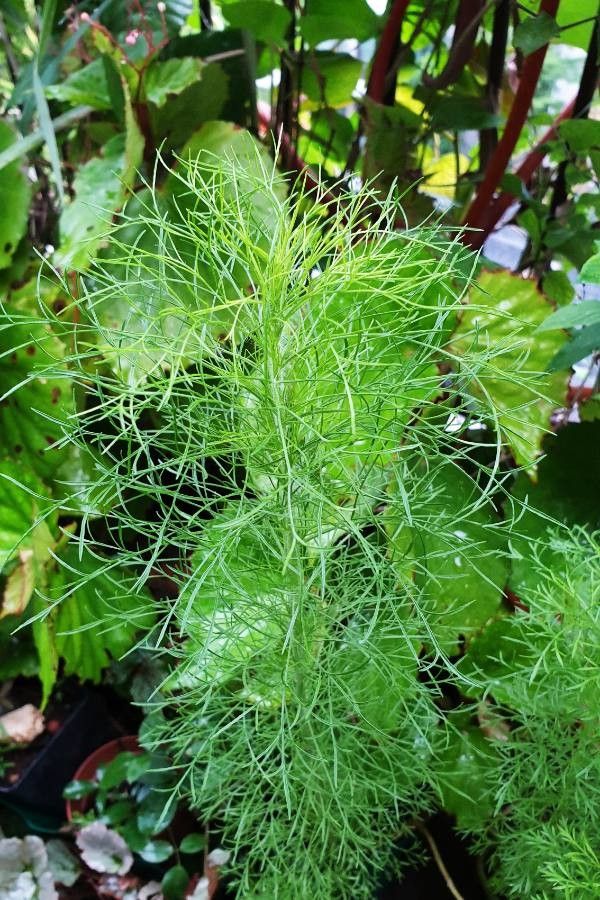
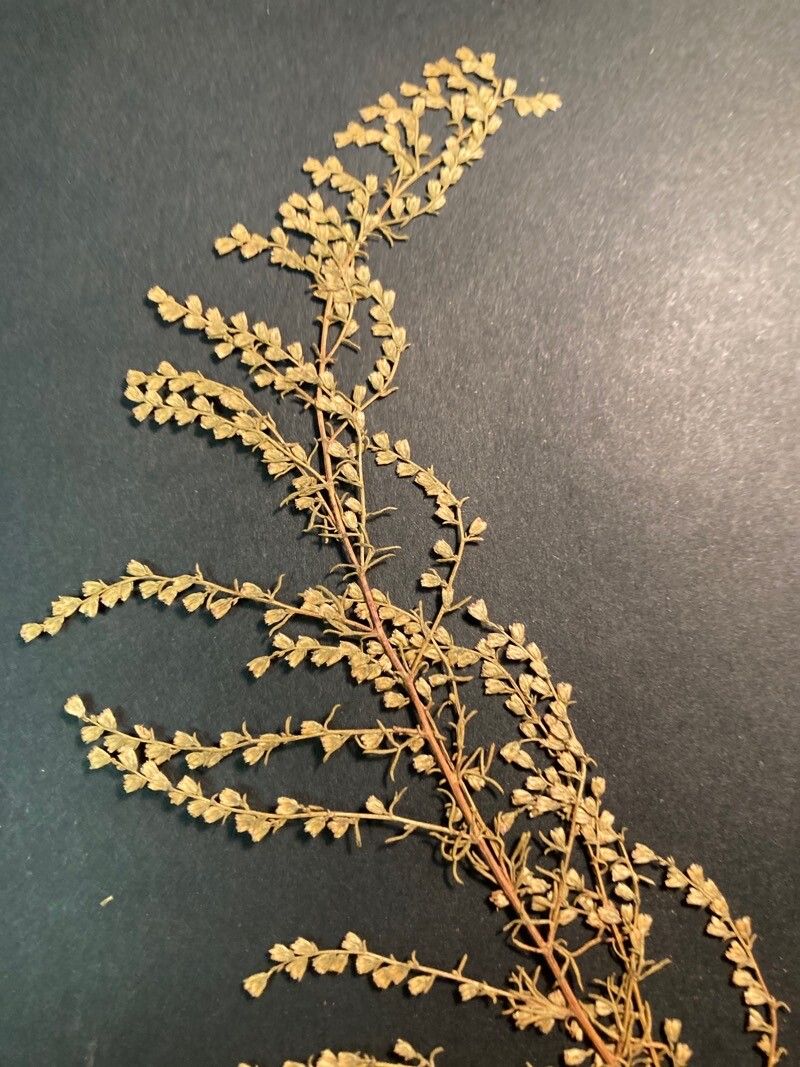
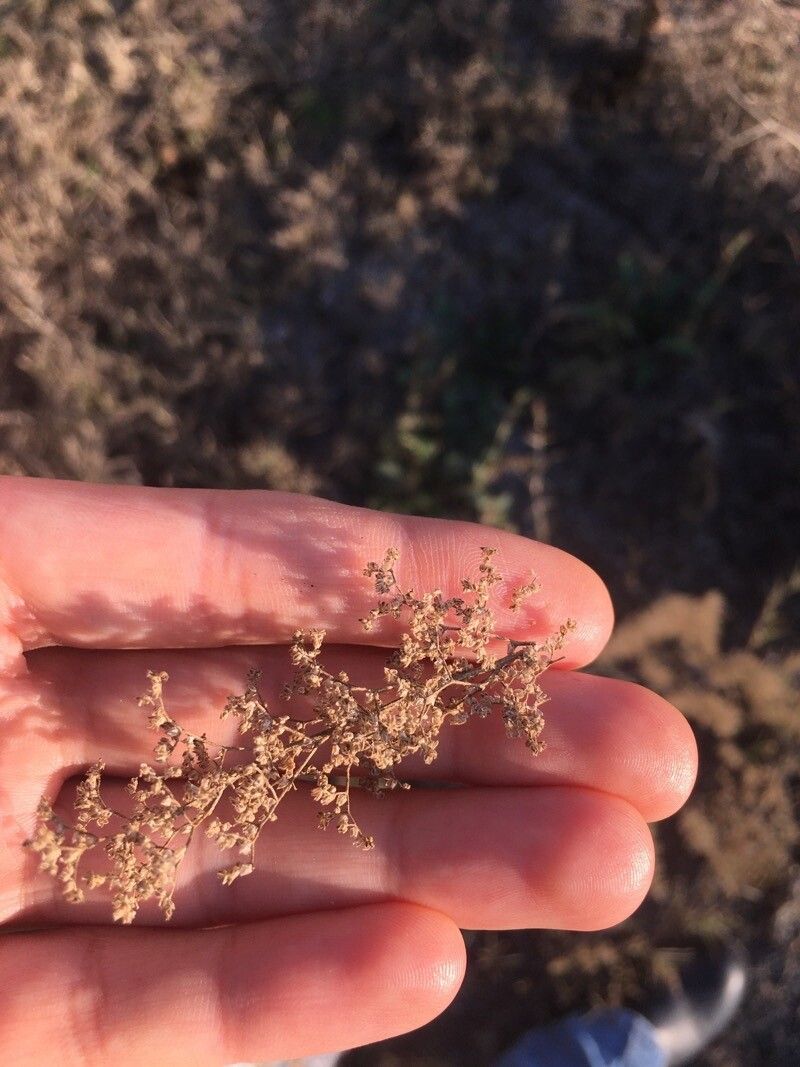
This plant can grow up to 1 meter in height and features a woody stem with a reddish-brown color. The leaves are alternate and pinnately divided with narrow lobes, appearing gray-green on the top and white underneath. Its small, yellow-green flowers are arranged in panicles at the top of the stem.
Artemisia scoparia has been used for centuries for its medicinal properties, particularly its anti-inflammatory effects. It is also valued as an insecticide, thanks to its strong aroma that repels insects.
The plant prefers well-drained soils and full sun exposure but can tolerate partial shade. It can be propagated through both seeds and cuttings.
In summary, Artemisia scoparia is an herbaceous perennial plant known for its medicinal properties and insect-repelling abilities. It grows up to 1 meter tall with alternate, pinnately divided leaves on reddish-brown stems, and bears small yellow-green flowers arranged in panicles at the top. It thrives in well-drained soils with full sun but can also tolerate partial shade. Propagation can be achieved through seeds or cuttings.
Redstem wormwood has strong resistance to disease and is generally not vulnerable to illnesses. That said, it can still be affected by pests and pathogens present in its environment, although such infections tend to be mild. Care-wise, the plant needs moderate upkeep. It should be pruned regularly to preserve a neat appearance and support healthy growth, and applying fertilizer can help encourage flowering. This species is well suited to anyone who has outdoor space, like a garden or patio, and does not require extensive gardening experience. It may, however, need more attention when grown indoors.
How to keep Artemisia Scoparia.
Light
Redstem wormwood is native to bright, open habitats and flourishes in full sun. It can tolerate partial sun but favors direct sunlight for best growth. This plant, which occurs as an annual or biennial, is known for its sun-loving character.
Water
Redstem wormwood is well-suited to arid environments due to its high drought tolerance and moderate watering requirements. To keep the plant healthy, it is best to water it deeply once a week. Be careful not to overwater, as this can be harmful. As an outdoor plant, redstem wormwood's growth cycle is synchronized with seasonal rains, which encourage its active growth.
Temperature
Redstem wormwood can tolerate a wide range of temperatures, though its distribution may still be limited by various combinations of moisture and heat. It does best in warm summer climates with sufficient rainfall or watering. Extended periods of cloudy, rainy weather or prolonged high temperatures raise the likelihood of the plant dying. In winter, adequate protection from cold can improve its chances of survival.
Fertilizer
Redstem wormwood are regarded as heavy feeders in terms of nutrients. They require frequent, small applications of nitrogen and potassium fertilizers and periodic additions of phosphorus, micronutrients, sulfur, and magnesium to sustain good growth and bright coloration. Continuous fertilization throughout the growing season is necessary to prevent deficiency symptoms and maintain optimal growth.
Pruning
Redstem wormwood has vibrant red stems and aromatic leaves. To keep it healthy and encourage bushier growth, it's best to strategically prune it from early to late spring. Start by removing any dead growth and thinning out the branches. This will improve airflow and sunlight exposure, enhancing the plant's overall health. Be sure to use clean, sharp tools to prevent infections.
Botanical profile.
- Plant Type
- Herb
- Life Cycle
- Biennial
- Genus
- Artemisia
- Family
- Asteraceae
- Hardiness Zone
- 3-7
- Mature Height
- 1.22 m
- Mature Spread
- 30 cm to 61 cm
- Leaf Color
- Green
- Leaf Type
- Semi-evergreen
- Flower Color
- Green, Yellow
- Flower Size
- 0.10 cm to 0.20 cm
- Bloom Time
- Late summer, Early fall, Mid fall
- Planting Time
- Spring, Summer, Autumn
- Harvest Time
- Mid fall, Late fall
- Native Area
- Egypt, Turkey, India, Austria, Slovakia, Montenegro, Pakistan, Slovenia, Croatia, Belarus, Uzbekistan, Russia, Iraq, Germany, Indonesia, Romania, Moldova, France, Saudi Arabia, Tajikistan, Czech Republic, Bulgaria, Armenia, Poland, Greece, Ukraine, Lebanon, Serbia, China, Afghanistan, Syria, Kyrgyzstan, Kazakhstan, Italy, Switzerland, Myanmar, Mongolia, Japan, Iran, Albania, Azerbaijan, Hungary, Turkmenistan
Other names.
Reader questions.
What are the sunlight requirements for Redstem Wormwood?
Redstem wormwood, scientifically known as Artemisia scoparia, thrives in environments that offer full sun exposure, meaning it requires more than 6 hours of direct sunlight daily for optimal growth. However, it can also tolerate partial sun conditions, with about 3-6 hours of sunlight. It's vital to observe how sunlight moves through your garden, selecting spots that provide an ideal mix of light and shade. This ensures your plants receive the appropriate amount of sunlight they need to be healthy.
What is Redstem wormwood also known as?
Redstem wormwood is also known botanically as Artemisia scoparia.
Can Redstem Wormwood grow under artificial lighting?
Yes, Redstem wormwood can grow under artificial lighting, especially when natural sunlight is not sufficient, such as during winter or in less sunny indoor spaces. Optimal growth under artificial lights is achieved by using LED lights, which can be adjusted to offer the specific light wavelengths that plants need. Full sun plants require 30-50W/sq ft, partial sun plants need 20-30W/sq ft, and full shade plants demand 10-20W/sq ft of artificial light. The light source should be placed 12-36 inches above the plant to mimic natural sunlight conditions, and most plants benefit from 8-12 hours of light per day.
What are common symptoms of inadequate sunlight for Redstem Wormwood?
When Redstem wormwood does not receive enough sunlight, it may exhibit several symptoms indicating light deficiency. These include smaller new leaves, leggy or sparse growth, premature leaf drop, slower growth or halted new growth, paler new leaves suggesting a lack of chlorophyll, chlorosis, which is the yellowing of leaves due to chlorophyll breakdown from excessive sunlight, sunscald, leaf curling, wilting, and leaf scorching. Recognizing these signs early can help in taking corrective measures to improve the plant's health.
How can you address insufficient sunlight for indoor and outdoor Redstem Wormwood plants?
For indoor Redstem wormwood plants struggling with insufficient sunlight, gradually move them to sunnier spots, aiming for at least 6 hours of direct sunlight daily. Utilize south-facing windows and consider artificial lighting solutions, such as keeping a lamp on for a minimum of 8 hours a day or investing in professional grow lights. Outdoor plants should similarly be moved to sunnier locations gradually to prevent sunburn, ensuring they adapt without experiencing drastic light intensity changes. If your plants are in the ground and sunlight is obstructed, identify and minimize these obstructions by pruning or relocating the plants to sunnier spots, making sure to choose the right time during the plant's dormant period for minimal stress.