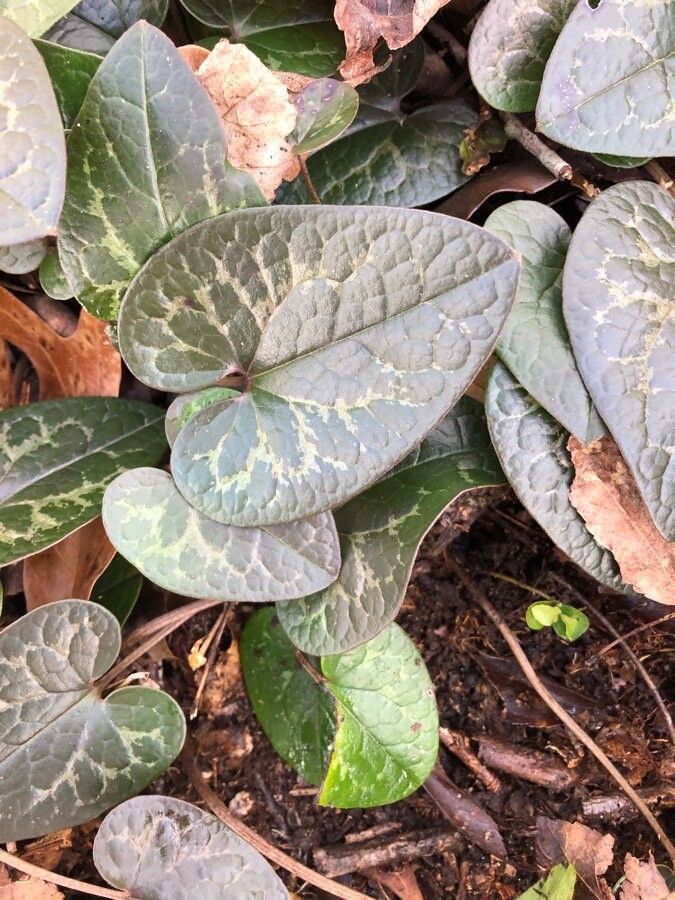
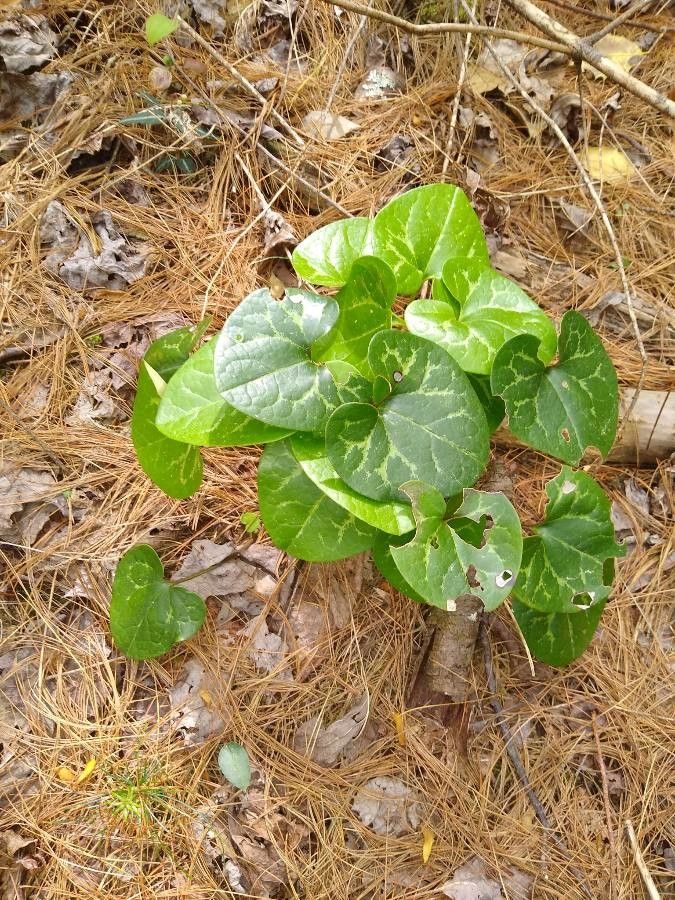
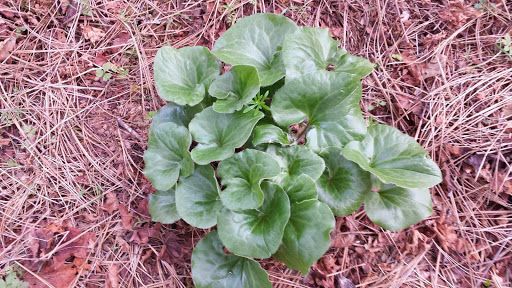
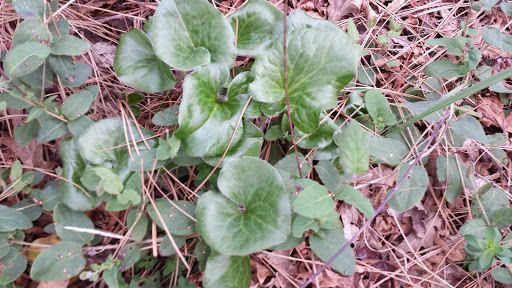
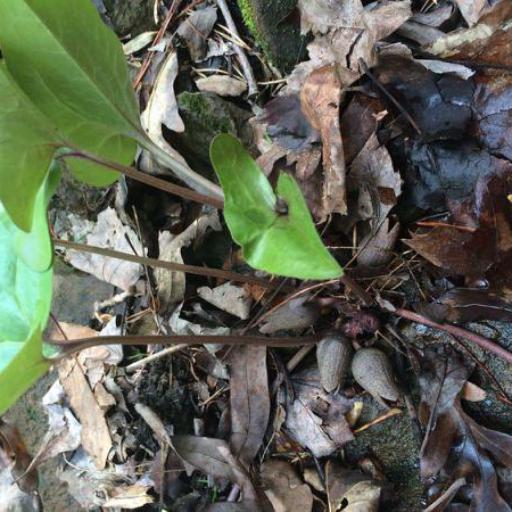
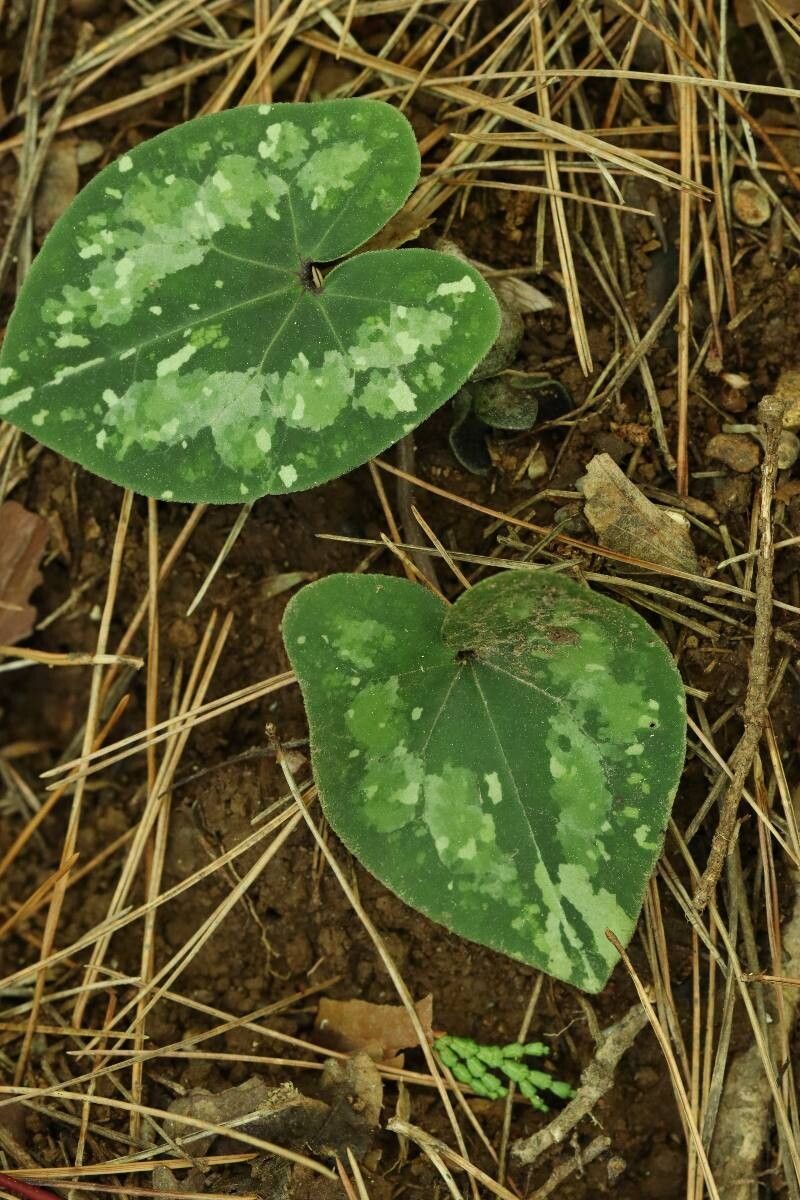
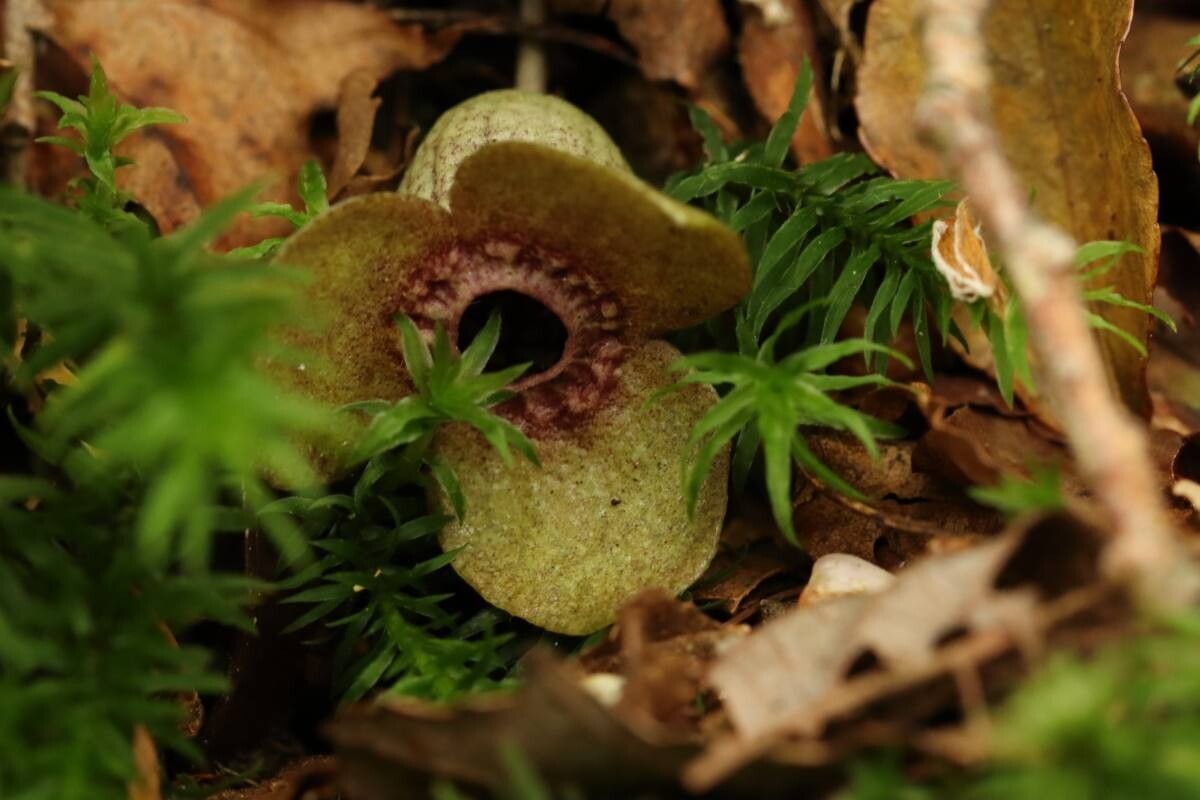
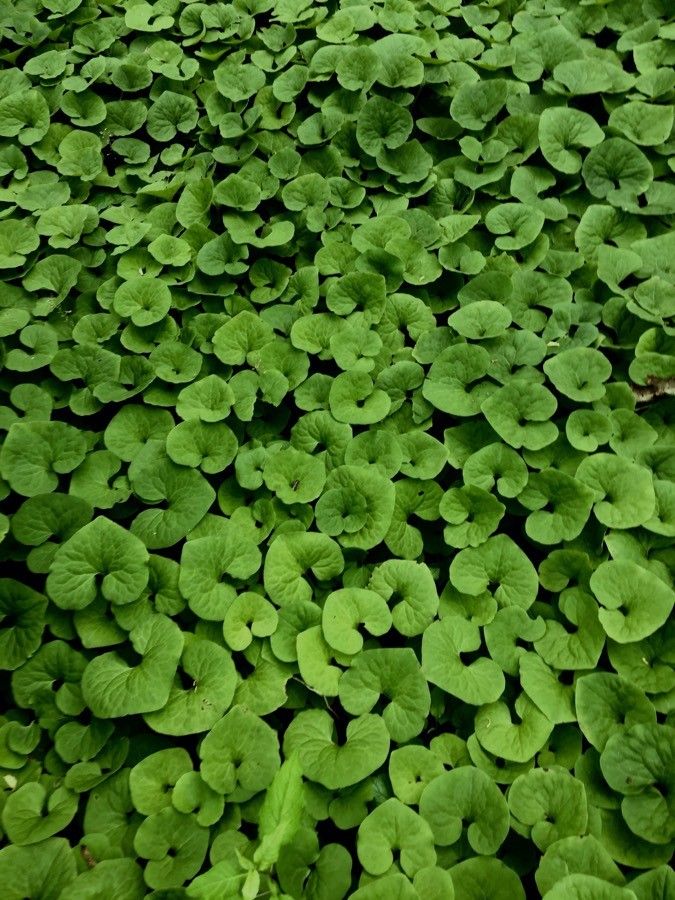
Asarum hartwegii, commonly known as Hartweg's wild ginger, is a perennial herbaceous plant belonging to the Aristolochiaceae family. Native to the western United States, it thrives in the shady areas of forests and woodlands. The plant features heart-shaped, dark green leaves that can grow up to 6 inches wide. Its small, bell-shaped flowers are reddish-brown and emit a spicy fragrance, typically blooming from late winter to early spring. Native American tribes have used Asarum hartwegii for medicinal purposes for centuries, appreciating its anti-inflammatory properties. Additionally, it is used as a flavoring agent in foods such as teas and candies. The plant prefers moist soil with good drainage but can tolerate dry conditions once established. It grows best in partial to full shade environments, spreading through underground rhizomes. Overall, Asarum hartwegii is an attractive ornamental plant that enhances the beauty of shady garden areas. It also offers medicinal benefits when used appropriately by trained professionals or under medical supervision. It's important to note that improper ingestion can be toxic, necessitating guidance from medical professionals or trained herbalists, especially if you are taking other medications.
Hartweg's wild ginger has strong resistance to disease and is generally not prone to illnesses. However, it can be vulnerable to pests and diseases present in its environment, and these infections are typically mild. In terms of care, the plant requires moderate maintenance. It should be pruned regularly to maintain a good appearance and healthy growth. Fertilizing can also help encourage flowering. Hartweg's wild ginger is suitable for anyone with outdoor space, such as a garden or patio, and does not demand extensive care experience. It may need more attention when grown indoors.
How to keep Asarum Hartwegii.
Light
Hartweg's wild ginger does best in spots with moderate sun rather than in areas with strong, constant sunlight. Excessive sun can harm its growth, causing the plant to wilt or suffer burn damage. Its original habitat had scattered sunlight, which indicates it can tolerate lower light levels. However, a complete lack of sunlight may result in stunted growth or a decline in health.
Water
Hartweg's wild ginger flourishes in moist, shaded environments and needs consistent humidity and evenly moist soil to thrive. To mimic its natural habitat, it's important to water the plant weekly. Being an evergreen, Hartweg's wild ginger requires a consistent water supply throughout the year, particularly during the cooler months when indoor humidity levels may decrease.
Temperature
Hartweg's wild ginger is native to temperate climates. Its growth is best encouraged at temperatures ranging from 50 to 95 °F (10 to 35 ℃). Seasonal adjustments may involve necessary temperature-control measures to maintain this range, thus promoting optimum growth.
Fertilizer
The best time to fertilize Hartweg's wild ginger is in early spring, as it emerges from dormancy and starts active growth. Fertilization supplies essential nutrients for healthy development. Although Hartweg's wild ginger has relatively low fertilizer requirements, an annual application can improve its survival and encourage better, longer-lasting flowers.
Pruning
For optimal care of Hartweg's wild ginger, prune it from late winter to early spring. This will help remove dead or diseased stems, maintain the plant’s shape, and prevent overcrowding. Doing so promotes healthy growth, improves air circulation, and enhances the plant’s appearance, ensuring robust growth throughout the season. Follow these guidelines for the best results.
Botanical profile.
- Plant Type
- Herb
- Life Cycle
- Perennial
- Genus
- Asarum
- Family
- Aristolochiaceae
- Hardiness Zone
- 6-9
- Mature Height
- 6 cm
- Mature Spread
- 25 cm
- Leaf Color
- Dark Green, Forest Green
- Leaf Type
- Evergreen
- Flower Color
- Brown
- Flower Size
- 2.54 cm to 5.08 cm
- Bloom Time
- Early spring, Mid spring
- Planting Time
- Spring, Summer, Autumn
- Harvest Time
- Late spring, Early summer, Mid summer
Other names.
Reader questions.
How should I water my Hartweg's wild ginger plant?
To care for the Hartweg's wild ginger, it's best to water it with filtered water at room temperature. Tap water may contain harmful particles, so it's important to use filtered water. It's also important to use water that is not too cold, as this plant is accustomed to warm environments and cold water can be shocking for it. Furthermore, avoid overhead watering to prevent foliage issues. Instead, water the plant directly into the soil until it's completely soaked. This ensures that the roots are moistened and can spread through the soil to gather necessary nutrients.
Why should I apply fertilizer to my Hartweg's wild ginger plant?
Fertilization is important for the Hartweg's wild ginger due to several reasons. It provides key nutrients that support the plant's growth above and below the ground. Despite this, the fertilization needs of the Hartweg's wild ginger are relatively low, and it can sometimes survive without fertilization. However, annual fertilization can be highly advantageous as it promotes the plant's longevity and enhances the quality and duration of its flowers. Therefore, those seeking to optimize the appearance of their Hartweg's wild ginger should ensure regular fertilization.
What are the sunlight requirements for Hartweg's wild ginger?
Hartweg's wild ginger requires partial sun, meaning about 3-6 hours of sunlight per day. It's crucial to observe the movement of sunlight through your garden to ensure the chosen spots provide a balanced mix of light and shade, crucial for the plant's health. Too much sun exposure can negatively impact its growth, causing wilting or burning, as it originally grew under scattered sun rays. In contrast, a lack of sunlight may result in stunted growth or a decline in health.
What is the native climate for Hartweg's wild ginger, and how should its growth temperature be managed?
Hartweg's wild ginger, scientifically known as Asarum hartwegii, is native to temperate climates. To encourage optimal growth, it thrives in temperatures ranging between 50 to 95 °F (10 to 35 °C). To maintain this temperature range, especially in regions where the seasonal temperatures fluctuate significantly, it might be necessary to implement temperature control measures. Although Hartweg's wild ginger has strong cold resistance, in cases where winter temperatures are expected to drop below the plant's tolerance limit, providing some form of cold protection, such as covering the plant with soil or straw, is advisable. Additionally, abundantly watering the plant before the first freeze of autumn to ensure the soil remains moist can help the plant through winter and early spring by preventing drought and water scarcity.
What should I do if I give too much or too little water to my Hartweg's wild ginger?
Overwatering is a more common problem for Hartweg's wild ginger than underwatering. When this plant receives too much water, its stems and leaves may wilt and turn yellow. Overwatering for a long time can also cause diseases like root rot, mold, and mildew, which can be fatal. Underwatering is less common, but it can still happen. In this case, the leaves become brittle and brown. It's important to recognize the signs of overwatering early to prevent irreversible damage. If you notice these signs, reduce your watering and check the soil's drainage. Replace the soil if it drains poorly. If you see signs of underwatering, increase your watering until the signs go away.
When should I fertilize my Hartweg's wild ginger plant?
The best time to fertilize a Hartweg's wild ginger is in late winter to early spring when the plant is coming out of its dormant phase and starting to grow actively. Fertilizing during this time will help promote healthy growth and give the plant a strong start for the season. While early spring is generally recommended for fertilizing, fall is also an acceptable time to feed the plant. However, it is not advisable to fertilize during summer or winter.
How can artificial lighting be used for Hartweg's wild ginger?
Indoor Hartweg's wild ginger plants can benefit from artificial lighting, especially when natural sunlight is insufficient. Proper lighting is important for optimal growth. LED lights are recommended for their ability to provide specific wavelengths needed by plants. Full sun plants require 30-50W/sq ft of artificial light, partial sun plants need 20-30W/sq ft, and full shade plants need 10-20W/sq ft. The light source should be placed 12-36 inches above the plant to mimic natural sunlight conditions, ensuring most plants receive 8-12 hours of light per day.
What symptoms indicate temperature stress in Hartweg's wild ginger, and what are the solutions?
Hartweg's wild ginger shows different symptoms based on whether it is experiencing low or high temperature stress. During low temperatures, particularly when it's colder than the plant's tolerance limit, there may not be visible signs of stress during the winter. However, a noticeable decrease in sprouting or complete lack of sprouting may occur by springtime. The recommended solution for this is to remove any parts of the plant that have failed to sprout in spring. On the other hand, exposure to high temperatures, especially above the plant's maximum tolerance, can cause the leaves to lighten in color, curl, become prone to sunburn, or in severe cases, lead to the wilting and drying out of the plant. To counteract this, sunburned and dried parts should be trimmed away. Moving the plant to a shaded area or using a shade cloth to protect it from the midday and afternoon sun, along with watering the plant in the morning and evening, are effective solutions to prevent further damage.
How often should I water my Hartweg's wild ginger plant?
If your Hartweg's wild ginger plant is in a pot, you can use the most precise way to determine if it needs water by plunging your finger into the soil. If the top two to three inches of soil is dry, it's time to water it. If you are growing your Hartweg's wild ginger outdoors in the ground, you can use a similar method to test the soil. Again, if the top few inches of soil is dry, it's time to water it. Typically, during the spring and early fall, watering once a week is sufficient. However, during extremely hot weather, you may need to water it twice a week or more. Nevertheless, mature and well-established Hartweg's wild ginger plants can withstand drought quite well.
When is it not a good idea to add fertilizer to my Hartweg's wild ginger plant?
To avoid overfertilization and complications, it is best to fertilize your Hartweg's wild ginger only during late winter and early spring. This plant has low fertilization needs, so one annual feeding is enough. However, if you missed fertilizing in spring, it is acceptable to feed the plant in the fall. During most of the growing season, it is not necessary to fertilize the plant. Additionally, during winter when the plant is dormant and not growing, fertilization is not recommended.
What are the symptoms of inadequate light for Hartweg's wild ginger?
Symptoms of inadequate light in Hartweg's wild ginger include smaller new leaves, leggy or sparse growth, early leaf drop to conserve resources, halted or no new growth indicating a survival mode, pale or irregularly colored new leaves, and symptoms caused by excessive sunlight such as chlorosis, sunscald, leaf curling, wilting, and leaf scorching. These symptoms reflect either too little or too much sunlight, impacting the plant's health and growth.
How much water does my Hartweg's wild ginger plant need?
When watering your Hartweg's wild ginger, make sure you give it plenty of water. Wait until the top few inches of soil are dry, and then water the plant thoroughly, making sure to soak the soil completely. You should add enough water that excess water drains out of the bottom of the pot. If you don't see excess water draining, you may not have given enough water. However, be careful not to let water accumulate in the soil, as this can harm the plant. If there is no water draining from the pot, it could mean that the soil doesn't drain well, which is not good for the plant's health. If the plant is outside, one inch of rain per week is enough.