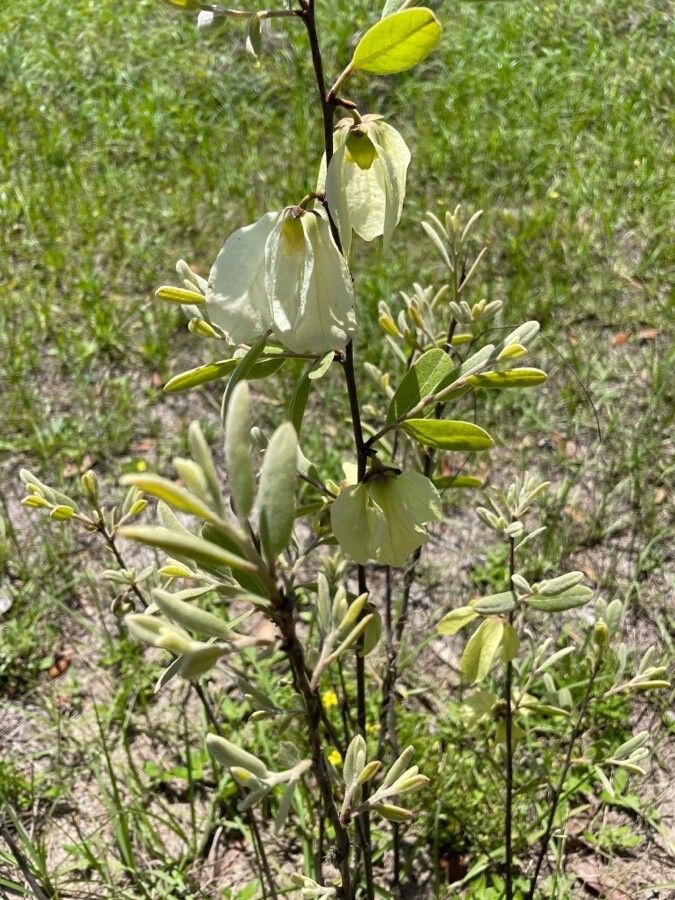
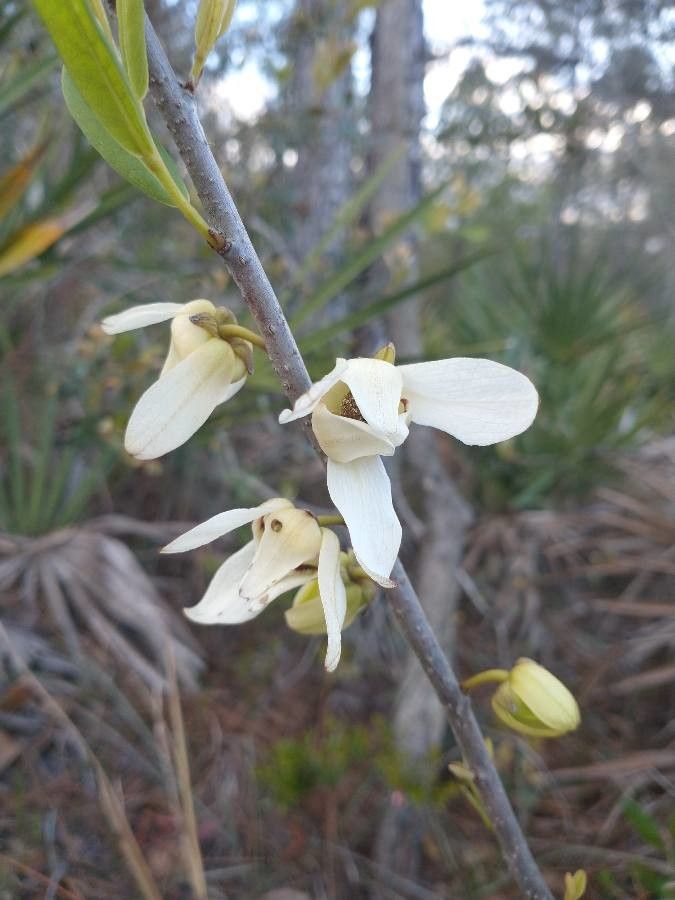
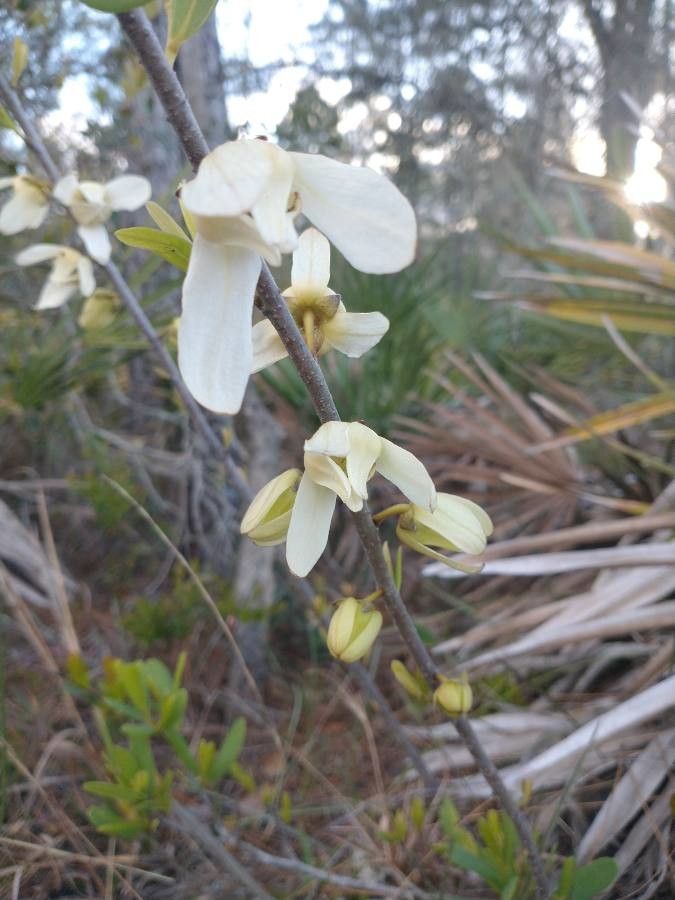
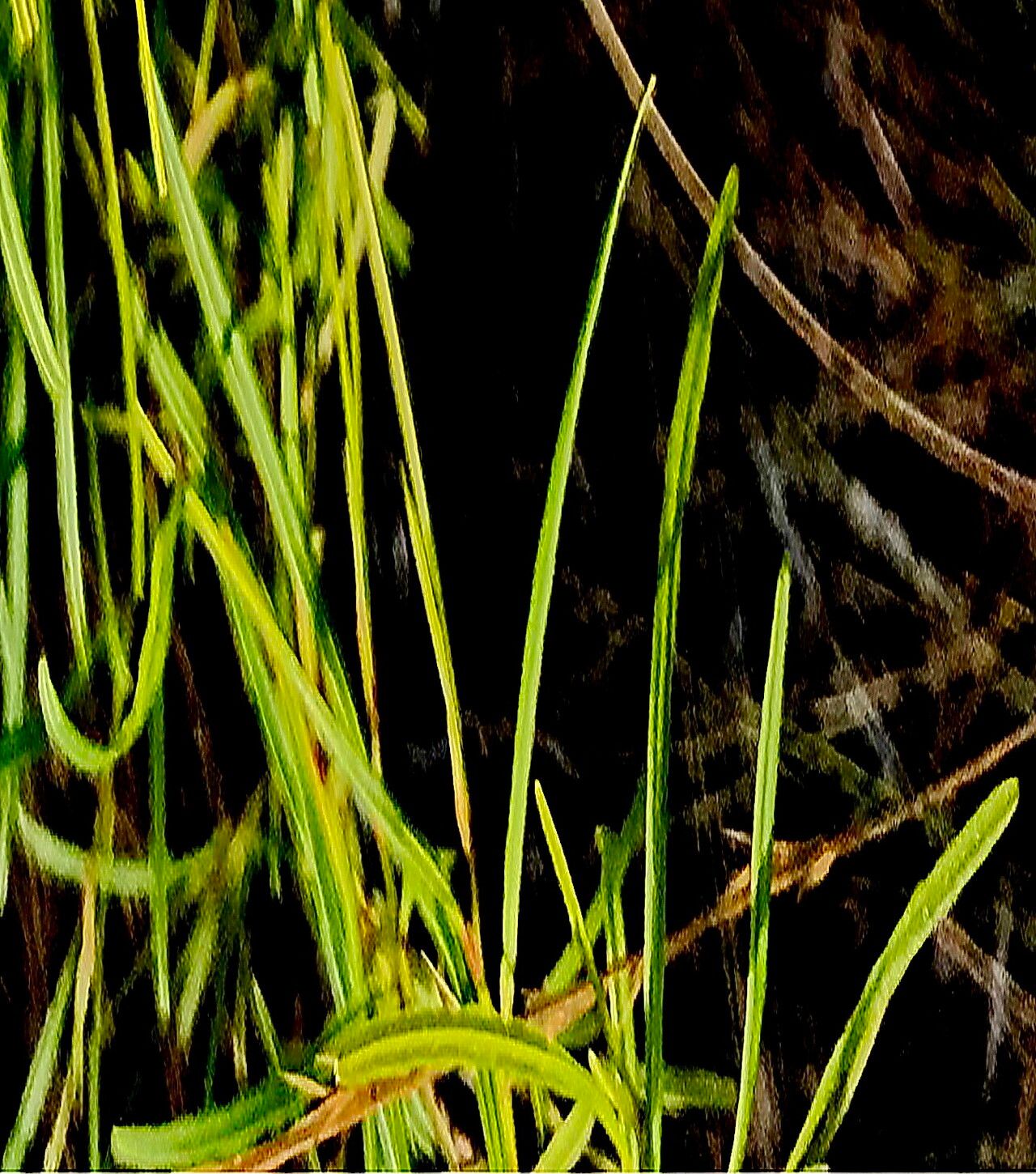
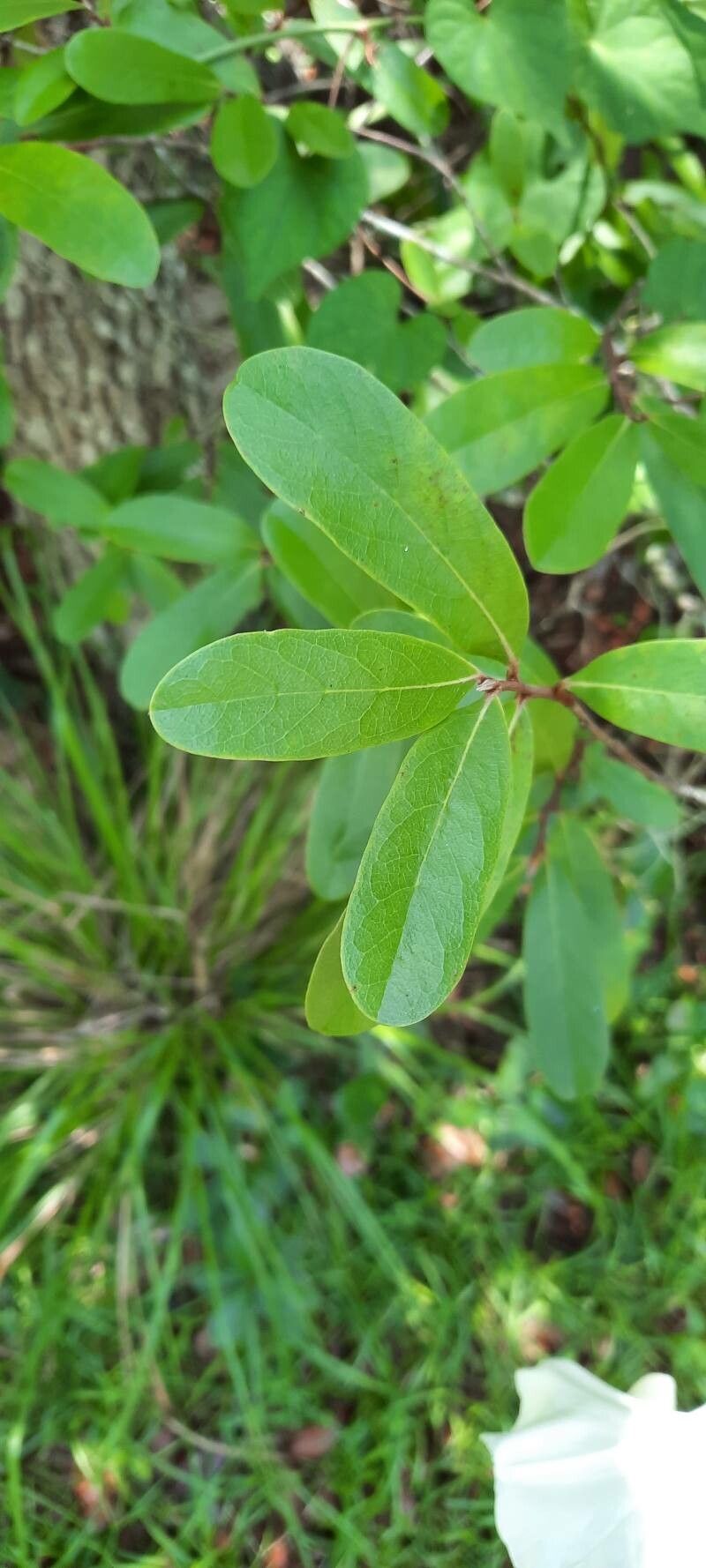
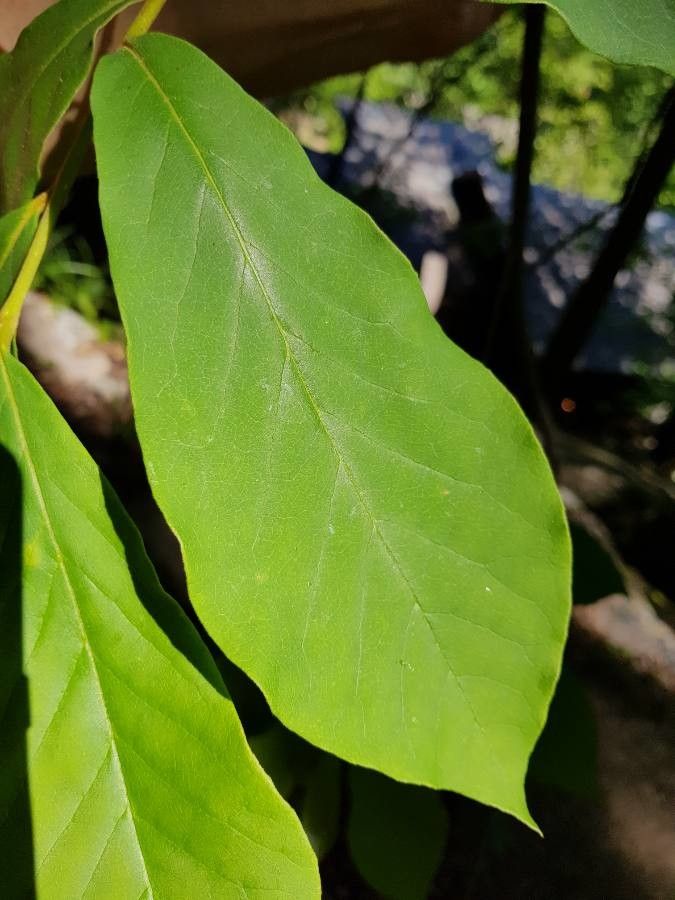
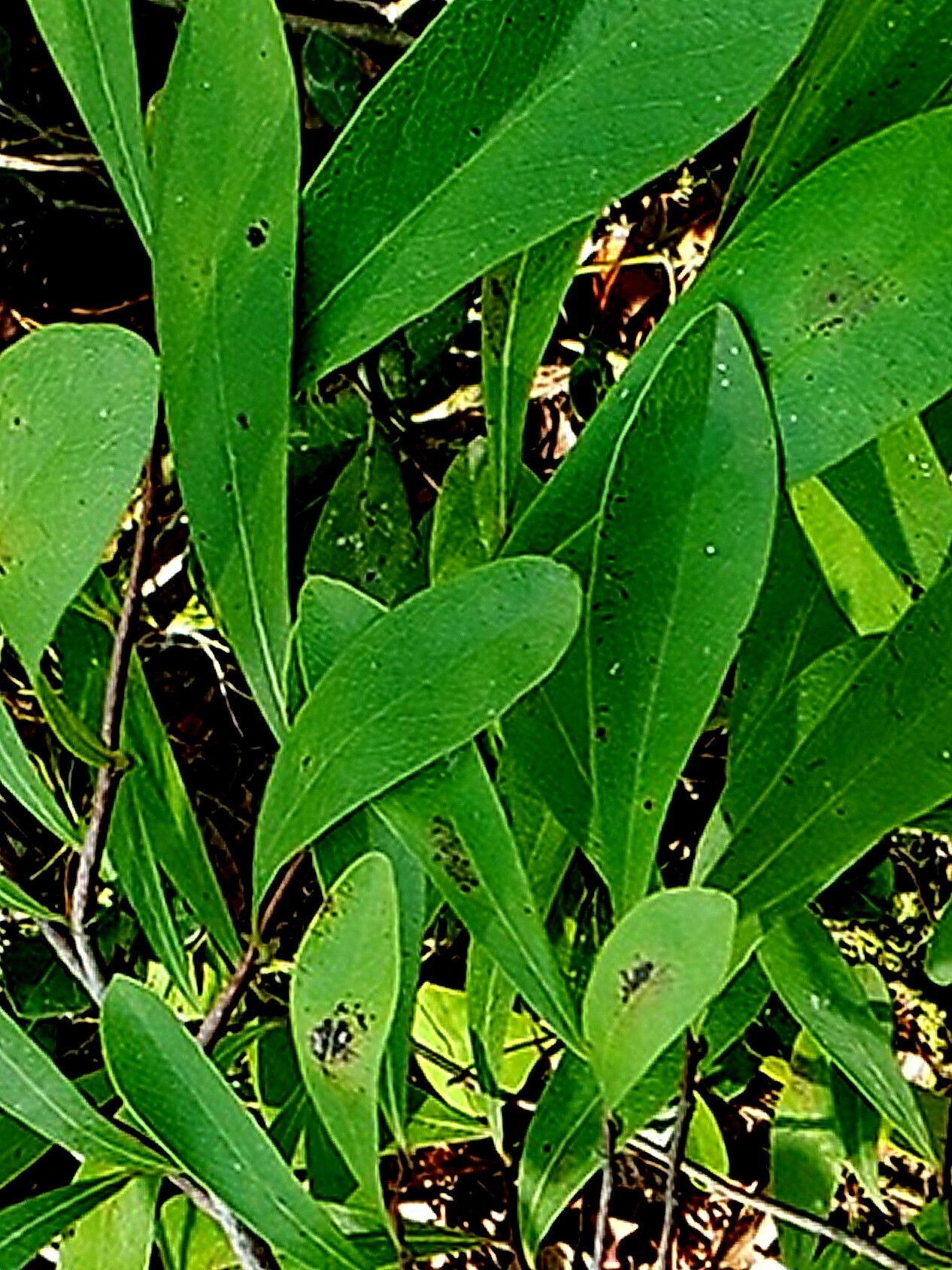
Asimina reticulata, commonly known as the netted pawpaw, is a small deciduous tree or shrub native to the southeastern United States. It typically reaches a height of 3 to 6 meters and has a spreading habit with an open crown. The leaves are simple, alternate, oblong, and feature prominent veins that form a net-like pattern on the surface.
The flowers of Asimina reticulata are small and inconspicuous, typically appearing in early spring before the leaves emerge. They grow singly or in clusters on short stalks along the branches. The fruit is an edible berry that resembles a large greenish-yellow mango, with soft flesh and numerous seeds.
Asimina reticulata prefers moist soils in shaded areas, such as riverbanks, swamps, or bottomlands. However, it can also tolerate drier soils if provided with adequate moisture during periods of drought. It is often found growing alongside other understory species such as dogwood (Cornus florida) and redbud (Cercis canadensis).
The netted pawpaw has been used by Native Americans for medicinal purposes, including the treatment of fever and digestive disorders. Its fruit has been used as food by both Native Americans and early European settlers.
Today, Asimina reticulata remains an important species for wildlife habitat, providing food sources for birds such as quail, wild turkey, and woodpeckers. It also serves as a host plant for several butterfly species, including the zebra swallowtail (Eurytides marcellus), which exclusively feeds on members of the Asimina genus during its larval stage.
Netted pawpaw shows strong disease resistance and is usually not susceptible to illnesses. Regarding care, this plant is fairly low-maintenance. When grown outdoors it needs little watering, and larger specimens typically do not require pruning. Smaller plants, however, should be trimmed after they finish blooming. Netted pawpawt is suitable for anyone with an outdoor area, such as a garden or deck, and does not demand extensive care experience.
How to keep Asimina Reticulata.
Light
Netted pawpaw is native to habitats such as forest understories or rocky areas, where it grows in natural shade. It prefers partial sun but can adapt to full sun or full shade, reflecting its versatile and hardy nature.
Temperature
Netted pawpaw demonstrates good adaptability to temperature, tolerating higher heat and considerable temperature fluctuations. In hot conditions, care should be taken with watering and providing suitable shade to avoid sunburn. However, netted pawpaw has relatively poor tolerance for low temperatures. Although it can endure some cold, excessively low temperatures may cause frost damage.
Fertilizer
The Netted pawpaw plant needs adequate nutrients to achieve optimal fruit production. Fertilize in early spring to encourage new growth and flower development. Regular feeding helps the plant remain healthy, produce more delicious fruit, and prevents nutrient-deficiency problems like yellow leaves and poor fruit yield.
Pruning
The netted pawpaw has leathery leaves and produces edible fruit. For healthy growth, it requires pruning in early spring. During pruning, remove any dead branches, thin out crowded areas, and make clean cuts to prevent damage. Pruning not only improves the shape of the plant but also enhances fruit production. Additionally, trimming back vigorous shoots encourages bushier growth. With regular care, the netted pawpaw will continue to thrive.
Botanical profile.
- Plant Type
- Shrub
- Life Cycle
- Perennial
- Genus
- Asimina
- Family
- Annonaceae
- Hardiness Zone
- 8-10
- Mature Height
- 0.91 m to 1.83 m
- Mature Spread
- 0.91 m to 2.13 m
- Leaf Color
- Dark Green
- Leaf Type
- Deciduous
- Flower Size
- 2.03 cm to 3.05 cm
- Bloom Time
- Early spring, Mid spring
- Planting Time
- Spring, Summer, Autumn
- Harvest Time
- Late summer, Early fall, Mid fall
Other names.