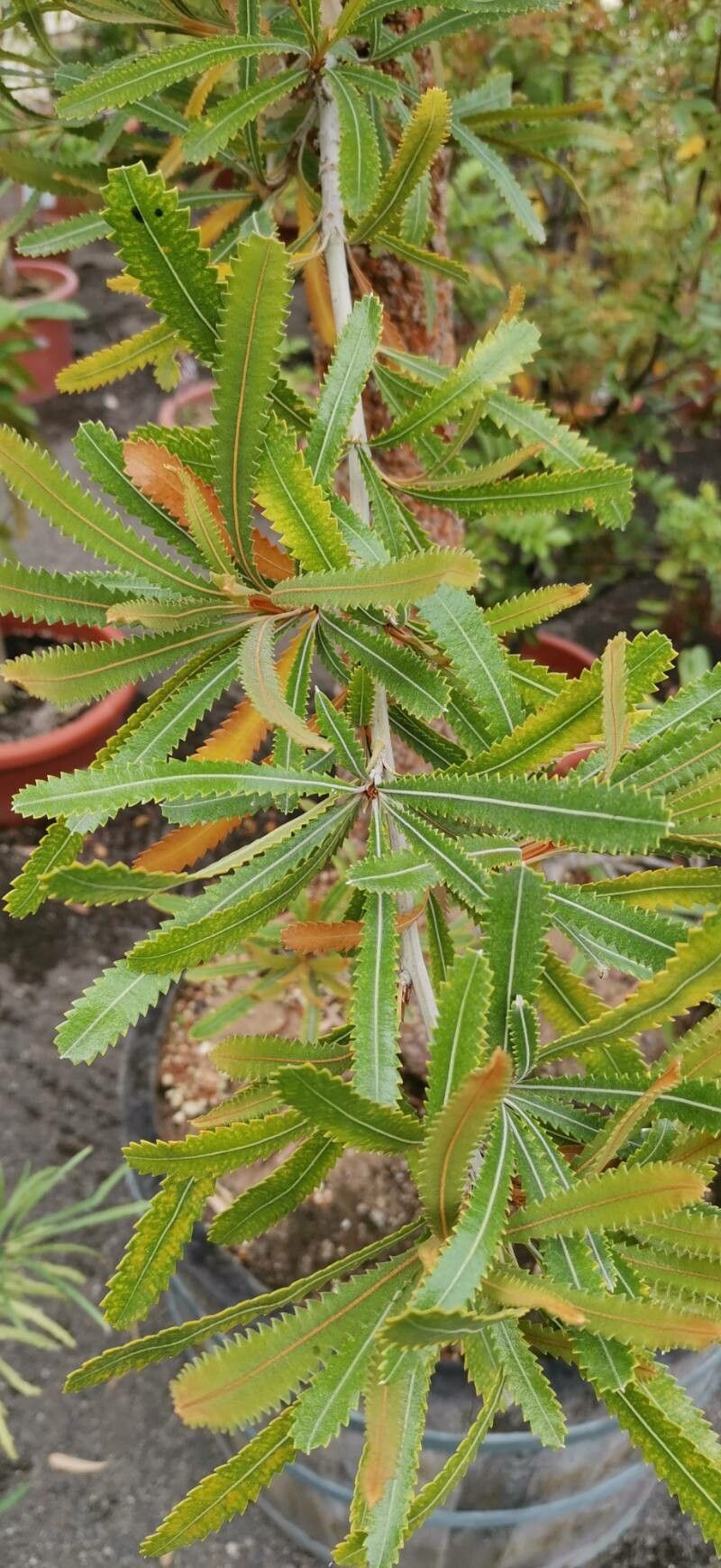
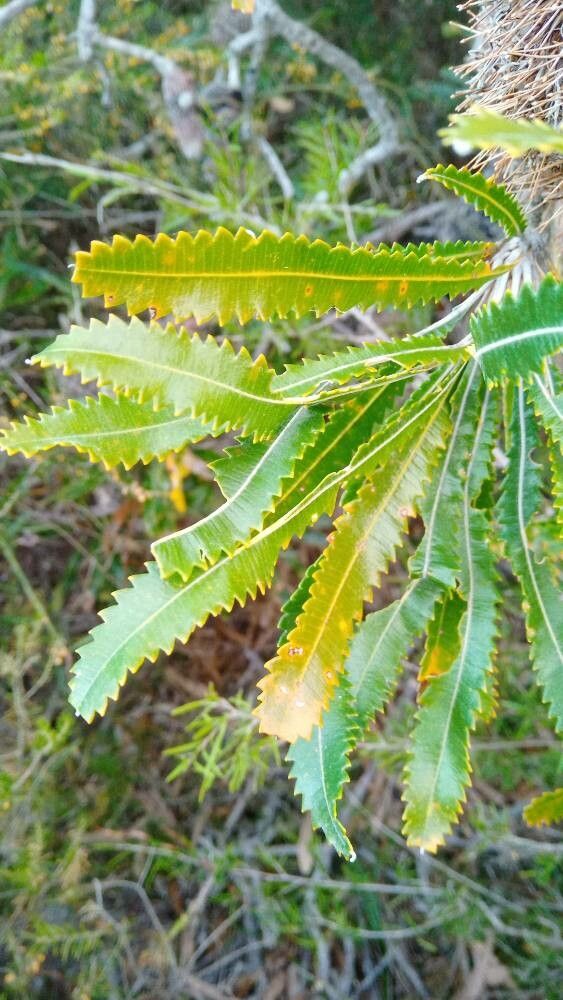
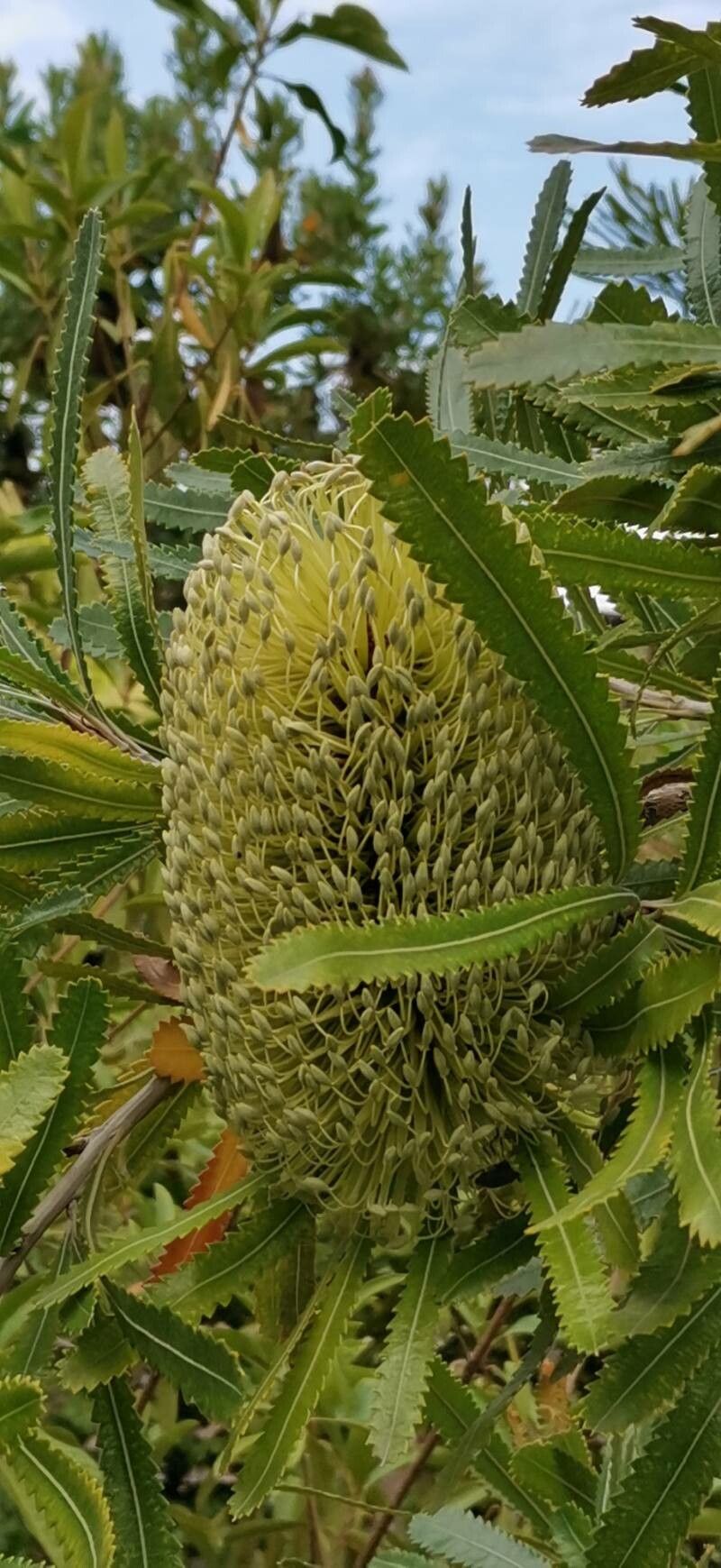
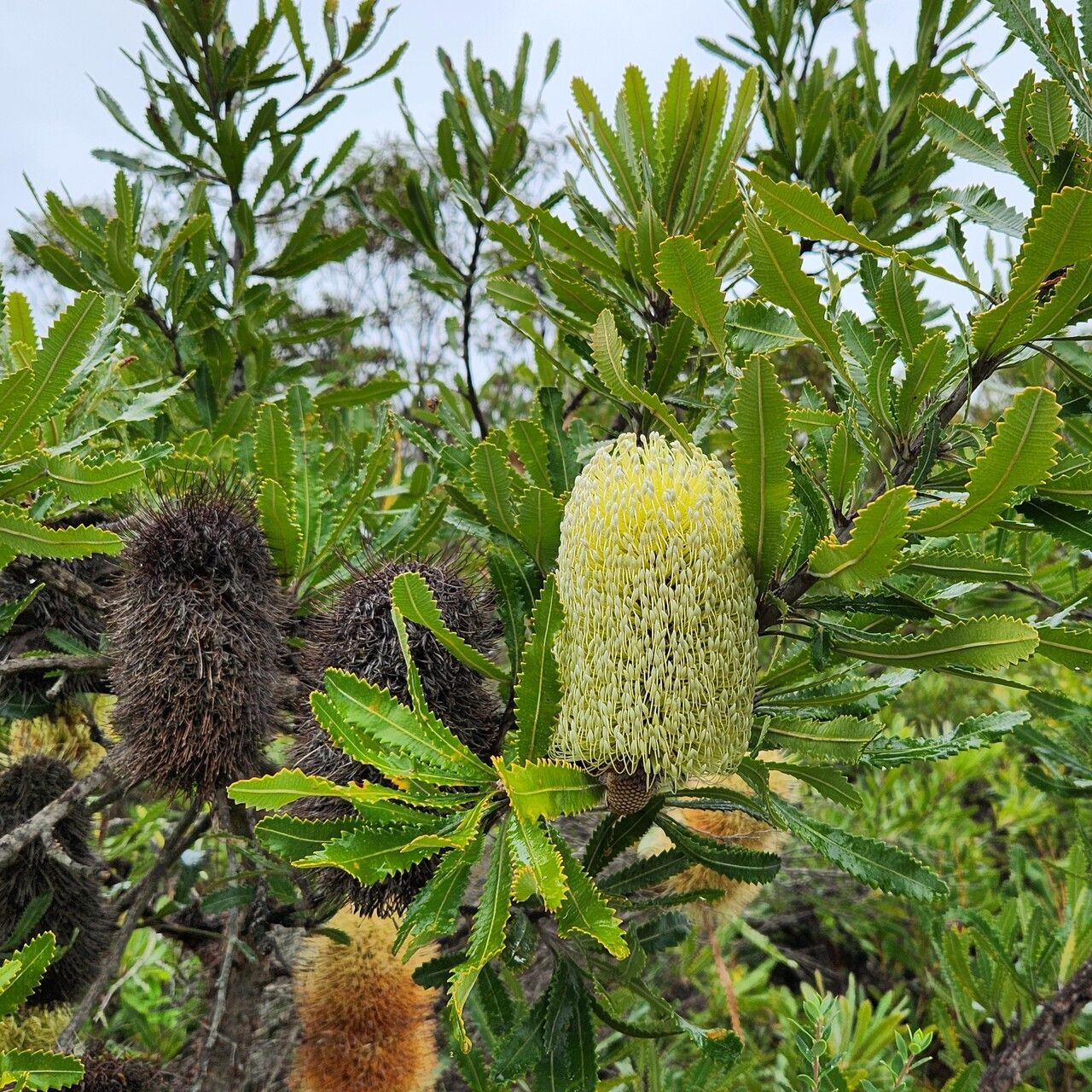
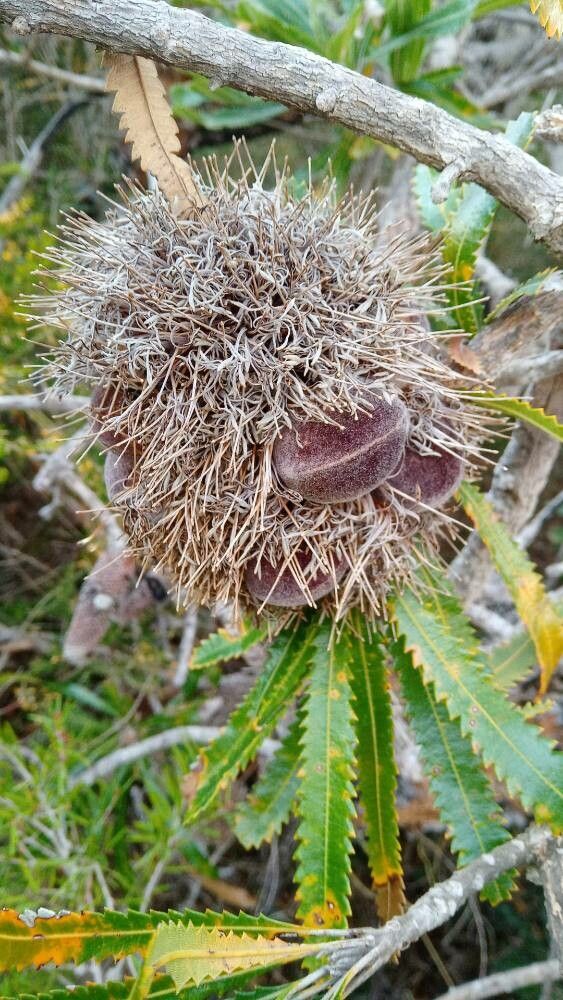
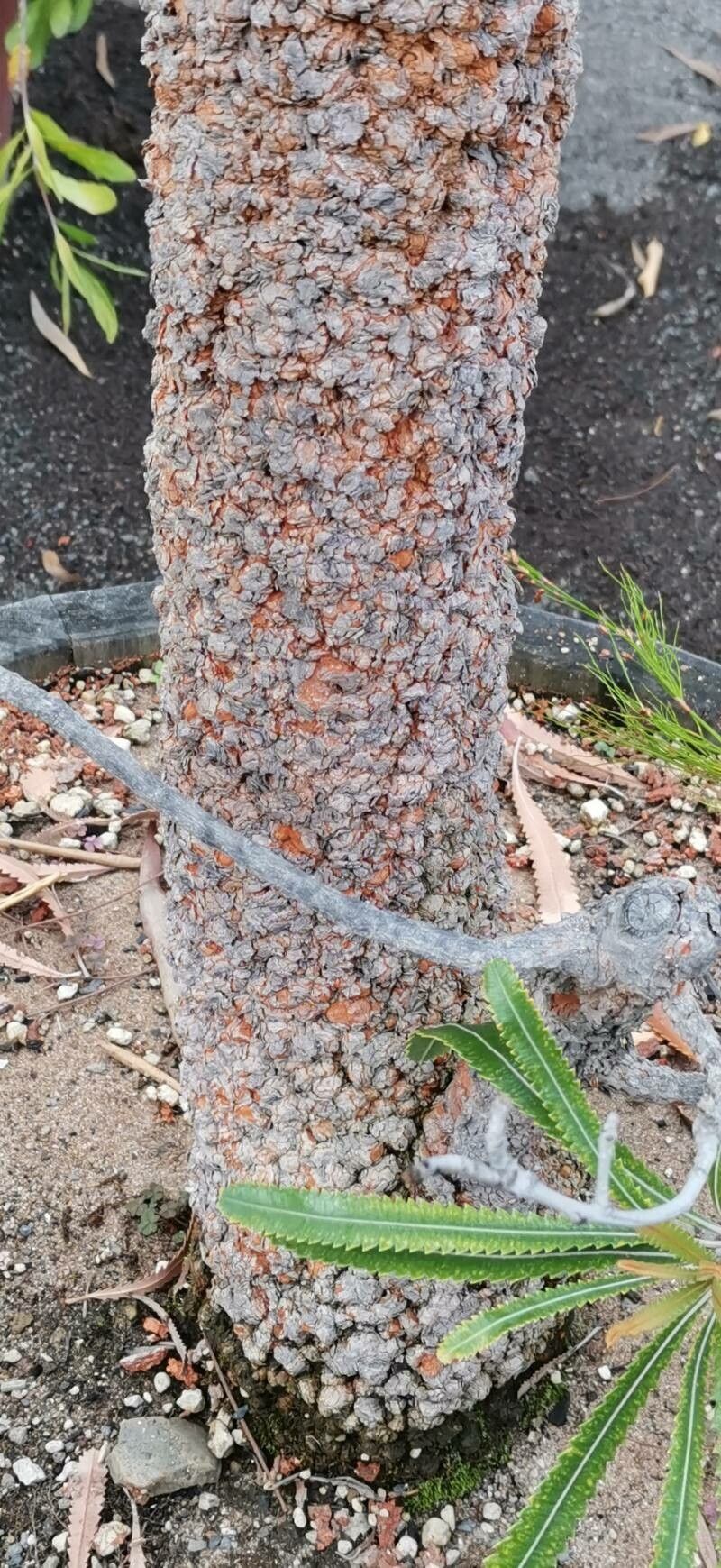
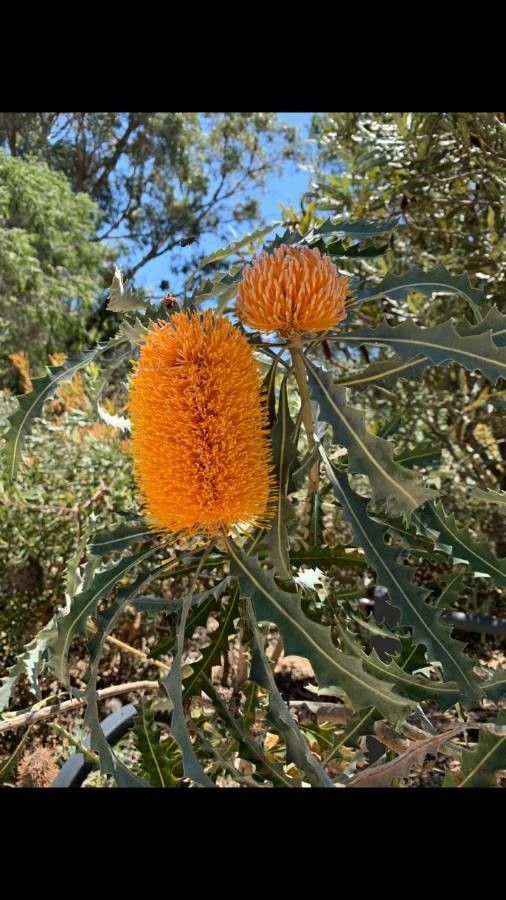
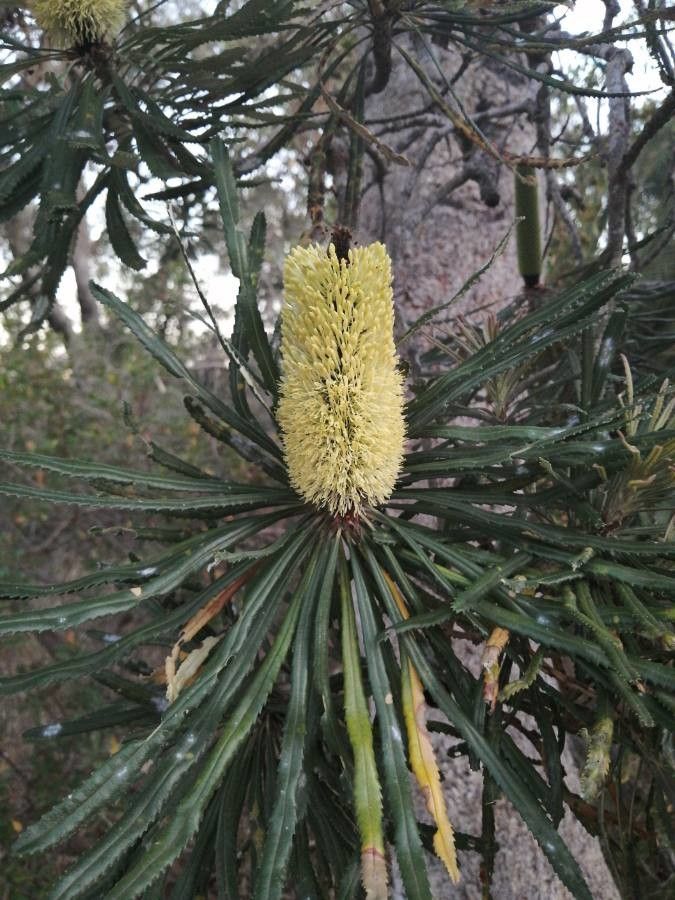
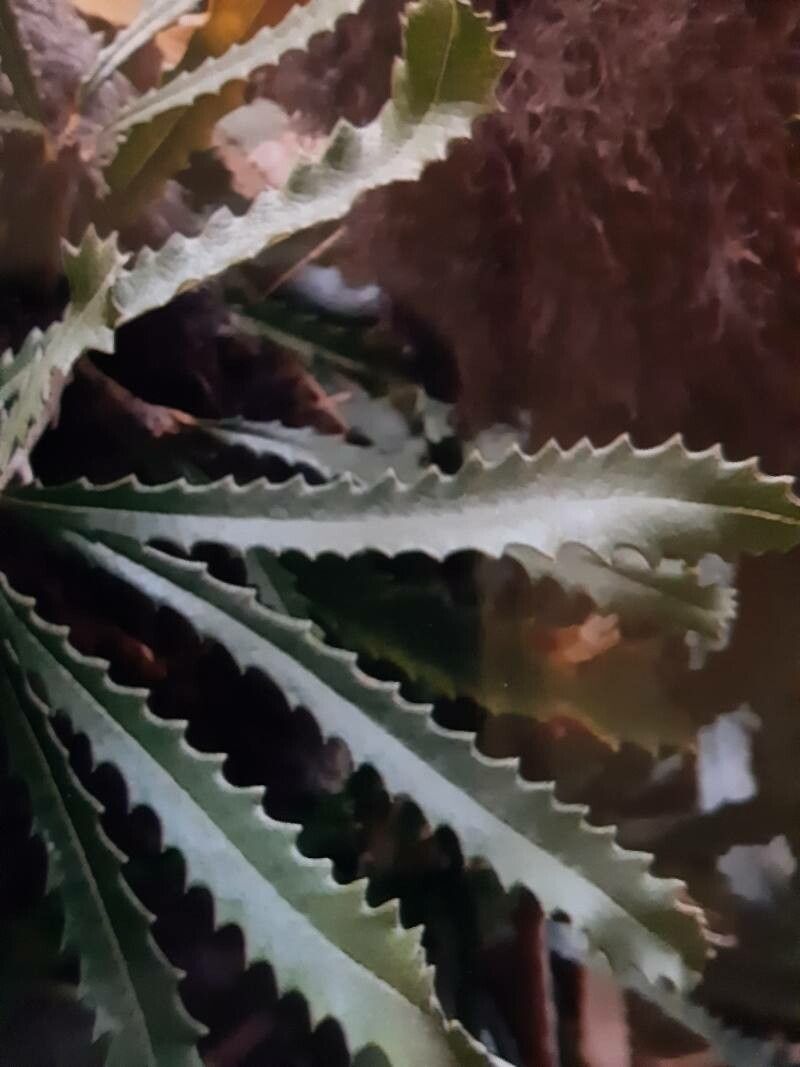
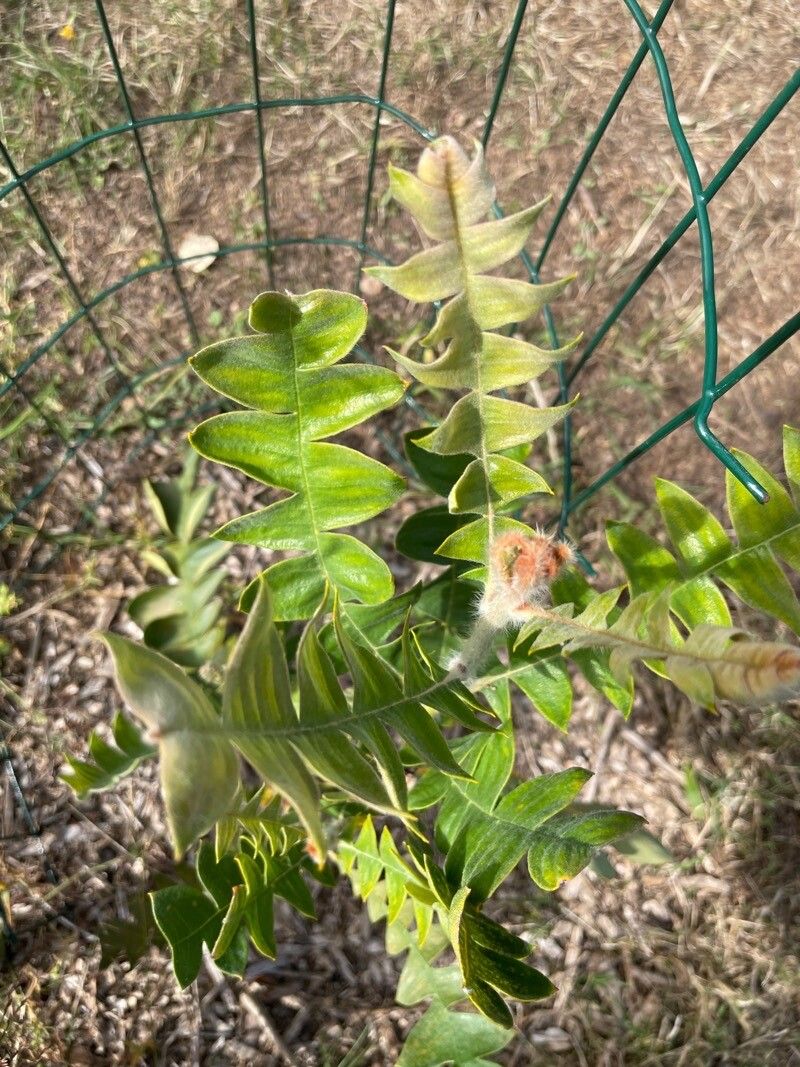
Banksia aemula, commonly known as the wallum banksia, is a shrub of the family Proteaceae. Found from Bundaberg south to Sydney on the Australian east coast, it is encountered as a shrub or a tree to 8 m (26 ft) in coastal heath on deep sandy soil, known as Wallum. It has wrinkled orange bark and shiny green serrated leaves, with green-yellow flower spikes, known as inflorescences, appearing in autumn. The flower spikes turn grey as they age and large grey follicles appear. Banksia aemula resprouts from its woody base, known as a lignotuber, after bushfires.
Old man banksia is resistant to disease and is generally not susceptible to illnesses. In terms of care, this plant is fairly low-maintenance. When grown outdoors it needs only minimal watering, and larger plants typically do not require pruning. Smaller plants, however, should be pruned after they have finished blooming. Old man banksia is suitable for anyone with an outdoor area, such as a garden or deck, and does not demand extensive gardening experience.
How to keep Banksia Aemula.
Light
Old man banksia does best with abundant light. As a resident of environments with open access to sunlight, its growth and overall condition visibly improve in bright, sun-filled areas. Excessive or limited light typically does not bother it. Nonetheless, insufficient light can hinder its successful development.
Temperature
Old man banksia is native to temperate environments and does best in temperatures of 68 to 100 °F (20 to 38 ℃). Seasonal temperature changes are typically not required unless conditions move substantially outside this range.
Fertilizer
Early spring, as an Old man banksia breaks dormancy, is the best time to fertilize. This supports overall growth and encourages flower development. Fertilization improves the foliage, stems, and branches, while encouraging large, vibrant, long-lasting flowers. It helps transfer nutrients from the roots to the blooms and enhances the plant’s health and disease resistance.
Pruning
The wallum banksia is a unique shrub known for its large flower spikes and serrated leaves. To encourage growth and prevent disease, prune it in early spring and remove any dead branches. Regular, minimal pruning not only boosts flowering but also improves airflow, enhancing both the plant's health and its aesthetic appeal.
Botanical profile.
- Plant Type
- Tree, Shrub
- Life Cycle
- Perennial
- Genus
- Banksia
- Family
- Proteaceae
- Hardiness Zone
- 9-11
- Mature Height
- 15.85 m
- Mature Spread
- 6.1 m
- Leaf Color
- Green, Red, Brown
- Leaf Type
- Evergreen
- Flower Color
- Yellow
- Flower Size
- 8.89 cm to 11.43 cm
- Bloom Time
- Late winter, Early spring, Mid spring
- Planting Time
- Spring
- Harvest Time
- Late spring, Early summer, Mid summer
Other names.