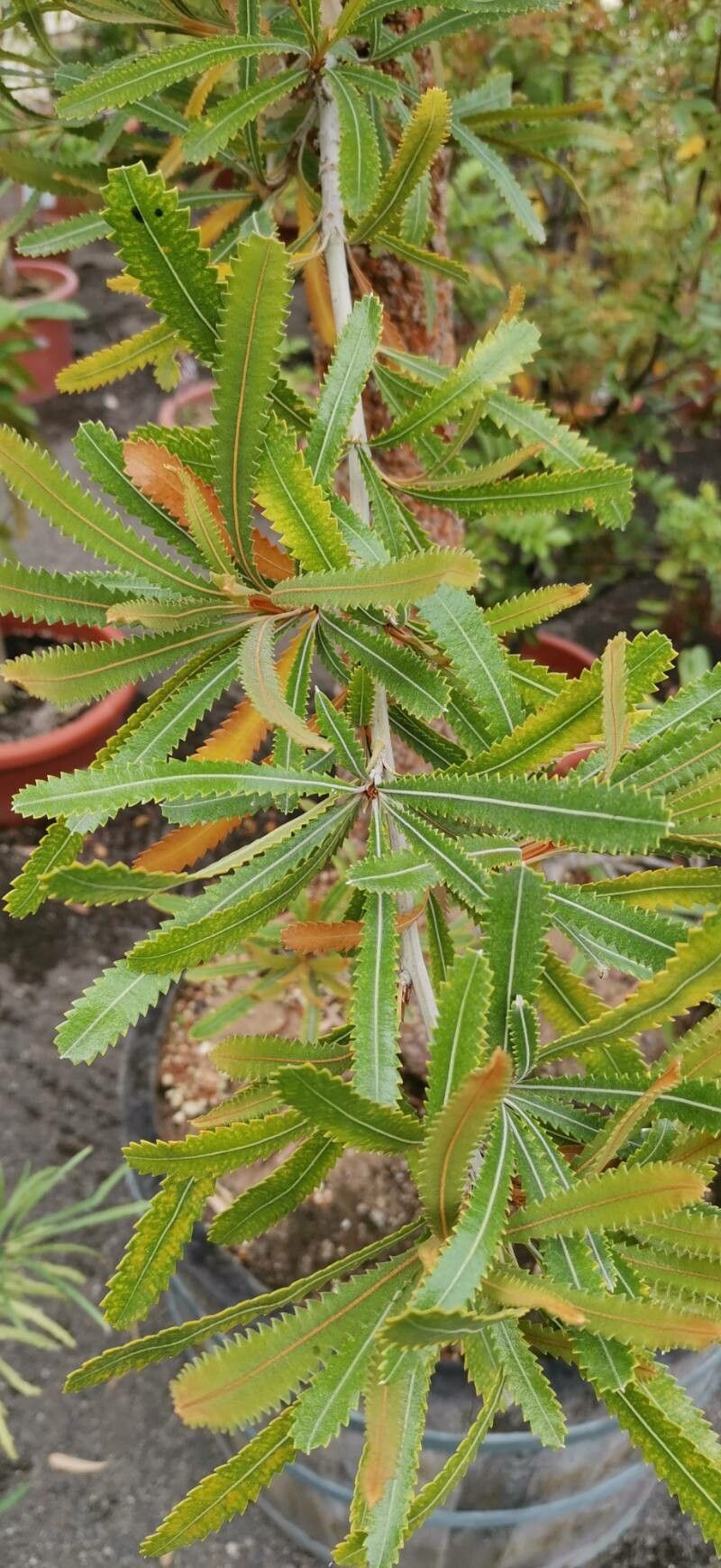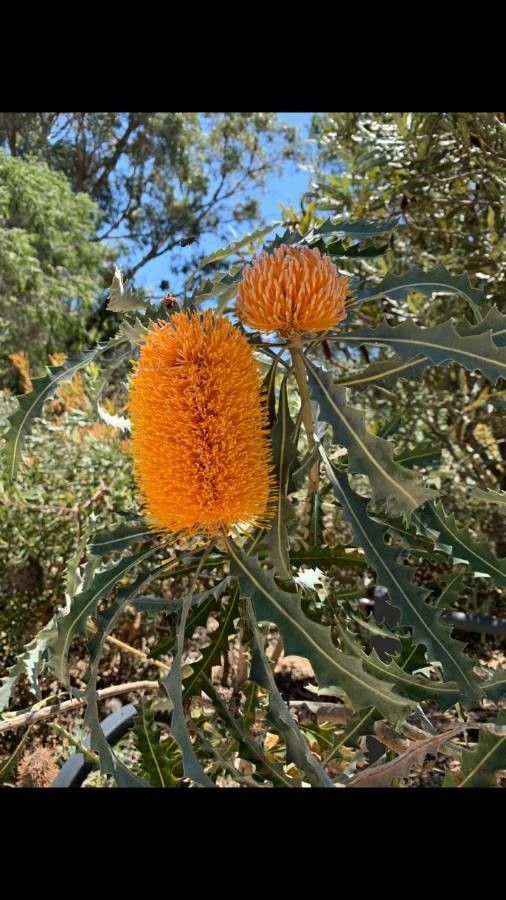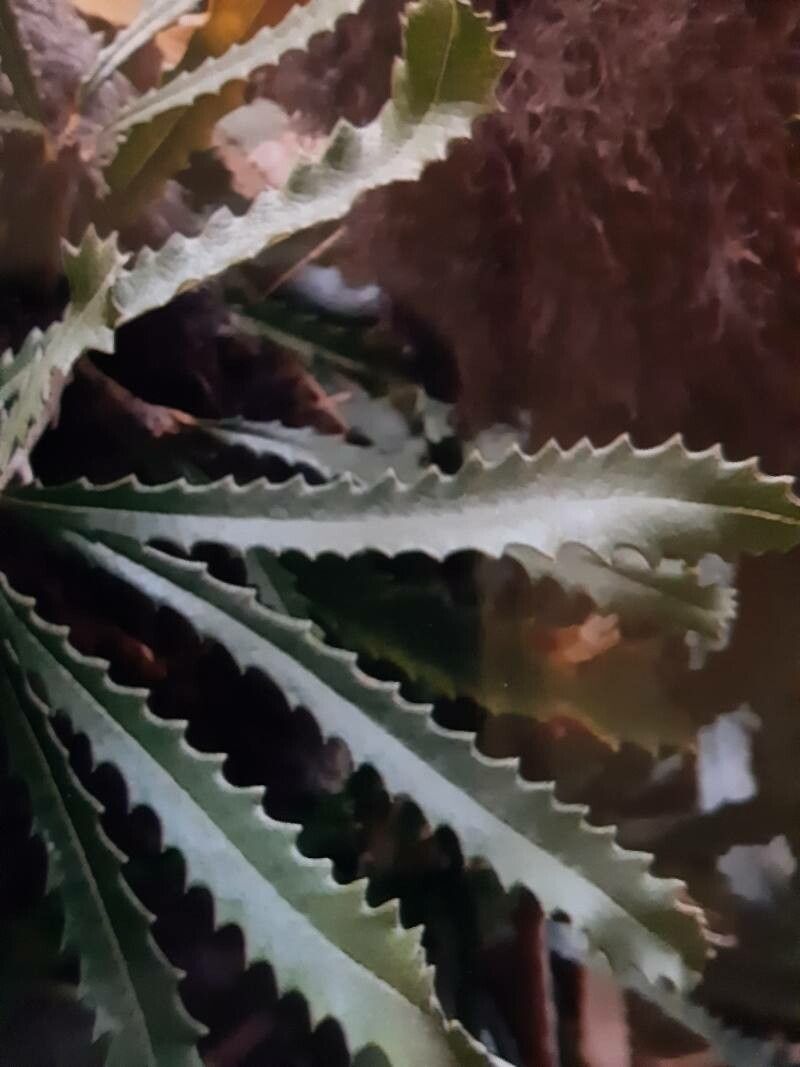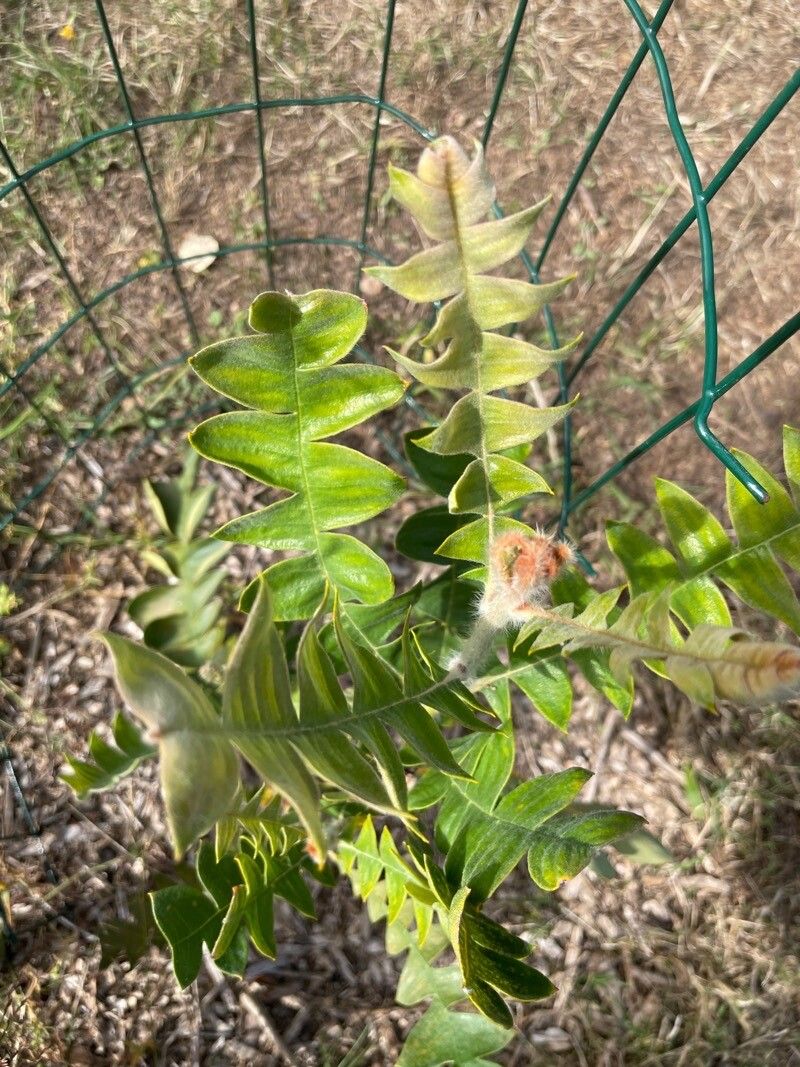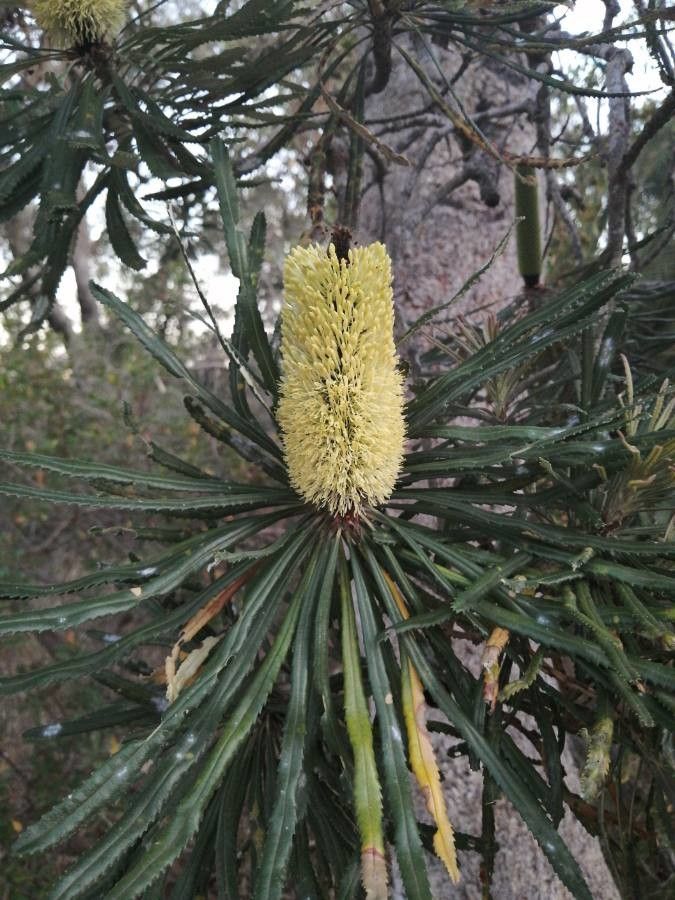
Banksia attenuata, commonly known as the candlestick banksia, slender banksia, or biara to the Noongar people, is a species of plant in the family Proteaceae. Commonly a tree, it reaches 10 m (33 ft) high, but it is often a shrub in drier areas 0.4 to 2 m (1.3 to 6.6 ft) high. It has long, narrow, serrated leaves and bright yellow inflorescences, or flower spikes, held above the foliage, which appear in spring and summer. The flower spikes age to grey and swell with the development of the woody follicles. The candlestick banksia is found across much of the southwest of Western Australia, from north of Kalbarri National Park down to Cape Leeuwin and across to Fitzgerald River National Park. English botanist John Lindley had named material collected by Australian botanist James Drummond Banksia cylindrostachya in 1840, but this proved to be the same as the species named Banksia attenuata by Scottish botanist Robert Brown 30 years earlier in 1810, and thus Brown's name took precedence. Within the genus Banksia, the close relationships and exact position of B. attenuata is unclear. The candlestick banksia is pollinated by and provides food for a wide array of animals in summer months. Several species of honeyeater visit the flower spikes, as does the honey possum, which has an important role as a pollinator. It regenerates from bushfire by regrowing from its woody base, known as a lignotuber, or from epicormic buds within its trunk. It can have a lifespan of 300 years. It has been widely used as a street tree and for amenities planting in urban Western Australia, though its large size generally precludes use in small gardens. A dwarf form is commercially available in nurseries.
Slender banksia has strong disease resistance and is usually not susceptible to illnesses. Regarding care, this plant is fairly low maintenance. When grown outdoors it needs little watering, and larger specimens generally do not require pruning. Smaller plants, however, should be pruned after they have finished blooming. Slender banksia is appropriate for anyone with an outdoor area, such as a garden or deck, and does not demand much gardening experience.
How to keep Banksia Attenuata.
Light
Slender banksia comes from open habitats, such as sunny meadows and the edges of forests, where light is plentiful. It prefers full sun but will also tolerate partial sun, showing good adaptability to different light levels.
Water
The Slender Banksia, native to Australia's arid regions, is highly drought-tolerant and thrives with minimal moisture. Although it requires weekly watering, it benefits greatly from well-drained soil. As an evergreen plant, the Slender Banksia is perfect for xeriscaping because it can retain water in its foliage during dry periods.
Temperature
Slender banksia is fairly adaptable to temperature, capable of withstanding higher heat and considerable temperature fluctuations. In hot weather, attention should be paid to watering and providing adequate shade to prevent sunburn. Conversely, Slender banksia is not as tolerant of cold. While it can endure some chill, very low temperatures can cause frost damage.
Fertilizer
Timing is essential for feeding Slender banksia. Apply fertilizer in early spring and continue once a month until early summer. Fertilizer promotes attractive blooms and supplies energy during both dormant and active growth periods.
Pruning
The slender banksia is known for its unique flower spikes and hardy foliage. To encourage healthy growth and improve air circulation, prune the plant from early to late winter by removing dead wood and any overgrown branches. Be sure to sterilize your tools for hygiene purposes. Regularly check the plant to maintain its health and appearance.
Botanical profile.
- Plant Type
- Tree, Shrub
- Life Cycle
- Perennial
- Genus
- Banksia
- Family
- Proteaceae
- Hardiness Zone
- 9-11
- Mature Height
- 2.13 m to 10.06 m
- Mature Spread
- 2.13 m to 3.96 m
- Leaf Color
- Dark Green, Olive Drab
- Leaf Type
- Evergreen
- Flower Color
- Yellow, Gold
- Flower Size
- 5.08 cm to 10.16 cm
- Bloom Time
- Mid fall, Late fall, Early winter
- Planting Time
- Spring, Summer, Autumn
- Harvest Time
- Late winter, Early spring, Mid spring