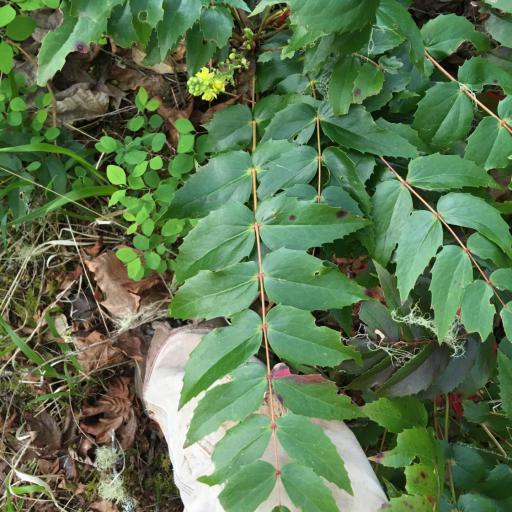
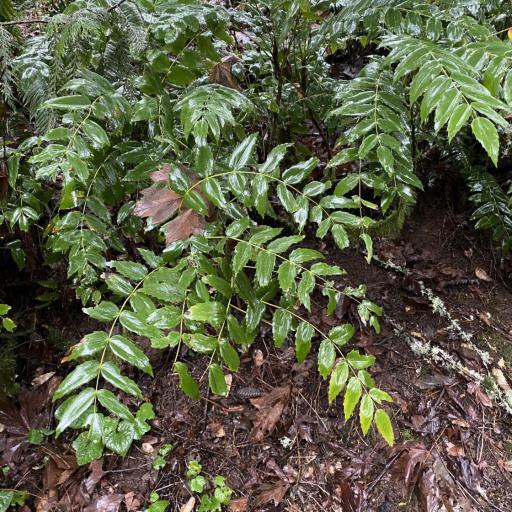
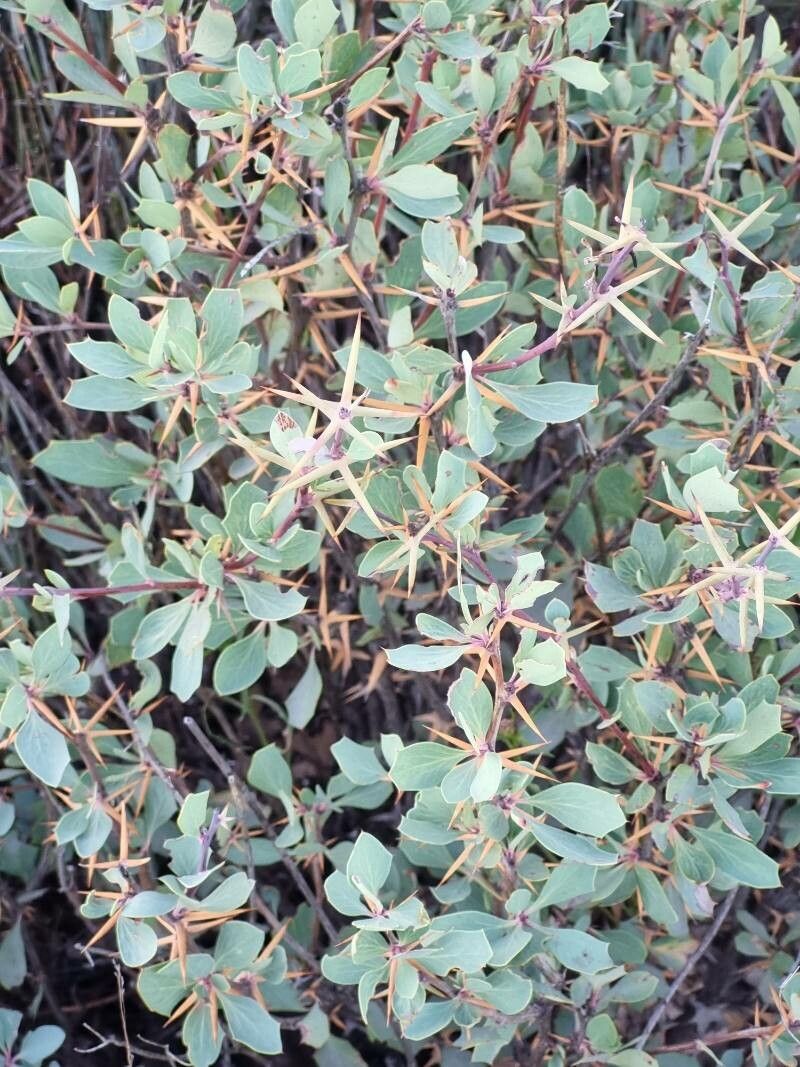
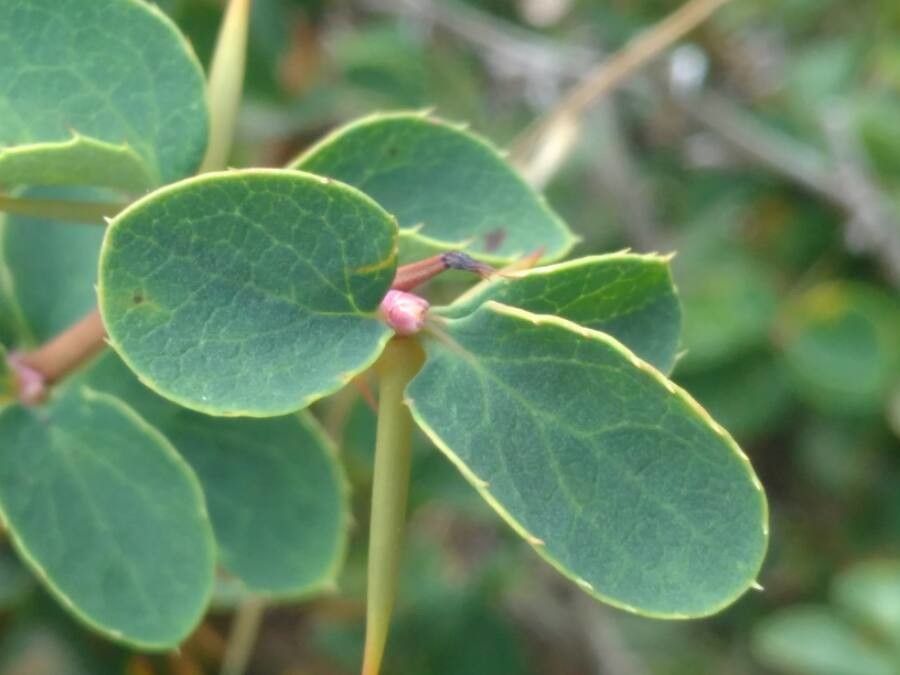
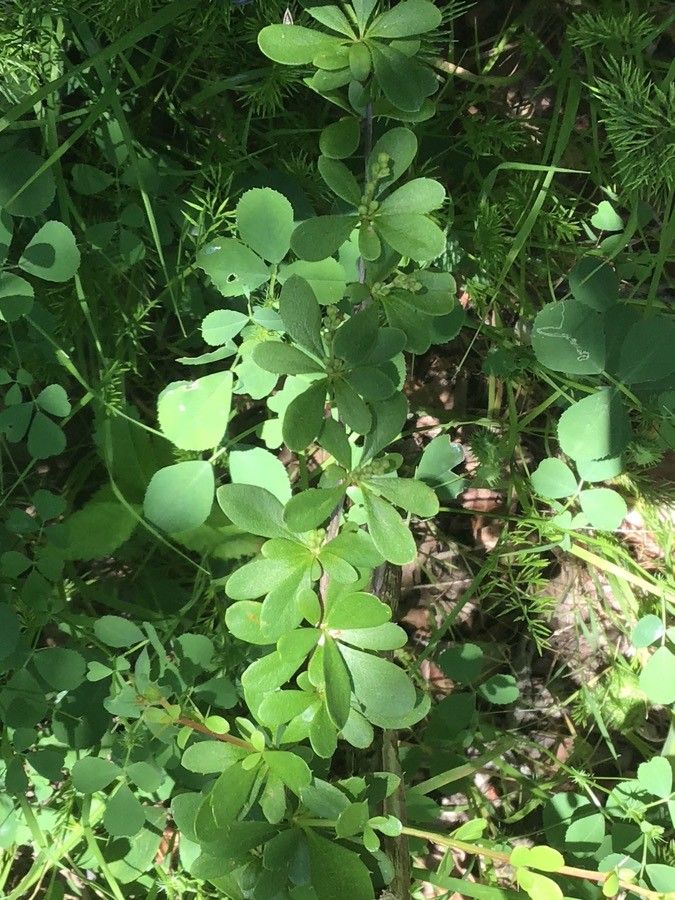
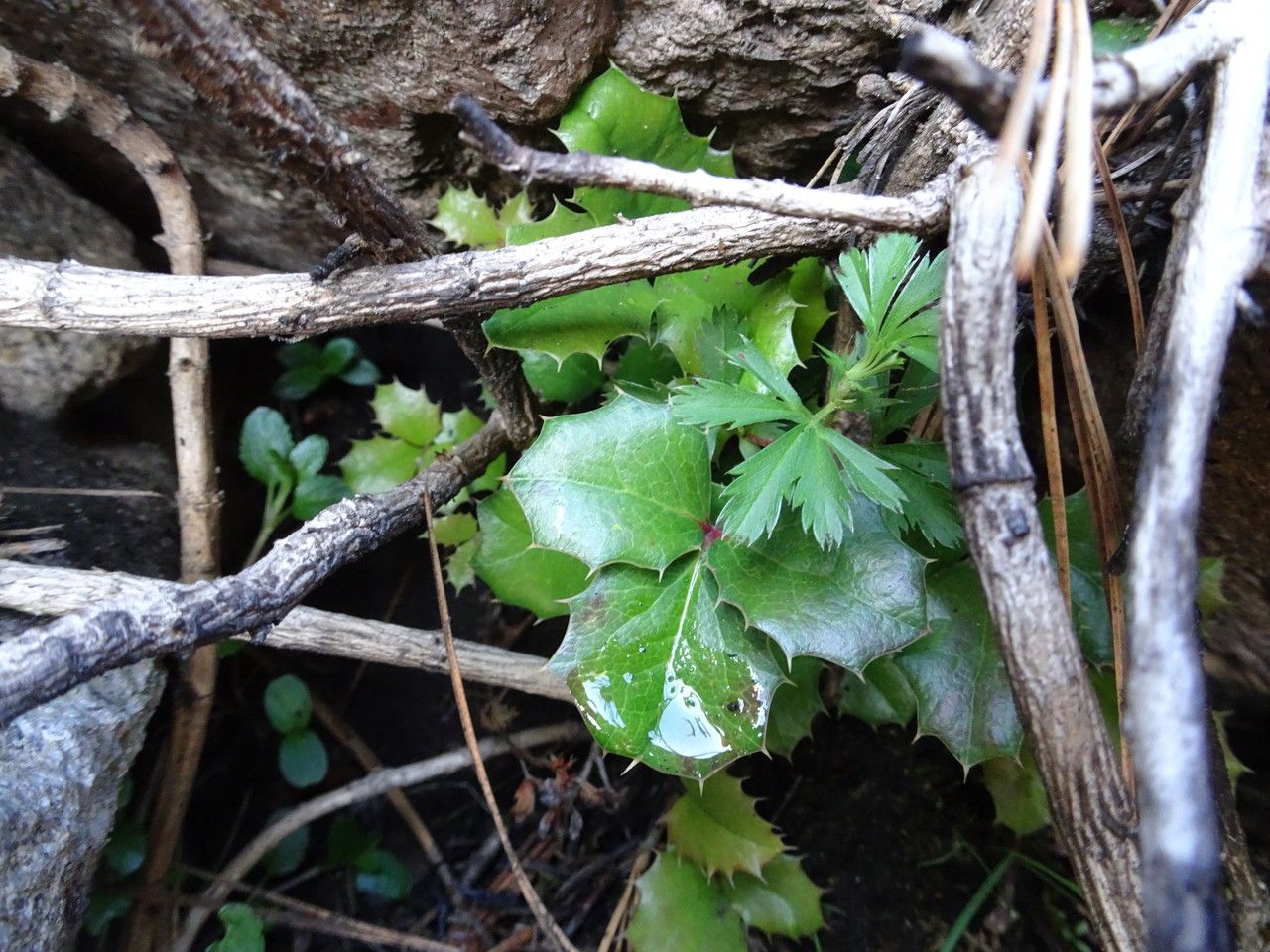
Mahonia nervosa, commonly known as dwarf Oregon-grape, Cascade barberry, Cascade Oregon-grape, or dull Oregon-grape, is a flowering plant native to the northwest coast of North America from southern British Columbia south to central California, with an isolated population inland in northern Idaho. It is especially common in second growth, Douglas-fir or western redcedar forests, making use of those pools of sunlight that intermittently reach the ground. Some authors place the entire genus Mahonia within the genus Berberis. The plant was collected by Lewis and Clark during their famous expedition to the West before being described for science in 1813.
Dwarf Oregon-Grape has good disease resistance and is generally not susceptible to diseases. In terms of care, this plant is relatively low-maintenance. When grown outdoors, it requires minimal watering, and larger plants usually do not need pruning. However, smaller plants should be pruned after they have bloomed. Dwarf Oregon-Grape is suitable for anyone with an outdoor space, such as a garden or deck, and does not require much gardening experience.
How to keep Berberis Nervosa.
Light
Dwarf Oregon-Grape performs best in moderate sunlight, though it can tolerate both strong sun and very low light. In its natural habitat it is commonly found in locations with fluctuating light, illustrating its adaptable sunlight habit. Too much or too little sun exposure can cause stunted growth.
Water
The Dwarf Oregon-Grape thrives in environments with balanced moisture and prefers consistent watering. It needs to be watered every 1-2 weeks. As an evergreen plant, it retains its leaves throughout the year and requires regular watering even during the colder months to prevent drying out, despite having some tolerance to drought.
Temperature
The dwarf Oregon-Grape is a temperate woody plant that prefers temperatures of 59 to 95 ℉ (15 to 35 ℃). It is native to habitats with temperatures in that range, such as temperate rainforests and mixed forests. During warmer months the plant can tolerate slightly higher temperatures, while in cooler seasons it may benefit from some protection from frost.
Fertilizer
Fertilize your Dwarf Oregon-Grape in early spring to encourage healthy growth. Regular feeding improves overall health, producing vigorous growth, greater tolerance of harsh conditions, and increased resistance to pests and diseases. Keep a consistent fertilization schedule for your Dwarf Oregon-Grape to preserve vibrant, deep-colored foliage and a lush appearance.
Pruning
Dwarf Oregon-Grape generally doesn't require pruning, but doing so can boost its vigor. To shape and thin the crown, it’s best to prune in the spring. This also improves ventilation and reduces humidity. Be careful not to cut more than one-third of the canopy. Make angled cuts and always disinfect your tools before pruning.
Pot & Repot
When repotting Dwarf Oregon-Grape, select a pot 1-2 inches (2.5–5.1 cm) larger that has ample drainage. Use a well-draining potting mix. Repot in spring or fall, making sure the root ball sits slightly lower than the rim of the flower pot. Water thoroughly after repotting and place in a warm spot with indirect sunlight.
Botanical profile.
- Plant Type
- Shrub
- Life Cycle
- Perennial
- Genus
- Berberis
- Family
- Berberidaceae
- Hardiness Zone
- 8-9
- Mature Height
- 0.1 m to 2.13 m
- Mature Spread
- 91 cm
- Leaf Color
- Green
- Leaf Type
- Evergreen
- Flower Color
- Yellow
- Flower Size
- 0.76 cm to 1.02 cm
- Bloom Time
- Mid spring, Late spring, Early summer
- Planting Time
- Spring
- Harvest Time
- Mid summer
Other names.