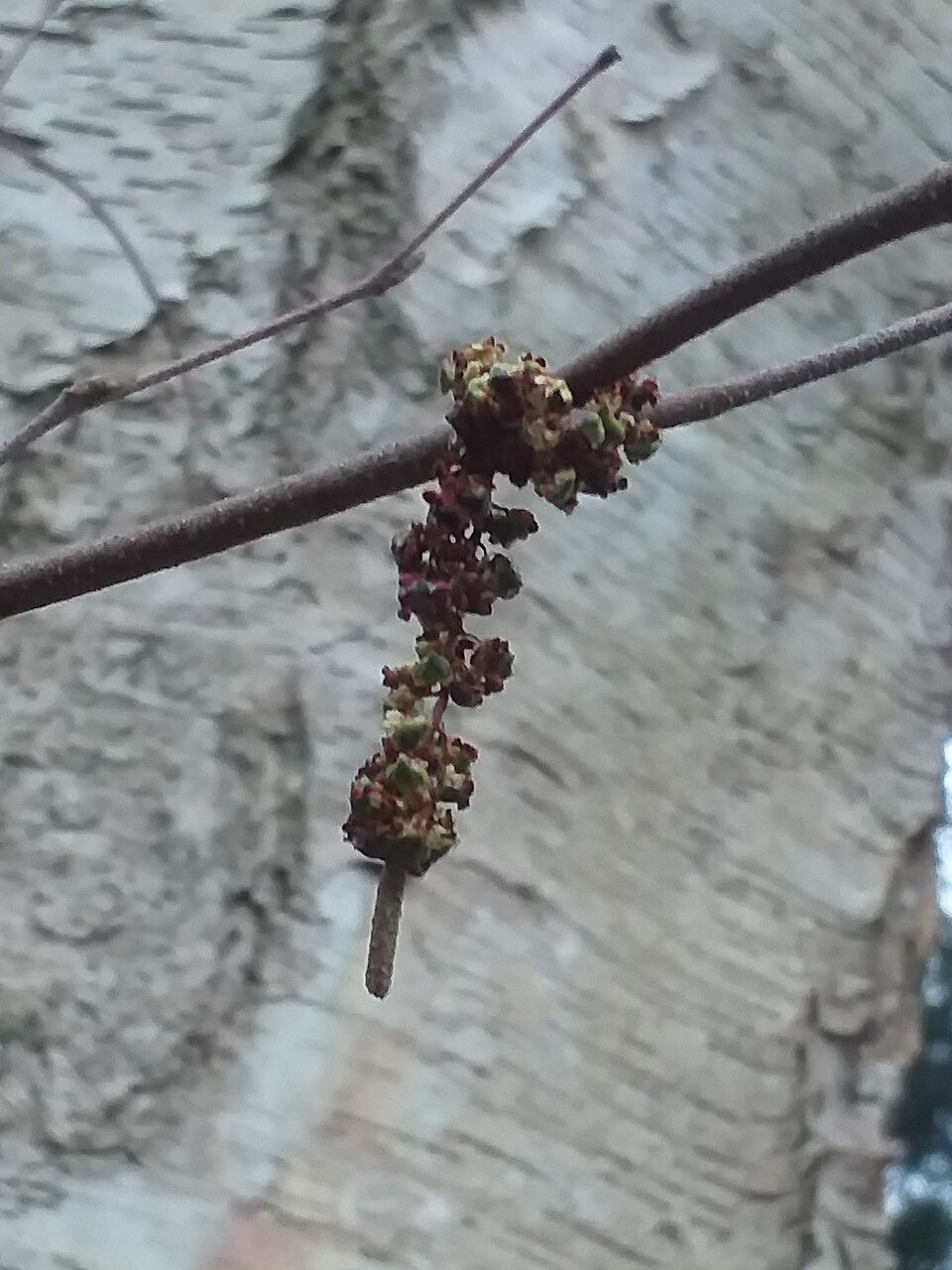
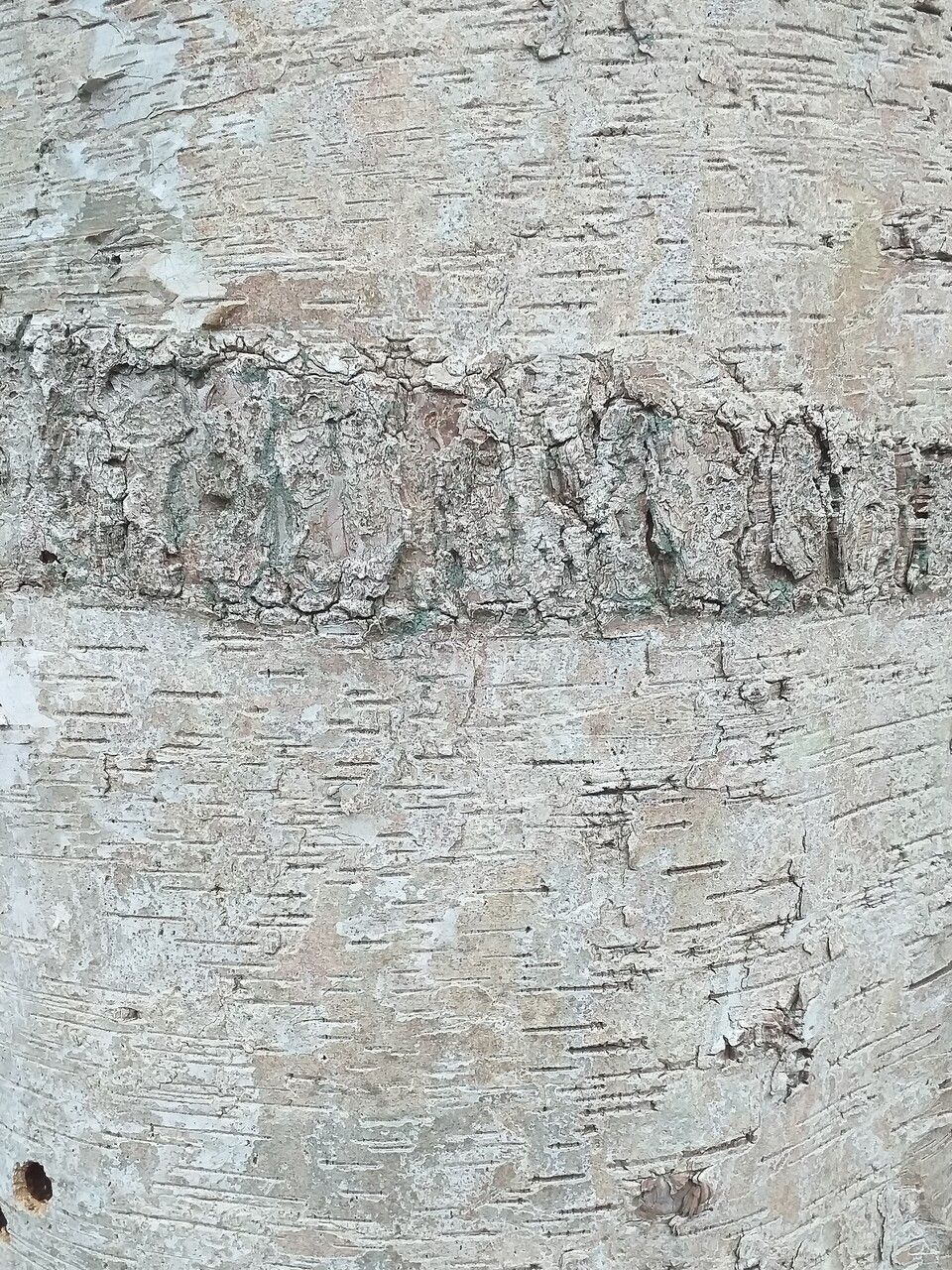
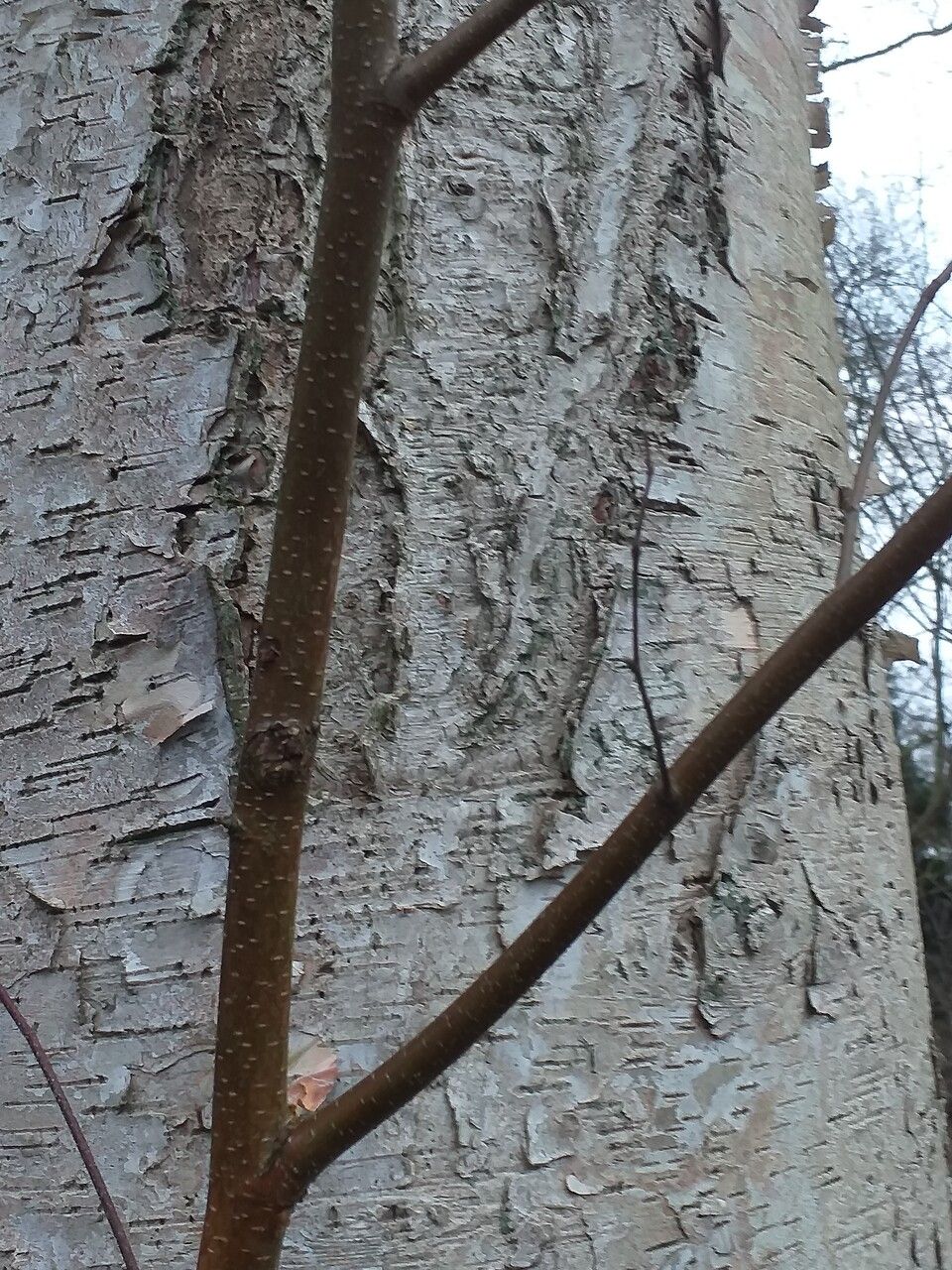
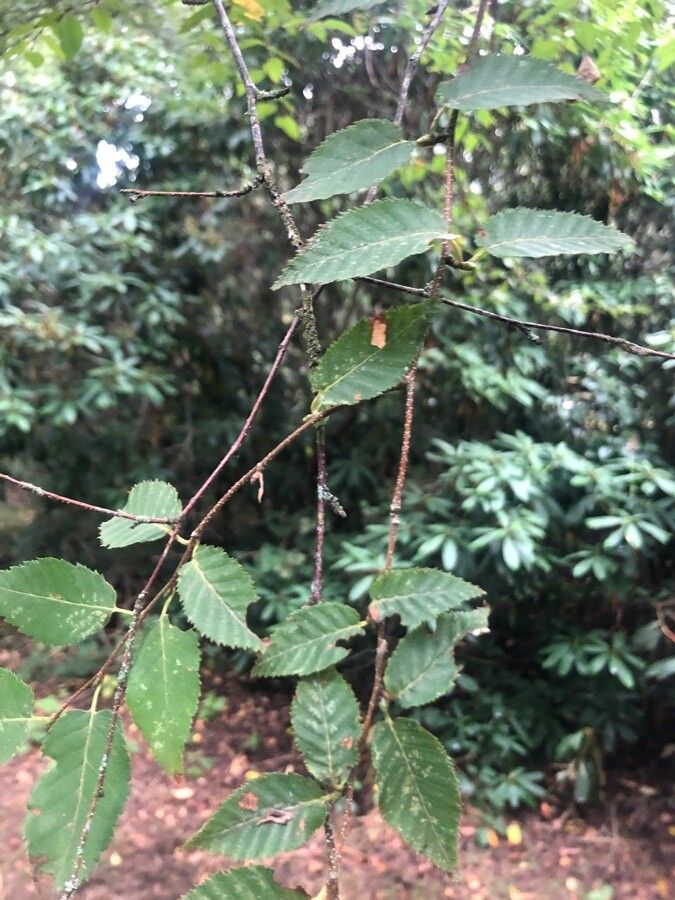
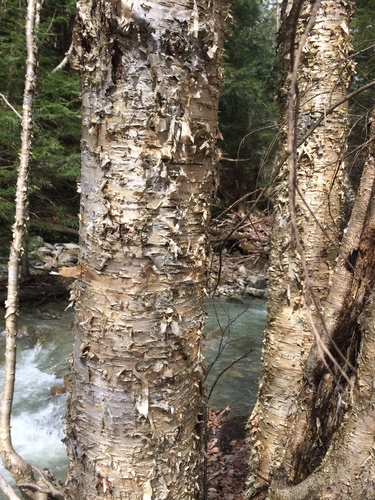
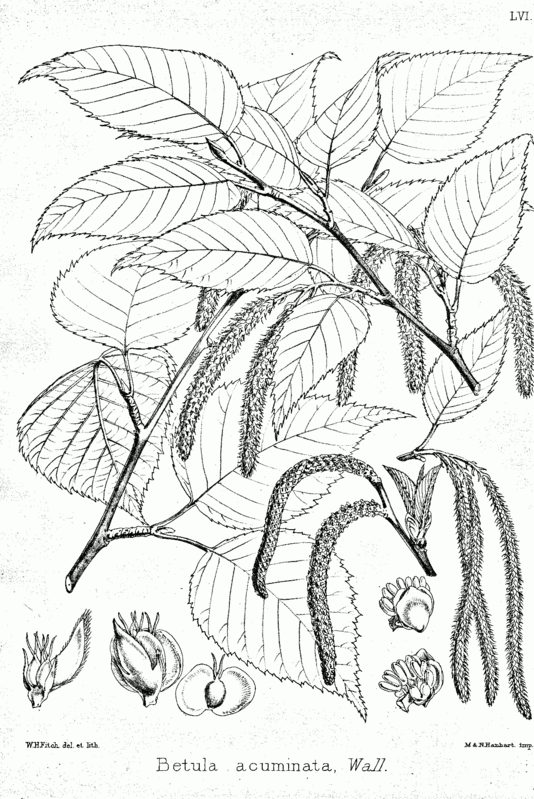
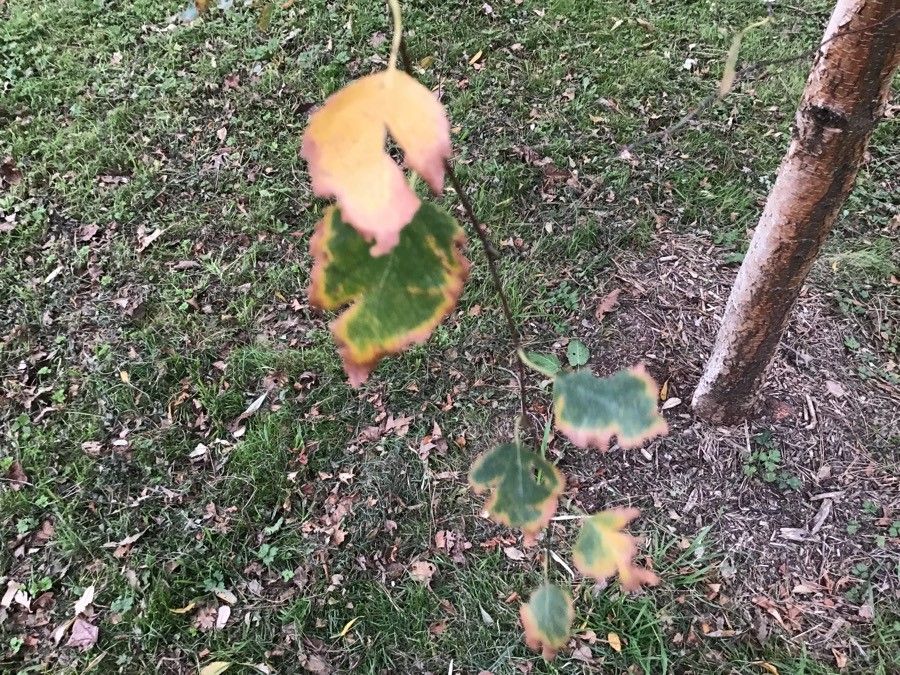
Betula neoalaskana (syn. B. resinifera) or Alaska birch, also known as Alaska paper birch or resin birch, is a species of birch native to Alaska and northern Canada. Its range covers most of interior Alaska, and extends from the southern Brooks Range to the Chugach Range in Alaska, including the Turnagain Arm and northern half of the Kenai Peninsula, eastward from Norton Sound through the Yukon, Northwest Territories, British Columbia, Alberta, Saskatchewan, Manitoba, southern Nunavut, and into northwestern Ontario. This tree typically grows to 15–20 m (49–66 ft) tall, occasionally up to 25 m (82 ft), and achieves a trunk diameter of 30–50 cm (12–20 in), and sometimes to more than 60 cm (24 in). It grows in a variety of habitats, from wetlands to ridgetops at altitudes of 100–1,200 m (330–3,940 ft). The mature bark ranges widely in color, from pure white to red, yellowish, pinkish, or gray. Bark of twigs, seedlings, and saplings is dark, from reddish to almost black, and covered with resin glands. The leaves are triangular-ovate, 3–8 cm (1.2–3.1 in) long and 2–6 cm (0.79–2.36 in) broad, with a truncate base and an acuminate apex, and a double-serrated margin. The fruiting catkins are 2–4 cm (0.79–1.57 in) long and about 1 cm (0.39 in) broad. It is able to tolerate extreme cold, as low as −48 °C (−55 °F). Although it is diploid like its close relatives, the Eurasian Silver Birch and the eastern American Gray Birch, it frequently hybridizes with the hexaploid Paper Birch; the hybrid is known as Betula × winteri. Hybrids also occur with American Dwarf Birch, named Betula × uliginosa.
Asian white birch exhibits strong disease resistance and is generally not susceptible to diseases. In terms of care, this species is relatively low-maintenance. When grown outdoors it requires minimal watering, and larger specimens typically do not need pruning. Smaller plants, however, should be pruned after they have finished blooming. Asian white birch is well suited for anyone with outdoor space, such as a garden or deck, and does not demand extensive plant-care experience.
How to keep Betula Neoalaskana.
Light
The asian white birch flourishes when exposed to copious amounts of sunlight during the day. It also adapts well to environments where there is varying, yet ample, sunlight. However, overexposure to the sun can cause sunscalding, while insufficient sunlight can hinder its growth and vitality. The asian white birch, native to an environment blessed with an abundance of sunlight, is well-adapted to soaking up the sun's warmth.
Temperature
The Asian white birch is native to regions with temperatures ranging from 32 °F (0 °C) to 90 °F (32 °C), showing an inclination towards mild climates. It might necessitate adaptations with the shifts in seasons to maintain temperature conditions similar to the ones in its original habitat.
Fertilizer
For the healthy expansion, supply your Asian white birch with fertilizer in the early days of spring. Ordinary fertilization bolsters general wellness, leading to strong growth, increased resistance to harsh circumstances, and better resistance to diseases and pests. Uphold a distinct fertilization program for your Asian white birch to guarantee brilliant leaves characterized by rich color and lush aspect.
Botanical profile.
- Plant Type
- Tree
- Life Cycle
- Perennial
- Genus
- Betula
- Family
- Betulaceae
- Hardiness Zone
- 2-8
- Mature Height
- 27.13 m
- Mature Spread
- 4.57 m to 7.62 m
- Leaf Color
- Green
- Leaf Type
- Deciduous
- Flower Color
- Green, Yellow, Cream, Brown
- Flower Size
- 2.54 cm
- Bloom Time
- Early spring, Mid spring
- Planting Time
- Spring
- Harvest Time
- Late summer, Early fall, Mid fall
- Native Area
- Russia, Koppen, Japan, Mongolia
Other names.