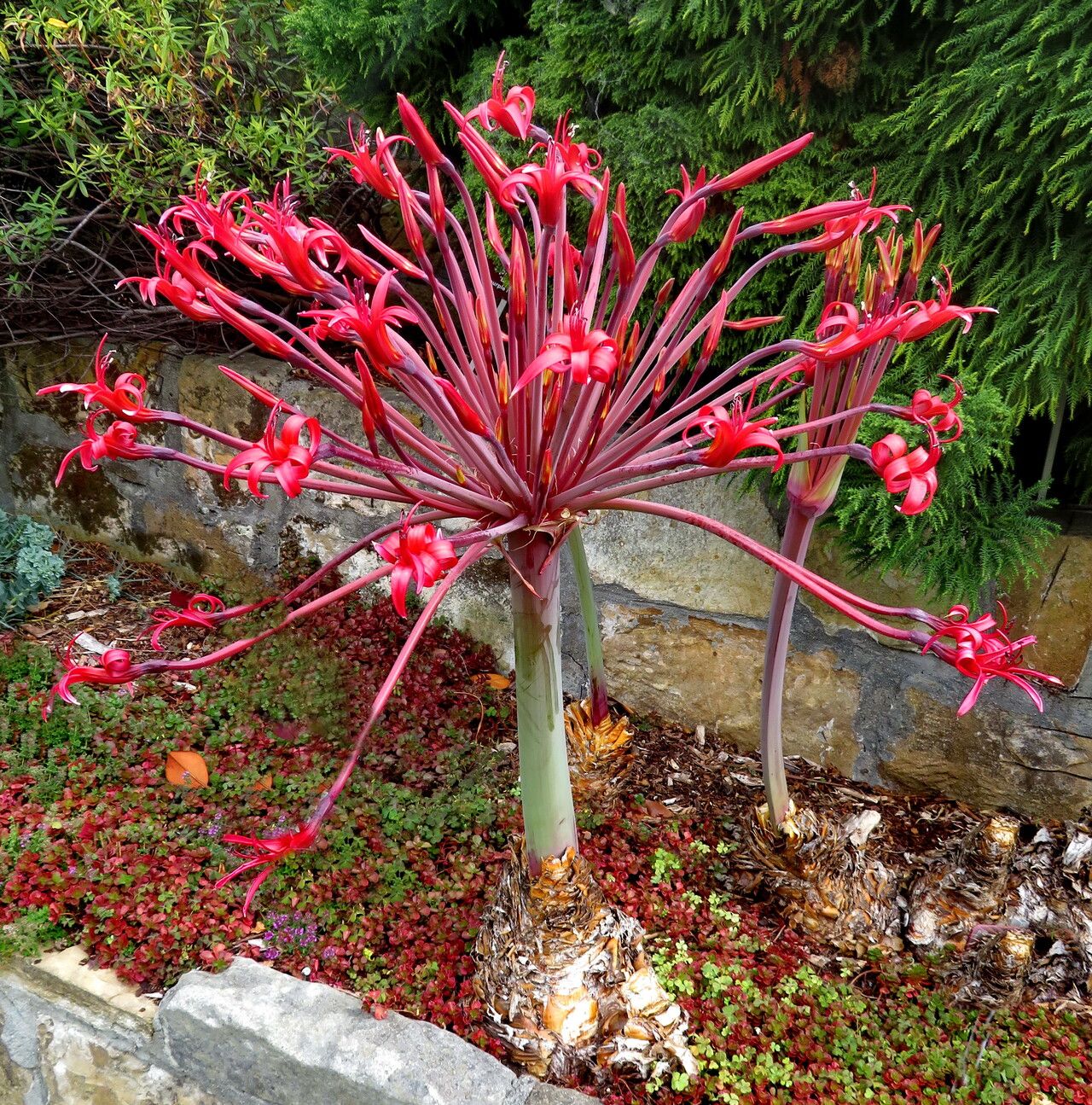
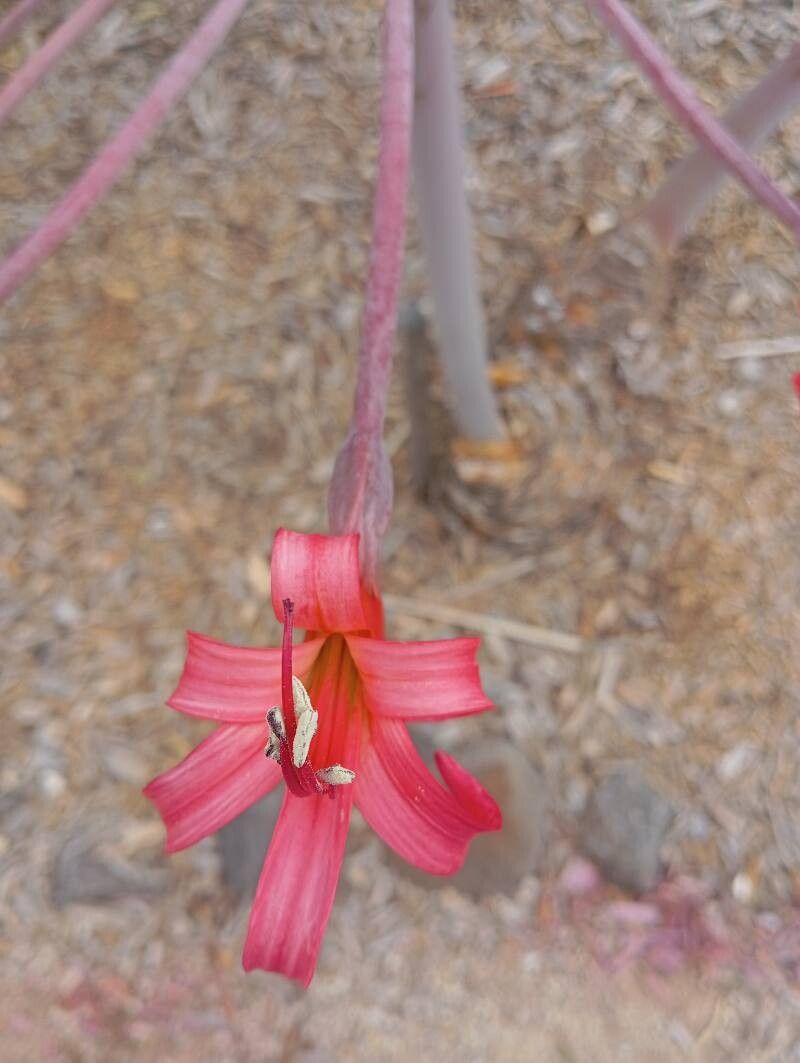
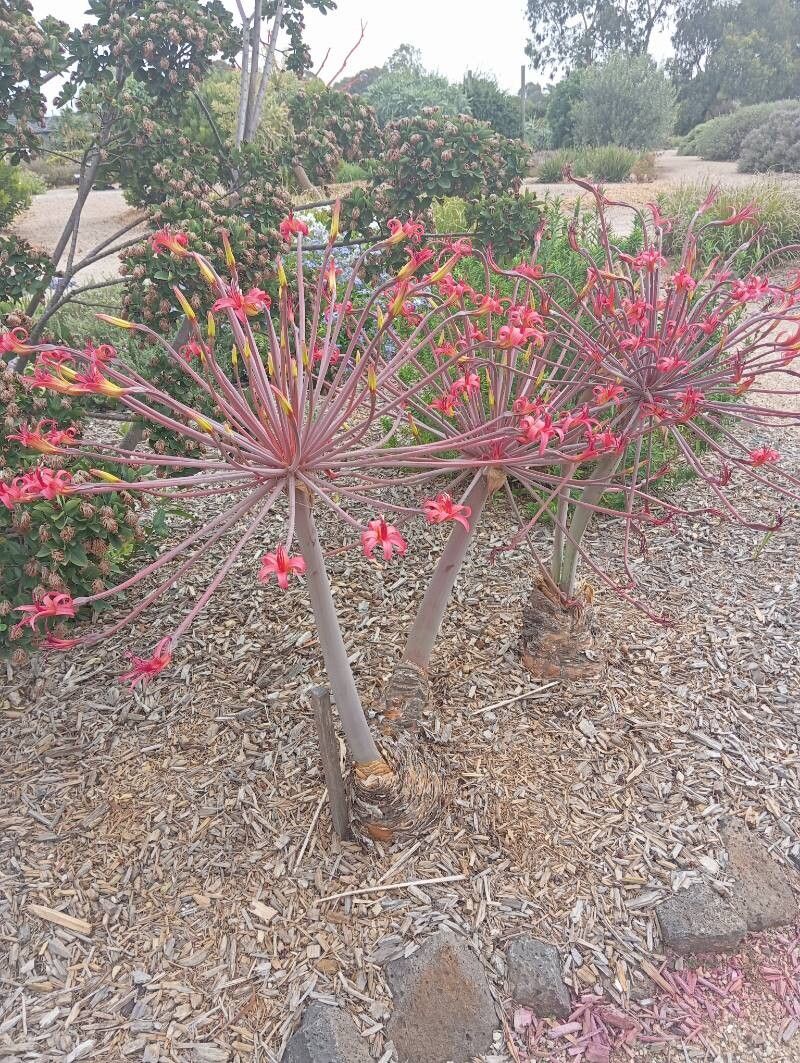
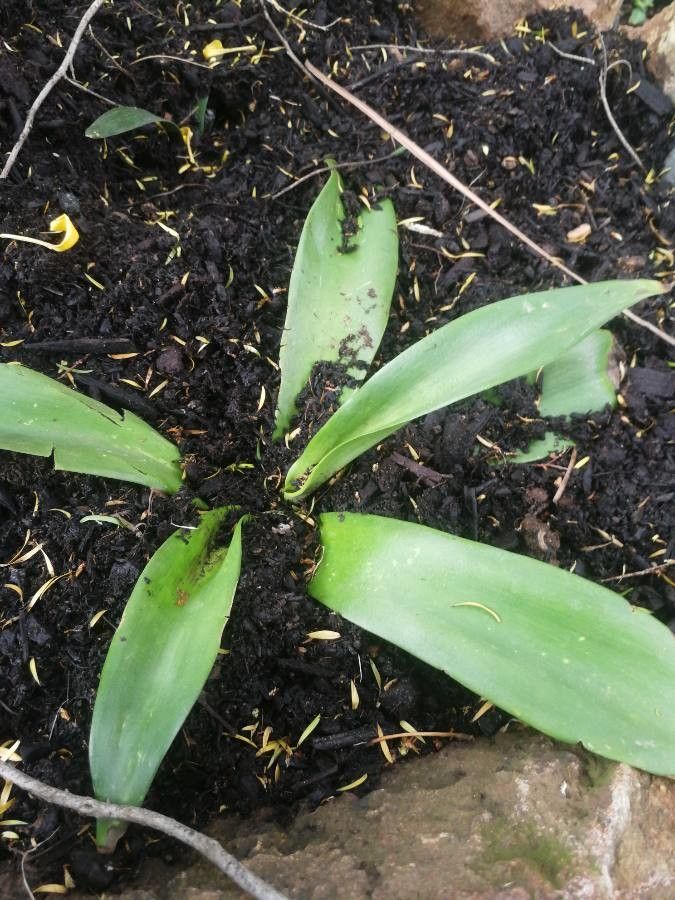
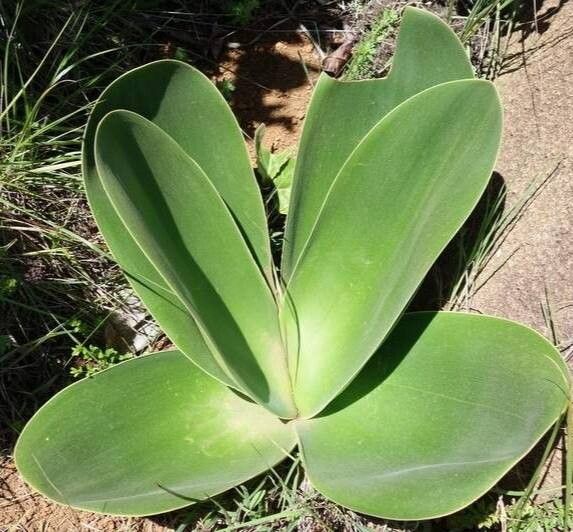
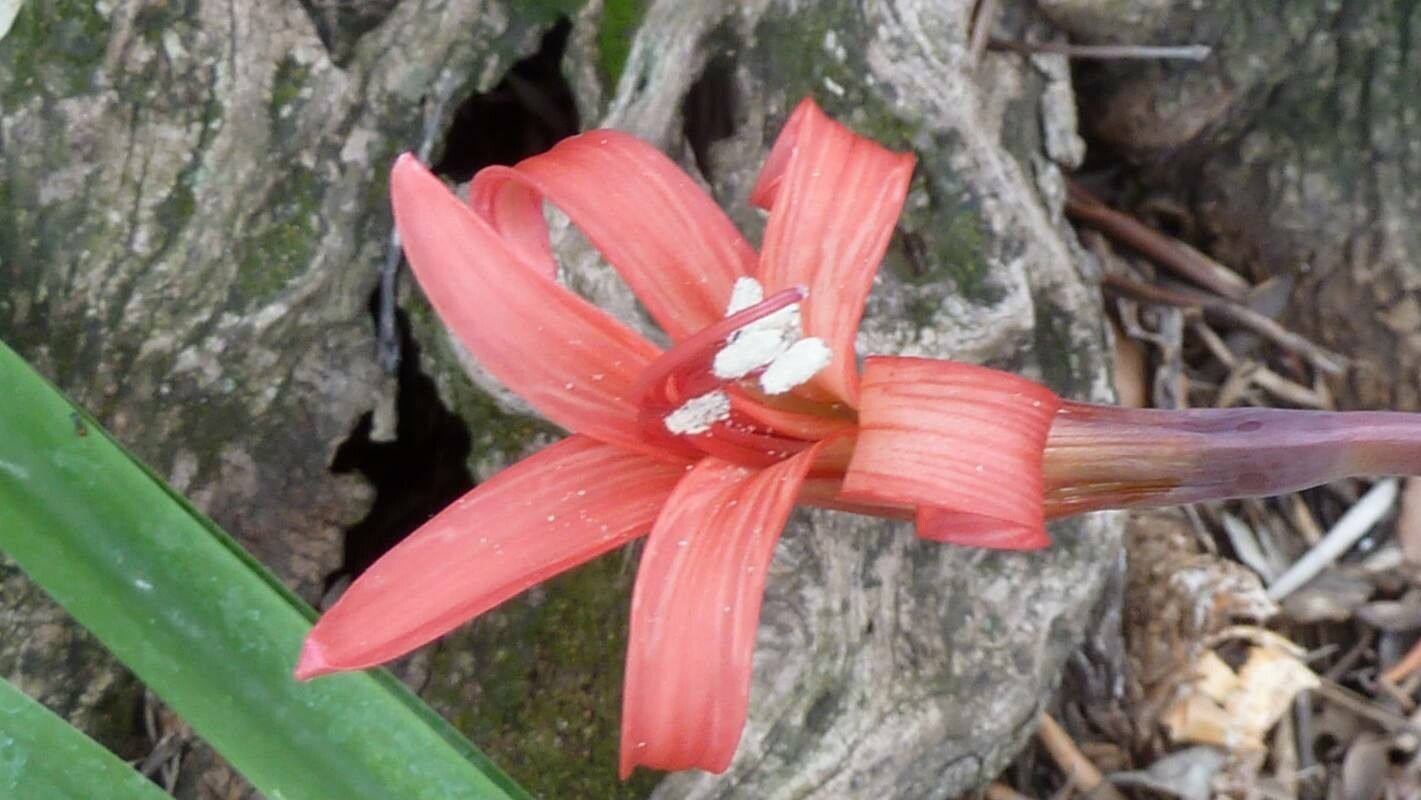
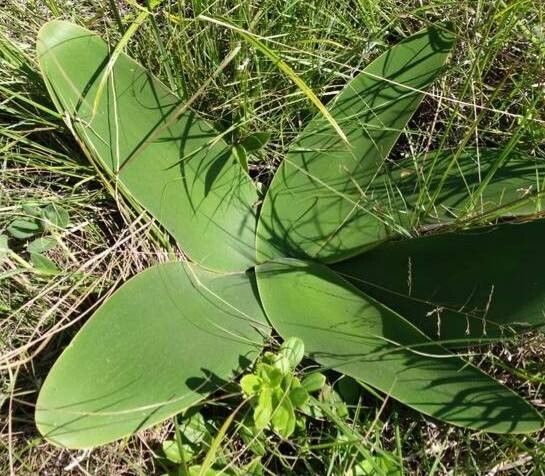
Brunsvigia josephinae, commonly called Josephine's lily or candelabra lily, is a deciduous, subtropical species of Brunsvigia originating from South Africa. It is marked by deep pink to red flowerheads which are about 12 to 15 inches long. It flourishes in medium humidity, at temperatures between 50 and 75 °F. Flowering stems appear from the bulbs in March and April, and the leaves develop later. These bulbs can take 12 years to settle before they flower, but they flower annually once established. It is available from commercial sources.
The candelabra lily is fairly disease-resistant and usually not prone to illnesses. However, it can be affected by pests and diseases present in its surroundings. These problems are typically not serious. In terms of care, this plant requires a moderate level of maintenance. It should be pruned regularly to maintain a neat appearance and healthy growth. Fertilizing can also help encourage flowering. The candelabra lily is suitable for anyone with outdoor space, such as a garden or patio, and does not demand extensive care experience. It may need more attention when grown indoors.
How to keep Brunsvigia Josephinae.
Light
Candelabra lily is a sun-loving herbaceous perennial native to open habitats, often thriving in meadows and grasslands. It prefers full sun but can also tolerate partial sun.
Temperature
Candelabra lily adapts well to temperature, able to withstand higher heat and wide temperature fluctuations. In hot conditions, care should be taken with watering and providing appropriate shade to prevent sunburn. However, it is relatively sensitive to low temperatures. Although it can tolerate some cold, excessively low temperatures may cause frost damage.
Fertilizer
For Candelabra lily, the primary time to fertilize is in early spring when flowers are forming. The appropriate fertilizer promotes better blooms and helps the Candelabra lily produce attractive flowers. Fertilizing in early spring ensures excellent flowers during the season and supplies energy for dormant growth phases.
Botanical profile.
Other names.