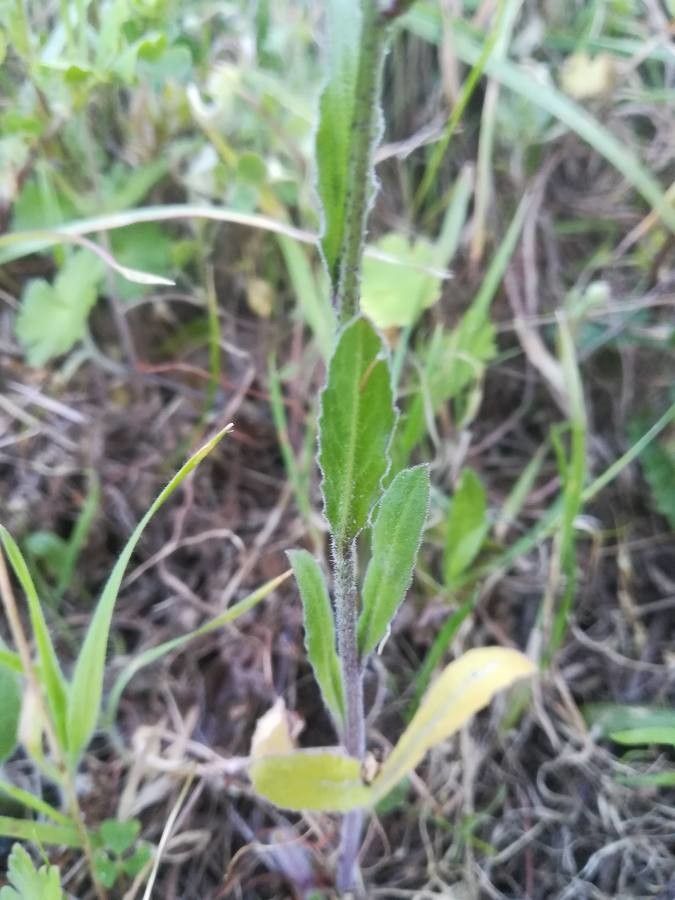
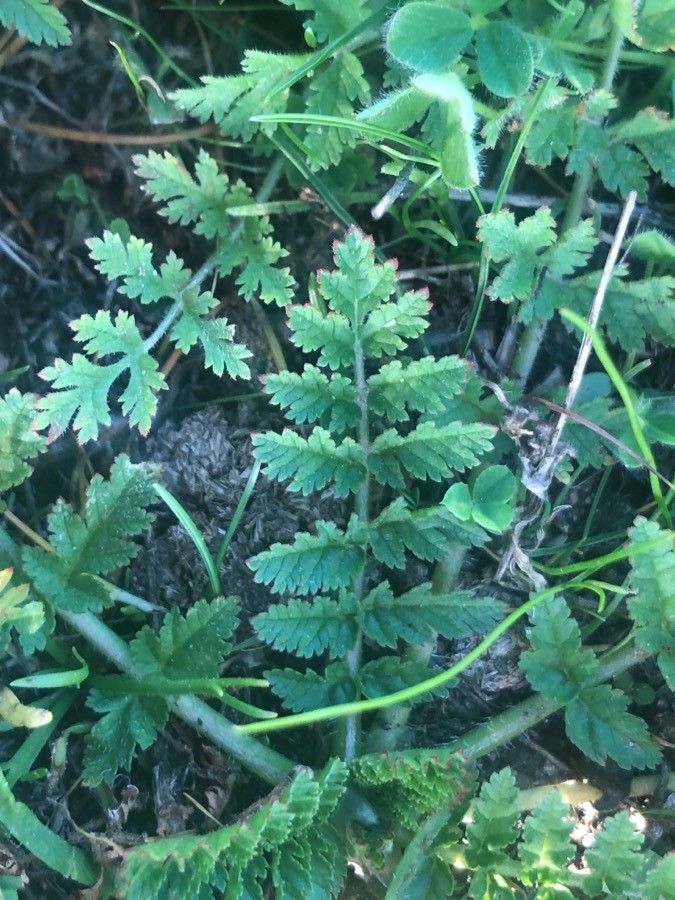
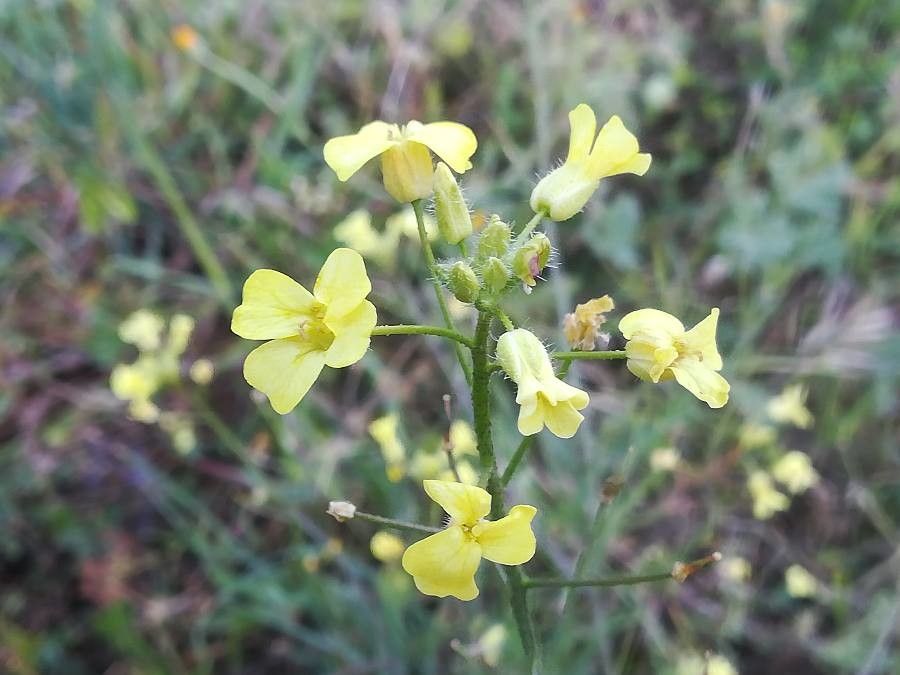
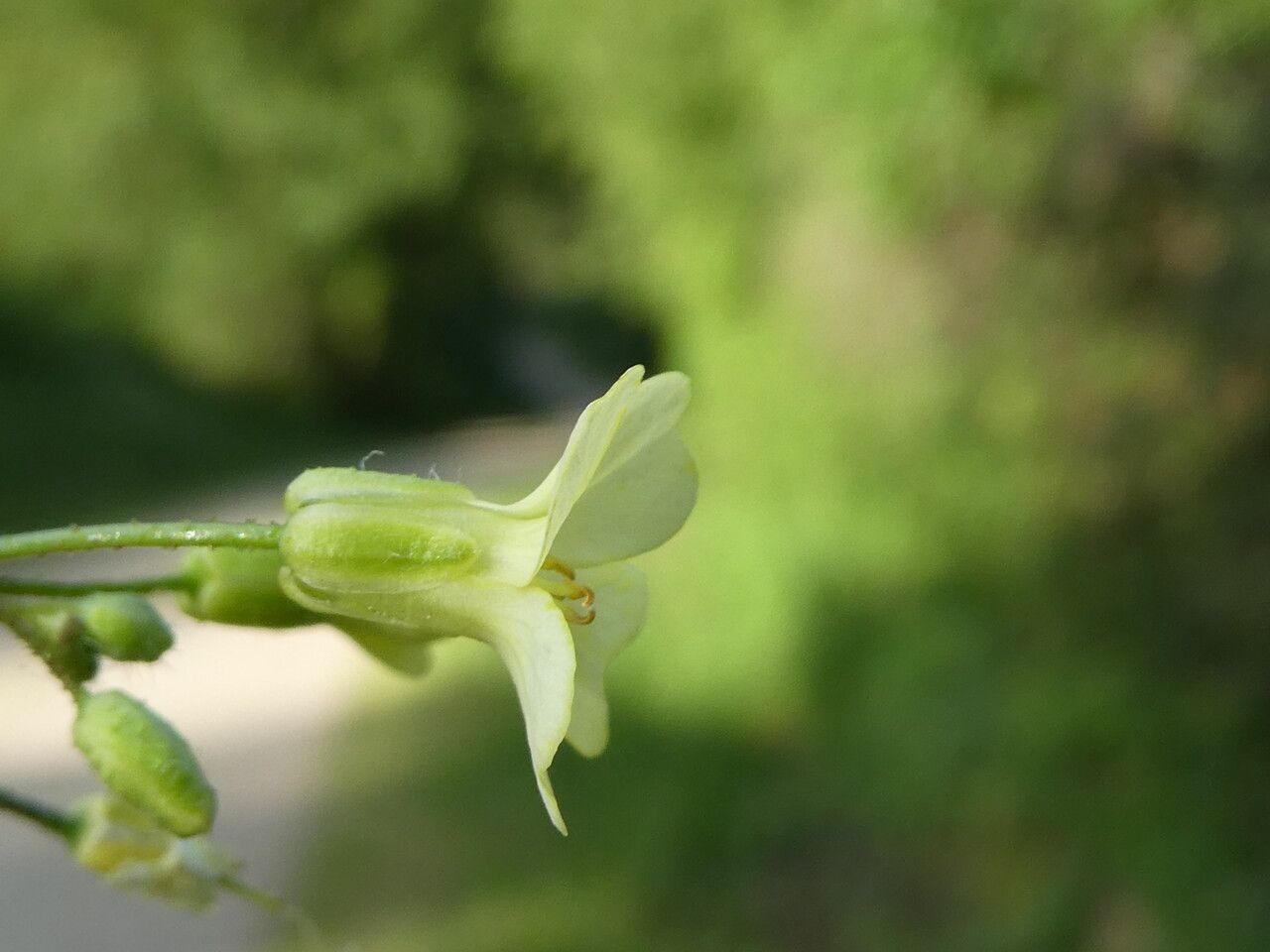
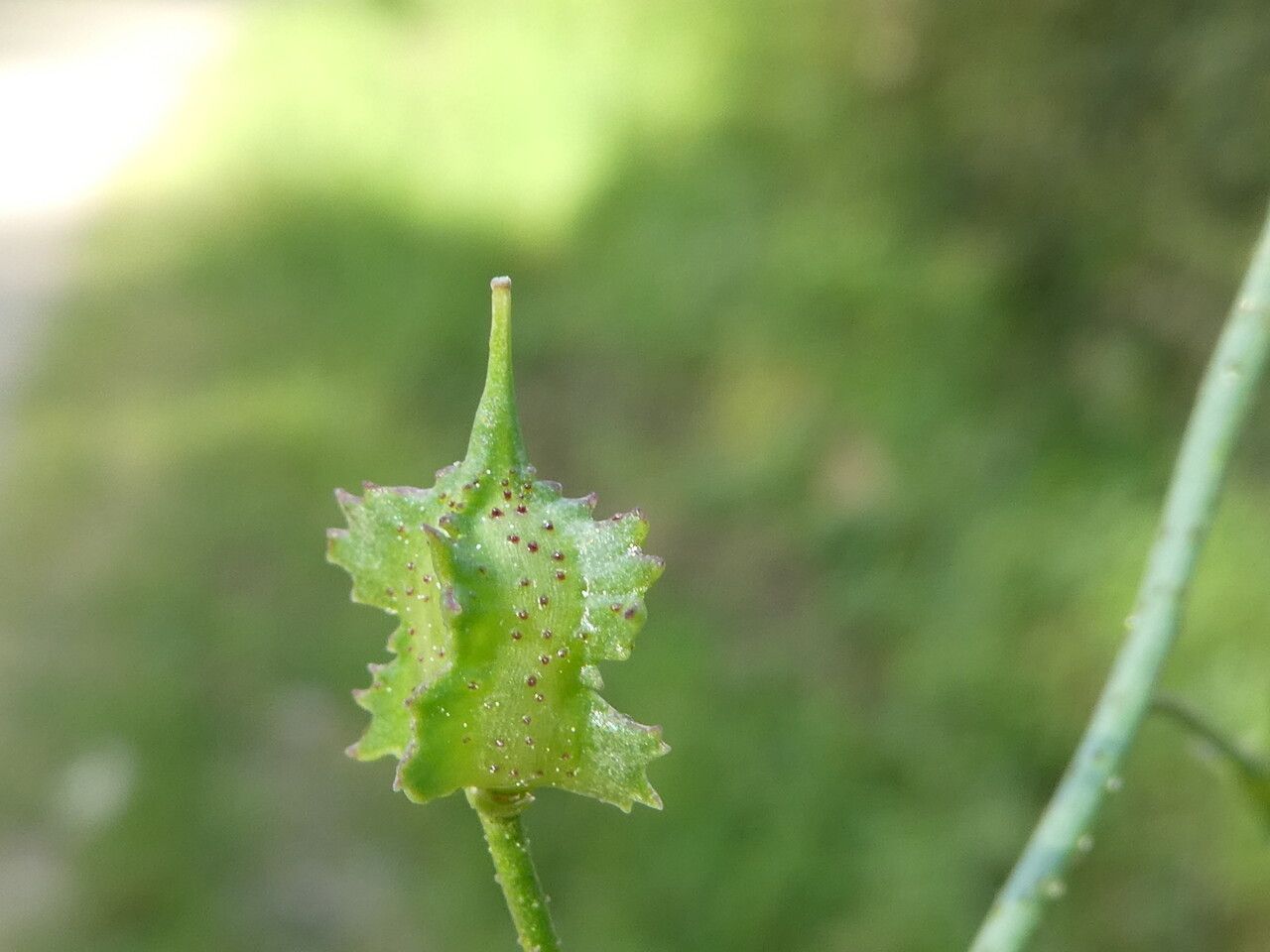
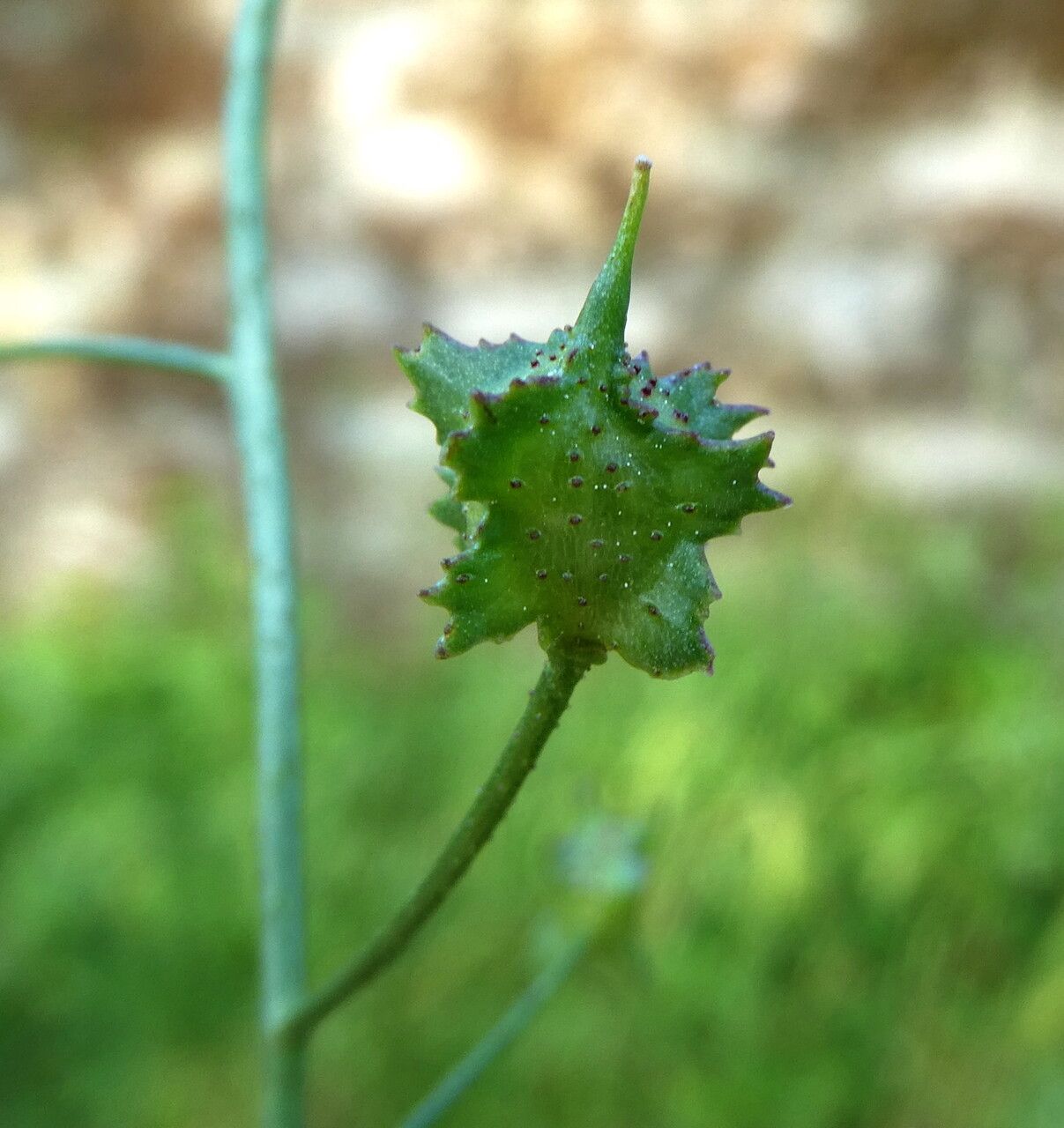
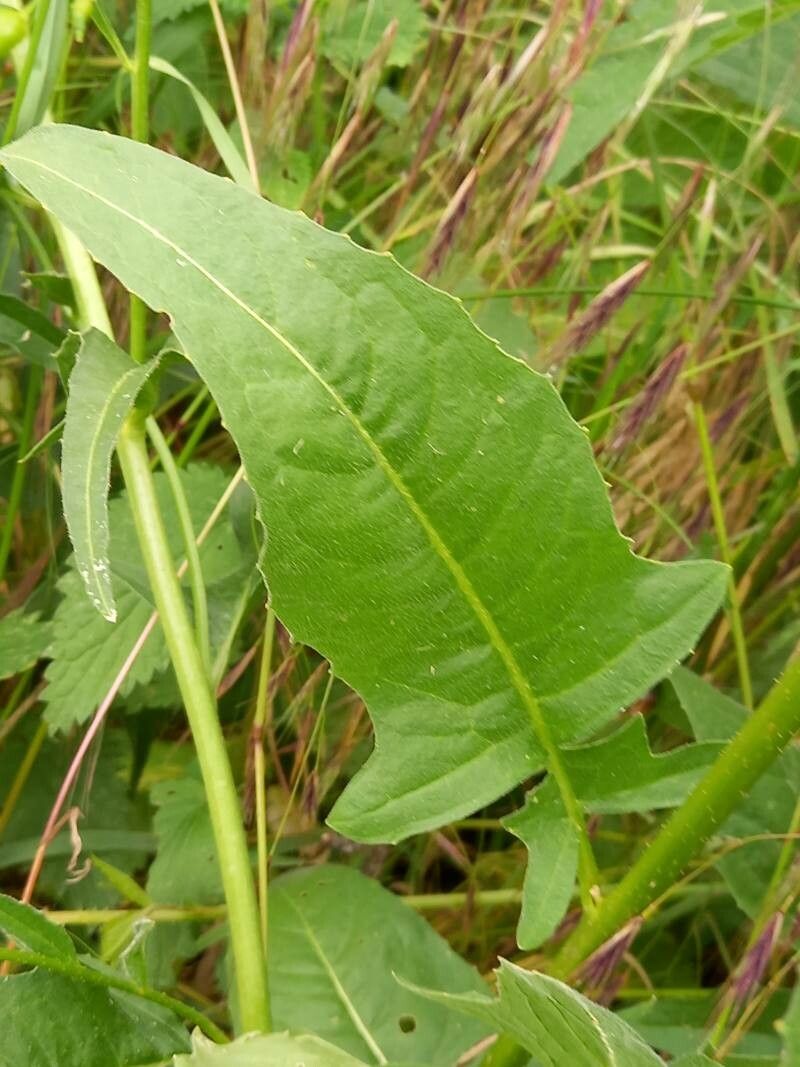
Bunias erucago, commonly known as the rocket cress or warty cabbage, is a biennial or perennial plant in the Brassicaceae family. Native to Europe and Asia, it has also been introduced to North America as an invasive species. The plant can grow up to 1 meter tall and features a thick stem with large, deeply lobed leaves. The flowers of Bunias erucago are small, yellow, and arranged in clusters at the top of the stem. They bloom from May to August. The plant produces long pods as fruit, which contain numerous seeds. Bunias erucago prefers sunny areas with well-drained soil but can also thrive in partially shaded locations. It is commonly found along roadsides, in fields, waste areas, and other disturbed sites. Rocket cress has been used for medicinal purposes for centuries due to its high content of vitamin C and other nutrients such as calcium and iron. However, it is important to note that the plant can be toxic if consumed in large quantities. Due to its invasive nature outside its native range in Europe, Bunias erucago poses a threat to biodiversity by outcompeting native plants for resources such as water and nutrients. This competition can lead to the extinction of native species if not properly controlled by authorities concerned with conservation efforts in areas where the plant has been introduced, either accidentally or intentionally through human activities like transportation.
Crested wartycabbage has strong disease resistance and is usually not susceptible to illnesses. Still, it can be affected by pests and diseases found in its environment. These infections are typically not severe. For care, this plant needs moderate upkeep. It should be pruned regularly to keep a good appearance and promote healthy growth. Fertilizing can also aid in encouraging flowering. Crested wartycabbage is suitable for anyone with outdoor space, such as a garden or patio, and does not demand extensive care experience. It may require increased attention when grown indoors.
How to keep Bunias Erucago.
Light
Crested wartycabbage comes from sunny, open habitats and does best in full sun. It will tolerate some shade but prefers direct sunlight for optimal growth. This plant, which can be annual or biennial, is known for its sun-loving habit.
Water
The crested wartycabbage is well-suited to arid conditions, demonstrating both drought tolerance and water-efficient behaviors. To mimic its natural environment, it needs to be watered weekly, reflecting the sparse rainfall of its native habitat. As an evergreen plant, it keeps its leaves throughout the year, making it both resilient and ideal for indoor growth.
Humidity
This plant prefers dry conditions, so don't mist it. However, watering it less often can also thrive in higher humidity.
Temperature
Crested wartycabbage shows strong temperature adaptability, tolerating higher heat and considerable temperature fluctuations. In hot conditions, care should be taken to water appropriately and provide shade to avoid sunburn. Conversely, Crested wartycabbage is not very tolerant of low temperatures. It can endure some cold, but very low temperatures may cause frost damage.
Fertilizer
Crested wartycabbage does well with regular, dilute applications of fertilizer to encourage healthy leaf growth. You should feed Crested wartycabbage about once a month during the summer. Nitrogen is essential for foliage, and providing nitrogen-rich sources helps Crested wartycabbage thrive.
Pruning
The crested wartycabbage is characterized by its warty texture and leafy growth. To encourage healthy development and manage its spread, it is best to prune the plant from early to late spring. Removing dead foliage not only improves air circulation but also helps reduce the risk of pests. By following these guidelines, you can ensure that your crested wartycabbage grows robustly and densely.
Botanical profile.
- Plant Type
- Herb
- Life Cycle
- Annual
- Genus
- Bunias
- Family
- Brassicaceae
- Hardiness Zone
- 6-9
- Mature Height
- 15 cm to 91 cm
- Mature Spread
- 20 cm to 40 cm
- Leaf Color
- Green
- Leaf Type
- Semi-evergreen
- Flower Color
- Yellow
- Flower Size
- 0.10 cm to 0.15 cm
- Bloom Time
- Mid spring, Late spring, Early summer
- Planting Time
- Spring, Summer, Autumn
- Harvest Time
- Summer
- Native Area
- Tunisia, Turkey, Montenegro, Bulgaria, Greece, Croatia, Slovenia, Serbia, Portugal, Italy, Spain, Switzerland, Albania, Ethiopia, Algeria, France
Other names.
Reader questions.
How should I water my Crested wartycabbage?
Crested wartycabbage can be watered in various ways, including using a garden hose with a spray nozzle, a watering can, or other common watering tools. This plant is not too particular about the type of water it receives and can thrive on rainwater, tap water, or filtered water. However, it is generally recommended to avoid watering it from above as this can harm the leaves and flowers and potentially lead to disease. A drip irrigation system is often the best method for watering Crested wartycabbage, as it provides even and direct water application to the soil. For container-grown plants, a similar watering approach can be used. Simply use a cup, watering can, or tap to apply water directly to the soil.
What are the sunlight requirements for Crested wartycabbage?
Crested wartycabbage thrives in environments where it gets full sun, which means it requires more than 6 hours of sunlight daily. It can also tolerate partial sun, approximately 3-6 hours of sunlight. However, its preference lies in direct sunlight for optimal growth. When positioning your garden or potted plants, observe the movement of sunlight to ensure your Crested wartycabbage receives the right balance of light and shade.
What is the common name of Bunias erucago?
The common name of Bunias erucago is Crested wartycabbage.
What should I do if I give my Crested wartycabbage too much or too little water?
To remedy underwatering for Crested wartycabbage, simply increase watering frequency when you notice it lacking moisture. Overwatering, on the other hand, can be a more serious problem if not caught early. It can lead to disease and eventual death for the plant. To prevent this, choose a sunny location with well-draining soil to help dry the soil and avoid waterlogging. If your potted Crested wartycabbage is overwatered, consider changing to a new pot with better drainage. Use loose soil and an efficient draining pot when repotting.
How can artificial lighting be used for Crested wartycabbage?
When Crested wartycabbage is grown indoors or in conditions where natural sunlight is inadequate, artificial lighting becomes crucial for its growth, especially during winter or in less sunny spaces. LED lights are recommended because they can be customized to the plant's needs. Full sun plants need 30-50W/sq ft, while partial sun plants need 20-30W/sq ft of artificial light. The light source should be placed 12-36 inches above the plant, mimicking natural daylight hours, which usually ranges from 8-12 hours per day.
What are the notable characteristics of Crested wartycabbage (Bunias erucago)?
There are no notable characteristics provided for Crested wartycabbage (Bunias erucago) in the provided information.
How often should I give water to my Crested wartycabbage?
Crested wartycabbage needs regular watering throughout the growing season. In the spring, water it once a week. As the season progresses and it gets warmer, you may need to increase watering to two to three times a week. However, be careful not to exceed this rate as it can harm the plant. Regardless of watering frequency, ensure that the soil remains moist but not wet. Watering a potted Crested wartycabbage is slightly different. Because the soil in a pot can dry out faster, you'll need to water it more often. Generally, water a container-grown Crested wartycabbage a few times a week, compared to just once a week for an in-ground plant.
What symptoms indicate Crested wartycabbage is receiving inadequate light?
When Crested wartycabbage does not receive enough light, it may exhibit symptoms such as smaller new leaves, leggy or sparse growth, faster leaf drop, slowed or halted new growth, and lighter-colored new leaves. It can also suffer from chlorosis, leaf scorch, leaf curling, sunscald, wilting, and sunscald. These symptoms suggest the plant is struggling due to insufficient sunlight and may need immediate attention to address light conditions.
What symptoms are associated with Crested wartycabbage?
There are no symptoms associated with Crested wartycabbage mentioned in the provided information.
How much water does my plant need?
To determine how much water to give your Crested wartycabbage, there are a few different approaches you can take. Some gardeners prefer to assess the soil moisture by feeling it. In this method, you would water until the top six inches of soil feel moist. Another option is to use a specific measurement. Typically, Crested wartycabbage requires around two gallons of water per week, depending on factors like temperature and soil dryness. However, it's important to avoid overwatering if your plant needs less water. When growing in a container, a different method is necessary. In this case, you should water enough to moisten all the dry soil layers. You can check this by inserting your finger into the soil or allowing excess water to trickle out of the pot's drainage holes.
What solutions can help Crested wartycabbage receiving inadequate light?
To address inadequate light for Crested wartycabbage, gradually increase its sunlight exposure by moving it to a sunnier location each week until it achieves at least 6 hours of direct sunlight. For indoor plants, consider using a south-facing window or artificial grow lights for at least 8 hours daily. Outdoors, ensure the plant is gradually adapted to more sunlight to avoid sunburn. Reducing obstructions and transplanting to a sunnier location with good drainage are also effective methods. Note that parts of the plant already affected may not recover, but new, healthy growth can be achieved with improved light conditions.
How do I know if I'm watering my Crested Wartycabbage enough?
Keeping your Crested wartycabbage appropriately watered can be a bit challenging. On one hand, these plants need to have their soil moistened weekly due to their deep roots. However, overwatering can easily lead to root rot and browning. Underwatering is less of a concern because Crested wartycabbage can survive without extra watering for a while. However, if you wait too long to water them, they will start to wilt and their leaves may become dry.