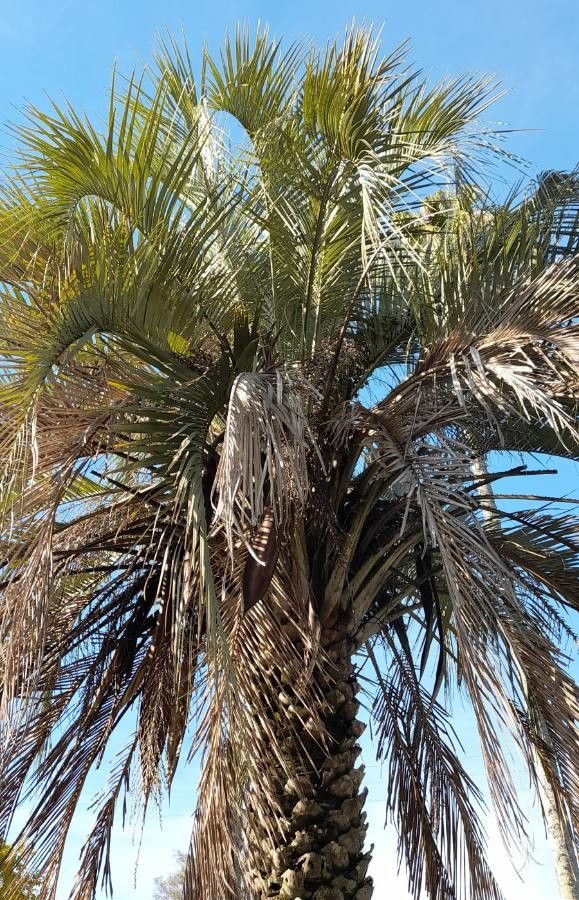
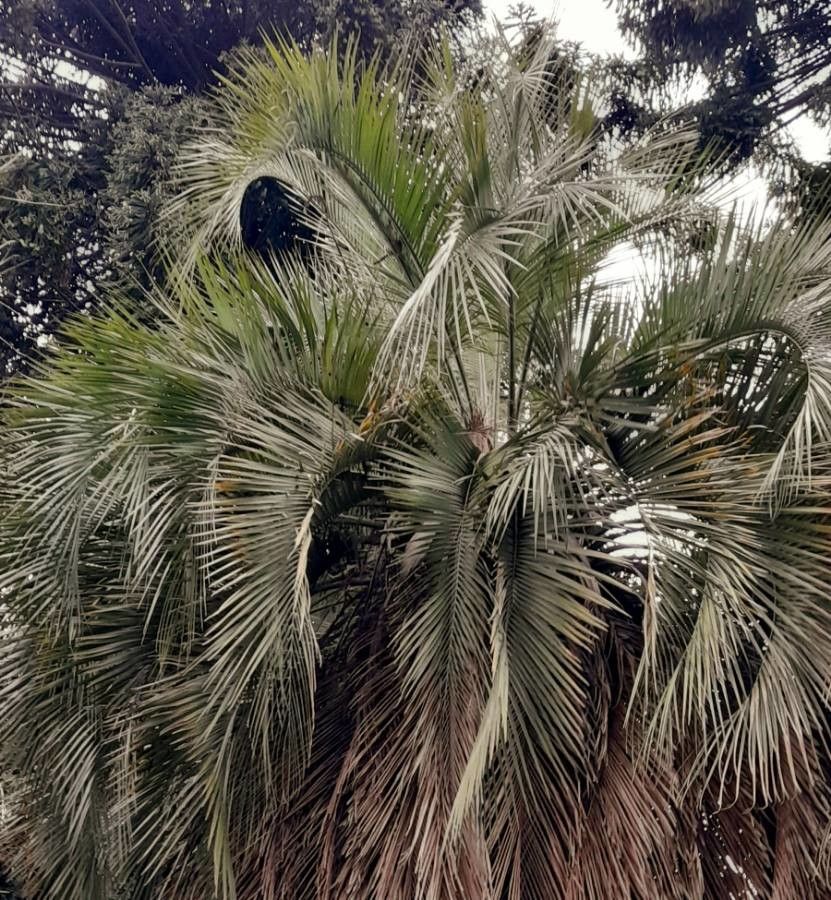
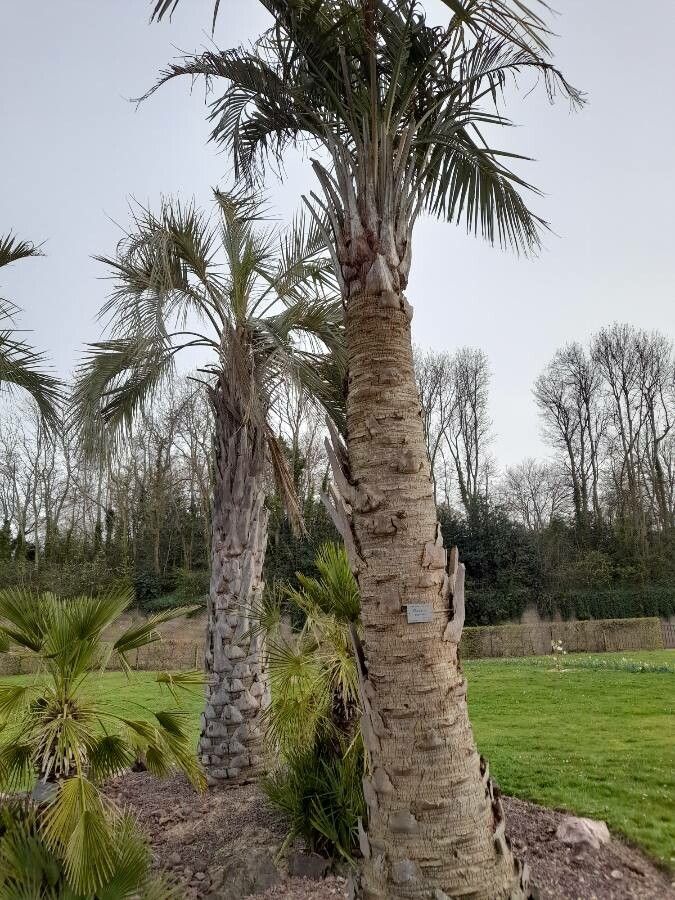
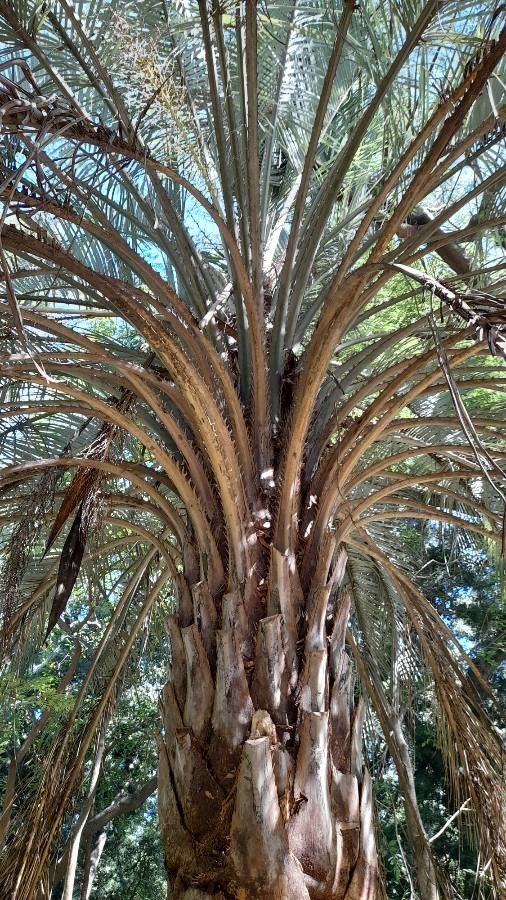
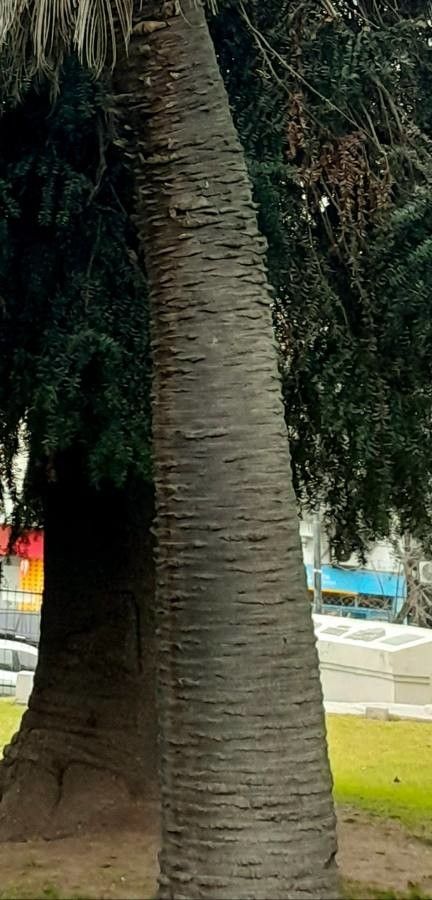
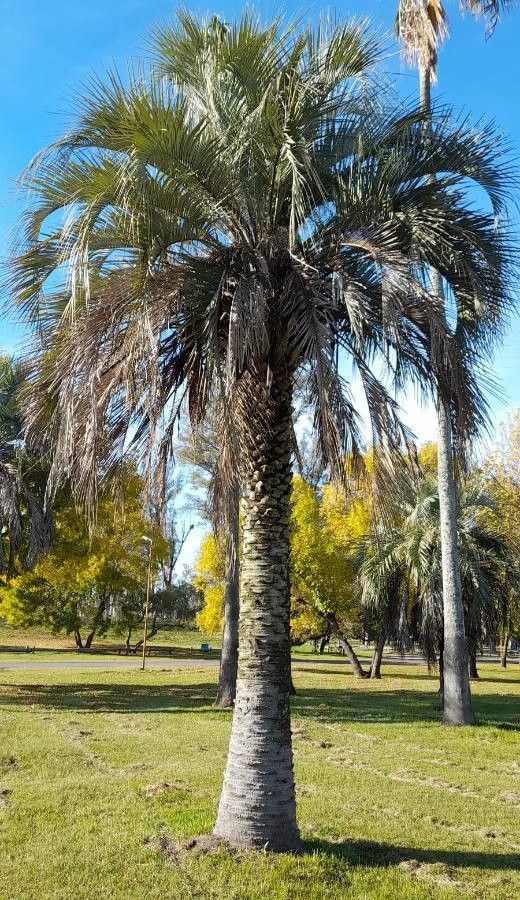
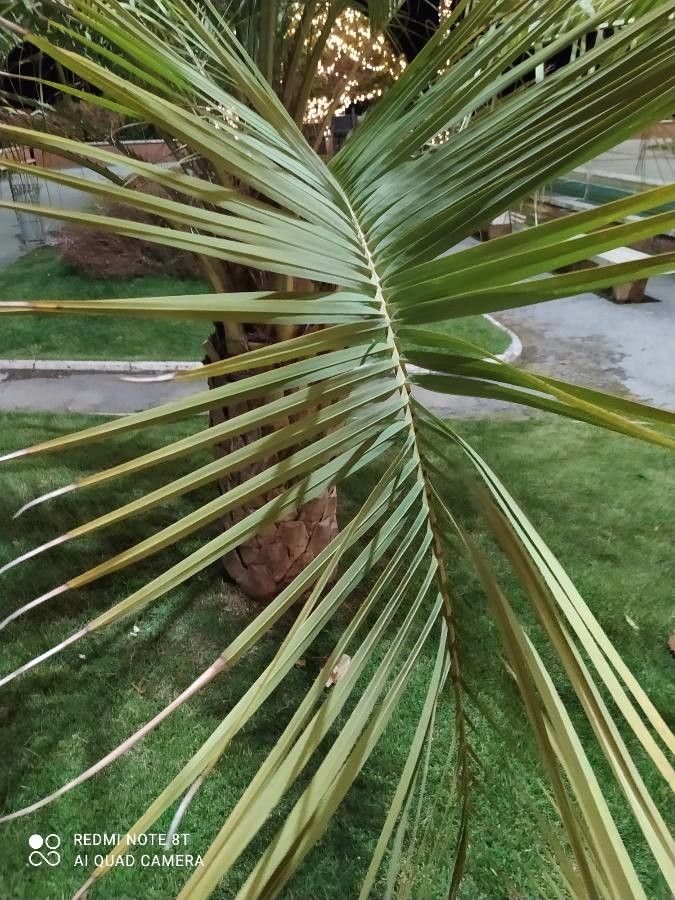
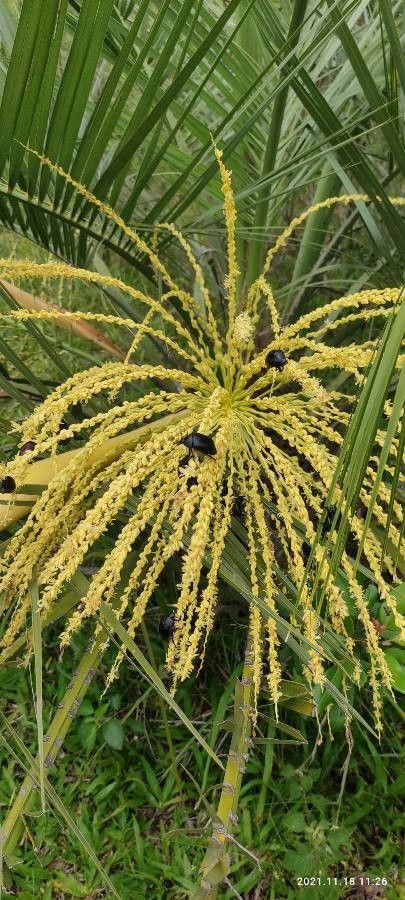
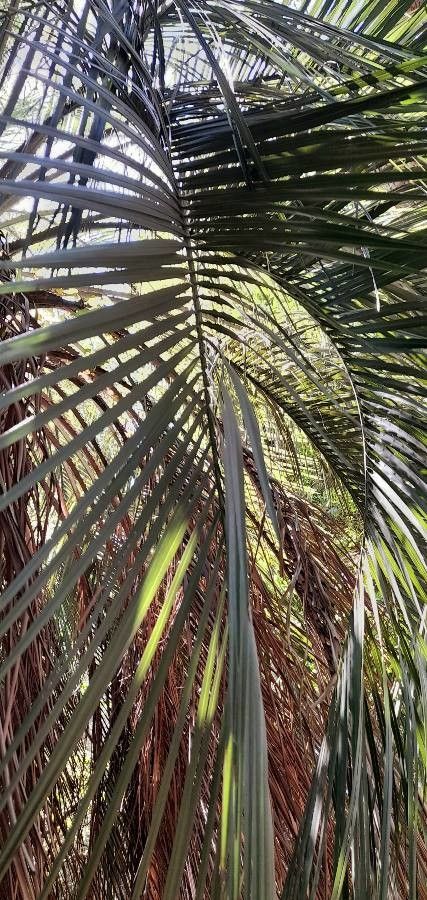
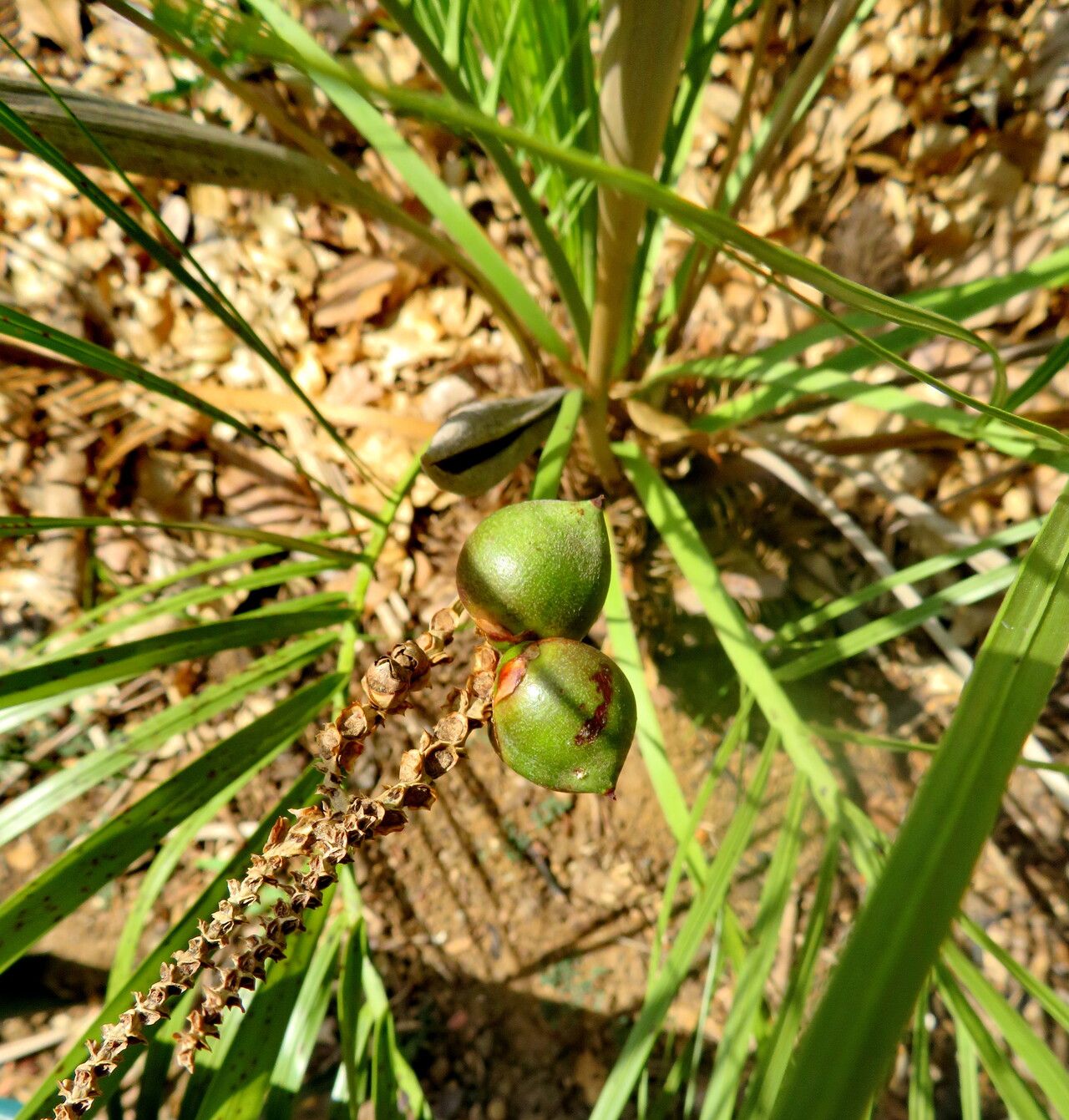
Butia yatay, commonly known as the Yatay Palm or Jelly Palm, is a palm tree species native to South America, particularly found in Argentina, Uruguay, and Brazil. The tree can reach heights of up to 20 meters and has a trunk diameter of up to 50 centimeters. Its pinnate leaves can extend up to three meters in length.
The Yatay Palm produces edible fruit often used to make jelly or wine. The fruit is sweet and rich in vitamin C.
Due to its attractive appearance and resilience in various climates, the Yatay Palm is frequently used for ornamental purposes. It thrives best in well-drained soil with plenty of sunlight but can also tolerate partial shade.
Moreover, the Yatay Palm plays a vital role in the ecosystem by providing habitat for numerous animals, including birds and insects.
In summary, Butia yatay is an important species offering economic benefits through fruit production and ecological benefits by supporting biodiversity.
The Yatay palm is highly resistant to disease and generally not susceptible to illnesses. As for care, this plant is fairly low-maintenance. When grown outdoors it needs only minimal watering, and larger specimens typically do not require pruning. Smaller plants, however, should be pruned after they finish blooming. The Yatay palm is well suited for anyone with outdoor space—like a garden or a deck—and does not demand extensive gardening experience.
How to keep Butia Yatay.
Light
The yatay palm comes from open habitats, such as sunlit meadows and forest margins, where light is plentiful. It grows best in Full Sun but will also tolerate Partial Sun, making it adaptable to different sunlight levels.
Water
The yatay palm, native to the grasslands of South America, thrives in well-drained soils and is moderately drought-tolerant. For optimal growth, water it weekly to maintain consistent moisture without causing waterlogging. The yatay palm flourishes best when planted outdoors in full sunlight. During the active growing season, regular watering is essential to preserve its lush, evergreen foliage.
Temperature
Yatay palm shows good adaptability to heat, tolerating higher temperatures and wide temperature swings. In hot weather, care should be taken with watering and providing adequate shade to avoid sunburn. However, Yatay palm is relatively weak in its resistance to cold. It can handle a certain amount of chill, but very cold conditions can cause frost damage.
Fertilizer
To encourage healthy growth, fertilize your Yatay palm in early spring. Regular feeding improves overall health, leading to strong growth, better tolerance of difficult conditions, and enhanced resistance to diseases and pests. Stick to a consistent fertilization schedule for your Yatay palm to preserve vibrant, deeply colored foliage and a lush appearance.
Pruning
The Yatay palm features feathery, arching fronds and a sturdy trunk. Key pruning practices involve removing dead fronds and spent flower stalks, ideally in early spring. This encourages better airflow, reduces the risk of disease, and promotes healthy growth. Always use clean, sharp tools when pruning to prevent infections.
Botanical profile.
- Plant Type
- Palm
- Life Cycle
- Perennial
- Genus
- Butia
- Family
- Arecaceae
- Hardiness Zone
- 9-11
- Mature Height
- 7.92 m to 11.89 m
- Mature Spread
- 3.96 m to 6.1 m
- Leaf Color
- Green, Dark Green
- Leaf Type
- Evergreen
- Flower Color
- Yellow
- Flower Size
- 0.25 cm to 0.51 cm
- Bloom Time
- Early summer, Mid summer
- Planting Time
- Spring, Summer, Autumn
- Harvest Time
- Late summer, Early fall, Mid fall
- Native Area
- Brazil
Other names.