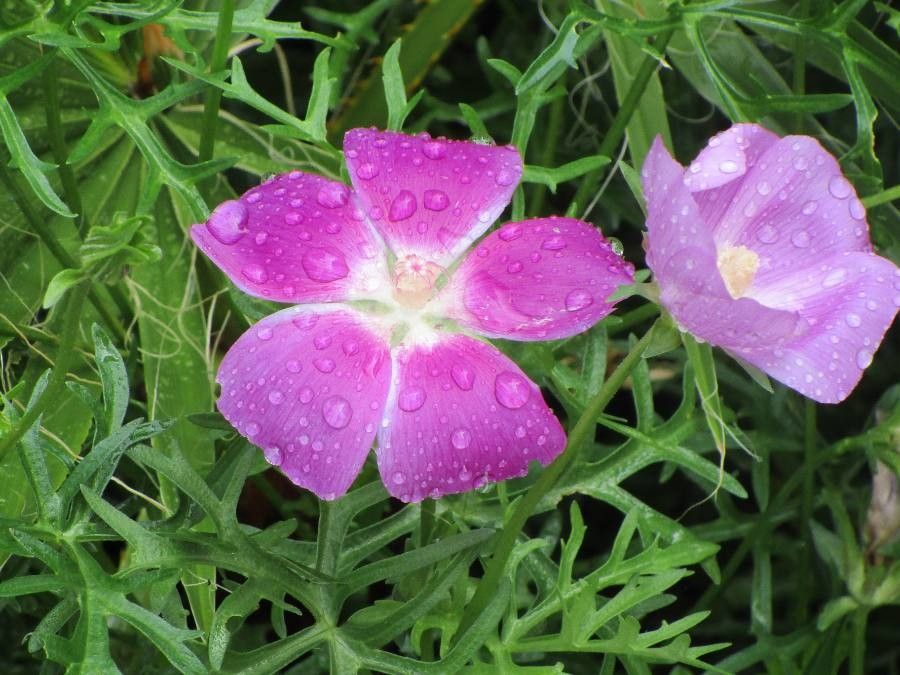
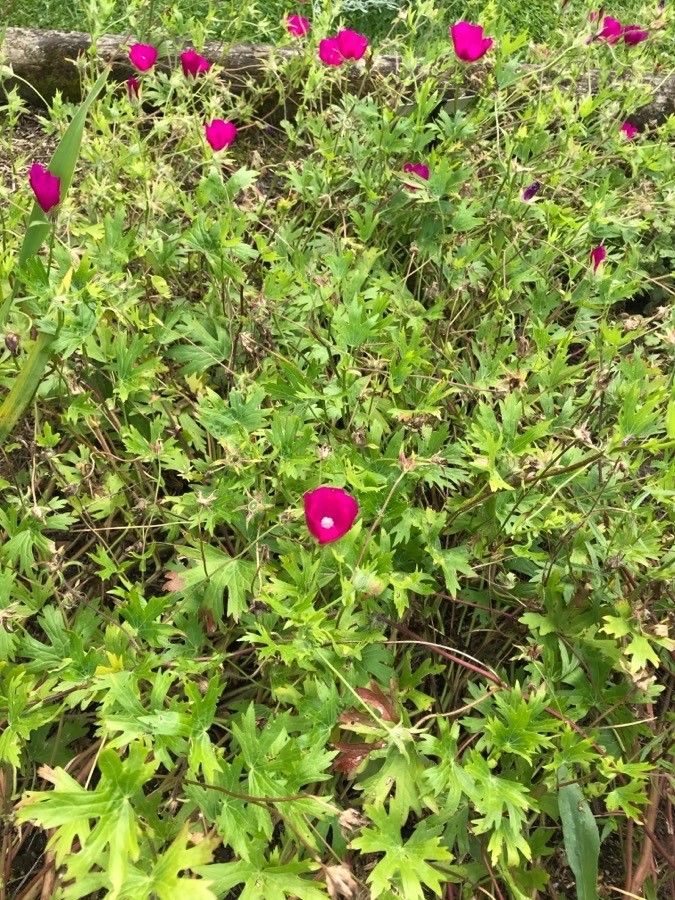
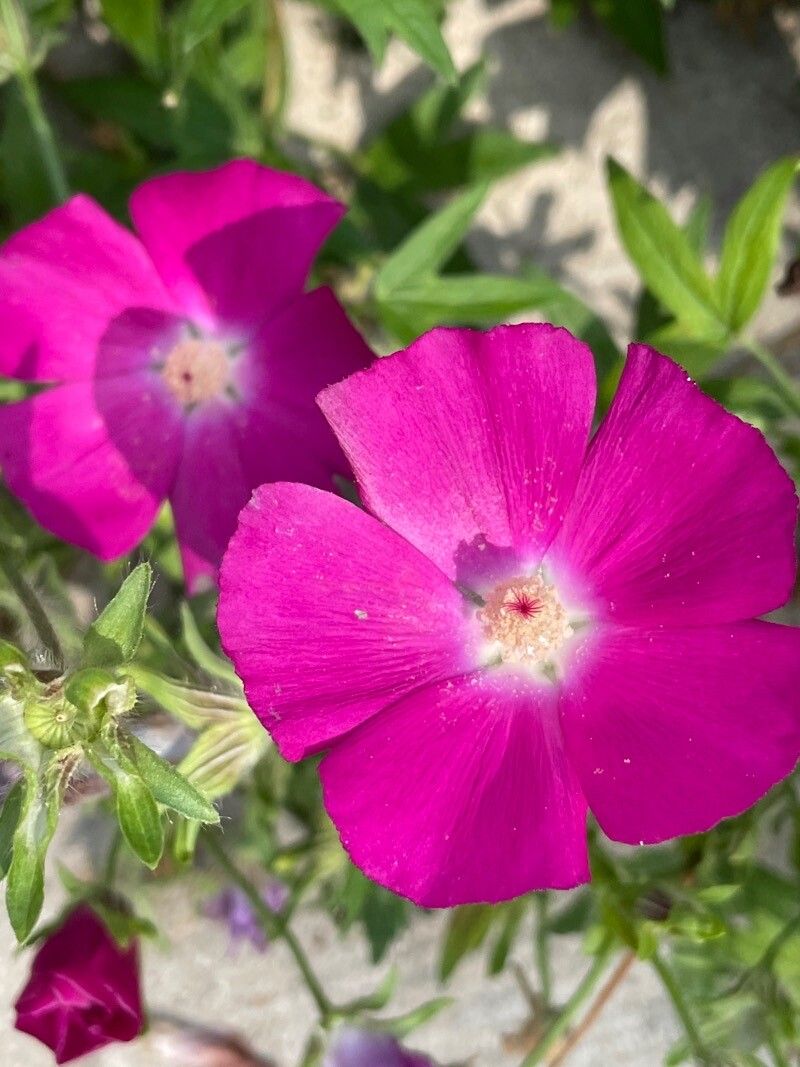
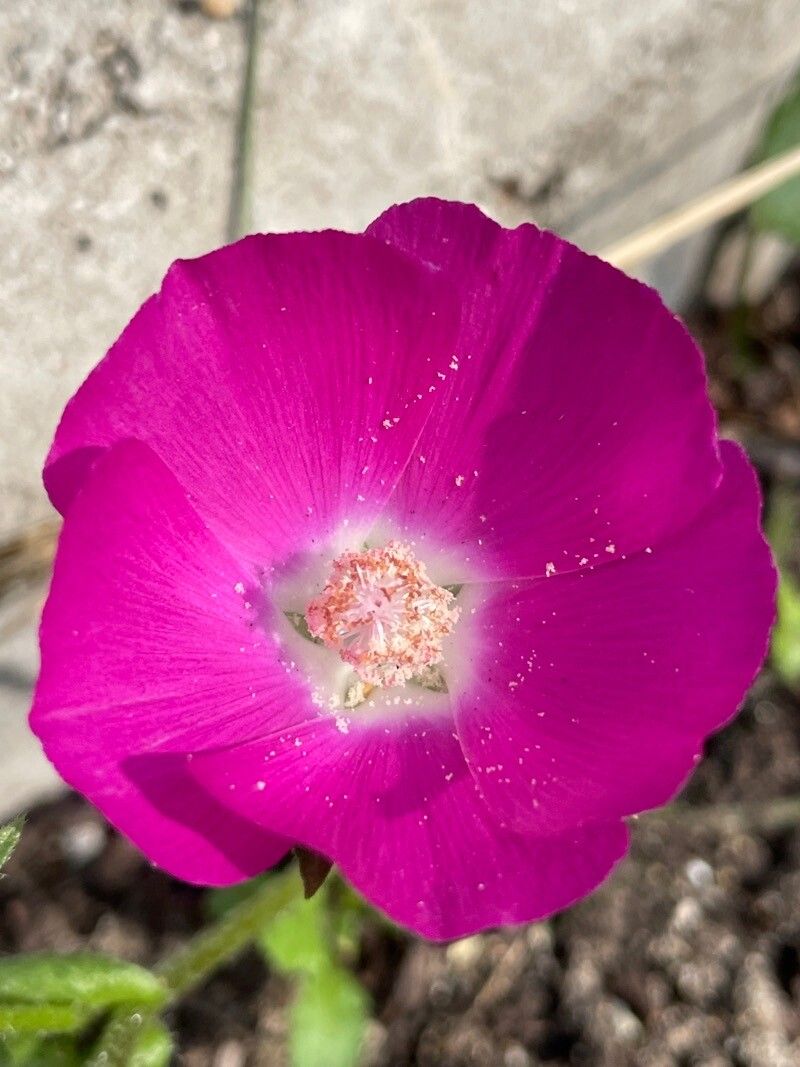
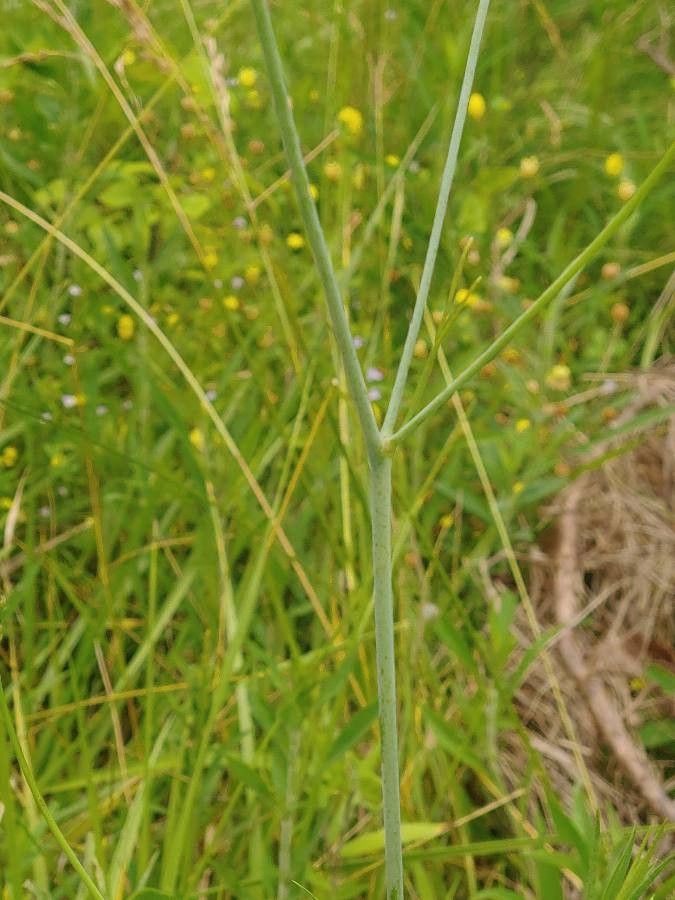
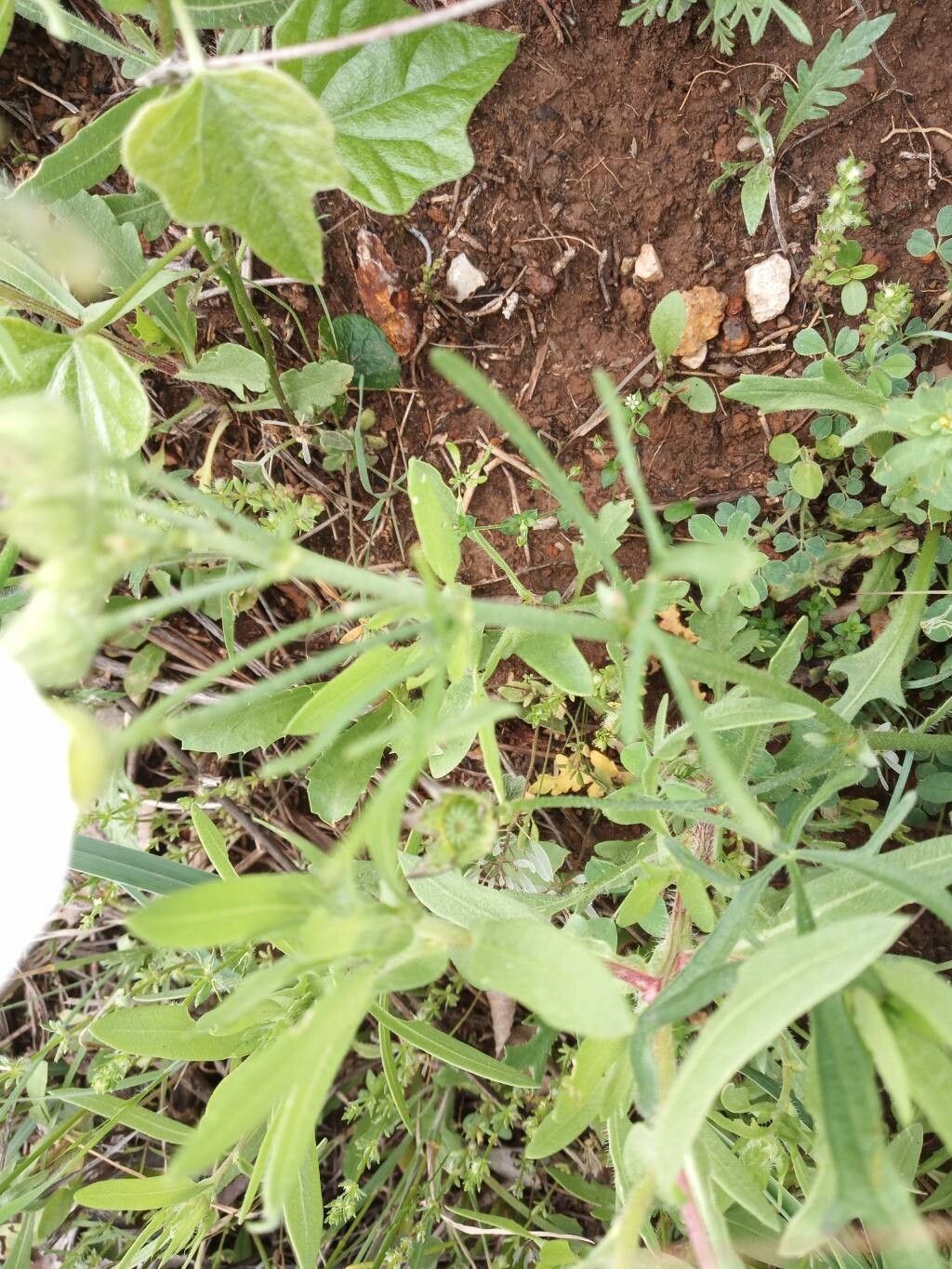
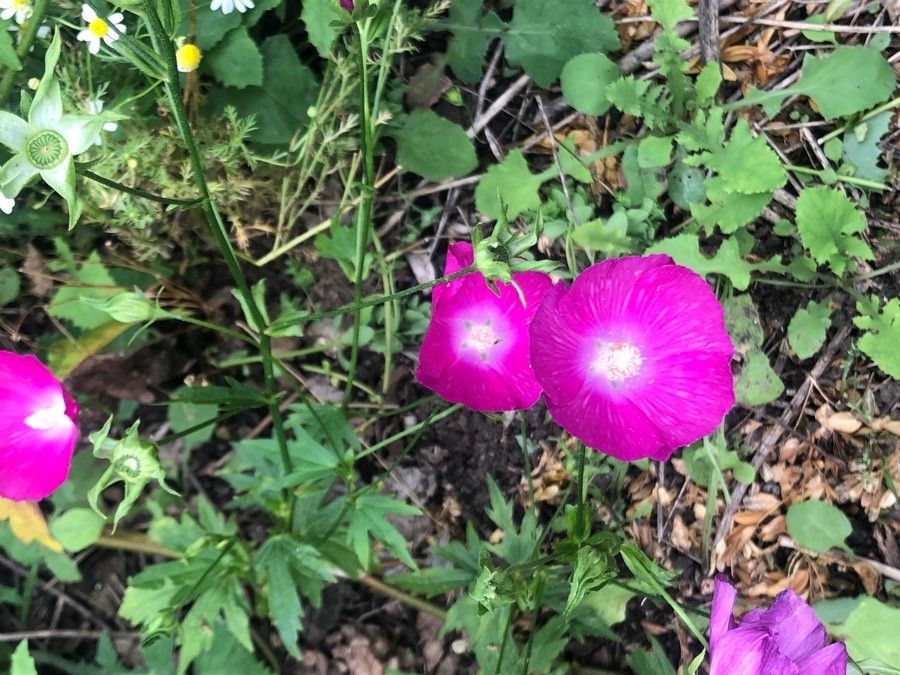
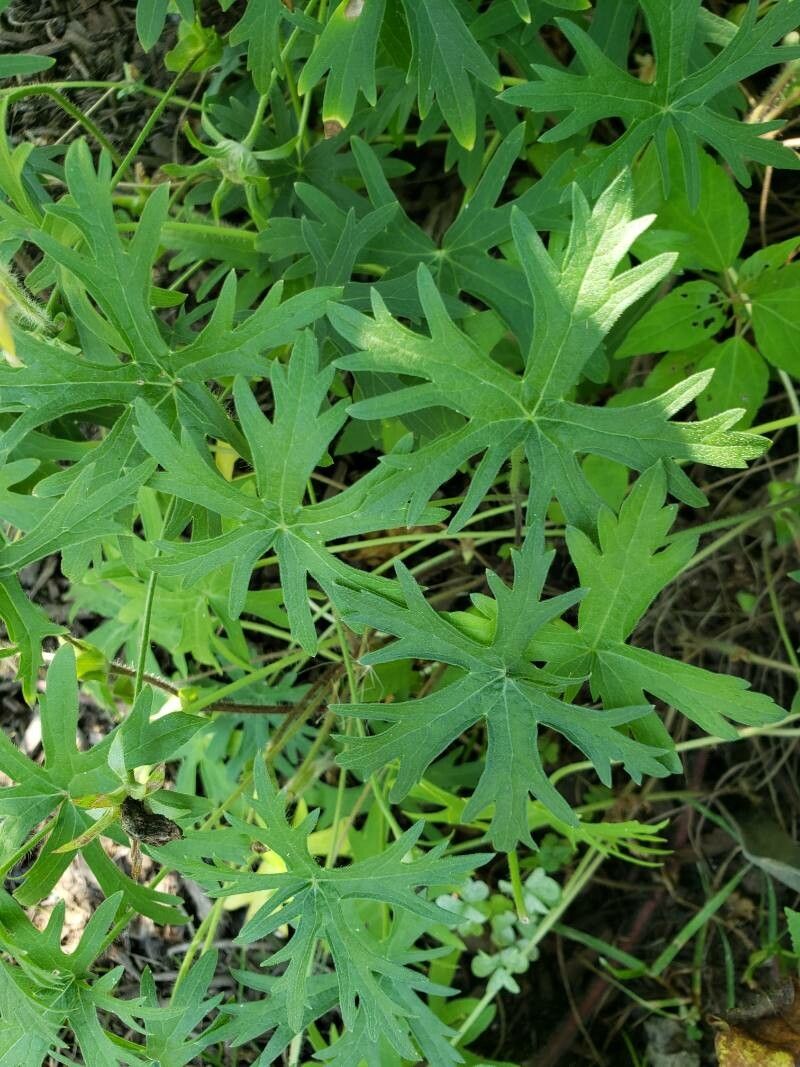
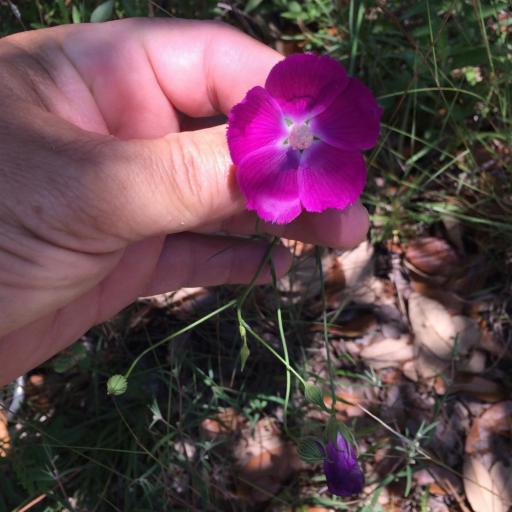
Callirhoe digitata, the fringed poppy mallow or standing wine cup, is a species of flowering plant in the family Malvaceae, native to the U.S. states of Kansas, Oklahoma, Missouri, Arkansas, and Alabama, and introduced to Illinois. A perennial with magenta flowers, in the wild it prefers to grow in sunny areas with drier, more alkaline soils. Recommended for both formal and informal plantings, it is hardy in USDA zones 5 through 8, and once established it is drought resistant.
Finger poppy-mallow has strong disease resistance and is generally not susceptible to illnesses. However, it can be affected by pests and diseases present in its surroundings. These problems are usually not severe. Regarding care, this plant requires moderate maintenance. It should be pruned on a regular basis to keep a good appearance and healthy growth. Fertilizing can also help encourage flowering. Finger poppy-mallow is suitable for anyone with an outdoor space, such as a garden or patio, and does not demand extensive plant-care experience. It may need more attention when grown indoors.
How to keep Callirhoe Digitata.
Temperature
Finger poppy-mallow can tolerate a wide variety of temperatures, but its range may still be restricted by specific combinations of moisture and heat. It performs best in warm summer conditions with sufficient rainfall or watering. Long periods of cloudy, rainy weather, as well as extended high temperatures, increase the risk of Finger poppy-mallow dying. In winter, protecting the plant from the cold can raise its chances of survival.
Fertilizer
One fertilizer application in spring is typically enough for Finger poppy-mallow, though additional feedings can maximize growth. Feed every one to one and a half months. Fertilizing improves the leaves' appearance and function, helping maintain even color and a healthy texture. It also promotes root growth and nutrient uptake, supporting the plant's long-term health.
Botanical profile.
Other names.