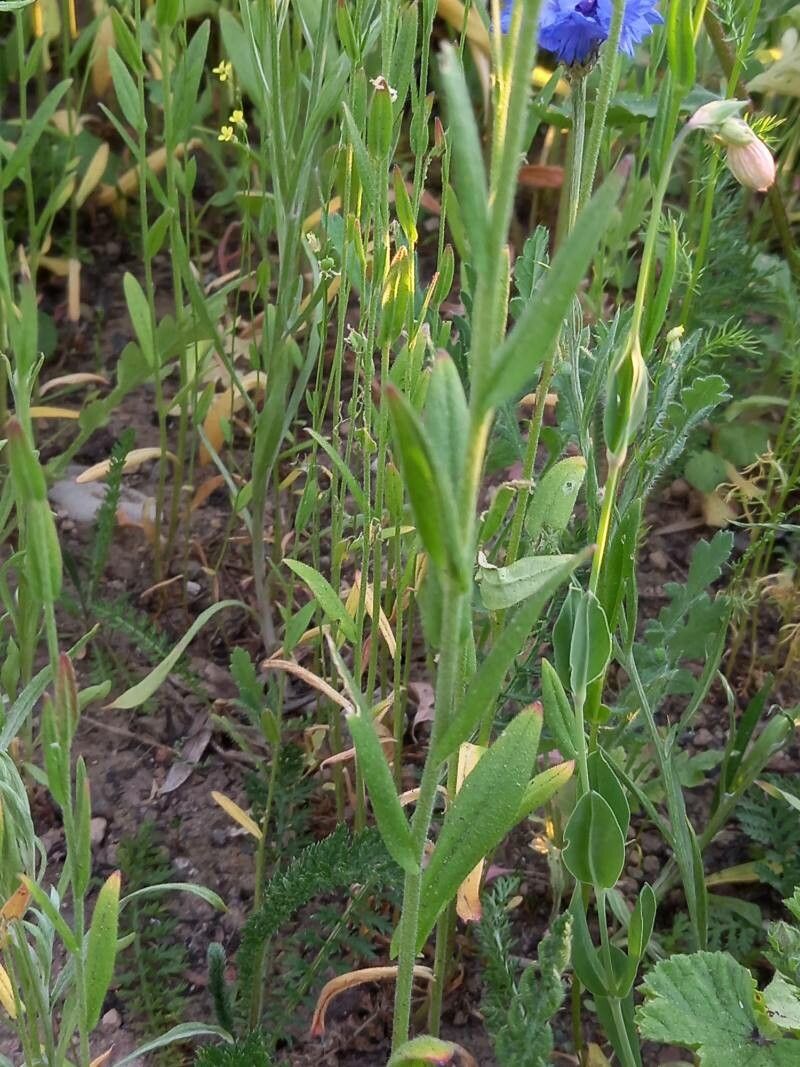
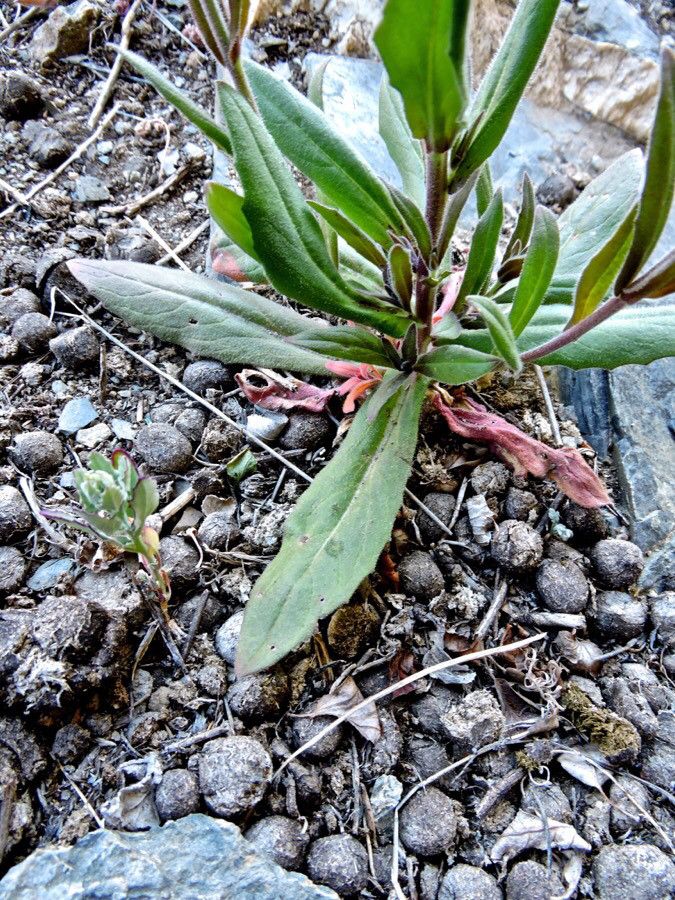
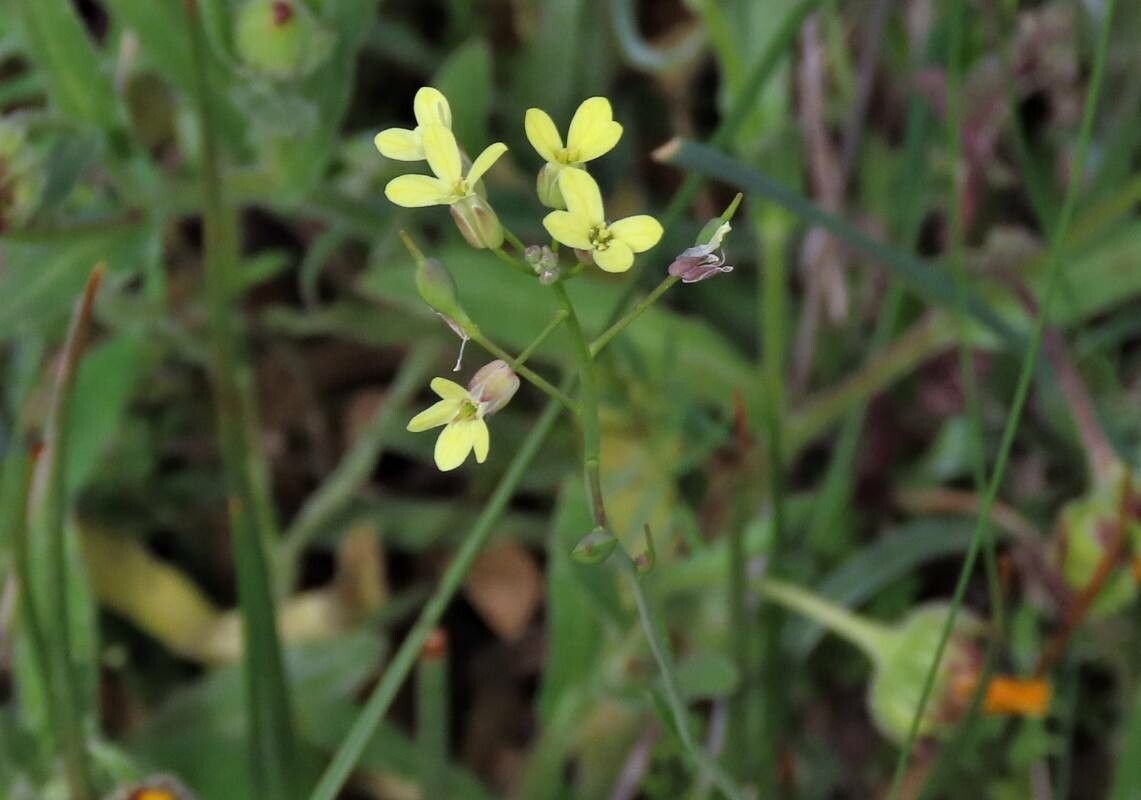
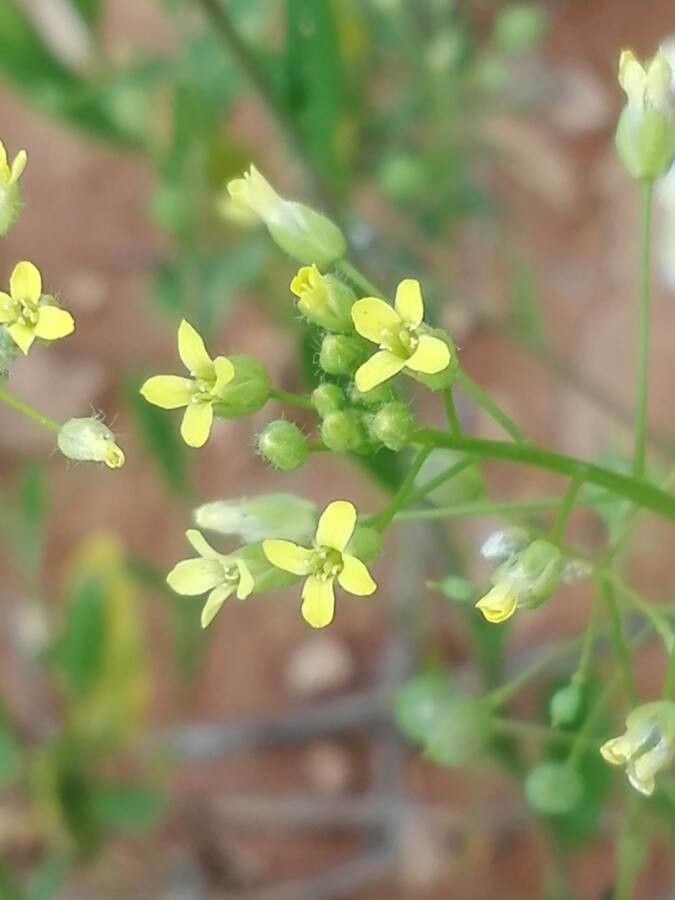
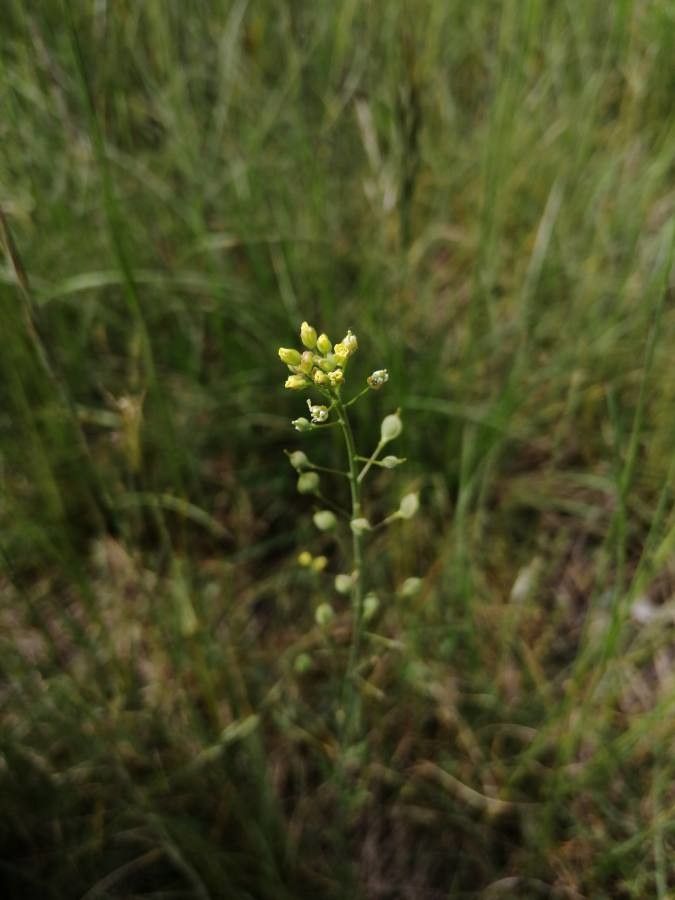
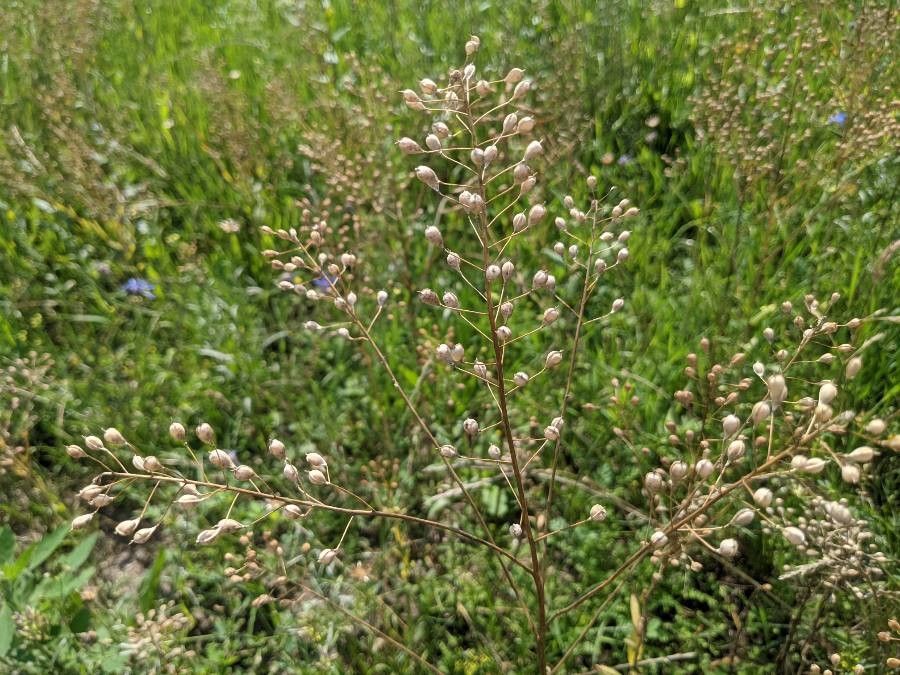
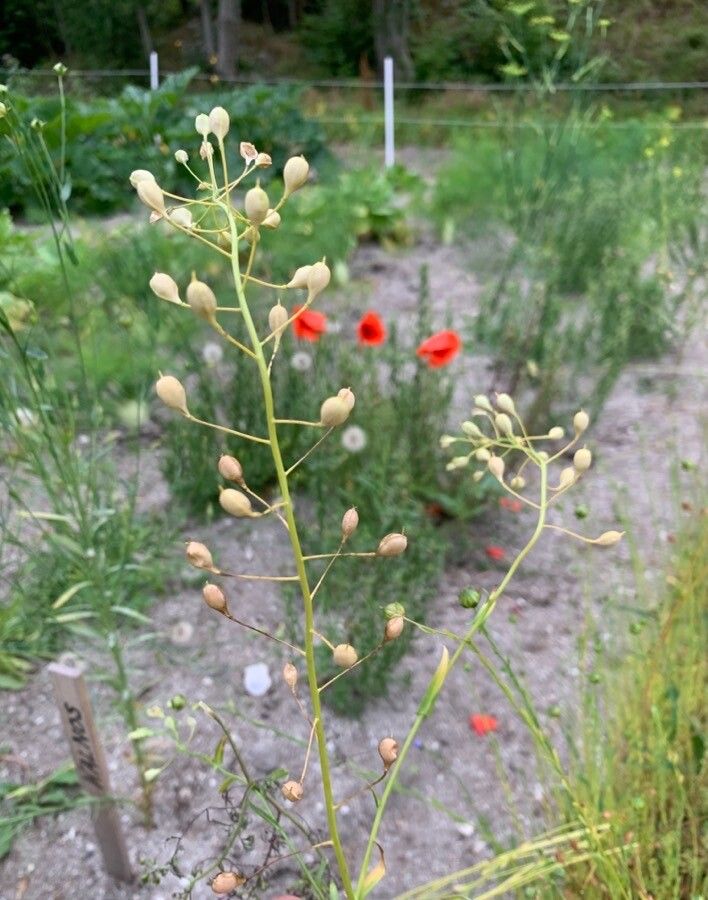
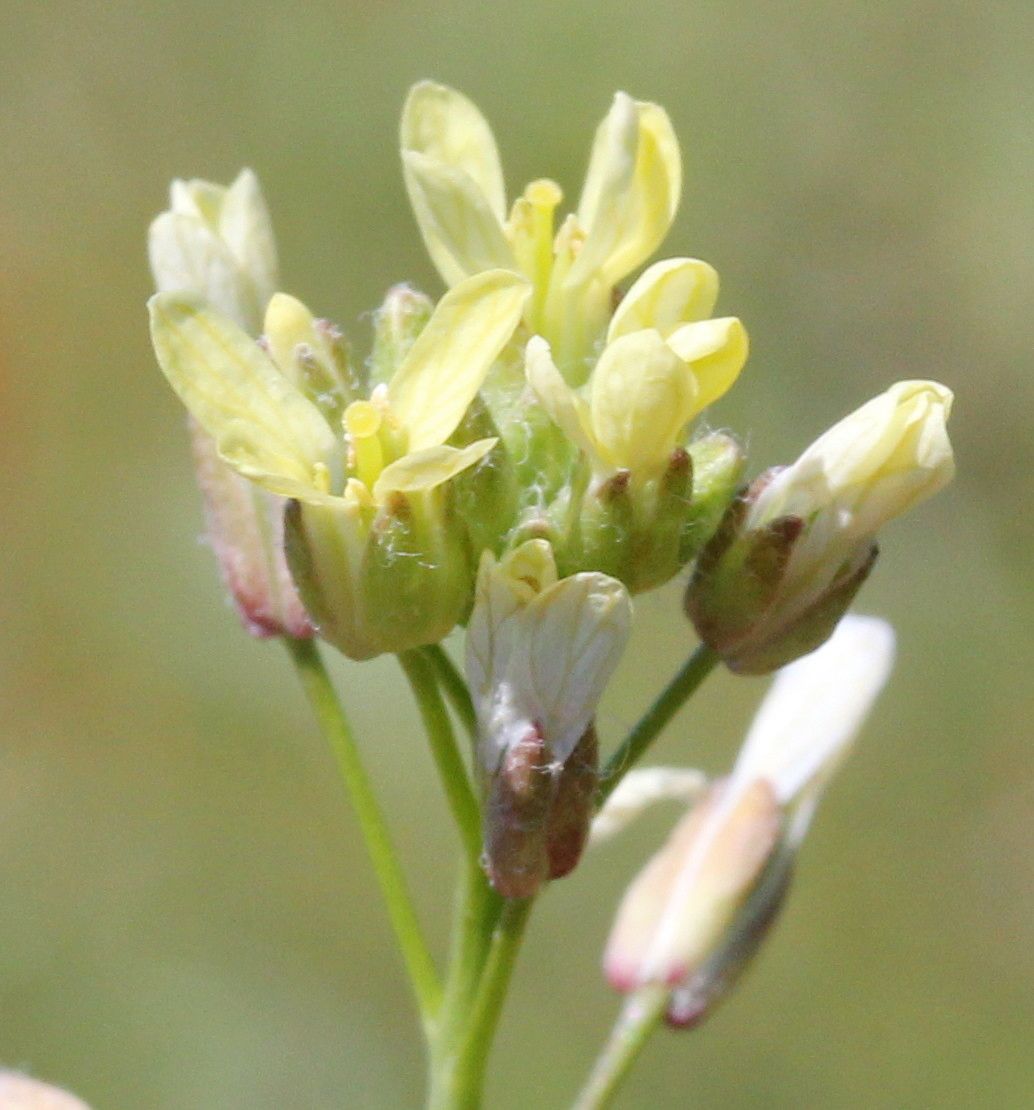
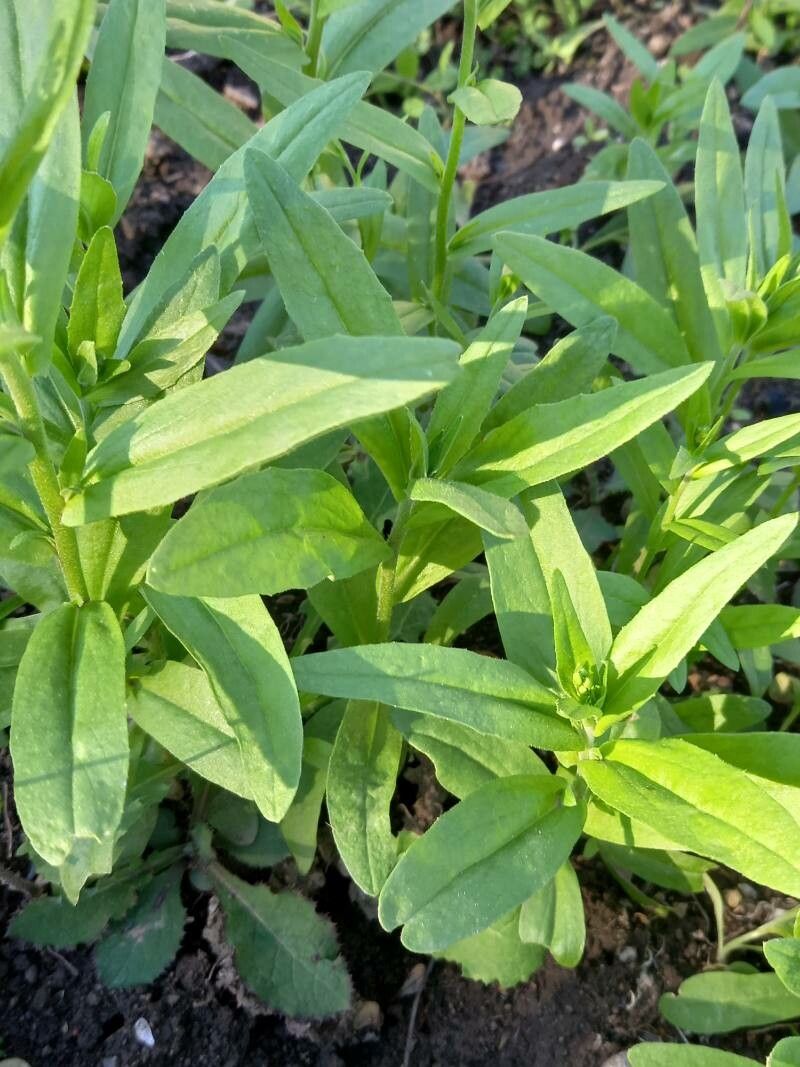
Camelina microcarpa is a species of flowering plant in the mustard family known by several common names, including littlepod false flax lesser gold-of-pleasure and small seed false flax. It is native to Europe and Asia, and it is common across the globe as an introduced species and sometimes a noxious weed. It is known as a weed of grain crops such as wheat and rye. This is an erect annual herb producing a branched or unbranched stem 30 centimeters to one meter in height. It is sometimes coated thinly in hairs, particularly on the lower part. The leaves are lance-shaped to oblong. The upper part of the stem is occupied by an inflorescence of many pale yellow flowers. They yield plump oblong to rounded fruits, each under a centimeter long and held at the tip of a short pedicel.
Littlepod false flax has strong resistance to disease and is generally not prone to illnesses. Still, it can be affected by pests and diseases present in its environment. Such infections are typically not serious. Regarding care, this plant needs moderate maintenance. It should be pruned regularly to preserve a neat appearance and support healthy growth. Applying fertilizer can also help encourage flowering. Littlepod false flax is well suited to anyone who has outdoor space, like a garden or patio, and does not require extensive gardening experience. It may need more attention if grown indoors.
How to keep Camelina Microcarpa.
Light
Littlepod false flax prefers ample light and does best beneath an open sky. It can cope with a partly shaded canopy, though growth may be slower. Excessive shade can cause poor development, while too much light can lead to the plants drying out.
Water
The Littlepod false flax is native to temperate regions, where it thrives in environments with moderate moisture and occasional brief droughts. To keep it healthy, it should be watered weekly. It also benefits from being outdoors in conditions that mimic natural rainfall patterns, as this improves water absorption and supports its growth cycles.
Temperature
Littlepod false flax is native to areas with mild climates and prefers temperatures between 68 and 95°F (20 to 35℃). Seasonal adjustments may be needed to keep conditions within this range, especially in very hot or very cold regions.
Fertilizer
Littlepod false flax responds well to regular, mild fertilizer applications to encourage healthy leaf growth. Fertilize Littlepod false flax about once a month during the summer. Nitrogen is important for foliage, and adding nitrogen-rich sources helps Littlepod false flax thrive.
Pruning
To enhance airflow and reduce the risk of disease, it's best to prune littlepod false flax from early to late spring. You can achieve this by removing dead stems and thinning out crowded areas to allow better light penetration. Avoid pruning during periods of active growth to prevent stress. This approach will help ensure stronger and more resilient growth throughout the season.
Botanical profile.
- Plant Type
- Herb
- Life Cycle
- Annual, Biennial
- Genus
- Camelina
- Family
- Brassicaceae
- Hardiness Zone
- 4
- Mature Height
- 15 cm to 40 cm
- Mature Spread
- 15 cm to 30 cm
- Leaf Color
- Green, Dark Green
- Leaf Type
- Deciduous
- Flower Color
- White, Yellow
- Flower Size
- 0.76 cm
- Bloom Time
- Spring
- Planting Time
- Spring, Summer
- Harvest Time
- Late spring, Early summer, Mid summer
Other names.
Reader questions.
How should I water my Littlepod false flax plant?
To water Littlepod false flax, you have several options: a garden hose with a spray nozzle, a watering can, or any other common watering tool. This plant is not too particular about the type of water it receives, as rainwater, tap water, or filtered water all work well. However, it is recommended to avoid watering from above, as this can harm the leaves and flowers and potentially cause disease. A drip irrigation system is often the most effective way to water Littlepod false flax, as it ensures even and direct watering of the soil. If you have a container-grown plant, you can follow a similar approach but use a cup, watering can, or tap to water directly into the soil.
What are the sunlight requirements for Littlepod false flax?
Littlepod false flax requires specific sunlight conditions for optimal growth. It thrives best in full sun, which is above 6 hours of direct sunlight per day, but can also grow in partial sun, receiving about 3-6 hours of sunlight. It's important to observe how sunlight moves through your garden to ensure your plants receive the right balance of light and shade. Too much shade can slow the plant's growth, while excessive direct light might cause the plant to dry out.
What is the ideal temperature range for growing Littlepod false flax?
Littlepod false flax, scientifically known as Camelina microcarpa, thrives in moderate climates. It prefers a temperature range between 68 to 95°F (20 to 35°C). Depending on your local climate conditions, you may need to make seasonal adjustments to keep the temperature within this range, especially if you live in an area that experiences extreme hot or cold temperatures.
What should I do if I give my Littlepod false flax too much or too little water?
If you notice that your Littlepod false flax is lacking moisture, the remedy is simple: water it more regularly. However, overwatering can be a more serious issue. If your plant is overwatered, it can develop diseases that can lead to its decline and death. To prevent this, it's important to choose a proper growing location that gets plenty of sunlight and has good drainage to avoid waterlogged soil. If you have overwatered your Littlepod false flax in a pot, you may need to consider repotting it. Ensure that the new pot has good drainage and use loose soil when repotting.
How does artificial lighting support Littlepod false flax growth indoors?
When natural sunlight is insufficient, especially during winter or in less sunny indoor areas, artificial lighting can be a lifesaver for Littlepod false flax. Indoor plants require specific watts per square foot based on their sun requirements: 30-50W/sq ft for full sun conditions, 20-30W/sq ft for partial sun, and 10-20W/sq ft for full shade conditions. LED lights are recommended due to their ability to provide tailored wavelengths needed for plant growth. The light source should be placed 12-36 inches above the plant for 8-12 hours a day to mimic natural sunlight conditions.
How does Littlepod false flax handle cold weather and what precautions should be taken in winter?
Littlepod false flax is highly tolerant of cold weather and doesn't require special frost protection measures during the winter months. However, it is beneficial to water the plant generously before the first freeze of autumn. This ensures the soil around the plant remains moist when it freezes, helping to protect the plant from drought and water scarcity during the winter and early spring.
How often should I give water to my Littlepod false flax?
Littlepod false flax requires regular watering throughout the growing season. In the spring, water once per week. As the season progresses and temperatures rise, you may need to water two to three times per week. However, exceeding this rate can harm the plant. Regardless of watering frequency, make sure the soil remains moist but not excessively wet. Watering Littlepod false flax in a pot is slightly different. The soil in pots dries out faster, so you will generally need to water container-grown plants a few times per week, compared to once a week for those planted in the ground.
What are the symptoms of inadequate lighting in Littlepod false flax?
When Littlepod false flax does not receive adequate light, several symptoms may appear. These include smaller new leaves than the older ones, leggy or sparse growth, premature leaf drop, slowed or halted growth, pale new leaves indicating a lack of chlorophyll, chlorosis where leaves turn yellow, sunscald on leaves or stems, leaf curling to minimize water loss, wilting due to excessive water loss, and leaf scorching where leaf edges become brown and crispy. These symptoms highlight the plant's need for more sunlight.
What should be done if the Littlepod false flax experiences temperatures below -30°C?
Although Littlepod false flax is extremely cold-tolerant, temperatures below -30°C can affect its ability to sprout in spring. There may not be noticeable changes during the winter, but a decrease in sprouting or a complete absence of sprouting can occur in spring. If this happens, it is advised to remove any parts of the plant that have failed to sprout.
How much water does my Littlepod false flax plant need?
Here are some tips on determining how much water to give your Littlepod false flax: 1. Some gardeners prefer to feel the soil for moisture to determine their watering amount. In this method, you would water until you feel the first six inches of soil becoming moist. 2. Alternatively, you can use a standard measurement to determine the water amount. Typically, it is recommended to give your Littlepod false flax about two gallons of water per week. However, this can vary depending on the weather and how quickly the soil dries. Keep in mind that strictly following these guidelines may result in overwatering if your plant requires less water for some reason. 3. When growing Littlepod false flax in a container, a different method is needed to determine the water amount. It is advised to water enough to moisten all dry layers of soil. You can check for moisture by sticking your finger into the soil, or you can water until you notice a slight trickle of excess water draining from the pot's holes.
How can I address sunlight deficiency for Littlepod false flax?
To address sunlight deficiency in Littlepod false flax, gradually increase its sunlight exposure. For indoor settings, shift the plant to a sunnier location weekly, aiming for at least 6 hours of direct sunlight, utilizing south-facing windows, and considering artificial lights for additional support. Outdoors, also increase sunlight exposure gradually to avoid sunburn. If obstructions like trees limit sunlight, consider pruning or transplanting smaller plants to brighter locations during their dormant periods for better sunlight access and improved growth.
How does Littlepod false flax react to high temperatures, and what measures should be taken?
Littlepod false flax is not tolerant of high temperatures. When the mercury rises above 35°C, the plant's growth halts, and it becomes more susceptible to rot. To mitigate the effects of high temperatures, trim away sunburned and dried-up parts of the plant. Relocate the plant to a spot that offers shade during the midday and afternoon sun, or use a shade cloth. Additionally, water the plant in the morning and evening to maintain soil moisture.