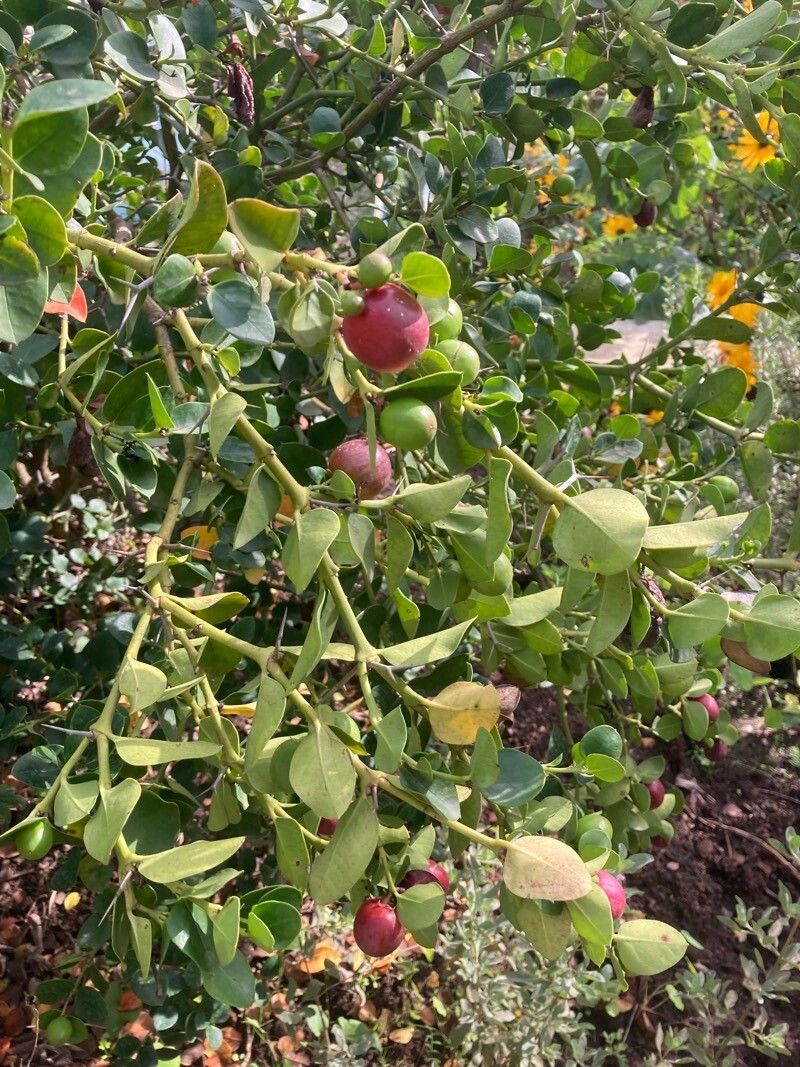
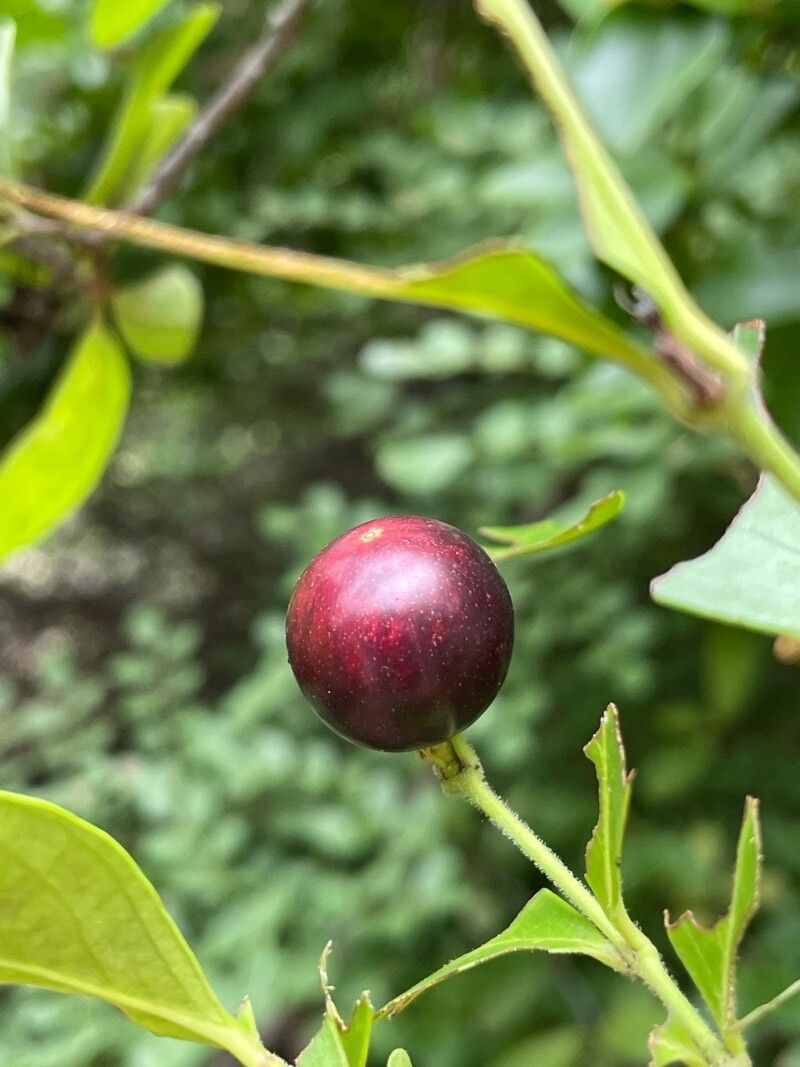
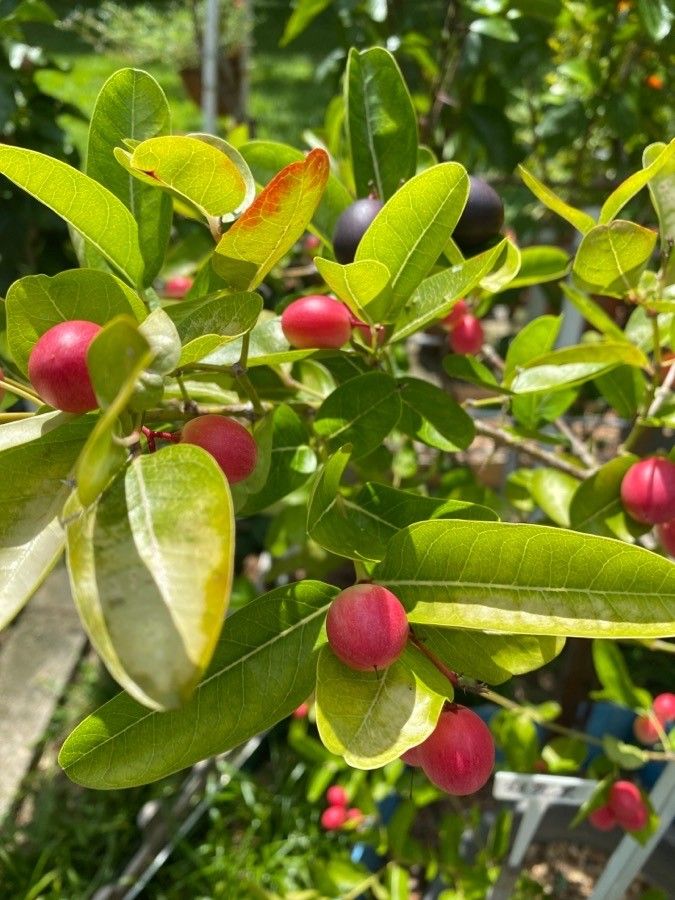
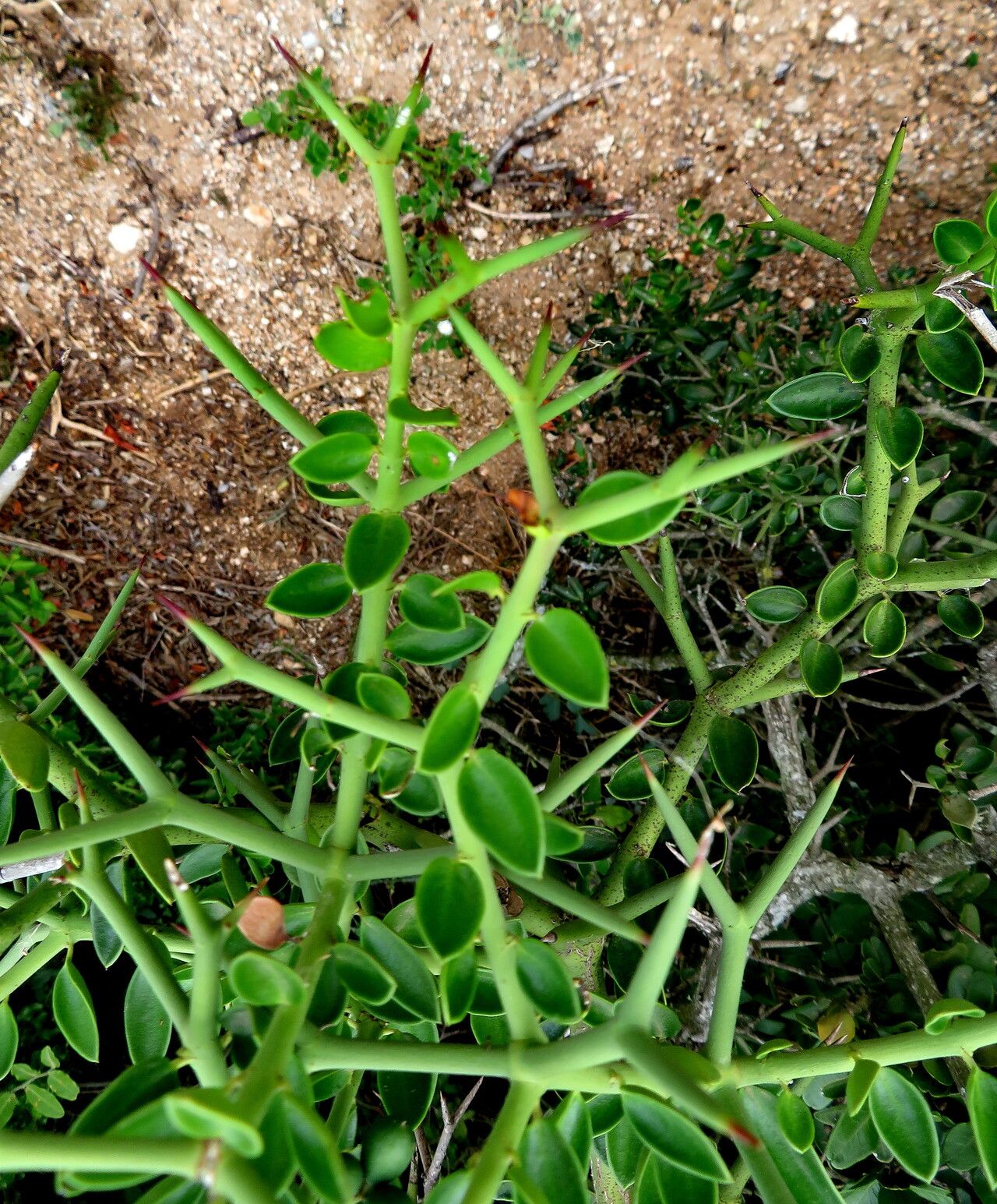
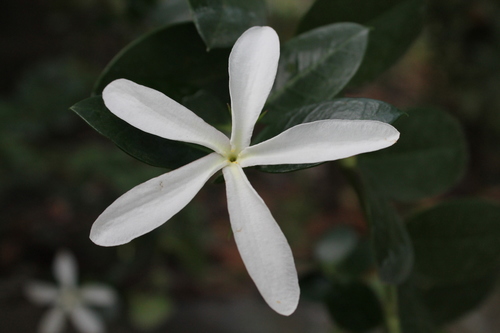
Carissa spinarum, the conkerberry or bush plum, is a large shrub of the dogbane family (Apocynaceae), widely distributed in tropical regions of Africa, Southern Asia, Australia, and various islands of the Indian Ocean. It is most well known in Australia, where it is also called currant bush or, more ambiguously, native currant or even black currant. It is, however, neither closely related to plums (Prunus) nor to true currants (Ribes), which belong to entirely different lineages of eudicots. In India, it is also called wild karanda /wild karavanda, referring to the related karanda (C. carandas). Carissa spinarum is often discussed under its many obsolete synonyms (see below).
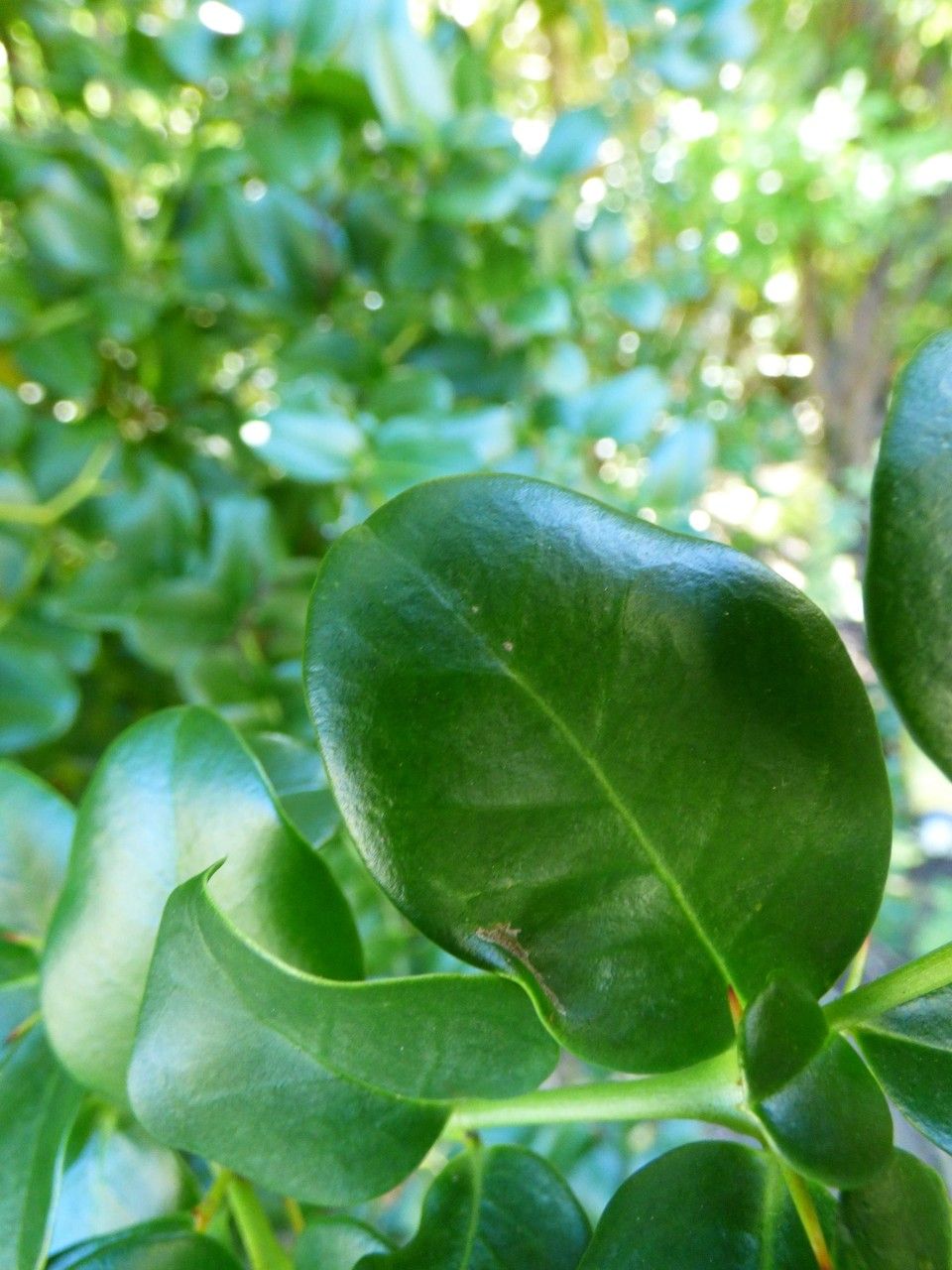
It grows as a multi-stemmed shrub, 0.5 to 3 metres in height. The leaves are glossy green, opposite, narrow ovate to lanceolate and 1–5 cm in length. The branches bear thorns of 1–3 cm length. White, star-shaped flowers ~1 cm across are followed by ovate green berries, 1–2 cm in length, which turn black or dark purple when ripe.
The bush plum has strong disease resistance and is generally not susceptible to disease. In terms of care, this plant is fairly low-maintenance. When grown outdoors it needs little watering, and larger plants typically do not require pruning. Smaller plants, however, should be pruned after they have finished blooming. The bush plum is suitable for anyone with outdoor space, such as a garden or deck, and does not need a lot of care experience.
How to keep Carissa Edulis.
Light
The bush plum does best when it gets the maximum amount of sunlight during the day. Being a sun-loving plant, it thrives in places with uninterrupted sun exposure. It has no specified tolerance for lower light conditions, and both too much and too little sunlight can adversely affect its growth and health.
Temperature
Bush plum is native to regions where average temperatures range from 68 to 95℉ (20 to 35℃). Preferring mild to warm climates, it can struggle in colder conditions or in extreme heat. For optimal growth, adjust its environment as the seasons change.
Fertilizer
Use organic fertilizers (for example, fish emulsion or compost) rather than chemical fertilizers for bush plum. Give young plants higher levels of nitrogen and phosphorus during spring. Mix compost or fertilizer into the soil before or after planting. For mature plants, supplement in spring with a balanced fertilizer or one targeted to specific nutrient deficiencies. Nutrient deficiency produces small leaves, short branches, yellow or bronze foliage, acidic fruits, premature fruit drop, and splitting.
Botanical profile.
- Plant Type
- Shrub
- Life Cycle
- Perennial
- Genus
- Carissa
- Family
- Apocynaceae
- Hardiness Zone
- 10
- Mature Height
- 1.83 m to 2.44 m
- Mature Spread
- 20 cm to 49 cm
- Leaf Color
- Green, Blue
- Leaf Type
- Evergreen
- Flower Color
- White
- Flower Size
- 2.54 cm to 5.08 cm
- Bloom Time
- Late spring, Summer, Early fall, Mid fall
- Planting Time
- Spring, Summer, Autumn, Winter
- Harvest Time
- Late summer, Fall, Early winter
- Native Area
- Sri Lanka, Djibouti, Somalia, Egypt, India, Burkina Faso, Angola, Namibia, Madagascar, Rwanda, Pakistan, Eritrea, Nigeria, Yemen, Kenya, Uganda, Tanzania, Zimbabwe, Guinea-Bissau, Mali, Benin, Indonesia, Cambodia, Cameroon, Burundi, Mozambique, Oman, Ghana, Ethiopia, Botswana, Congo, Nepal, Saudi Arabia, Malawi, Central African Republic, South Africa, Zambia, Sudan, Bangladesh, Guinea, Chad, China, Vietnam, Myanmar, Togo, Senegal, Côte d'Ivoire, Congo (DRC), Thailand
Other names.