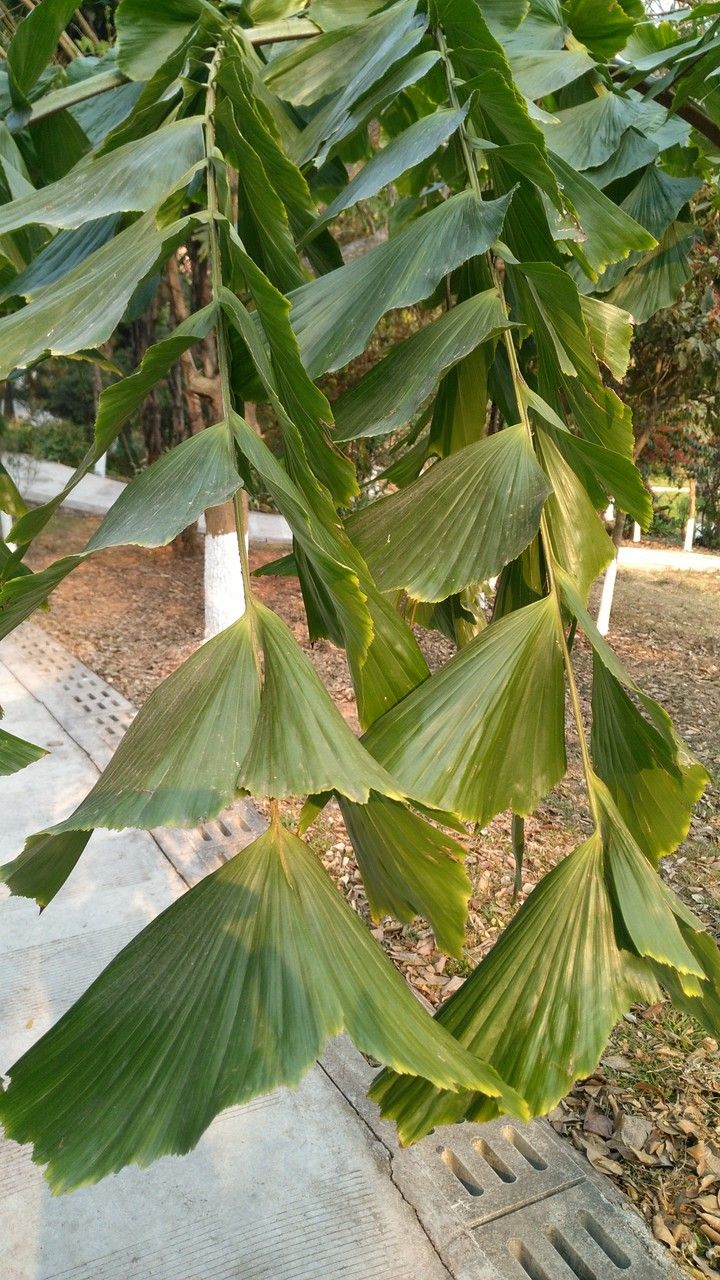
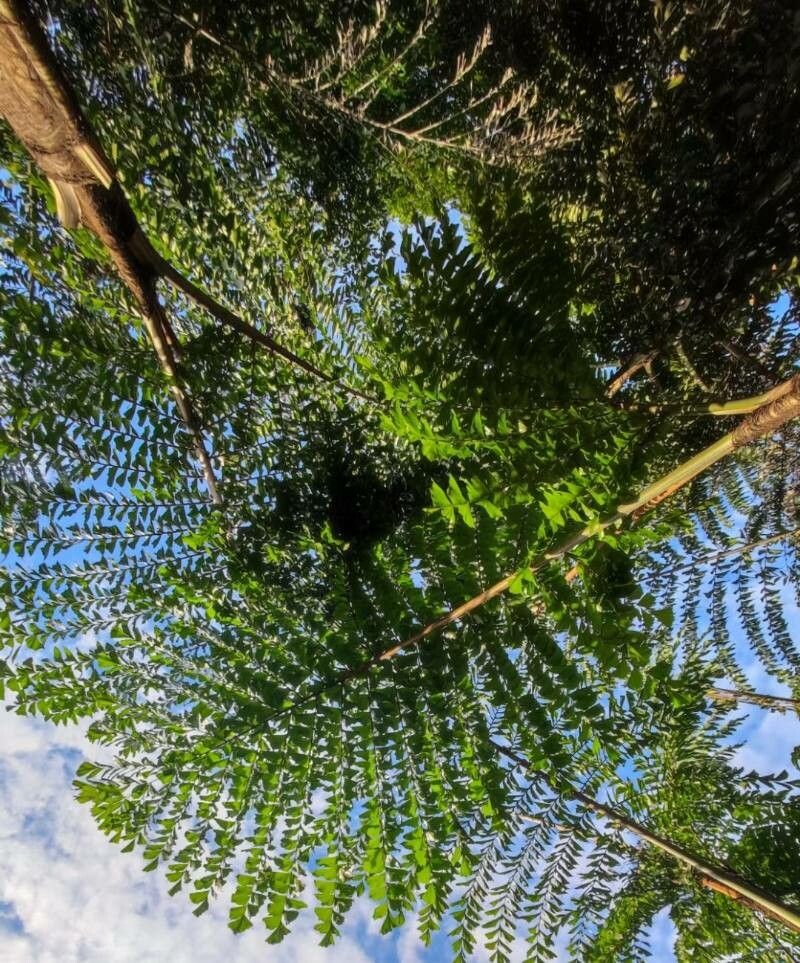
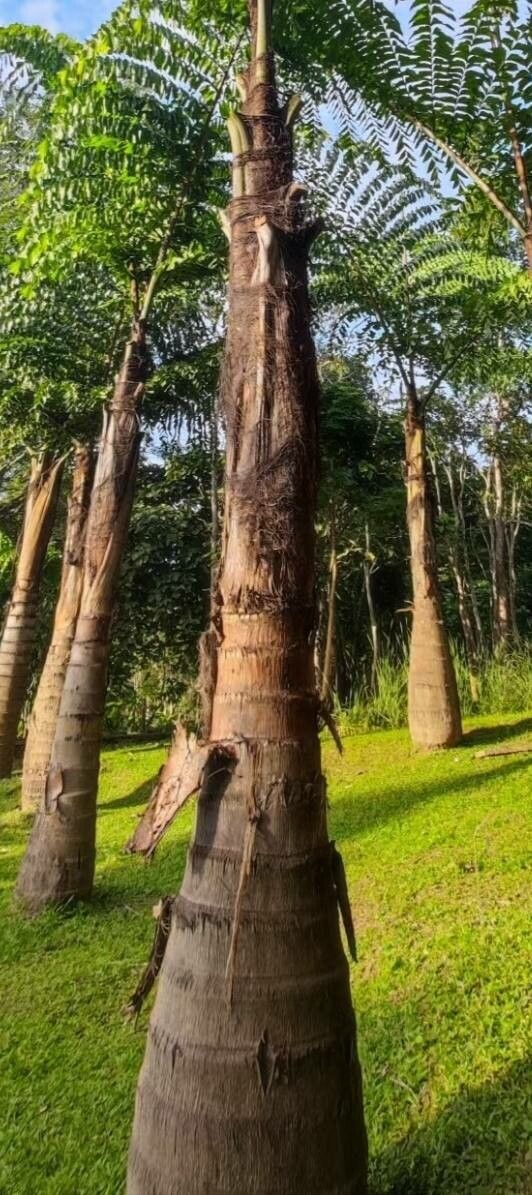
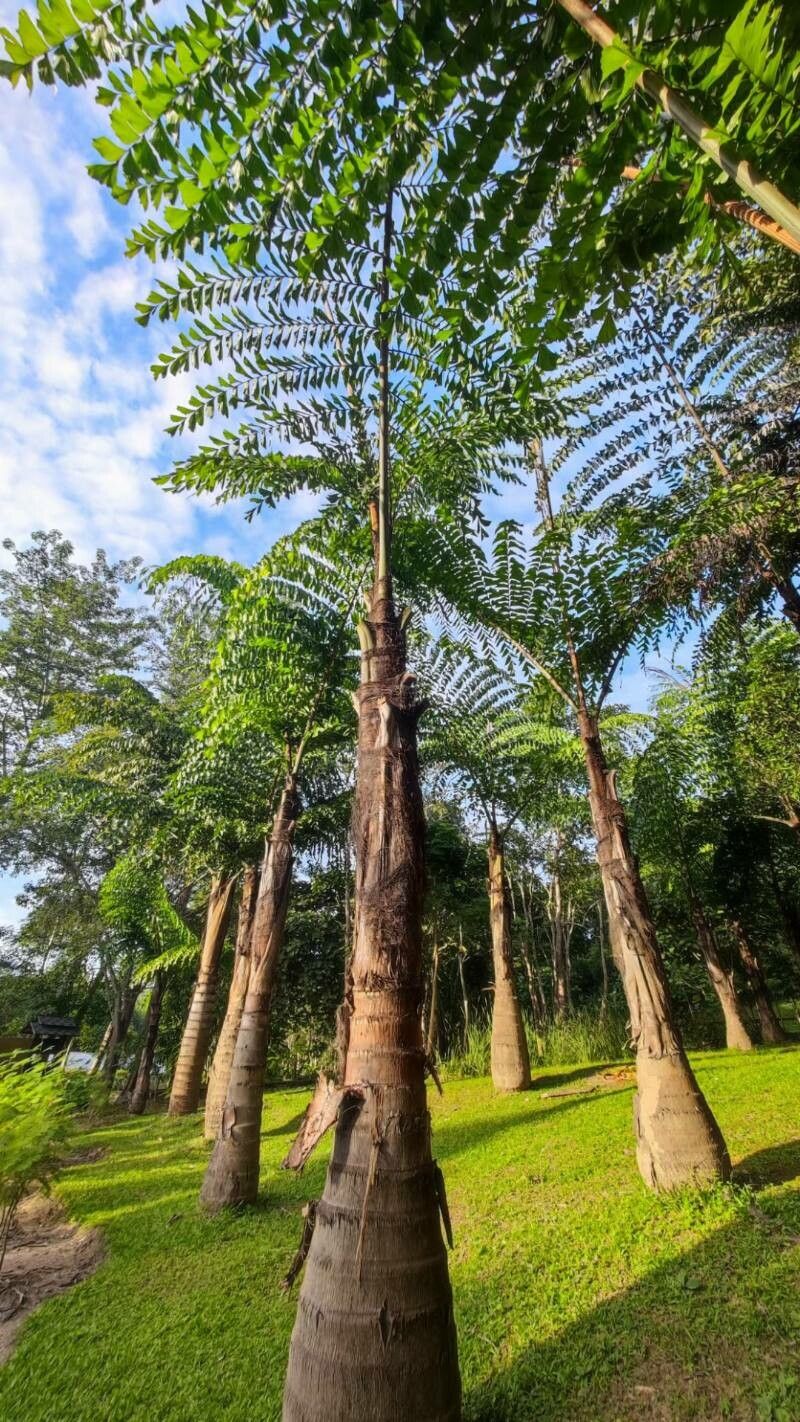
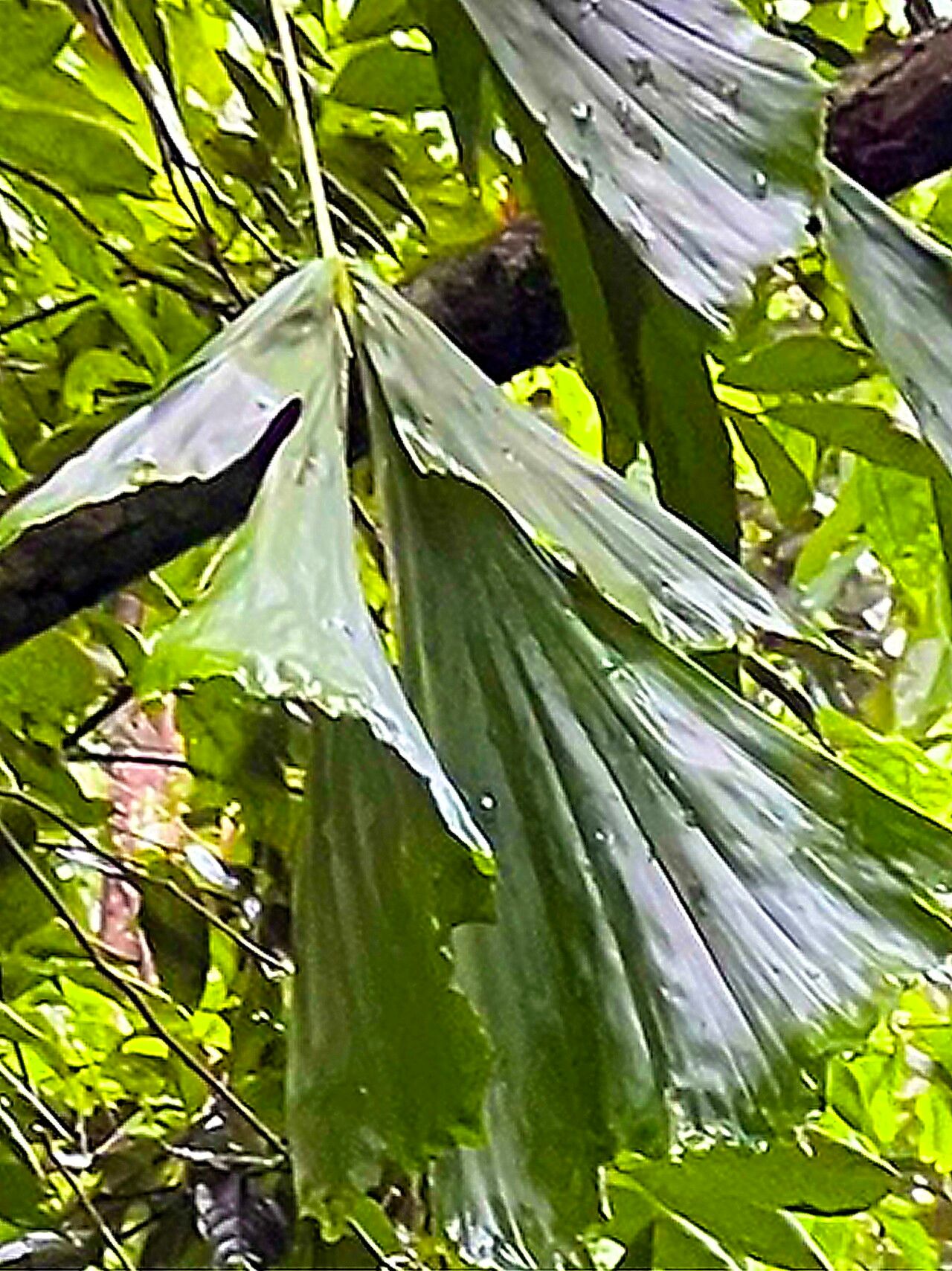
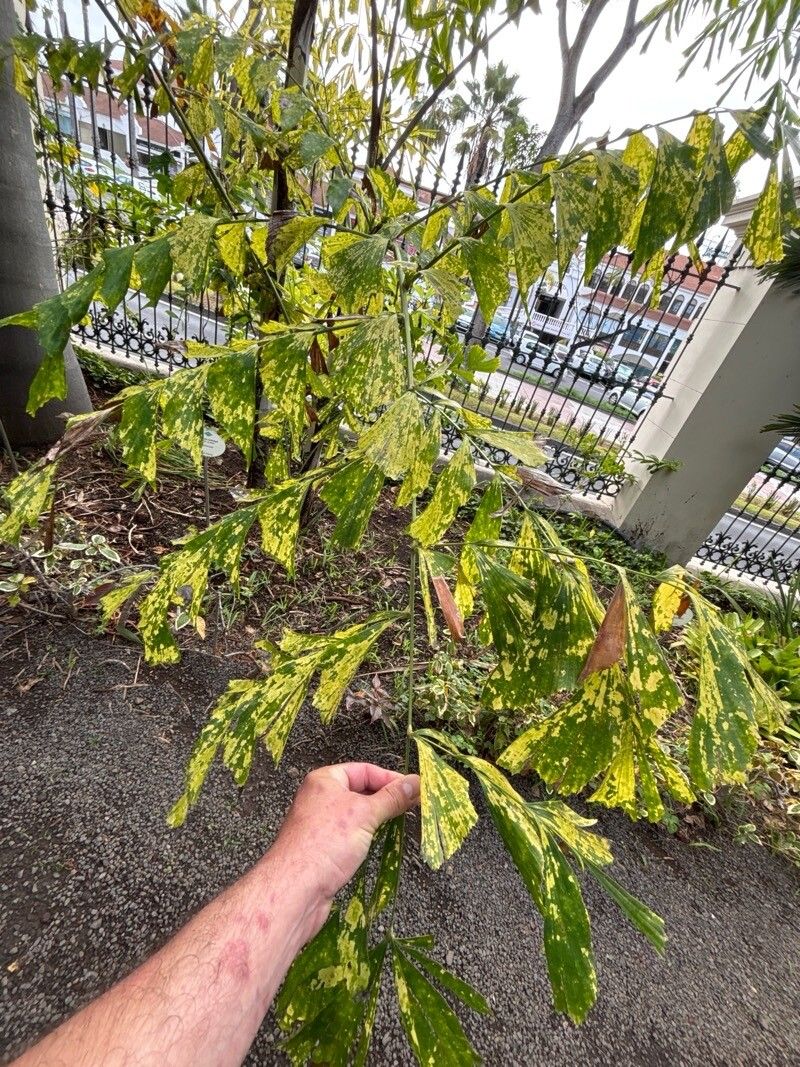
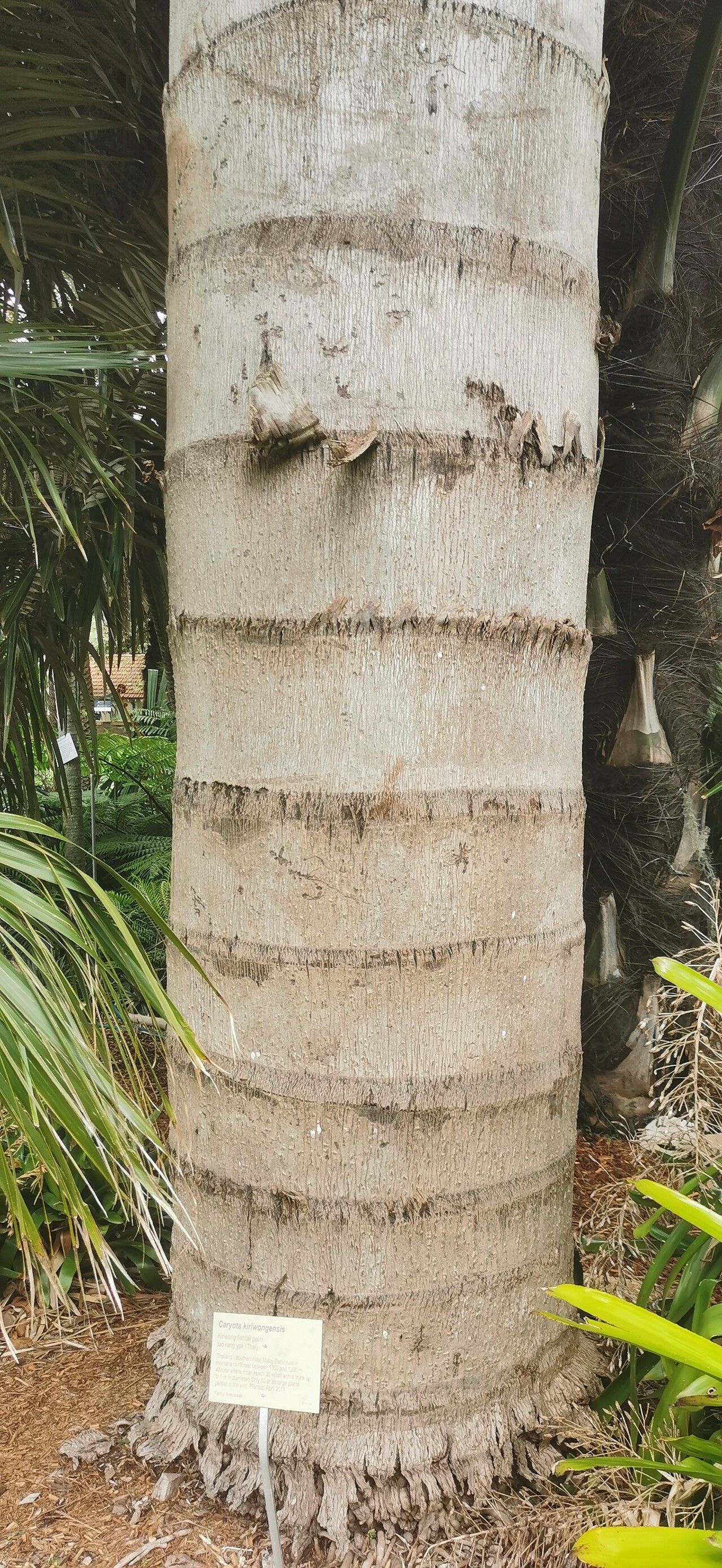
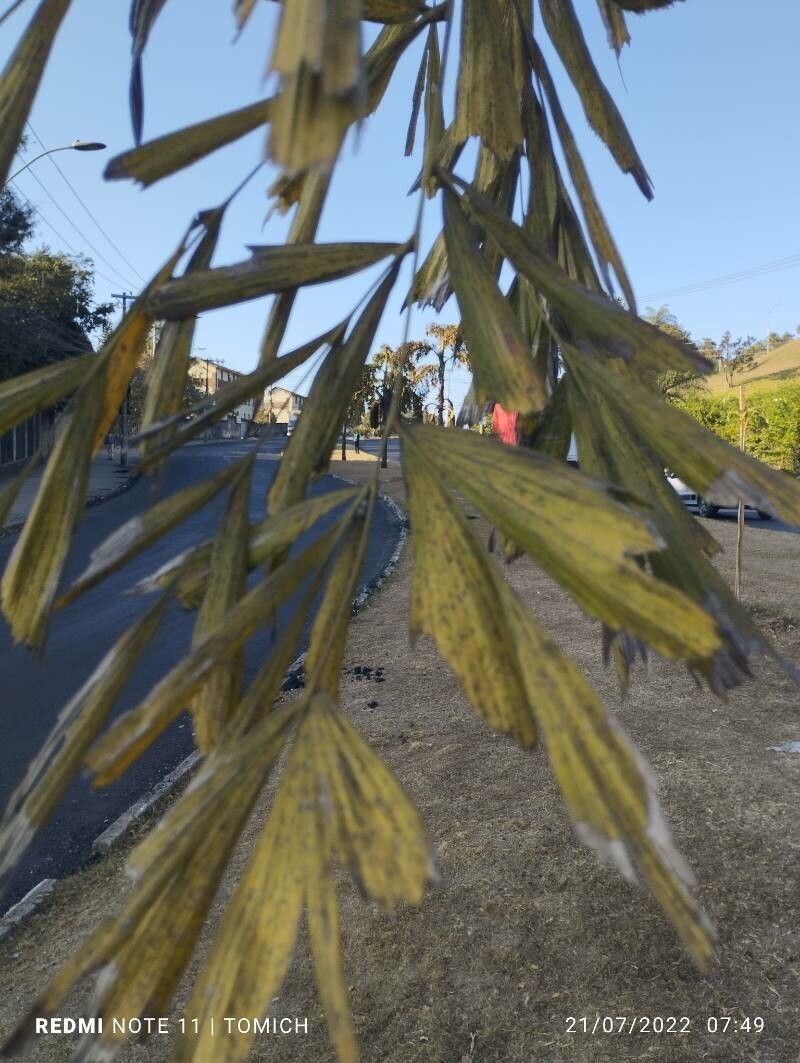
Caryota obtusa is a species of flowering plant in the palm family from India, Laos and Thailand. The palm is commonly called giant fishtail palm or Thai giant caryota. It can reach 20 meters or more in height and is thus considered a tree. It is monocarpic meaning it flowers once, then dies. Its inflorescence can reach 6 meters or more in length.
The giant fishtail palm is fairly disease-resistant and is typically not susceptible to illnesses. In terms of care, this plant is quite low-maintenance. When grown outdoors, it needs only minimal watering, and larger plants usually do not require pruning. Smaller plants, however, should be pruned after they have bloomed. The giant fishtail palm is suitable for anyone with an outdoor area, such as a garden or deck, and does not require extensive care experience.
How to keep Caryota Obtusa.
Light
The giant fishtail palm performs best with abundant sunlight throughout the day and can tolerate moderate light. In its native habitat it receives ample sun, which promotes healthy growth. However, too much sun can lead to leaf burn, while too little light can hinder its growth.
Water
The giant fishtail palm, native to tropical forests, thrives in high humidity and is capable of withstanding moderate drought. It should be watered every 2-3 weeks, as it can store water internally. Regular misting is beneficial for its health, especially during growth periods when temperature and soil moisture are crucial for maintaining vibrant foliage.
Temperature
The giant fishtail palm naturally occurs in habitats with moderate to high temperatures and prefers 68 to 100 °F (20 to 38 °C). Small seasonal adjustments may be required to reproduce this temperature range, especially in cooler regions.
Fertilizer
The best time to fertilize a Giant fishtail palm is in early spring, as it breaks dormancy. Fertilizing at that time supports overall growth and flower development. It improves the foliage, stems, and branches, while encouraging flowers that are larger, more vibrant, and longer-lasting. It also helps transport nutrients from the roots to the flowers and enhances the plant's health and resistance to disease.
Pruning
The giant fishtail palm is known for its distinctive bipinnate leaves and requires very little pruning. In early spring, it's important to remove any dead fronds and spent flower stalks to maintain its appearance and prevent disease. Make sure to make clean cuts to avoid damaging the plant. This will help ensure healthy growth and longevity. Regular monitoring and pruning are key.
Botanical profile.
- Plant Type
- Tree
- Life Cycle
- Perennial
- Genus
- Caryota
- Family
- Arecaceae
- Hardiness Zone
- 9-11
- Mature Height
- 20.12 m
- Mature Spread
- 25 cm to 46 cm
- Leaf Color
- Green
- Leaf Type
- Evergreen
- Flower Color
- White
- Flower Size
- 1.02 cm
- Bloom Time
- All year round
- Planting Time
- Spring, Summer, Autumn
- Harvest Time
- All year round
- Native Area
- Laos, India, Thailand
Other names.
Reader questions.
What are the sunlight requirements for plants?
Plants typically fall into categories based on their sunlight requirements: full sun and partial sun. Full sun plants require more than 6 hours of direct sunlight daily, and partial sun plants thrive in about 3-6 hours of sunlight. Understanding how sunlight moves through your garden is crucial for choosing spots that provide the ideal balance of light and shade, ensuring the well-being of your plants. This careful placement helps in preventing issues related to both overexposure and underexposure to sunlight.
What are the ideal temperature conditions for the Giant fishtail palm?
The Giant fishtail palm thrives in moderate to high temperatures, preferring environments that range from 68 to 100°F (20 to 38°C). It's extremely heat-loving and susceptible to cold temperatures. During autumn, if grown outdoors, it's advisable to move the plant indoors to a location near a bright window, yet away from direct heat sources like heaters. To promote plant growth, maintaining temperatures above 20°C during the winter is crucial, as temperatures nearing 0°C can significantly harm the plant.
How does the giant fishtail palm respond to sunlight?
The giant fishtail palm fares best when it receives ample sunlight during the day and can also sustain moderate sunlight. Its native habitat is abundant in sunlight, which supports its healthy growth. Nevertheless, too much direct sun exposure can cause leaf burn, whereas too little sunlight may inhibit its growth. In indoor settings or during winter, when natural sunlight might not be adequate, artificial lighting offers a beneficial alternative to maintain optimal growth. For indoor plants, it's essential to ensure they receive sufficient lighting, which can be achieved using artificial lights when natural sunlight is lacking.
How should you care for a Giant fishtail palm during low temperatures?
Giant fishtail palm requires warm conditions to thrive and is not tolerant of low temperatures. It performs best when temperatures stay above 20°C and should be kept from dropping below 0°C during winter. Exposure to temperatures below -5°C can cause the leaves to lighten in color, eventually turning brown or black with symptoms like wilting and drooping after frost damage. The best solution is to trim off the frost-damaged parts and move the plant to a warm room indoors, preferably near a south-facing window for ample sunlight. It's also important to avoid placing the palm near heaters or air conditioning vents to prevent the air from getting too dry.
What are the symptoms of insufficient sunlight in giant fishtail palms?
Giant fishtail palms show several symptoms when they don't receive enough sunlight, especially when grown indoors during winter. These include smaller new leaves, leggy or sparse growth, premature leaf drop, halted new growth, lighter-colored new leaves, chlorosis, sunscald, leaf curling, wilting, and leaf scorching. These symptoms reflect the plant's struggle to adapt to low light conditions, affecting its health and appearance. Insufficient sunlight disrupts the plant's ability to perform photosynthesis efficiently, leading to reduced growth and vitality.
What steps should be taken if a Giant fishtail palm experiences high temperatures?
During summer, it's vital to ensure that the Giant fishtail palm is kept in temperatures below 38°C to avoid stress from excessive heat. If the temperature exceeds 43°C, the leaves may lighten and the plant can suffer from sunburn. To mitigate high temperature stress, trim away the sunburned and dried parts of the plant. Then, relocate the palm to an area with shade, particularly away from the harsh midday and afternoon sun. Additionally, watering the plant in the morning and evening can help keep the soil moist and further protect the plant from heat stress.
What solutions can mitigate the symptoms of insufficient sunlight in plants?
To combat the symptoms of insufficient sunlight in plants, you can take several measures. Gradually moving your plants to sunnier locations, ensuring they receive at least 6 hours of direct sunlight daily, is beneficial. For indoor plants, consider using artificial light if the plant is large or not easily movable, keeping a desk or ceiling lamp on for at least 8 hours daily or investing in professional plant grow lights. Outdoor plants should be moved gradually to avoid sunburn. Reducing obstructions that block sunlight, like pruning trees, and transplanting smaller plants during their dormant period to locations with better sunlight and drainage, are effective strategies. It's important to note that while new growth can be healthy following these adjustments, parts of the plant that were already affected by insufficient sunlight may not recover.