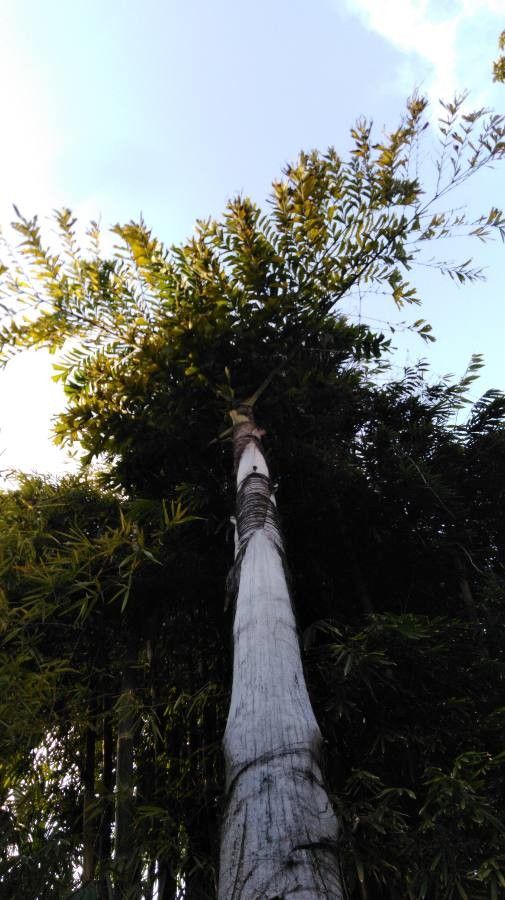
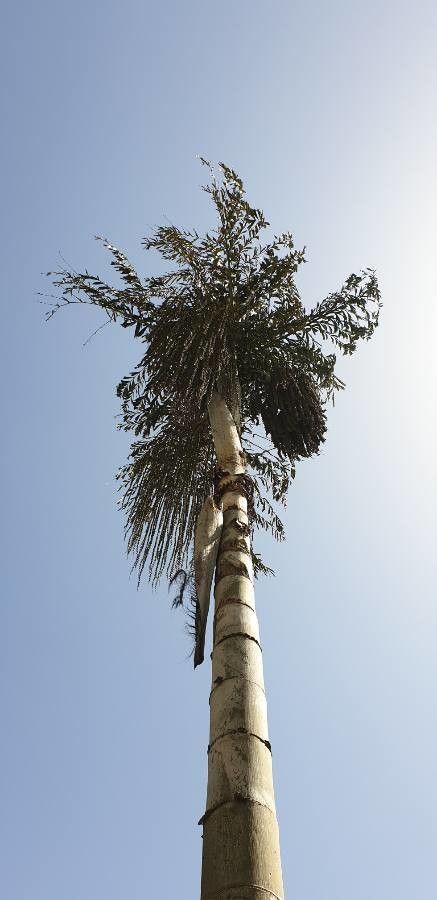
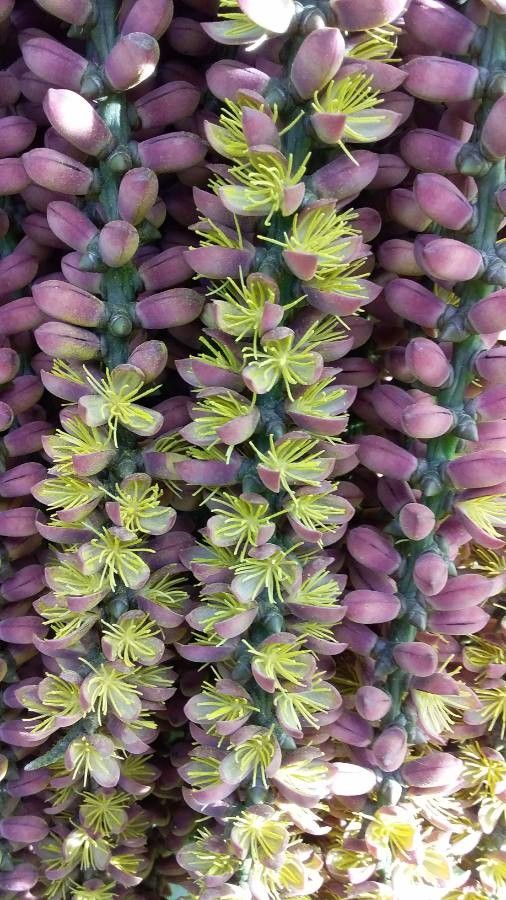
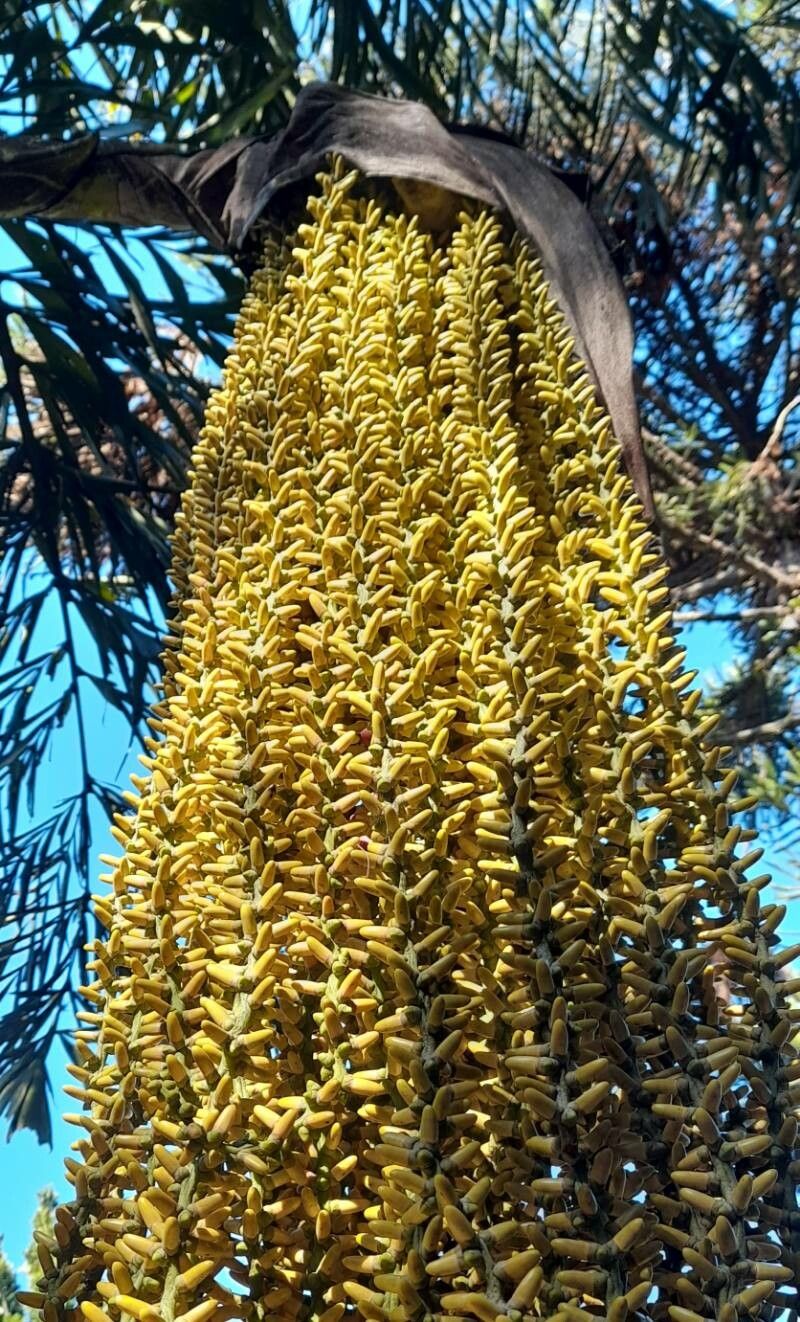
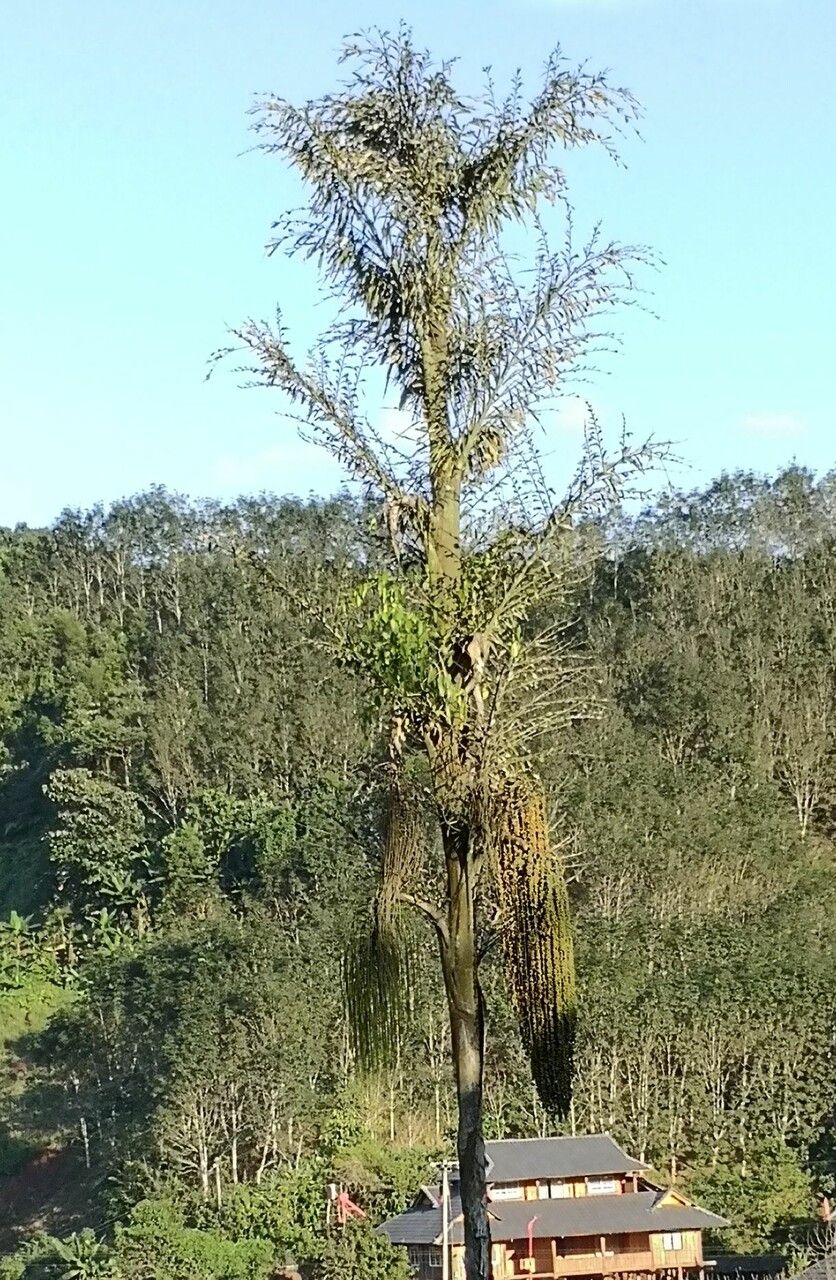
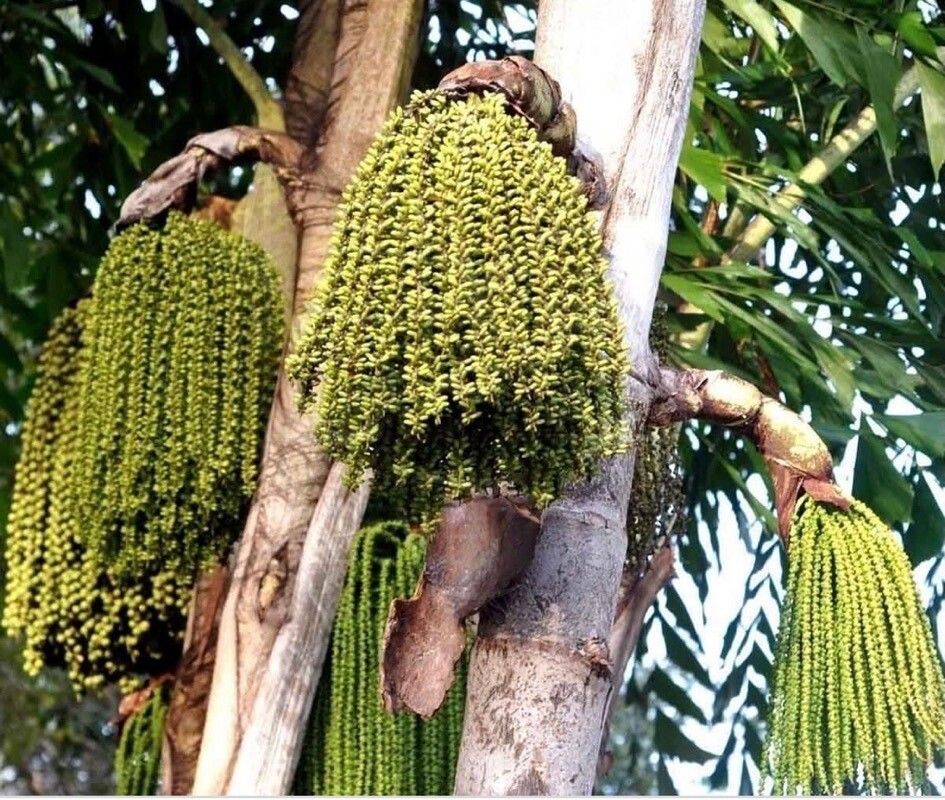
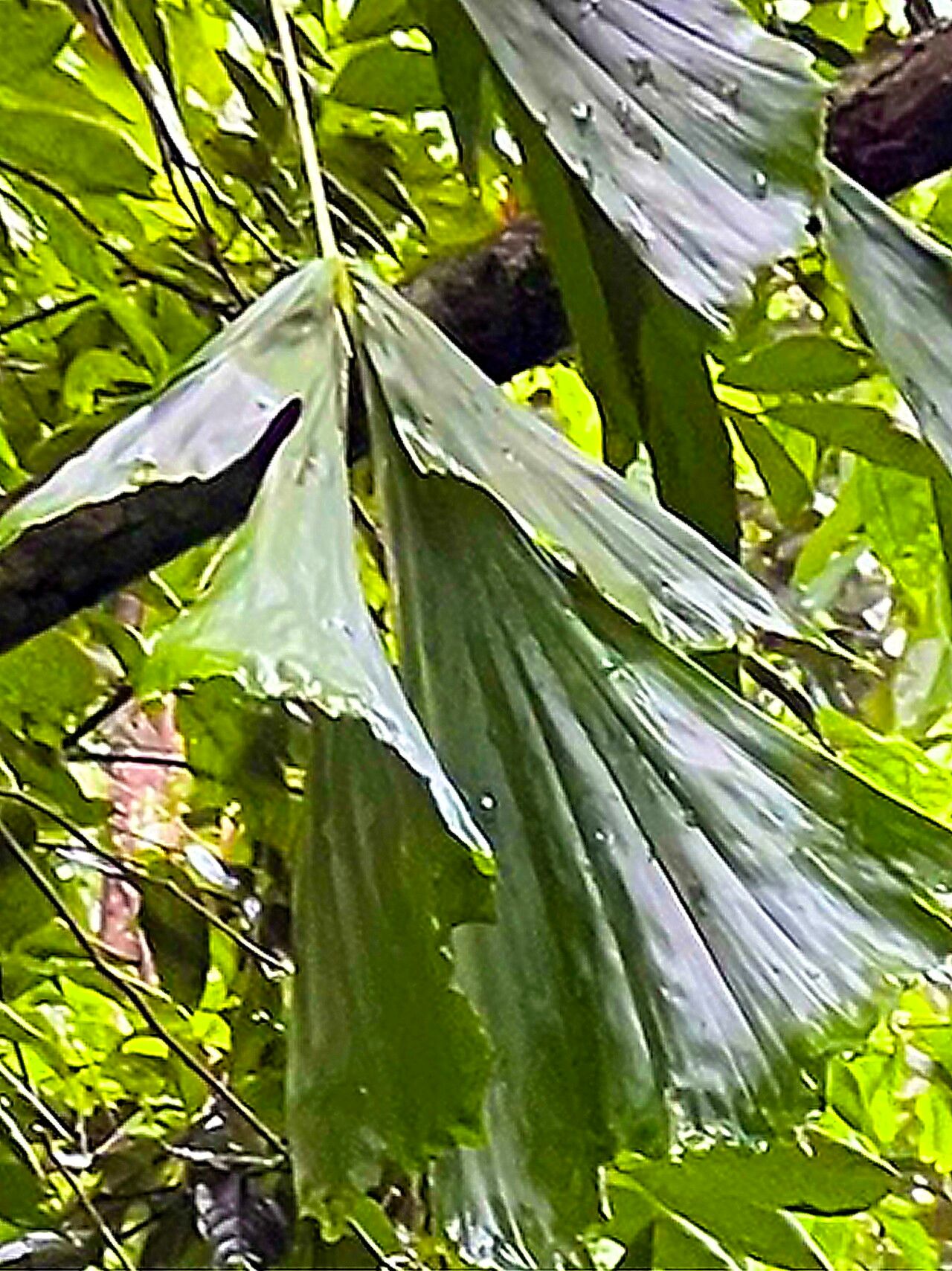
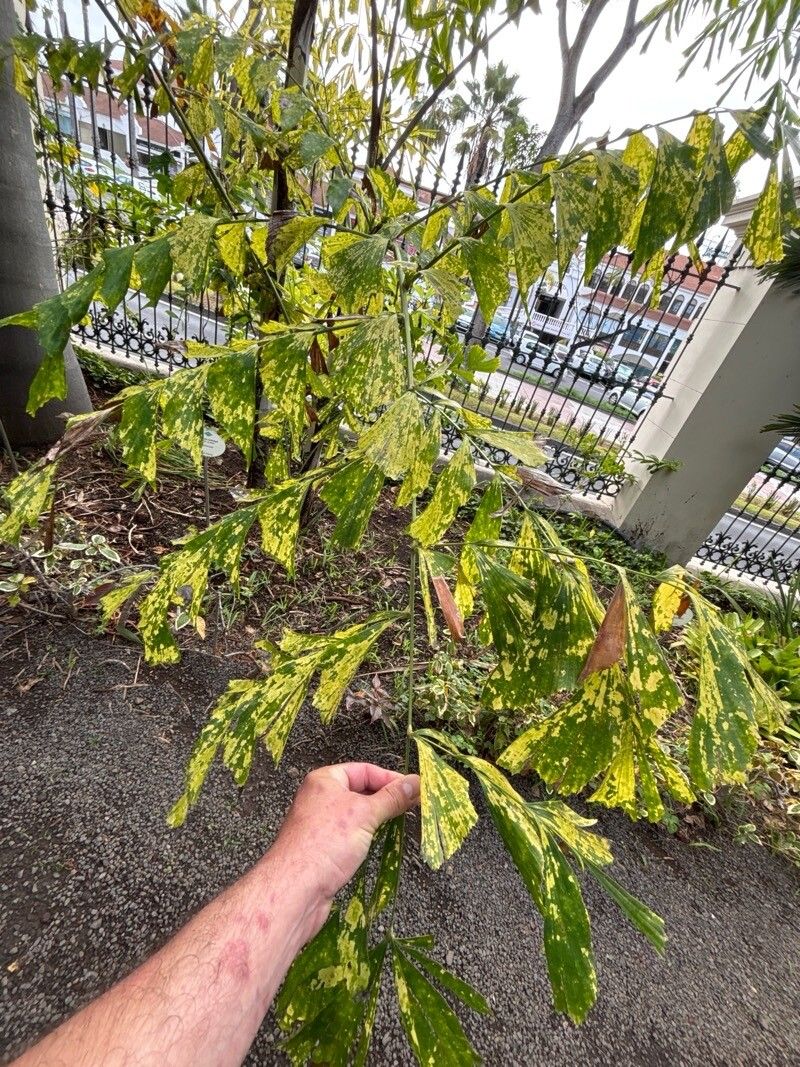
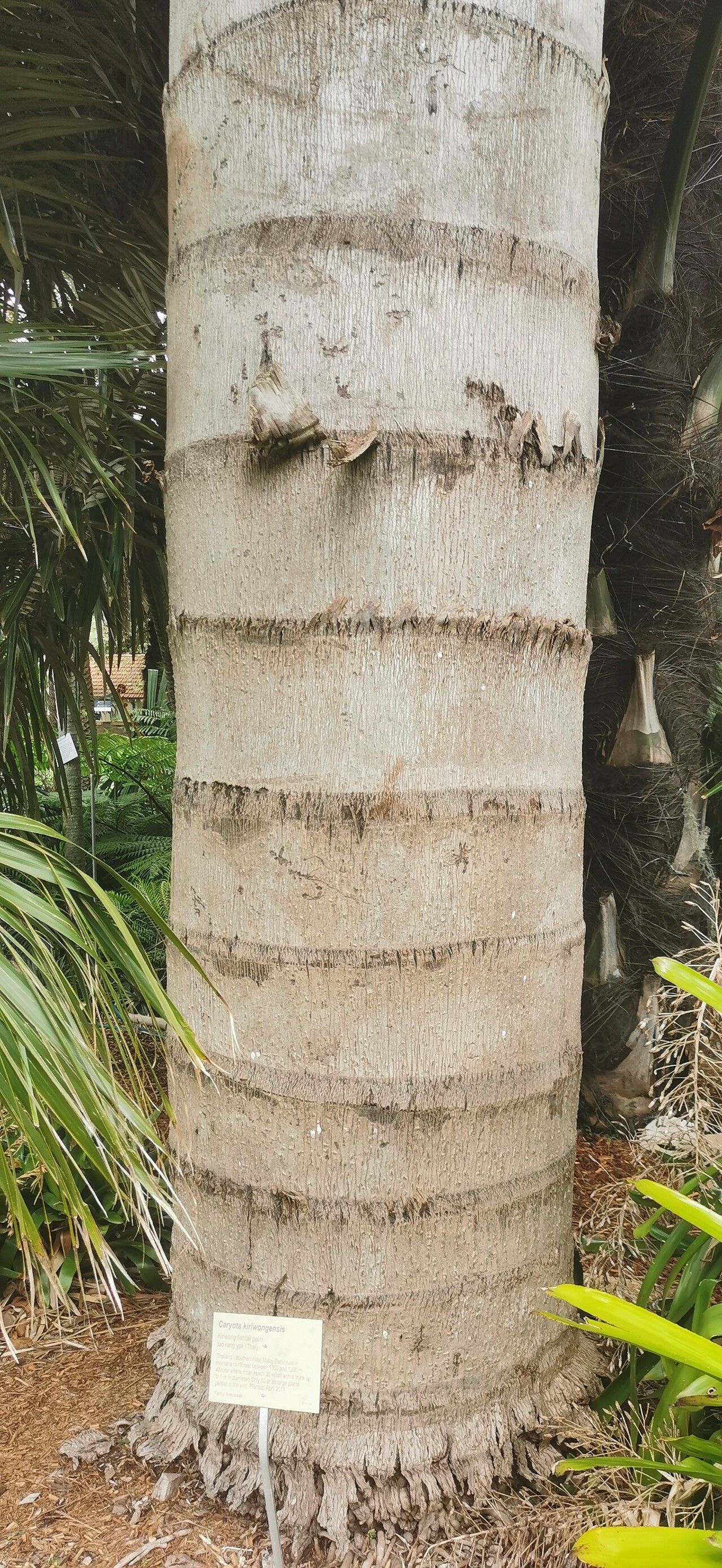
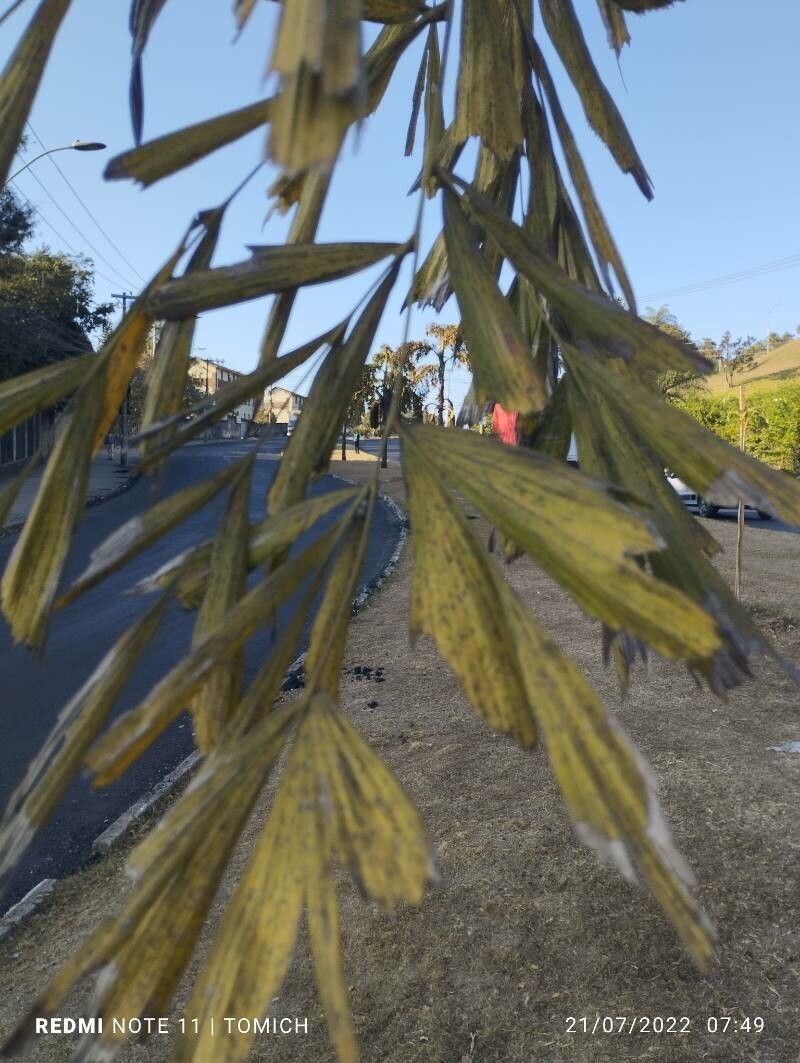
Caryota urens is a species of flowering plant in the palm family, native to Sri Lanka, India, Myanmar and Malaysia (perhaps elsewhere in Indo-Malayan region), where they grow in fields and rainforest clearings, it is regarded as introduced in Cambodia. The epithet urens is Latin for "stinging" alluding to the chemicals in the fruit. Common names in English include solitary fishtail palm, kitul palm, toddy palm, wine palm, sago palm and jaggery palm. Its leaf is used as fishing rod after trimming the branches of the leaf and drying. According to Monier-Williams, it is called moha-karin ("delusion maker") in Sanskrit. It is one of the sugar palms.
The Jaggery palm is fairly resistant to disease and is generally not susceptible to illnesses. Regarding care, the plant is relatively low-maintenance. When grown outdoors it needs only minimal watering, and larger plants typically do not require pruning. Smaller plants, however, should be pruned after they have bloomed. The Jaggery palm is suitable for anyone with an outdoor space, such as a garden or a deck, and does not require extensive care experience.
How to keep Caryota Urens.
Light
Jaggery palm flourishes in strong sunlight but can tolerate periods of shade. Its native habitats received ample sun, encouraging healthy growth. Too little light can lead to weakened growth, while too much can cause scorched leaves.
Water
The jaggery palm thrives in tropical climates with high humidity and needs moderate watering, ideally every 1-2 weeks. As an evergreen plant, it keeps its leaves year-round, showing its adaptability in conserving moisture during drier periods.
Humidity
This plant needs special care because it loves high humidity levels of 60-80% or more. The best way to achieve this is by placing a humidifier near the plant. Daily misting is also essential! Make sure the room has good ventilation.
Temperature
Jaggery palm comes from tropical areas where the weather is generally warm and humid. As a result, it is adapted to high heat and humidity. It does not tolerate abrupt temperature shifts and prefers a steady temperature, so avoiding indoor temperature fluctuations is important. It typically cannot withstand cold and needs warmer conditions to grow. If the surrounding temperature falls too low, the plant may stop growing or even die.
Fertilizer
The best time to fertilize a Jaggery palm is in early spring as it breaks dormancy. This encourages overall growth and flower development. Fertilization improves the foliage, stems, and branches, while encouraging large, vibrant, and long-lasting flowers. It helps transfer nutrients from the roots to the flowers and enhances the plant’s health and resistance to disease.
Pruning
The jaggery palm is a tall plant with cascading fronds that requires pruning in early spring. Be sure to remove only the dead fronds, taking care not to cut the green ones, as this can lead to nutrient loss. Proper pruning enhances air circulation and light penetration, which supports healthy growth. Additionally, remember to sanitize your tools before pruning to prevent disease and maintain the plant's health.
Pot & Repot
To ensure optimal growth of your jaggery palm, repot it every 1-2 years during the spring. Use a large, sturdy pot with excellent drainage. After repotting, place the plant in bright, indirect light and keep the soil consistently moist, being careful not to overwater.
Toxicity
Fishtail palm trees contain calcium oxalate crystals, needle-like crystals that can injure when ingested or touched. You might experience itching, a burning sensation, and dermatitis upon contact. If you eat it, you may experience that same burning sensation in your mouth and throat.
Further reading →
The toxicity and danger assessments provided are for reference only. We do not assure their accuracy, so it's crucial not to depend on them. Seek professional advice when necessary for accurate guidance.
Botanical profile.
- Plant Type
- Tree
- Life Cycle
- Perennial
- Genus
- Caryota
- Family
- Arecaceae
- Hardiness Zone
- 9-12
- Mature Height
- 24.99 m
- Mature Spread
- 10.06 m
- Leaf Color
- Green
- Leaf Type
- Evergreen
- Flower Color
- Yellow, Green
- Flower Size
- 0.10 cm
- Bloom Time
- All year round
- Planting Time
- Spring, Summer, Autumn
- Harvest Time
- All year round
- Native Area
- Sri Lanka, India
Other names.
Reader questions.
How should I water my Jaggery palm tree?
You can water your Jaggery palm in various ways, using tools like watering cans, hoses, or even cups. It's important to water the plant by applying the water directly to the soil. Make sure to moisten all areas of the soil equally, so that every part of the root system gets enough water. Using filtered water is helpful to avoid harmful particles that may be present in tap water. It's also recommended to use water that is at or slightly above room temperature to prevent shocking the Jaggery palm. However, this plant generally responds well to any type of water you provide.
What are the sunlight requirements for a Jaggery Palm?
Jaggery Palm requires full sun, which means it needs above 6 hours of sunlight to thrive optimally. It can also grow in conditions of partial sun or full shade, which equates to about 3-6 hours of sunlight. Monitoring how sunlight moves through your garden will help in choosing the best spots that offer a balance of light and shade, ensuring your Jaggery Palm's wellbeing.
What is Jaggery palm?
Jaggery palm, scientifically known as Caryota urens, is a type of palm tree. It is well-known for its use in the production of jaggery, a traditional sweetener in many parts of the world. The palm is distinctive for its unique appearance and the valuable sap extracted from it, which is then processed to produce jaggery.
What do I do if I give my Jaggery palm too much or too little water?
Outdoor plants, especially newly planted ones or seedlings, can often suffer from lack of watering. It's important to remember to water them regularly, especially during the first few months when the plant is still small or recently planted. Once the roots are established, Jaggery palm trees can rely on rainfall for most of their water needs. When you have a Jaggery palm planted in a pot, overwatering is more likely to happen. If you accidentally overwater your plant, it's crucial to address the situation promptly. Immediately stop watering the plant to minimize the effects of overwatering. Then, take the plant out of its pot to check the roots. If you find that none of the roots have developed root rot, you can go ahead and return the plant to its pot. However, if there are signs of root rot, you should trim away the affected roots and consider applying a fungicide to prevent further damage. Lastly, make sure to repot the Jaggery palm in well-draining soil. In the case of underwatering, simply increase the frequency of watering the Jaggery palm. This is usually a simple fix. If you notice the plant's leaves drooping, drying out, or falling off due to underwatering, they will quickly regain fullness once sufficiently watered. As soon as you recognize underwatering, correct your watering frequency accordingly.
What are the essentials for growing a healthy Jaggery Palm?
The Jaggery Palm excels in intense sun exposure but can tolerate some shade. Its original habitat provided plenty of sunlight, which is crucial for its healthy growth. Insufficient light leads to weak growth while excessive exposure may burn the foliage. In case of inadequate natural light, especially during winter or in darker rooms, artificial lighting can be a great substitute. LED lights are advisable as they can be tailored to offer specific wavelengths needed for growth. Depending on the type of sunlight the plant needs (full sun, partial sun, or full shade), artificial light should range from 10-50W per square foot. The artificial light source should be placed 12-36 inches above the plant and turned on for 8-12 hours per day to mimic natural light conditions.
How often should I give water to my Jaggery palm plant?
To properly care for your plants, it's important to consider their water needs. Most outdoor plants can rely on natural rainfall, but if your area doesn't get much rain, you'll need to make sure they're adequately watered. During the spring and fall, watering every 2 weeks should be sufficient, but in the summer, more frequent watering is necessary. In the winter, when plants are growing slower and need less water, you can water them less often or even skip watering altogether. However, young or newly planted Jaggery palms may require more frequent watering to help them establish and grow into more drought-tolerant plants. When it comes to potted plants, there are two main approaches to determining watering frequency. One is to create a set schedule, such as watering once a week or every other week. However, this may not consider the specific conditions of your Jaggery palm's growing environment. Another option is to base watering frequency on soil moisture. It's generally recommended to wait until the top two to four inches of soil have completely dried out before watering again. This method allows you to adjust watering frequency based on the season and the plant's individual needs.
What symptoms indicate light deficiency or excessive sunlight in Jaggery Palm?
Symptoms of light deficiency in Jaggery Palm include smaller new leaves, leggy or sparse growth, faster leaf drop, slower or halted growth, and lighter-colored or pale new leaves. Excessive sunlight can cause chlorosis, where leaves turn yellow due to chlorophyll breakdown, sunscald causing pale or necrotic patches, leaf curling as a mechanism to reduce exposed surface area, wilting from increased water loss, and leaf scorching characterized by brown, dry patches on leaves. Addressing these issues promptly by adjusting the plant's light exposure ensures healthier growth.
How much water does my Jaggery palm tree need?
To properly water your Jaggery palm, you don't always need to use a lot of water. If only a few inches of soil have dried since the last watering, give the plant about five to ten ounces of water each time. You can also determine how much water to use based on how dry the soil is. Take note of how many inches of soil have dried out between waterings. To ensure the plant gets enough moisture, water it until all the soil layers that have dried out since the last watering are moistened. If more than half of the soil is dry, consider giving it more water. In this case, keep watering until you see excess water draining from the pot's drainage holes. If you have a Jaggery palm planted outside where it receives plenty of rain, it may not need additional watering. When the plant is young or getting established, make sure it gets 1-2 inches of rain per week. As it grows, it can rely solely on rainwater, but during hot weather with no rainfall for 2-3 weeks, give it a thorough watering to prevent stress.
How can I treat symptoms of poor light exposure in Jaggery Palm?
For indoor Jaggery Palms, slowly transition the plant to a location with at least 6 hours of direct sunlight daily, ideally near a south-facing window. If moving the plant isn't feasible, consider using a desk lamp or invest in professional plant grow lights, keeping them on for at least 8 hours a day. For outdoor plants, incrementally move them to sunnier spots each week to prevent shock and sunburn. When dealing with ground-planted Jaggery Palms, identify and reduce obstructions like overhanging branches. For smaller plants that can be moved, consider transplanting during their dormant period to a sunnier location with ample sunlight and good drainage. Some symptoms of light deficiency may not be reversible, but new growth will be healthy once the lighting issue is corrected.
How can I know if I'm giving enough water to my Jaggery palm?
The Jaggery palm is often overwatered, which can result in yellowing leaves, leaf loss, shriveled structure, and root rot. On the other hand, an underwatered Jaggery palm may wilt, have brown or brittle leaves. Regardless of the signs, intervention is necessary to restore the plant's health.
Can you provide guidance on watering my Jaggery palm in different stages of its growth?
When the Jaggery palm is young, like during the seedling stage, it needs more water compared to when it is fully grown. It's important to keep the soil consistently moist during the early stages to help the roots grow. The same is true if you've transplanted a Jaggery palm to a new location. Additionally, if your Jaggery palm is flowering or fruiting, it will likely need more water to support these structures.
How do I make sure my Jaggery palm gets enough water all year round?
The watering needs of your Jaggery palm will be influenced by seasonal changes. In the hot summer months, especially in sunny areas, you will likely have to water this plant more frequently to prevent the soil from drying out quickly due to the strong sunlight. On the other hand, during the winter when the plant is not actively growing, it will require less water. During this time, you can water it once every 2 to 3 weeks or sometimes not at all. If you are growing the Jaggery palm indoors, be aware that appliances like air conditioners can cause the plant to dry out faster, so you may need to water it more often.