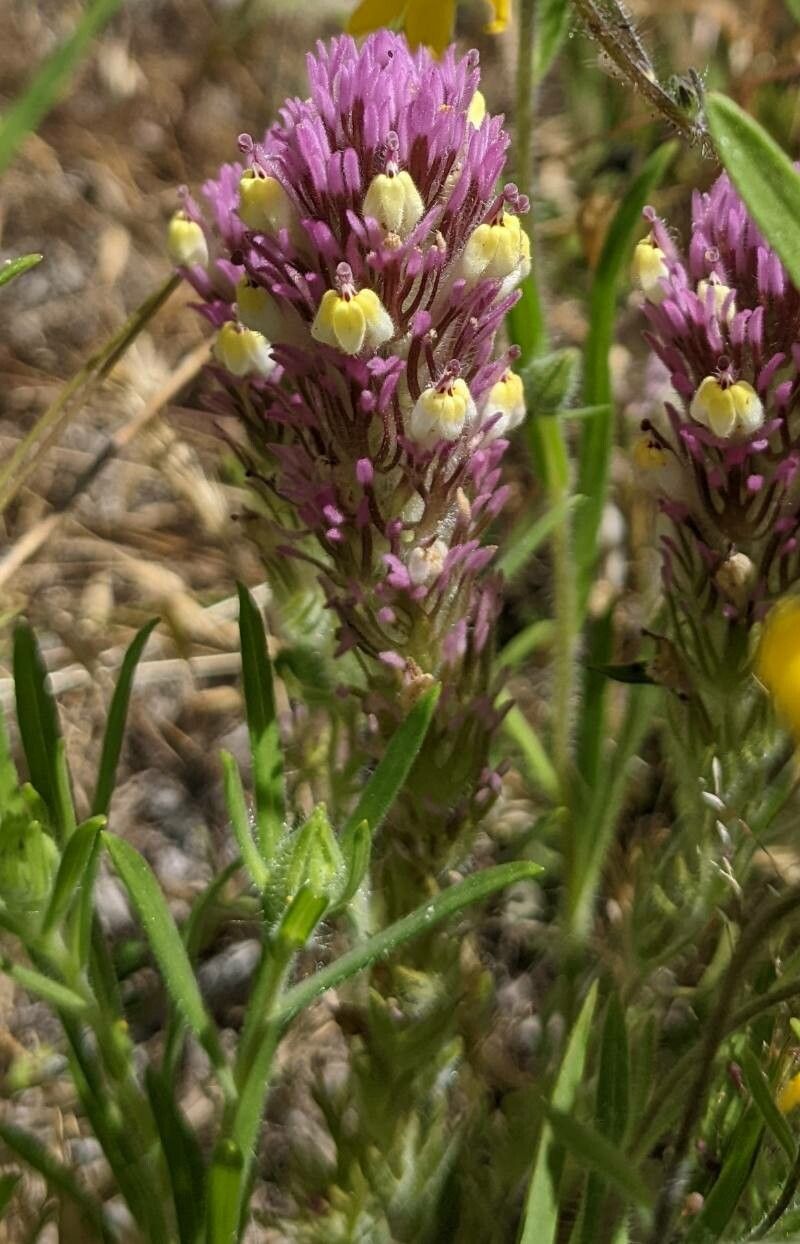
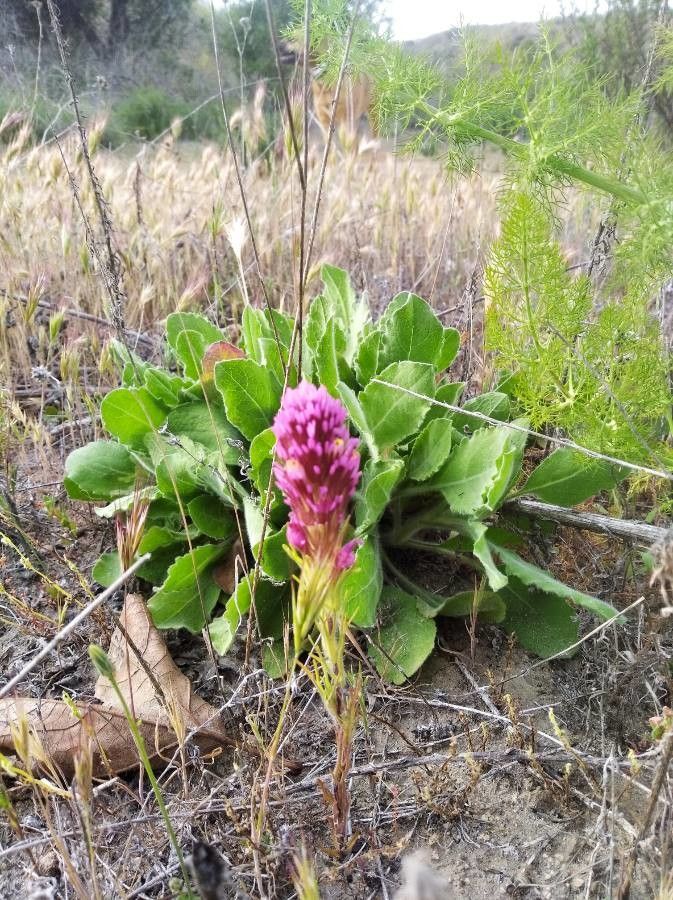
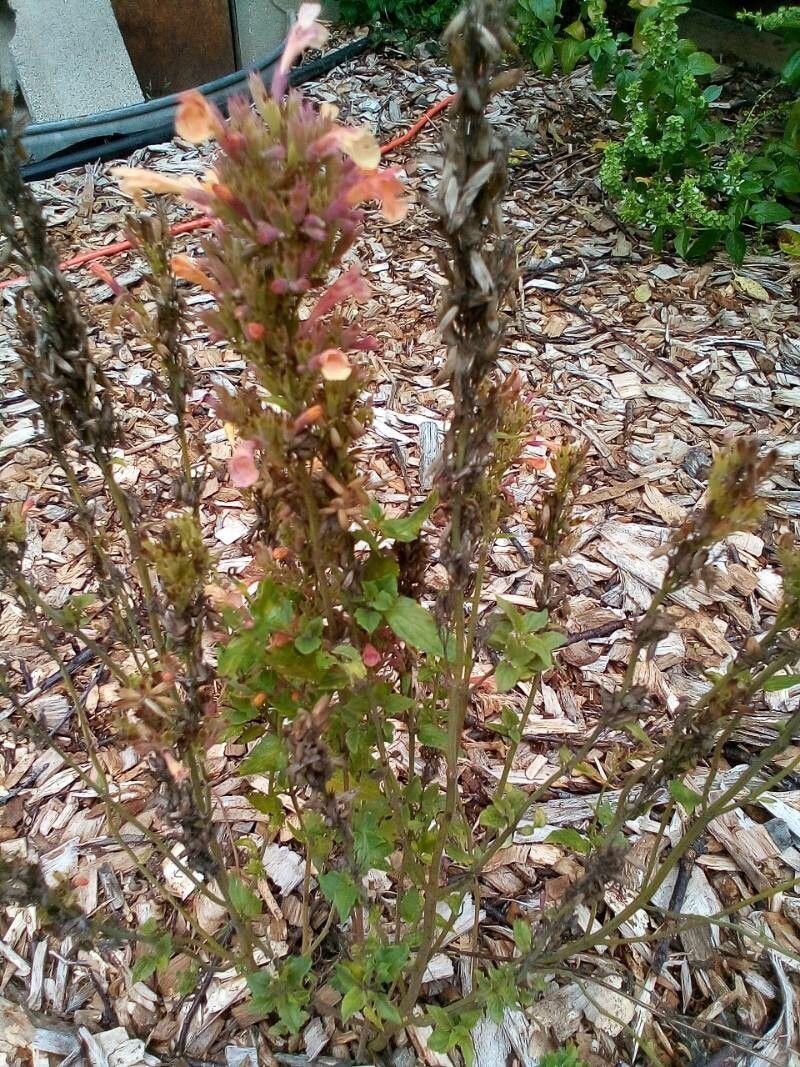
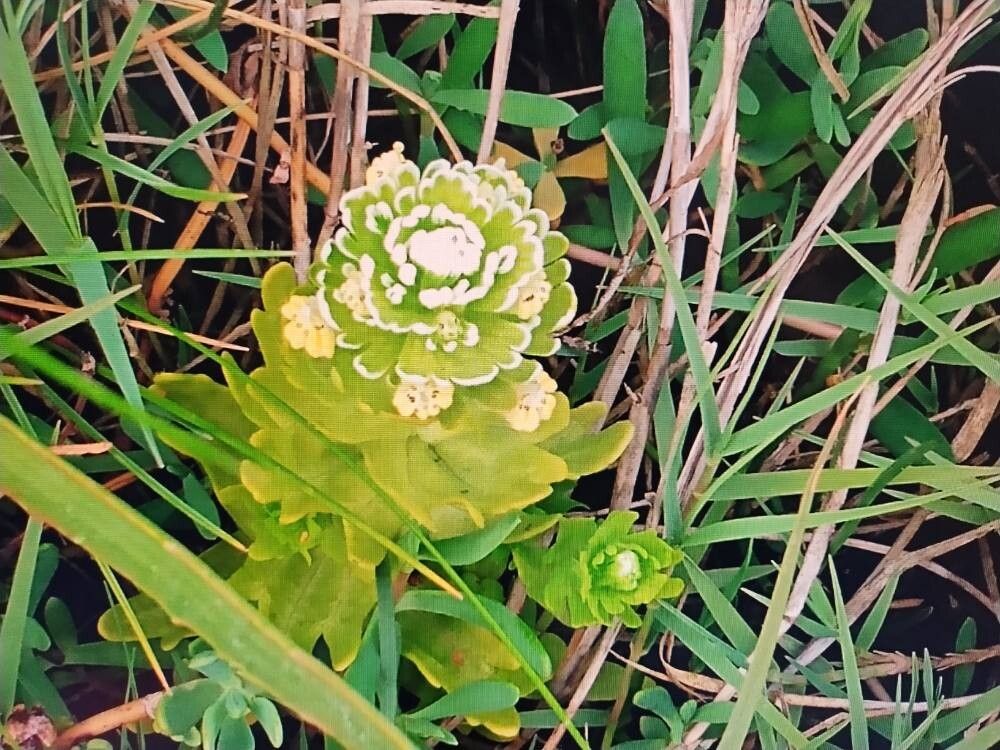
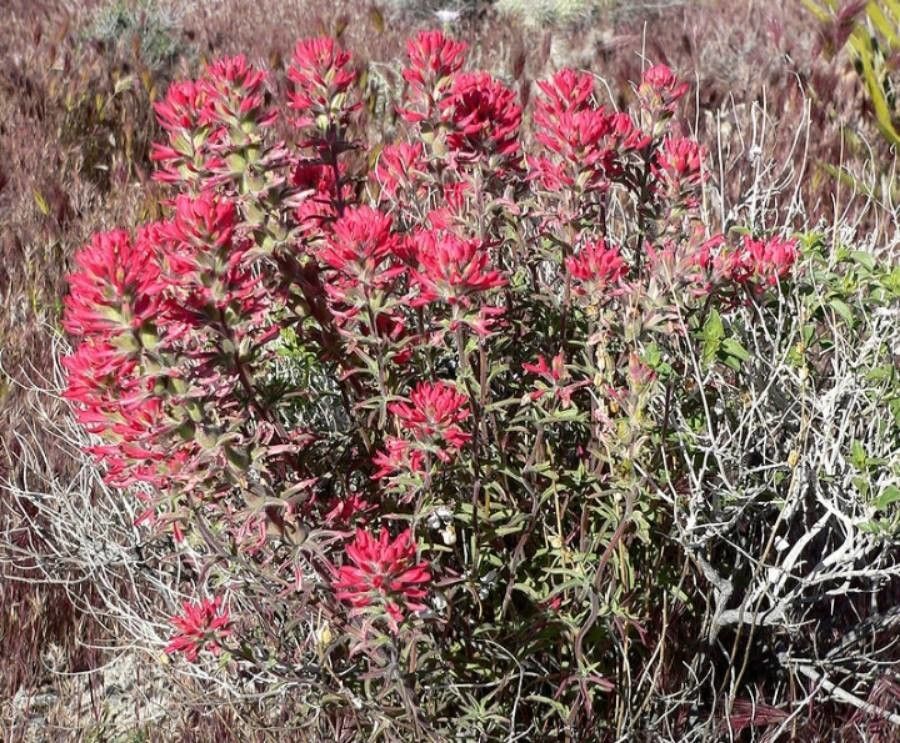
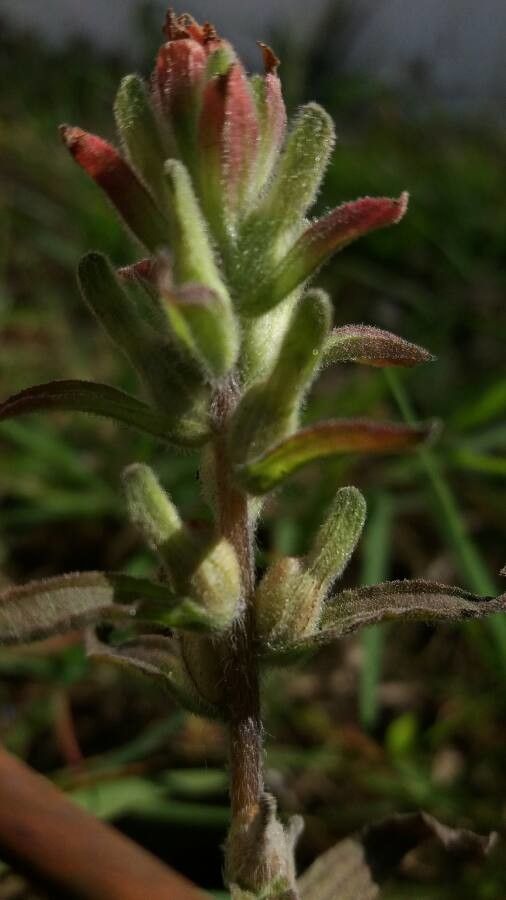
Castilleja exserta (formerly Orthocarpus purpurascens) is a species of plant in the genus Castilleja which includes the Indian paintbrushes. Its common names include purple owl's clover, escobita, and exserted Indian paintbrush.This species is native to the Southwestern United States in various habitats of California, Arizona, and New Mexico; and to Northwestern Mexico. It is an introduced species in Hawaii.
Exserted indian paintbrush is fairly resistant to disease and generally not prone to illnesses. However, it can be vulnerable to pests and diseases present in its environment. These problems are usually minor. In terms of care, this plant requires moderate maintenance. It should be pruned regularly to maintain a neat appearance and healthy growth. Fertilizing can also help encourage flowering. Exserted indian paintbrush is suitable for anyone with outdoor space, such as a garden or patio, and does not require extensive care experience. It may need more attention when kept indoors.
How to keep Castilleja Exserta.
Light
Exserted indian paintbrush does best when it receives abundant sunlight throughout the day. Its native habitats—exposed hill slopes and open grasslands—reflect this need for plentiful light. Both insufficient and excessive sun exposure can influence its growth and flowering stages and may impair its health.
Water
The exserted Indian paintbrush thrives in dry environments and is exceptionally drought-tolerant. It needs to be watered weekly, but make sure not to over-saturate it. The plant prefers well-draining soil to mimic its natural habitat. Primarily grown outdoors, the exserted Indian paintbrush is resilient and low-maintenance, ensuring it receives enough moisture without becoming waterlogged.
Temperature
Exserted indian paintbrush performs best in areas where temperatures range from 68 to 95 °F (20 to 35 ℃). Seasonal adjustments to its care are recommended to accommodate its preference for moderate temperatures.
Fertilizer
When most of the blooms on Exserted indian paintbrush have opened to full size, resume fertilizing. At the peak flowering period, apply fertilizer every three to four weeks, weather permitting. Once the Exserted indian paintbrush begins to produce fewer new blooms, stop fertilizing; there is no need to feed the plant when it can no longer set additional blooms.
Pruning
Pruning the exserted Indian paintbrush from early to late spring helps promote dense growth and more blooms. To maintain its shape and health, remove any dead or diseased stems. This also improves air circulation and reduces the risk of disease. Always use clean, sharp tools to prevent infections and encourage vibrant flower production.
Botanical profile.
- Plant Type
- Herb
- Life Cycle
- Annual
- Genus
- Castilleja
- Family
- Orobanchaceae
- Hardiness Zone
- 9
- Mature Height
- 10 cm to 46 cm
- Mature Spread
- 30 cm
- Leaf Color
- Green, Dark Green
- Leaf Type
- Deciduous
- Flower Color
- Purple
- Flower Size
- 0.76 cm to 2.54 cm
- Bloom Time
- Early spring, Mid spring
- Planting Time
- Spring, Summer
- Harvest Time
- Late spring, Early summer
- Native Area
- Mexico
Other names.
Reader questions.
What are the sunlight requirements for Exserted Indian Paintbrush?
Exserted Indian Paintbrush requires full sun, which means it needs above 6 hours of sunlight daily to thrive optimally. It is essential to observe how sunlight moves through your garden to select spots that offer a perfect balance of light and shade, ensuring the plants' well-being. Originating from exposed hill slopes and open grasslands, this plant is accustomed to ample levels of sunlight throughout the day. Insufficient or excessive sunlight can adversely affect its growth and flowering stages, potentially compromising its health.
What is the ideal temperature range for the Exserted Indian Paintbrush?
The Exserted Indian Paintbrush, known botanically as Castilleja exserta, thrives in regions where temperatures range between 68°F and 95°F (20°C and 35°C). To maintain the plant's health, seasonal adjustments in care are recommended to meet its preference for moderate temperatures. This plant has some tolerance to cold, generally not requiring additional measures when temperatures are above 0°C. However, if temperatures are expected to drop below freezing, temporary cold protection measures should be taken, such as wrapping the plant with plastic film, fabric, or other materials, which should be removed once temperatures rise again.
How can artificial lighting be used for indoor Exserted Indian Paintbrush plants?
For indoor Exserted Indian Paintbrush plants where natural sunlight is insufficient, especially during winter or in less sunny spaces, artificial lighting serves as a vital solution to promote healthier growth. LED lights are preferable for indoor plant lighting because they can be customized to offer specific wavelengths needed by the plants. Depending on the plant's sunlight needs, the required intensity of artificial light ranges from 10-20W/sq ft for full shade plants, 20-30W/sq ft for partial sun plants, to 30-50W/sq ft for full sun plants. The artificial light source should be positioned 12-36 inches above the plant and kept on for 8-12 hours per day to mimic natural daylight conditions.
How does the Exserted Indian Paintbrush react to low temperatures?
The Exserted Indian Paintbrush has moderate tolerance to low temperatures and thrives best when the temperature remains above 20°C. During the winter, it's crucial to keep the plant's environment above 0°C to prevent damage. If temperatures drop below -5°C, the plant's leaves may begin to droop. Mildly affected leaves can recover, but in severe cases, they will wilt and eventually fall off. It's advised to trim off frost-damaged parts and, to further protect the plant from low temperatures, wrap it with materials like non-woven fabric or cloth and construct a wind barrier.
What are the symptoms of inadequate light in Exserted Indian Paintbrush plants?
When Exserted Indian Paintbrush is grown indoors or in conditions lacking sufficient light, several symptoms might appear: Small and new leaves might grow smaller than mature ones, the plant can become leggy or exhibit sparse growth due to longer spaces between leaves or stems, older leaves might drop sooner to conserve resources, and new growth could halt. Additionally, insufficient light leads to lighter-colored leaves, a condition known as chlorosis (yellowing of the leaves), sunscald (damage from intense light), leaf curling as a defensive mechanism against too much light, wilting from excessive water loss, and leaf scorching which is characterized by brown, dry edges on leaves due to overexposure to sunlight.
How should you care for the Exserted Indian Paintbrush in high temperatures?
In the summer months, it's important to ensure that the Exserted Indian Paintbrush is kept in conditions where the temperature does not exceed 35°C. Exposure to temperatures above 38°C can lead to lighter leaf colors, drying and withering of leaf tips, leaf curling, and an increased susceptibility to sunburn. To mitigate these effects, trim away sunburned and dried-up parts of the plant. Moving the plant to a shaded location or using a shade cloth to protect it from the midday and afternoon sun can prevent further damage. Additionally, watering the plant in the morning and evening will help keep the soil adequately moist.
How can you address light-related issues in Exserted Indian Paintbrush plants?
To address light-related issues in Exserted Indian Paintbrush plants, consider the following solutions: For indoor plants, gradually relocate them to sunnier spots until they receive at least 6 hours of direct sunlight daily, using south-facing windows for maximum exposure. Artificial lights, like desk or ceiling lamps, should be on for at least 8 hours daily, or consider investing in professional grow lights for sufficient lighting. For outdoor plants, slowly move them to brighter areas to avoid sudden light intensity changes that could cause sunburn. If sunlight is obstructed by objects like trees, try pruning to allow more light through. For smaller plants, consider transplanting during their dormant period to a location with better sunlight and drainage. Note that parts of the plant damaged by insufficient light may not recover, but new growth should be healthy after adjusting light exposure.