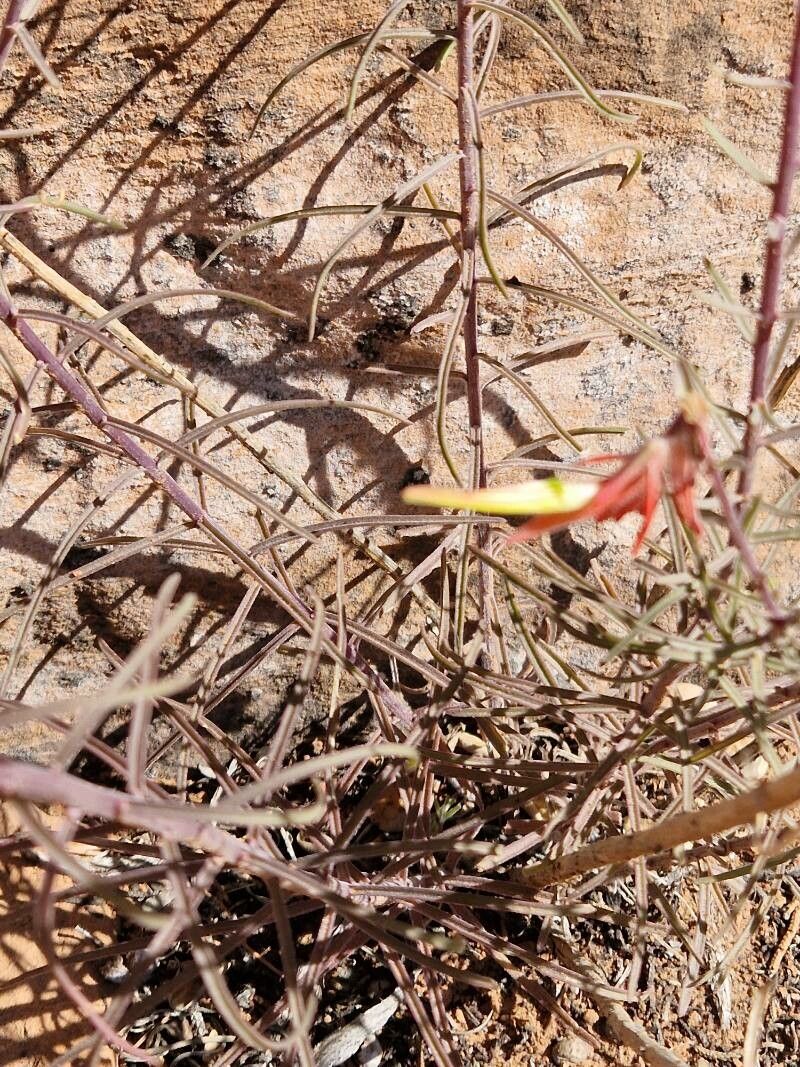
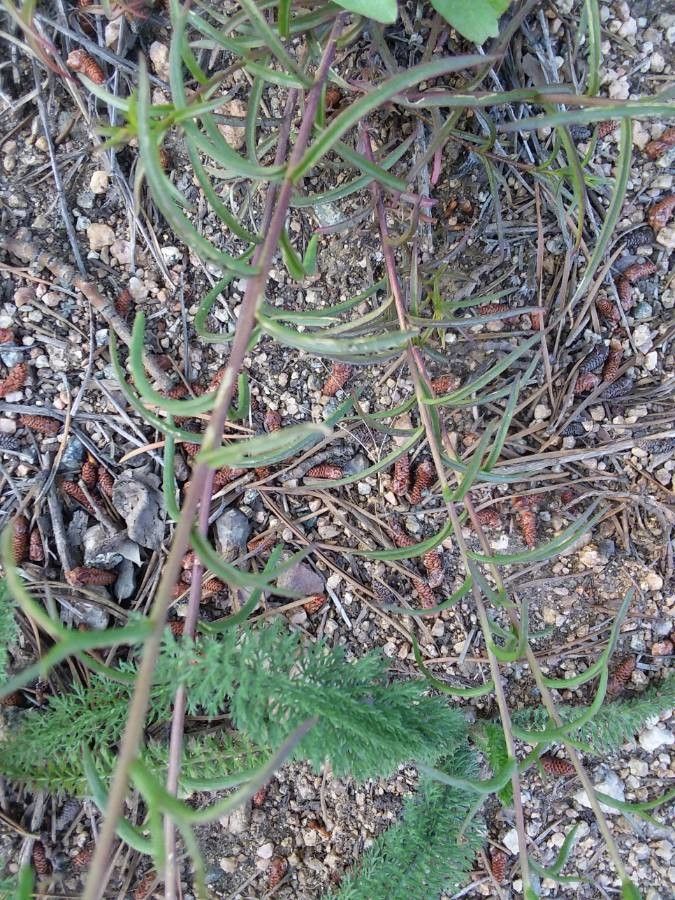
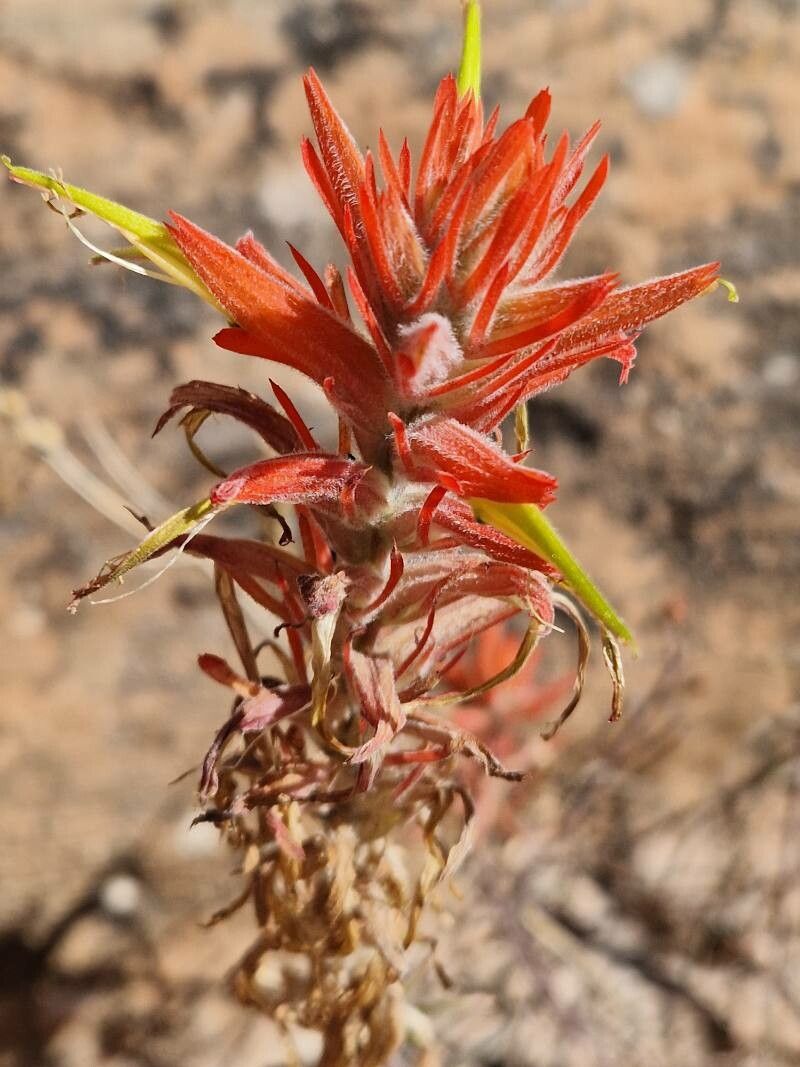
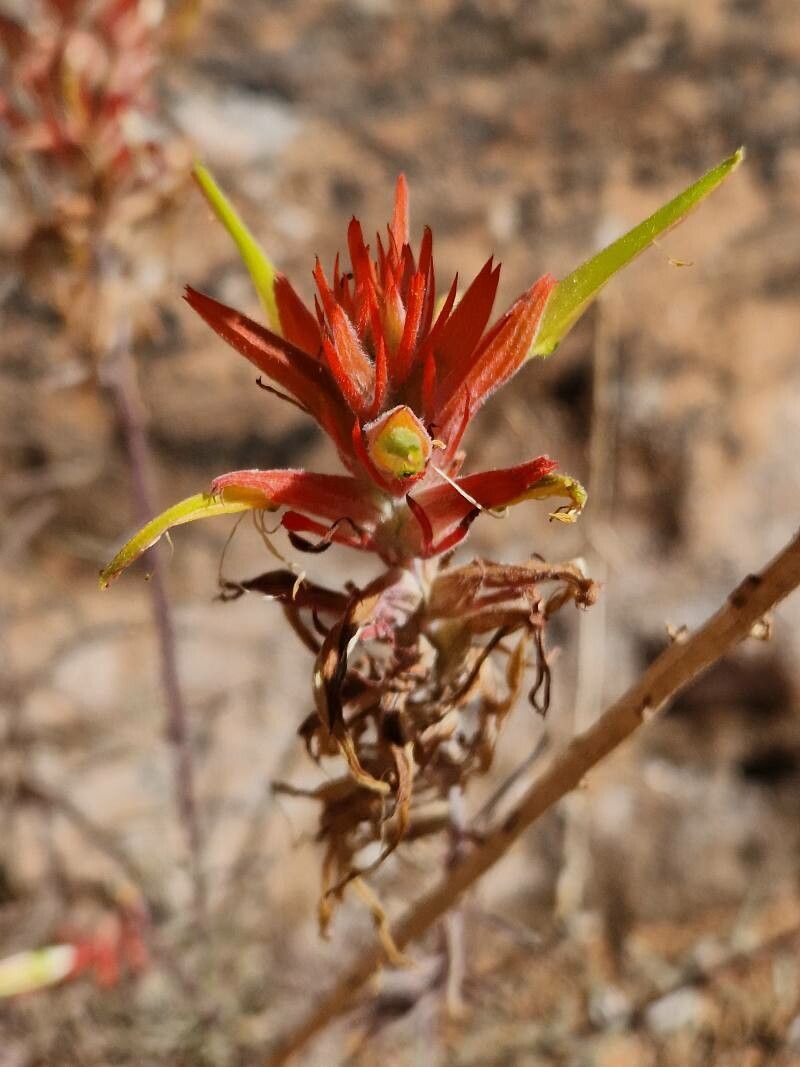
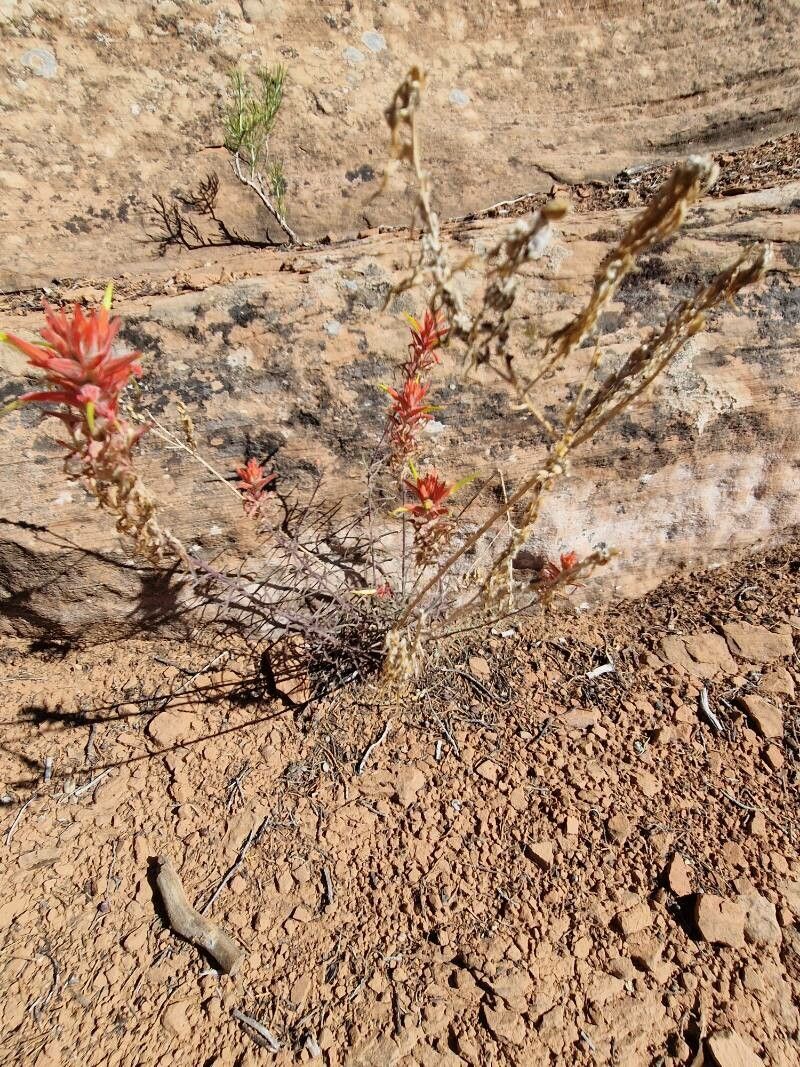
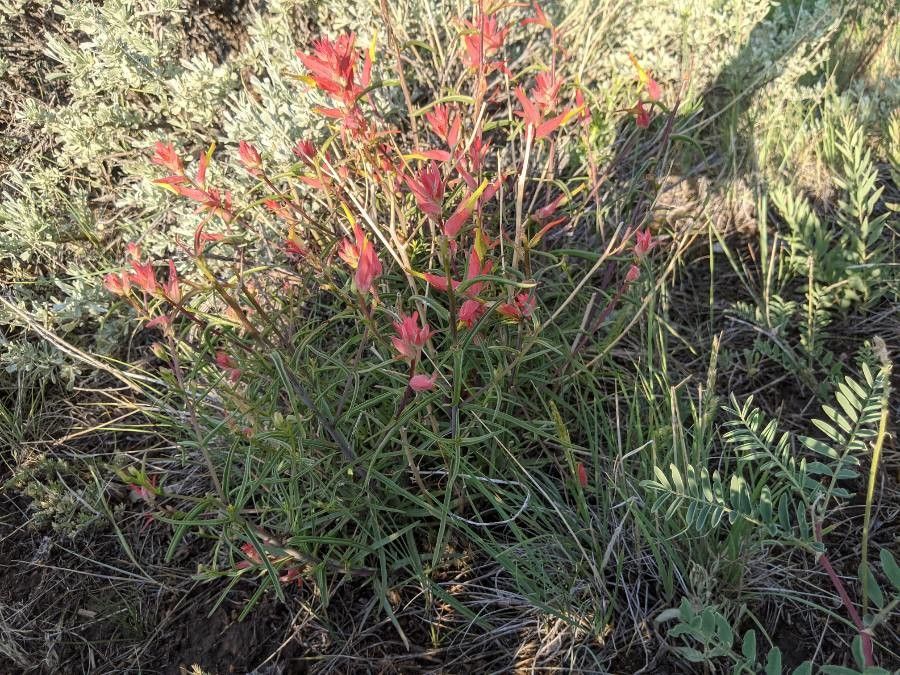
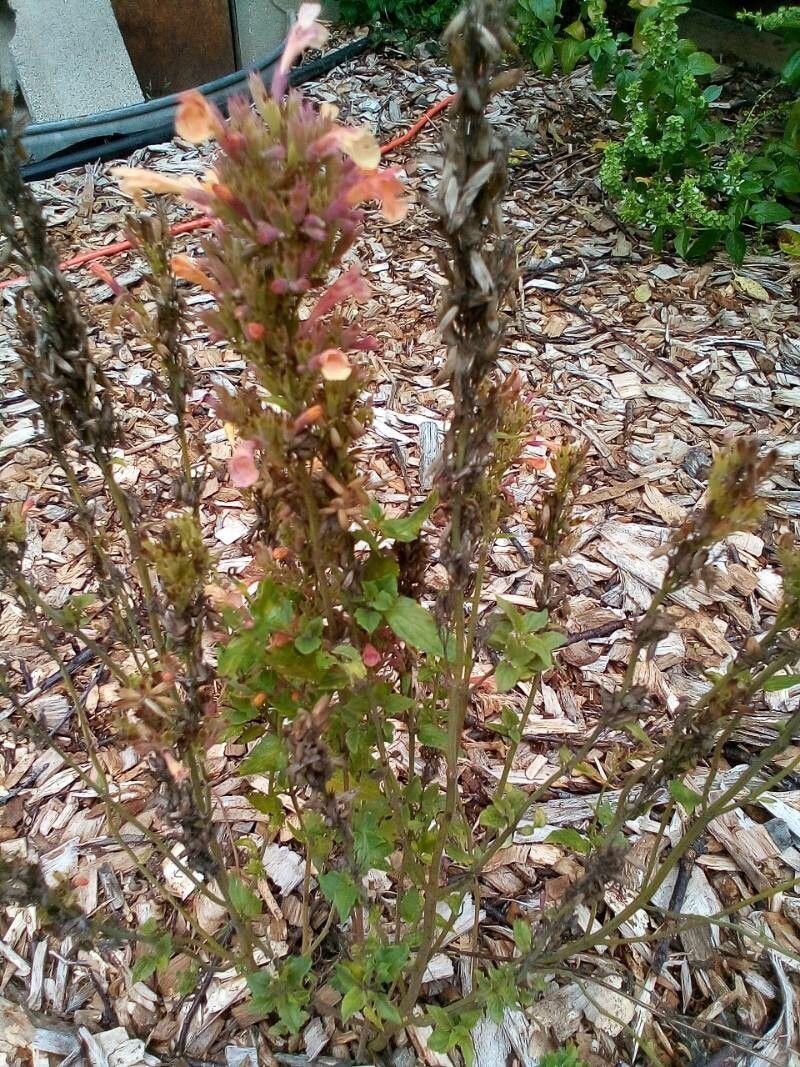
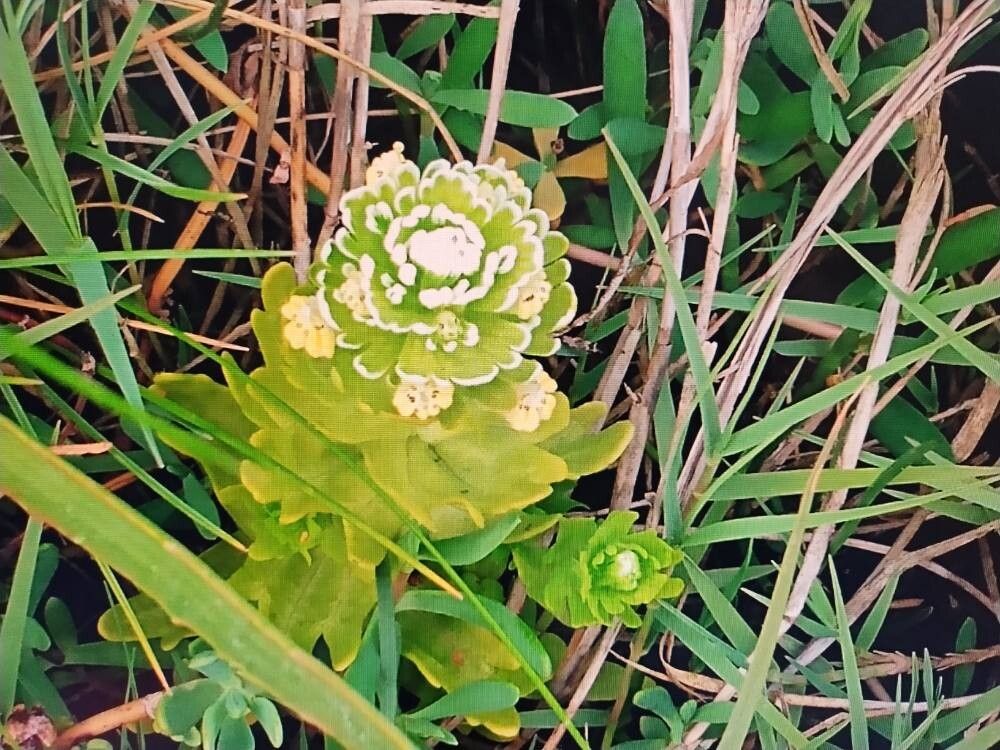
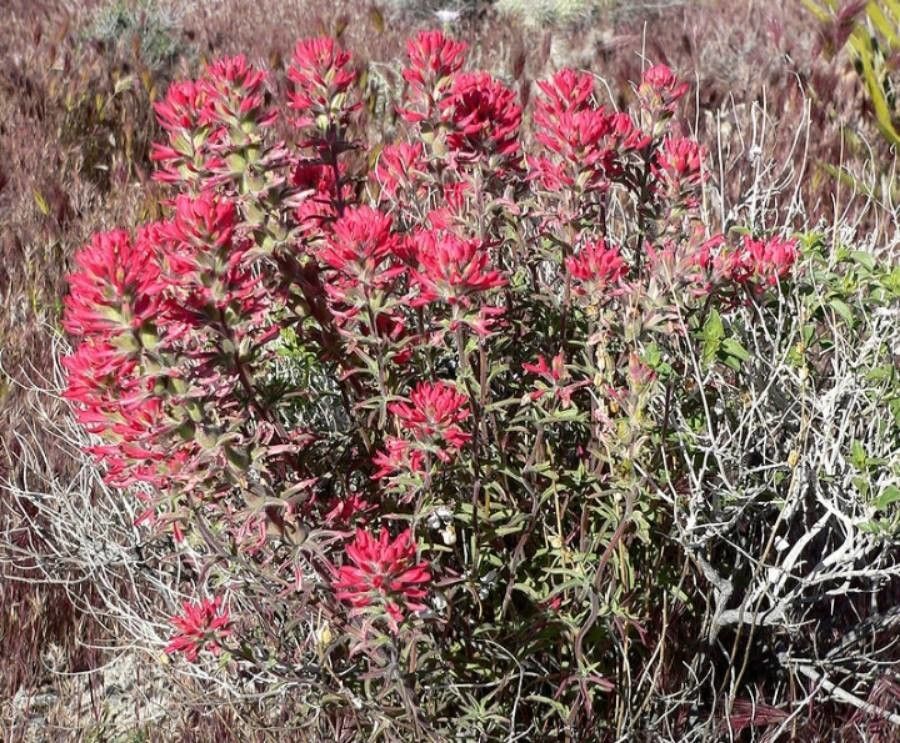
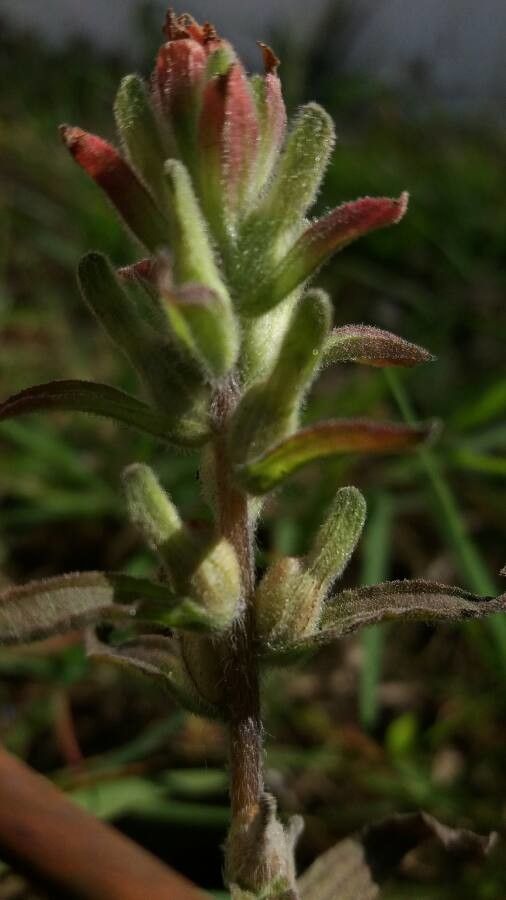
Castilleja linariifolia, commonly known as Wyoming Indian paintbrush, is a perennial herbaceous plant in the Orobanchaceae family. This species is native to western North America and thrives in various habitats, including meadows, sagebrush flats, and open forests. The plant can grow up to 30 cm tall and features narrow leaves that are linear to lanceolate in shape. Its most distinctive characteristic is its vibrant flowers, which are bright red-orange or yellow-orange with green bracts that look like a paintbrush dipped in paint. These eye-catching flowers bloom from May to August. Castilleja linariifolia plays a crucial role in the ecosystem, particularly for pollinators like hummingbirds and bees, due to its nectar-rich flowers. Additionally, this plant holds cultural significance for Native American tribes, who have traditionally used it for medicinal purposes. Propagation of Castilleja linariifolia can be done via seeds or division. However, it requires well-drained soil and full sun exposure for optimal growth. It's important to note that this species may be challenging to establish because of its parasitic nature; it relies on the roots of other plants to obtain nutrients. In summary, Castilleja linariifolia is a stunning wildflower with significant ecological importance and cultural value in the natural landscapes of western North America.
Wyoming Indian-Paintbrush has strong disease resistance and is generally not prone to illnesses. Still, it can be affected by pests and diseases present in its surroundings, though these infections are typically not severe. Regarding care, the plant needs moderate maintenance. It should be pruned regularly to maintain a tidy appearance and support healthy growth. Fertilizing can also help encourage flowering. Wyoming Indian-Paintbrush is suitable for anyone with outdoor space, such as a garden or patio, and does not demand extensive care experience. It may require more attention if grown indoors.
How to keep Castilleja Linariifolia.
Light
Wyoming Indian-Paintbrush thrives with constant sun exposure and can tolerate some shade. However, optimal growth and productivity are achieved in full sun. If it gets insufficient light, it may grow more slowly or show reduced vigor.
Water
The Wyoming Indian-Paintbrush is a herbaceous perennial that thrives outdoors, having adapted to seasonal rains for survival and flowering. It prefers consistent moisture and benefits from steady humidity, which means it requires weekly watering. Although it originates from meadows and grasslands, it has moderate drought tolerance.
Temperature
Wyoming Indian-Paintbrush prospers in its native habitat at temperatures ranging from 32 to 90 °F (0 to 32 ℃). To encourage optimal growth, modify care according to the seasons, especially during extreme temperatures.
Fertilizer
The best time to fertilize a Wyoming Indian-Paintbrush is in early spring, as it comes out of dormancy and begins active growth. Fertilization supplies essential nutrients needed for healthy development. Although Wyoming Indian-Paintbrush has relatively low fertilizer requirements, applying fertilizer once a year can improve its survival and encourage healthier, longer-lasting blooms.
Pruning
To promote growth and maintain the shape of the Wyoming Indian-Paintbrush, it should be pruned from early to late spring. Removing spent flowers and damaged stems encourages new blooms and helps prevent disease. Minimal, targeted pruning preserves the plant's natural form, ensuring it remains healthy and attractive.
Toxicity
The Indian paintbrush plant is known to contain high amounts of selenium, which can be toxic if ingested in large amounts. Symptoms include nausea, vomiting, and fatigue. High amounts of selenium can be fatal in horses.
Further reading →
The toxicity and danger assessments provided are for reference only. We do not assure their accuracy, so it's crucial not to depend on them. Seek professional advice when necessary for accurate guidance.
Botanical profile.
- Plant Type
- Herb
- Life Cycle
- Perennial
- Genus
- Castilleja
- Family
- Orobanchaceae
- Hardiness Zone
- 3-8
- Mature Height
- 91 cm
- Mature Spread
- 61 cm
- Leaf Color
- Green, Blue
- Leaf Type
- Deciduous
- Flower Color
- Red
- Flower Size
- 2.03 cm to 3.05 cm
- Bloom Time
- Summer
- Planting Time
- Spring, Summer
- Harvest Time
- Early fall, Mid fall
- Native Area
- Mexico
Other names.
Reader questions.
How should I water my Wyoming Indian-Paintbrush plant?
To properly care for the Wyoming Indian-Paintbrush, use filtered room temperature water rather than tap water, which may contain harmful particles. Since the plant comes from a warm environment, avoid using cold water as it can shock the plant. Additionally, it's best not to water the plant from above to prevent issues with the foliage. Instead, soak the soil with the filtered room temperature water until it is completely moistened. This helps the plant's roots spread and collect necessary nutrients.
What are the sunlight requirements for the Wyoming Indian-Paintbrush?
The Wyoming Indian-Paintbrush thrives in locations that offer full sun exposure, which means it should receive more than 6 hours of direct sunlight daily. It can also tolerate partial sun conditions, with about 3-6 hours of sunlight. It is important to observe the movement of sunlight through your garden to choose spots that provide the perfect balance of light and shade, ensuring the plants' optimal growth and happiness.
What is the optimal temperature range for the growth of Wyoming Indian-Paintbrush?
The Wyoming Indian-Paintbrush, or Castilleja linariifolia, thrives in temperatures ranging from 32 to 90 °F (0 to 32 °C). It is important to adjust the care of the plant with the changing seasons to ensure optimal growth, especially in extreme temperatures. The plant possesses strong cold resistance, hence special frost protection is generally not needed during winter. However, for temperatures expected to drop below -35°C, protection such as covering the plant with soil or straw is recommended. Also, watering the plant abundantly before the first freeze in autumn to keep the soil moist through winter and early spring, helps prevent drought and water scarcity for the plant.
What do I need to do if I give my Wyoming Indian-Paintbrush plant too much or too little water?
Overwatering can be harmful to your Wyoming Indian-Paintbrush as it is a common issue. Too much water can cause wilting, yellowing of the stems and leaves, and even diseases like root rot, mold, and mildew that can kill the plant. Underwatering is less common due to the plant's drought tolerance, but it can still happen, resulting in brittle and brown leaves. It is important to promptly identify the signs of overwatering and take action to prevent irreversible damage. This includes reducing the watering schedule and checking the soil's drainage. If underwatering is detected, simply increase watering until the plant recovers.
How do light conditions affect the growth and fruitfulness of Wyoming Indian-Paintbrush?
Wyoming Indian-Paintbrush benefits greatly from continuous exposure to the sun, achieving the best growth and fruitfulness with complete sun exposure. Inadequate light may lead to slower growth or weakened vitality. To support optimal growth, indoor plants may require artificial lighting, especially when natural sunlight is insufficient. LED lights are a popular choice for indoor plant lighting, as they can provide specific wavelengths needed by the plants. Full sun plants need 30-50W/sq ft, partial sun plants require 20-30W/sq ft, and full shade plants need 10-20W/sq ft of artificial light.
How should Wyoming Indian-Paintbrush be cared for in low temperatures?
Wyoming Indian-Paintbrush is cold-tolerant and fares best when temperatures remain above 0°C. During the winter, it is crucial to keep the plant above -30°C. If temperatures fall below -35°C, the plant may not show immediate damage during winter, but there could be a decrease in or absence of sprouting in spring. In spring, any parts of the plant that have failed to sprout should be removed to encourage healthy growth.
How often should I give water to my Wyoming Indian-Paintbrush plant?
If your Wyoming Indian-Paintbrush is in a pot, the best way to check if it needs water is by sticking your finger into the soil. If the top two to three inches of soil feels dry, it's time to water it. If you have the plant planted outdoors in the ground, you can use the same method to test the soil. Once again, if the top few inches of soil have dried out, it's time to water. Usually, during spring and early fall, you'll need to water this plant once a week. However, during extremely hot weather, you may need to water it twice or more per week. It's worth mentioning that mature and well-established Wyoming Indian-Paintbrush plants have a good tolerance for drought.
What are the symptoms of light deficiency in Wyoming Indian-Paintbrush?
Symptoms of light deficiency in Wyoming Indian-Paintbrush include smaller new leaves compared to mature ones, leggy or sparse growth, faster leaf drop, slower or no new growth, lighter-colored new leaves, chlorosis, sunscald, leaf curling, wilting, and leaf scorching. These symptoms indicate the plant is not receiving enough light, affecting its growth and overall health.
What are the effects of high temperatures on Wyoming Indian-Paintbrush, and how can they be mitigated?
In periods of high temperatures, specifically above 32°C during summer, the Wyoming Indian-Paintbrush can experience several stress symptoms. These include leaves becoming lighter in color, prone to curling, susceptibility to sunburn, and in severe cases, wilting and drying out of the entire plant. To mitigate these effects, sunburned and dried parts of the plant should be trimmed away. Moving the plant to a shade or using a shade cloth to protect it from the midday and afternoon sun is advisable. Additionally, watering the plant in the morning and evening to keep the soil moist is crucial for its wellbeing in high temperatures.
How much water does my Wyoming Indian-Paintbrush plant need?
To properly water your Wyoming Indian-Paintbrush, don't hold back on the amount of water you provide. Wait until the top two to three inches of soil are dry, then give the plant a thorough soaking. Make sure the water completely saturates the soil by adding enough that it drains out of the pot through the bottom holes. If there's no excess water draining, you likely haven't watered enough. However, be careful not to let water accumulate in the soil, as this can harm the plant. On the other hand, if water doesn't drain well, you may have poorly draining soil, which is not good for the plant's health. For outdoor plants, one inch of rainfall per week will be enough.
What solutions can address light deficiencies for indoor and outdoor Wyoming Indian-Paintbrush plants?
To address light deficiencies, gradually move plants to a sunnier location each week for both indoor and outdoor settings. For indoor plants, maximizing sunlight exposure through a south-facing window or using artificial lighting, such as a desk or ceiling lamp for at least 8 hours daily, can be beneficial. For outdoor plants, ensure a gradual transition to avoid sunburn. If sunlight obstruction is an issue, consider pruning trees or transplanting smaller plants to areas with ample sunlight and good drainage. Note that parts of the plant affected by insufficient sunlight may not recover fully, but new growth will be healthier after improving light exposure.
How do I water my Wyoming Indian-Paintbrush plant at different stages of growth?
The water needs of the Wyoming Indian-Paintbrush can vary depending on its growth stages. In the first few years of its life or after being transplanted to a new location, it requires more water. During these stages, the plant focuses on developing new roots that will support future growth, and these roots need extra moisture. As the plant matures, it will require less water overall. Additionally, during the bloom period, the flower development requires a significant amount of moisture, so you may need to give the plant more water at this specific time.