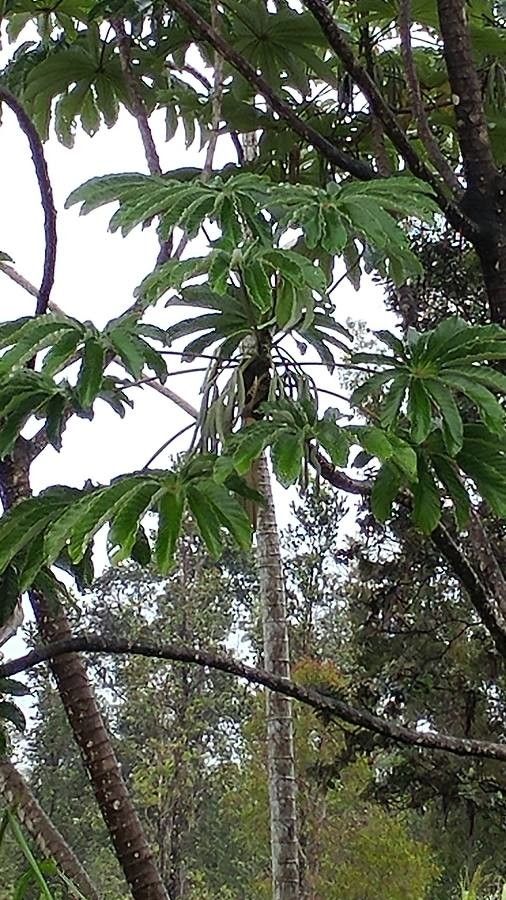
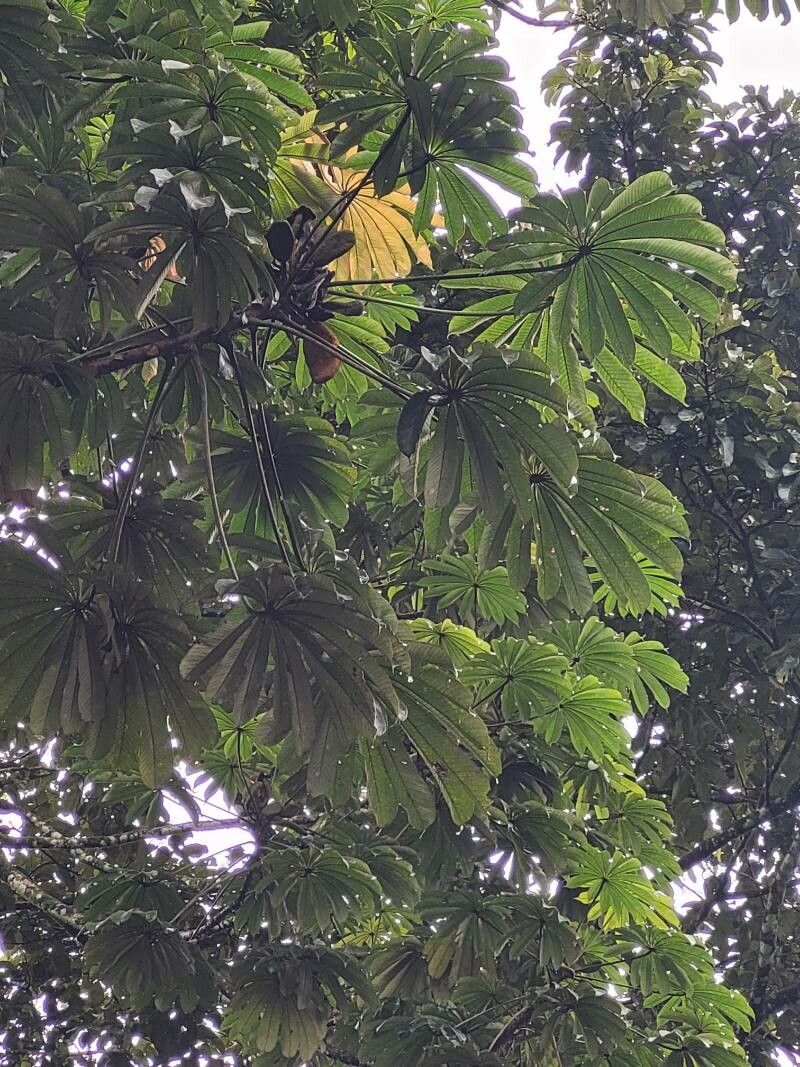
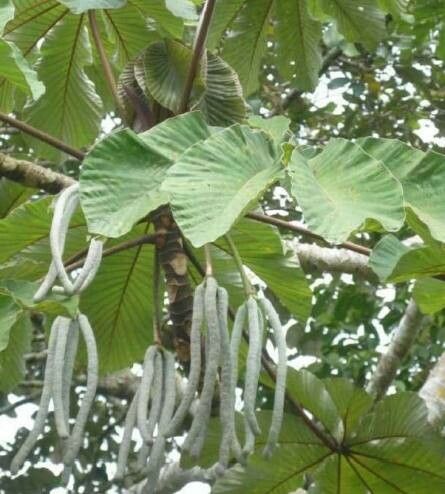
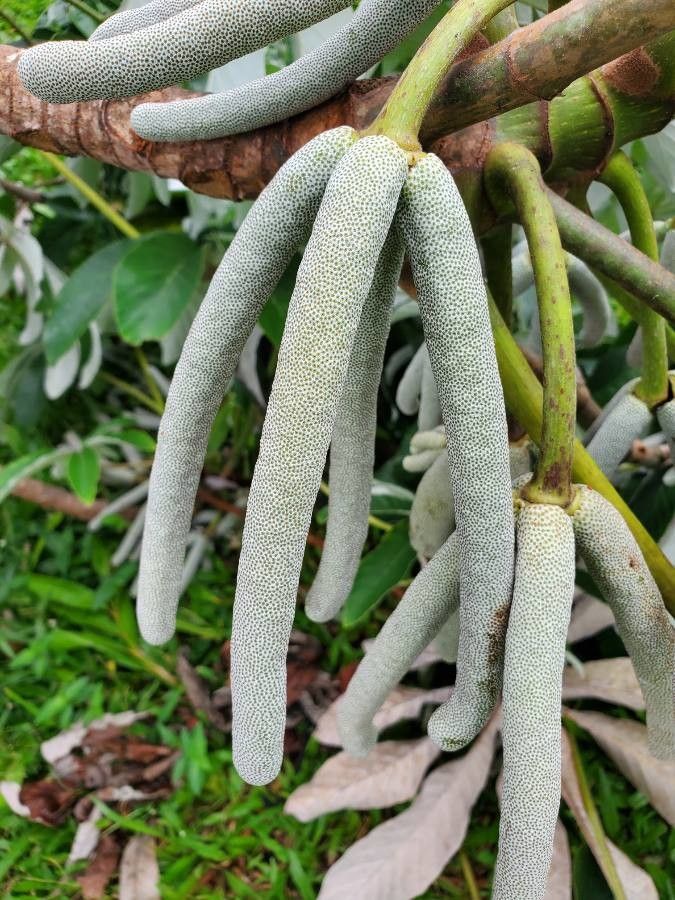
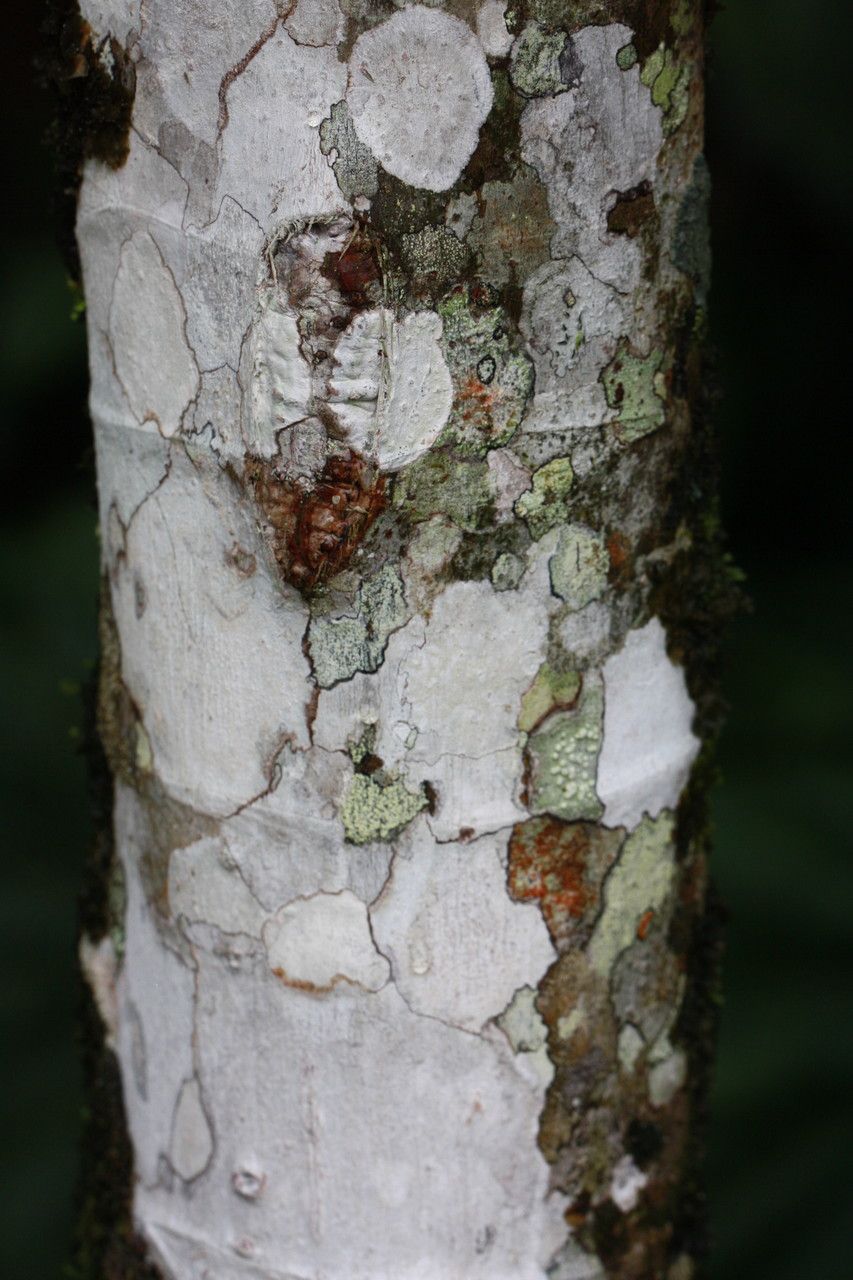
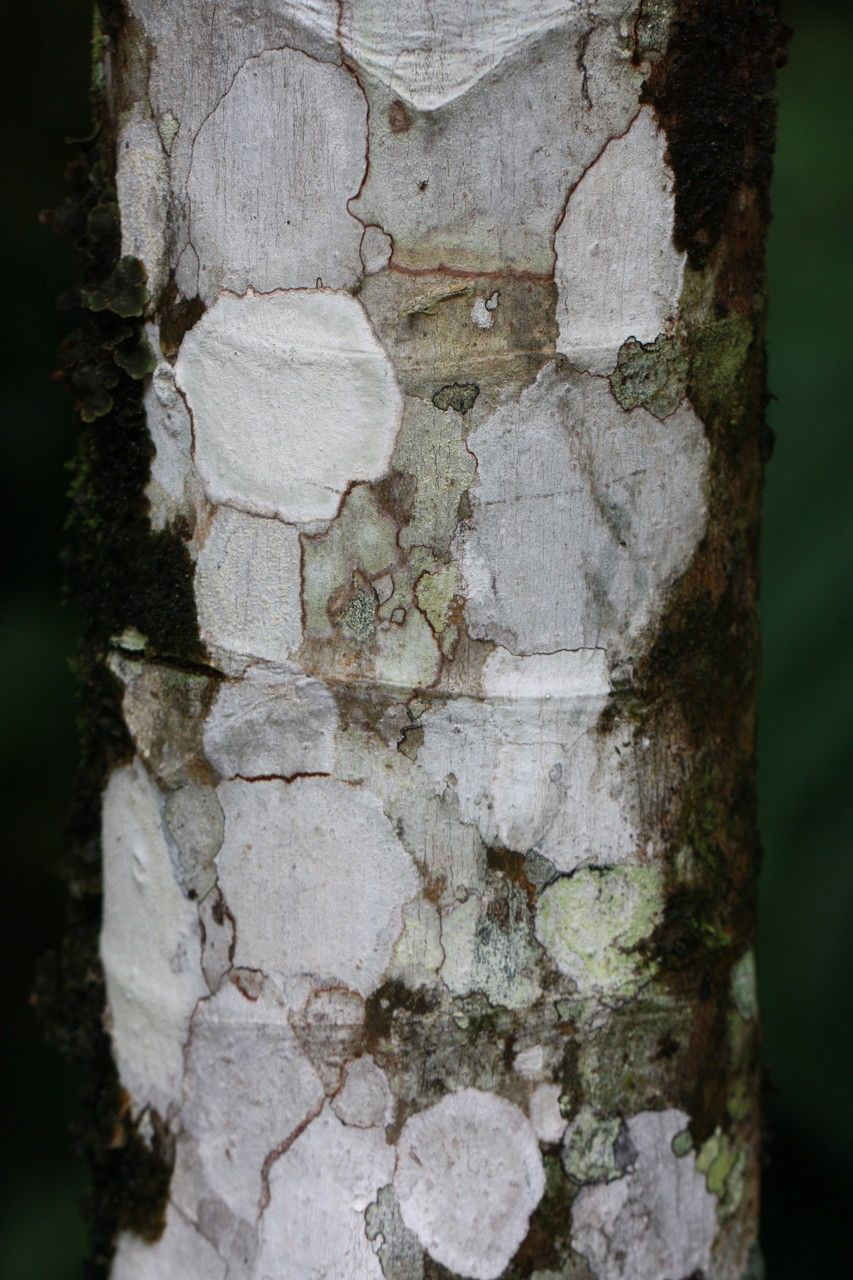
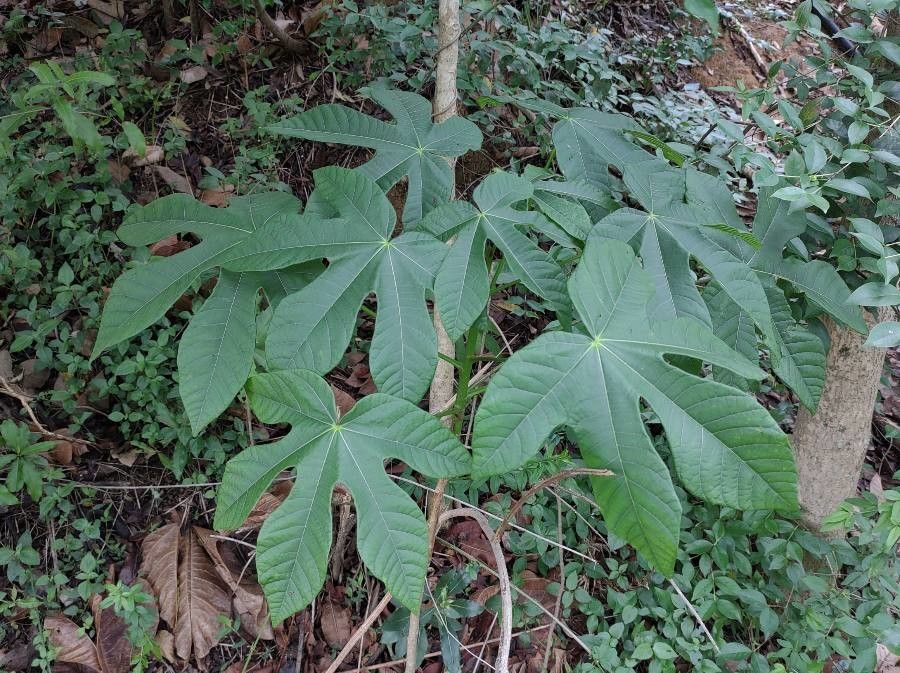
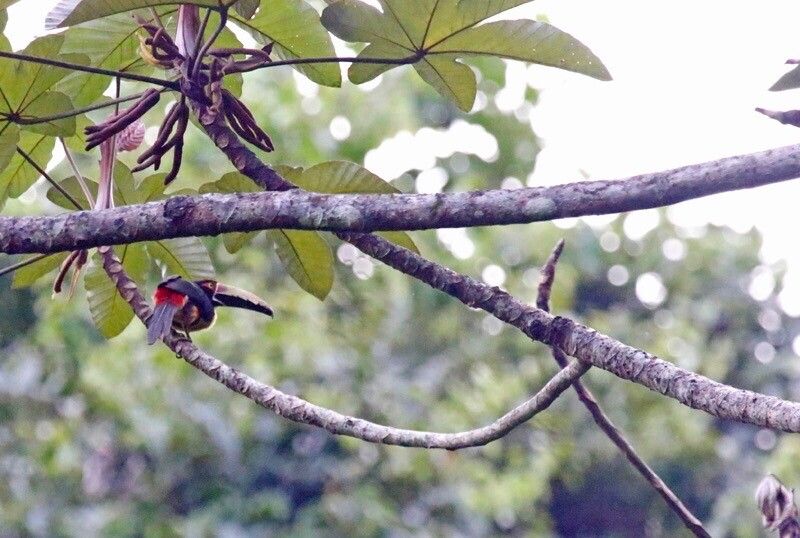
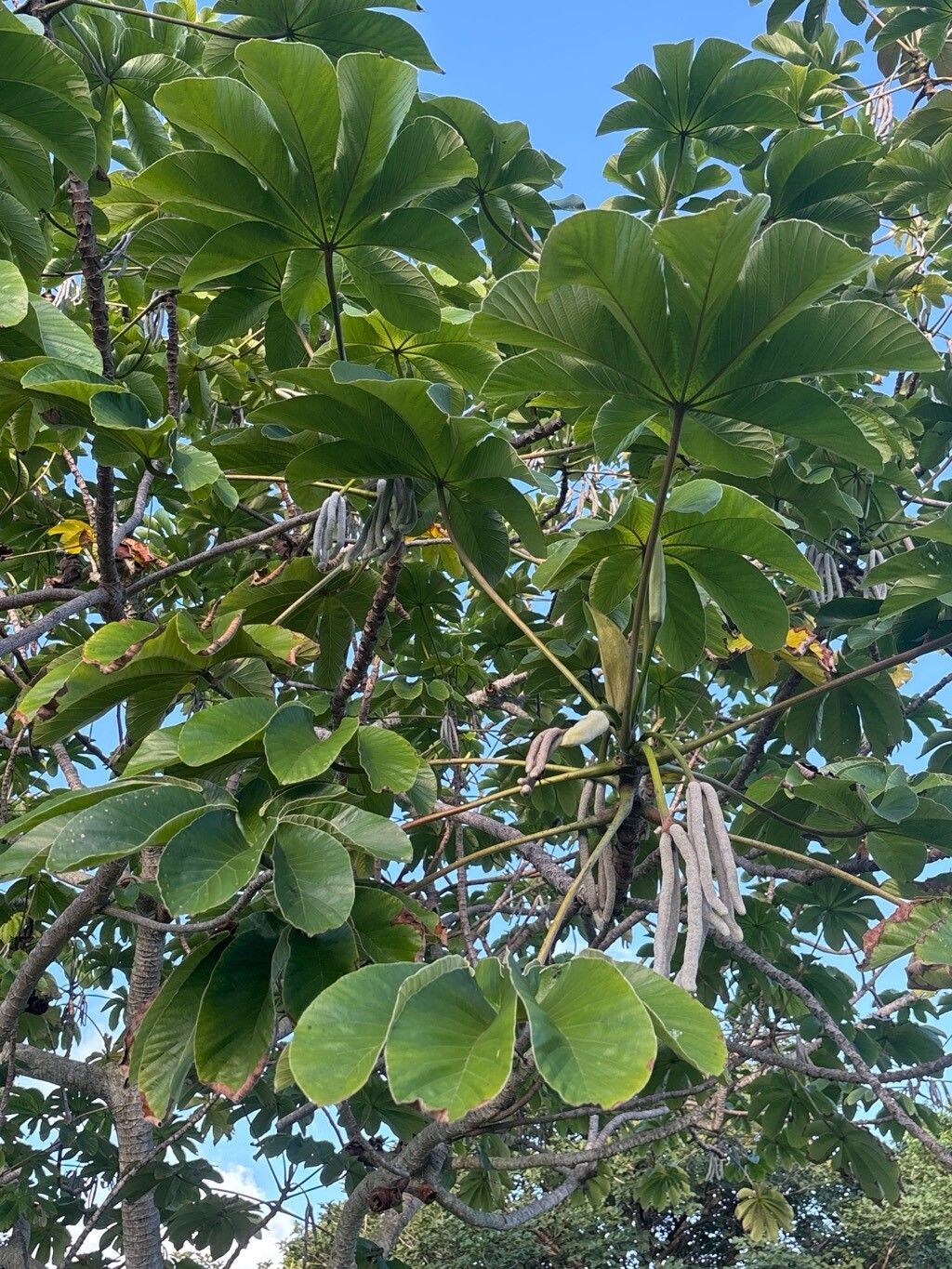
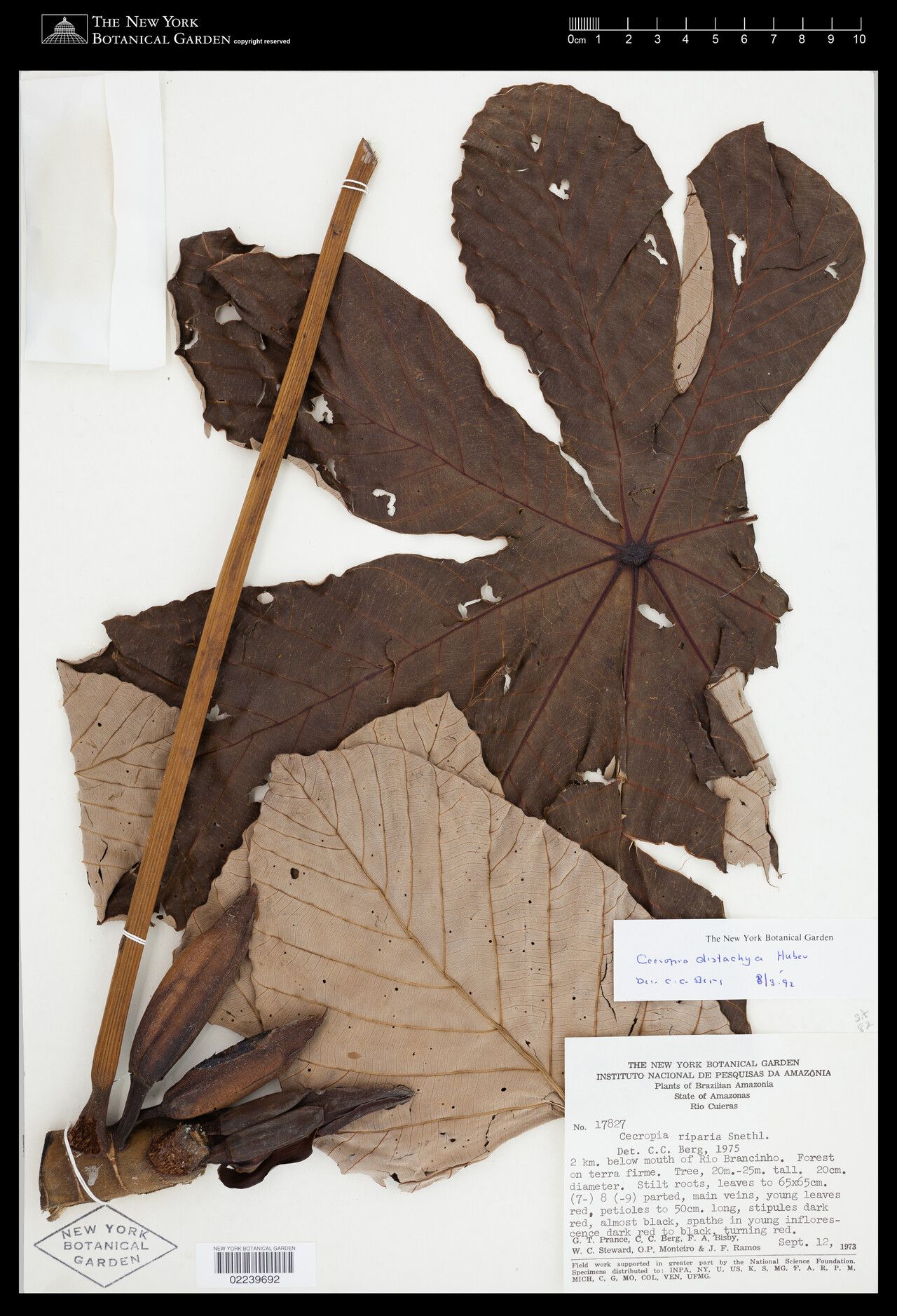
Cecropia obtusifolia is a species of plant in the family Urticaceae. It is found in Colombia, Costa Rica, Nicaragua, Mexico and Panama. Common Names include trumpet tree, pop-a-gun, tree-of-laziness, and snakewood tree. In Central America it is known as Guarumo. Though impressive silhouetted against the sky, it is an invasive species in the islands of Hawaii. Cecropia obtusifolia is used in traditional Amerindian medicine. Many other species of the genus Cecropia share the folk reputation of curing heart failure, cough, asthma and bronchitis. Cecropia obtusifolia has vasorelaxant activity due possibly to inhibition of angiotensin.
The trumpet tree has strong resistance to disease and is usually not susceptible to illnesses. In terms of care, this plant is fairly low-maintenance. When grown outdoors it needs little watering, and larger specimens typically do not require pruning. Smaller plants, however, should be pruned after they have finished blooming. The trumpet tree is suitable for anyone with outdoor space, such as a garden or a deck, and does not demand a lot of gardening experience.
How to keep Cecropia Obtusifolia.
Light
The trumpet tree comes from open habitats, such as sunny meadows and forest edges, which supply plenty of light. It does best in full sun but can also tolerate partial sun, adapting well to different sunlight conditions.
Water
The trumpet tree prefers consistent moisture but can tolerate drought conditions once it is established. Water the tree every 2 to 3 weeks, ensuring the soil dries out between waterings to prevent overwatering. It thrives in well-draining soil, which is essential to maintain proper hydration without waterlogging. Due to its size, the trumpet tree is typically grown outdoors.
Temperature
The trumpet tree is a plant species native to temperate regions and requires temperatures from 59 to 100.4 °F (15 to 38 ℃). It can adapt to warmer climates, but when grown outside its native range it is recommended to adjust temperatures according to the seasons to achieve better growth.
Fertilizer
Fertilize your Trumpet tree in early spring to encourage healthy growth. Regular feeding improves overall vigor, leading to strong growth, greater tolerance of harsh conditions, and increased resistance to pests and diseases. Stick to a consistent fertilization schedule for your Trumpet tree to maintain foliage that is bright, richly colored, and lush.
Pruning
The trumpet tree is easily recognized by its large, umbrella-like leaves. For it to thrive, it's important to prune it in early spring. Key techniques for successful pruning include removing dead branches, improving air circulation, and shaping the tree for better structure. It's crucial to use clean tools to prevent infections. Regular pruning helps control the tree's size and encourages healthier growth, which in turn prevents disease.
Botanical profile.
- Plant Type
- Tree
- Life Cycle
- Perennial
- Genus
- Cecropia
- Family
- Urticaceae
- Hardiness Zone
- 7-11
- Mature Height
- 12.19 m to 18.29 m
- Mature Spread
- 4.57 m to 9.14 m
- Leaf Color
- Dark Green, Forest Green
- Leaf Type
- Deciduous
- Flower Color
- Yellow, Green
- Flower Size
- 10.16 cm to 17.78 cm
- Bloom Time
- All year round
- Planting Time
- Spring
- Harvest Time
- All year round
Other names.
Reader questions.
How should I water my Trumpet tree?
To ensure excellent root development, consider placing a garden hose at the base of the plant. Avoid spraying the leaves directly, as this can be harmful. Keep in mind that if the plant is outdoors and exposed to direct sunlight, the leaves may require more watering. Using bubblers or soaker hoses on each plant's roots is also effective in keeping them moist. If you're adding or removing plants, consider using soaker hoses that cover the entire garden or bed to encourage deep root growth. After watering, make sure to drain any excess water and allow the soil to dry before watering again. To prevent diseases, water the plants at ground level. When it's sunny, it can be beneficial to spray the entire bush with water. Whether the plant is potted or in the ground, remember that the Trumpet tree prefers deep watering rather than light sprinkling.
What are the sunlight requirements for the Trumpet Tree?
The Trumpet Tree, scientifically known as Cecropia obtusifolia, flourishes best in full sunlight conditions, requiring more than 6 hours of direct sunlight daily. It can also adapt to partial sunlight conditions, managing well with about 3 to 6 hours of sunlight. It's important to monitor the sunlight movement through your garden to find the ideal spots that offer the perfect mix of light and shade. This careful observation ensures your plants' growth and happiness by providing them with the optimal balance of light.
What are the ideal temperature conditions for growing a Trumpet Tree?
The Trumpet Tree (Cecropia obtusifolia) thrives in temperate areas, preferring temperatures between 59 to 100.4 °F (15 to 38 °C). It possesses robust cold resistance and can adapt to warmer climates. For those growing the Trumpet Tree in non-native environments, adjusting the temperature according to the season can enhance its growth. Although it is generally not necessary to protect the tree from frost, if winter temperatures are expected to fall below -15°C, precautions such as wrapping the trunk and branches with non-woven fabric or cloth should be taken. It is also advisable to water the plant abundantly before the first freeze of autumn to keep the soil moist and prevent drought and water scarcity during the winter and early spring.
What should I do if I give the Trumpet tree too much or too little water?
An overwatered Trumpet tree may exhibit yellowing, dropping and wilting leaves, as well as a dull and unhealthy appearance with mushy stems. To address these symptoms, it's advisable to adjust your watering schedule. However, wilting can also indicate under watering, with leaves turning crispy and dry. In such cases, check the soil moisture and if it's dry, provide a thorough watering. Although this will help the Trumpet tree recover, it may still display dryness and yellow leaves due to root damage. Once the plant returns to normal, the yellowing of leaves will cease. When growing the Trumpet tree indoors, consistently monitor moisture levels and avoid overwatering, watching out for black spots which may indicate a need for drying out the soil for a few days. Overwatering can lead to root rot, which should be addressed by transferring the plant to a different pot if discolored and slimy roots are observed. Preventing root rot involves avoiding excessive soil saturation. Lastly, when planting the Trumpet tree outdoors, check the soil's moisture level by digging a little deeper; excessively dry soil signals under watering, necessitating adequate watering to aid in plant recovery.
What are the essential light conditions for growing a Trumpet Tree?
Originating from open environments like sunny meadows and forest edges, the Trumpet Tree thrives in abundant light, making full sun or partial sun conditions ideal for its growth. Indoor Trumpet Trees require sufficient lighting to grow well, especially in conditions where natural light is limited, like during winter or in less sunny locations. Artificial lighting, such as LED lights, can be used to supplement the lack of natural sunlight, ensuring that the plants receive the specific wavelengths of light they need for optimal growth. The recommended artificial light intensity varies by plant type, with full sun plants requiring 30-50W/sq ft, partial sun plants needing 20-30W/sq ft, and full shade plants 10-20W/sq ft.
How does low temperature affect the Trumpet Tree and what measures should be taken?
The Trumpet Tree is cold-tolerant and performs best when temperatures stay above 15°C. If temperatures drop below -10°C, it generally withstands the cold well, but when temperatures fall below -15°C, the tree may not show immediate damage in winter. However, come spring, the branches might become brittle and dry, and fail to produce new shoots. To address this, prune any dead branches in spring to encourage new growth and preserve the tree's health.
How often do I need to water my Trumpet tree?
The Trumpet tree prefers deep and infrequent watering. When planted in pots, it is important to soak them with a gallon of water each time, as the storage capacity of flower pots is limited and the soil can dry out quickly. In cold regions, watering is needed every 3 to 5 days, preferably in the morning when the soil is dry. To determine if watering is necessary, check the soil inside the pot. If the top 2-3 inches of soil are dry, it's time to water the plant fully. On hot days, monitor the moisture daily as the heat can rapidly dry out the soil. If you have a garden, irrigation of the soil is necessary. In hot climates, watering once a week is sufficient. Only water when you observe that about 2 to 3 inches of soil has become too dry, both outdoors and indoors. Take into account the amount of rainfall and avoid overwatering to prevent root rot. Trumpet trees typically grow during spring and fall. Applying a 3 to 4-inch layer of mulch outdoors can help conserve water. Sandy soil requires more frequent watering due to its faster drainage, while clay soil needs less frequent watering to avoid root rot. Consider marking the calendar whenever you water and take note if the leaves start to droop, as this might indicate a delay in watering.
What symptoms indicate a Trumpet Tree is not receiving enough light?
When a Trumpet Tree doesn't get enough light, it may show several symptoms, including smaller new leaves, leggy or sparse growth, faster leaf drop, and a halt in new growth indicating the plant is in survival mode. Lighter-colored new leaves and chlorosis, where leaves lose their green color, suggest a lack of chlorophyll and nutrients. Additionally, sunscald, leaf curling, wilting, and leaf scorching can also present if the plant is exposed to too much light. These symptoms signify the plant's struggle in suboptimal lighting conditions and the need for immediate light condition adjustments.
What impact does high temperature have on the Trumpet Tree and how can it be mitigated?
During summer, it's crucial to keep the Trumpet Tree below 38°C. Exceeding 43°C can cause the leaves to lighten in color, tips to dry and wither, and increase susceptibility to sunburn. To mitigate high temperature stress, trim away any sunburned and dried up parts of the plant. Relocating the tree to a shaded area during midday and afternoon or using a shade cloth can protect it from excessive sun exposure. Additionally, watering the plant in the morning and evening helps keep the soil moist and supports the tree's needs during hot temperatures.
How much water does my Trumpet tree need?
The Trumpet tree has different water needs depending on whether it is potted or planted outdoors. For potted plants, water them deeply until water is dripping from the bottom of the pot, then wait for the soil to dry before watering again. Use a water calculator or moisture meter to determine the amount of water given in a week. In the flowering period, provide plenty of water but let it evaporate to prevent root rot. Outdoor Trumpet trees may not need additional watering if there is adequate rainfall. Young or newly planted trees need 1-2 inches of rain per week, but as they grow, they can rely on rainfall alone. During hot weather or prolonged dry spells, it's important to water the tree during cooler times of the day to prevent heat damage.
How can I address and improve the light conditions for my Trumpet Tree?
Improving light conditions for your Trumpet Tree involves several strategies depending on whether it's grown indoors, outdoors, or in the ground. For indoor plants, gradually moving them to sunnier locations to ensure at least 6 hours of daily direct sunlight or using artificial lights like desk or ceiling lamps for at least 8 hours a day can help. For outdoor plants, a gradual shift to sunnier spots over weeks is recommended to avoid sunburn, with the understanding that not all parts of the plant may recover from previous light deficiencies. For plants in the ground, reducing obstructions by pruning nearby trees and transplanting smaller plants during their dormant period to sunnier locations can significantly enhance sunlight exposure. In all cases, observing and addressing the specific light needs of your Trumpet Tree ensures healthier growth.
Do I need to change how often I water my Trumpet tree depending on the time of year or the weather?
To properly care for the Trumpet tree, it is important to provide outdoor conditions with rainfall, but watering is only necessary during persistently dry weather. During the spring and fall growing seasons, keep the soil moist but not soggy, and alternating between dry and moist soil conditions will promote healthy growth. In the summer, the hot weather can cause water to evaporate quickly, so additional watering may be needed if there is a lack of rainfall. In general, the Trumpet tree requires less water during the winter when it goes dormant. To facilitate water evaporation, use a well-draining but moisture-retentive soil mixture, such as terracotta, when planting the tree. During the dormant period, after the spring and before the leaves appear, watering can be skipped as the tree can rely on fall and winter rains to survive. When cultivating the Trumpet tree to encourage growth and blooming, ensure good drainage, especially during winter. In pots, where the root growth is limited, adequate watering is essential, especially in summer. It is recommended to water thoroughly, ensuring the entire root system receives a deep soak once or twice a week, depending on weather conditions. Shallow sprinkles that only reach the leaves should be avoided as they can encourage fungi growth and do not reach the roots effectively. Even during dormancy in the fall and winter, avoid completely drying out the tree. Overwatering should be avoided as well, as the Trumpet tree dislikes sitting in water for too long and may die if the soil does not drain well. Applying mulch can help reduce stress, conserve water, and promote healthy blooms.